Directly manufactured under rigorous ISO batch-level quality control. Explore our engineered tower packing, molecular sieves, and catalytic filtration products deployed across tier-1 chemical plants globally.
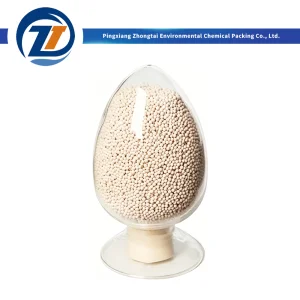
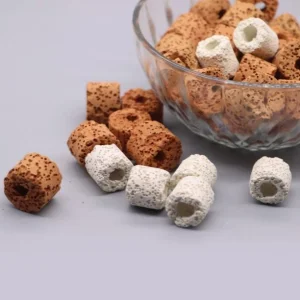
In modern wet ultra-fine agitation bead mills, grinding media must withstand extreme shear stresses, inter-particle impact forces, and corrosive slurries without fracturing or introducing foreign contamination.
Doped with 5 mol% $Y_2O_3$, Tetragonal Zirconia Polycrystal (Y-TZP) boasts a density of $\ge 6.0\text{ g/cm}^3$ and fracture toughness $>9.0\text{ MPa}\cdot\text{m}^{1/2}$. The phase-transformation toughening mechanism prevents crack propagation under severe dynamic kinetic loads in high-speed agitator bead mills (up to 16 m/s tip speed).
Formulated with Cerium Oxide ($CeO_2$), CSZ achieves an ultra-high specific gravity of $6.2\text{ g/cm}^3$. The elevated mass delivers massive impact energy ($E_k = \frac{1}{2}mv^2$), rendering it ideal for high-viscosity paints, heavy mineral pulps, calcium carbonate grinding, and formulations where aggressive shear thinning is critical.
Formed via electro-fusion or sintering methods, containing 55% to 65% $ZrO_2$. Offering a balanced density of $4.0 - 4.2\text{ g/cm}^3$, zirconium silicate beads bridge the performance gap between fused alumina balls and high-purity Y-TZP, providing cost-optimized grinding kinetics for agrochemicals, titanium dioxide, and kaolin slurries.
| Media Grade | Composition ($ZrO_2$ + Dopant) | Bulk Density (g/cm³) | Vickers Hardness (HV10) | Crush Load (Ø 1.0mm) | Primary Industrial Field |
|---|---|---|---|---|---|
| Y-TZP Ultra 95 | 95% $ZrO_2$, ~5.2% $Y_2O_3$ | ≥ 6.00 | ≥ 1,250 GPa | ≥ 2,300 N | Battery Cathodes, MLCC, Pharma |
| Ceria-Zirconia Prime | 80% $ZrO_2$, ~20% $CeO_2$ | ≥ 6.20 | ≥ 1,180 GPa | ≥ 2,100 N | Viscous Inks, Metallurgical Slurries |
| Sintered Silicate 65 | 65% $ZrO_2$, 33% $SiO_2$ | ≥ 4.10 | ≥ 1,000 GPa | ≥ 1,250 N | Pesticides, Architectural Paints |
| Fused Silicate 55 | 55% $ZrO_2$, 40% $SiO_2$ | ≥ 3.85 | ≥ 900 GPa | ≥ 950 N | Paper Coating ($CaCO_3$), Glazes |
Analyzing shifts in procurement methodologies, cleanroom handling standards, and how integrated Chinese manufacturers dominate the advanced grinding media export market.
The electric vehicle and grid-storage revolution requires sub-micron dispersion of Lithium Iron Phosphate ($LiFePO_4$), Ternary NCM/NCA precursors, and silicon-carbon composite anodes. Media contamination must stay below single-digit ppm levels to safeguard cell cycle lifespan and prevent internal micro-shorting.
China supplies over 70% of the world's functional zirconia chemicals, benefitting from localized chemical raw material pipelines ($ZrOCl_2$), domestic $Y_2O_3$ supply, automated continuous tunnel kilns, and state-of-the-art titrato-dripping molding equipment that eliminates internal micro-voids.
Global procurement teams at BASF, AkzoNobel, CATL, and Samsung SDI evaluate grinding media based on Total Cost of Ownership (TCO). Low-quality beads suffer catastrophic bead fragmentation, blinding mill dynamic separators, wrecking mechanical seals, and contaminating final dispersion batches.
Transparent price benchmarks based on FOB Chinese Port delivery, categorized by material chemistry, synthesis route, bead diameter, and order volume tiers.
| Bead Formulation & Grade | Available Diameter Range | Small Batch (100–500 kg) | Standard Pallet (1–5 Tons) | Full Container Load (≥10 Tons) | Standard Packaging Format |
|---|---|---|---|---|---|
| 95% Yttria Stabilized (Y-TZP) Dripping Method, Nanoscale Raw Powder |
0.05 mm – 0.3 mm | $75.00 – $95.00 / kg | $65.00 – $80.00 / kg | $55.00 – $68.00 / kg | 25 kg Drum / Hermetic Steel Drum |
| 95% Yttria Stabilized (Y-TZP) Standard Precision Sizing |
0.4 mm – 3.0 mm | $45.00 – $58.00 / kg | $38.00 – $48.00 / kg | $32.00 – $40.00 / kg | 25 kg Double Poly-Lined Drum |
| Ceria Stabilized Zirconia (CSZ) High Specific Gravity Grade (6.2 g/cm³) |
0.6 mm – 2.5 mm | $38.00 – $48.00 / kg | $32.00 – $40.00 / kg | $27.00 – $34.00 / kg | 25 kg Plastic Pail / Wooden Crate |
| Zirconium Silicate ($ZrSiO_4$ 65%) Sintering Method, Microcrystalline |
0.8 mm – 3.0 mm | $14.00 – $19.00 / kg | $11.00 – $15.00 / kg | $9.50 – $12.50 / kg | 25 kg Reinforced Bag / 1MT Jumbo |
| Zirconium Silicate ($ZrSiO_4$ 55%) Fused Method |
1.0 mm – 4.0 mm | $9.50 – $13.50 / kg | $7.50 – $10.00 / kg | $6.20 – $8.50 / kg | 1MT Palletized Big Bag |
Procurement Tip for Plant Engineers: Quoted prices reflect international commodity zircon sand and rare earth oxide ($Y_2O_3$, $CeO_2$) market baselines. Beads below 0.1 mm require cleanroom liquid dripping classification, which adds precision micro-sieving cost, but prevents mechanical seal blowouts on high-end mills like Netzsch Zeta® and Bühler MicroMedia®.
Explore how ultra-pure zirconia grinding media integrates into continuous multi-stage manufacturing plants across high-barrier technological sectors.
Processing $LiFePO_4$, $LiNi_{x}Mn_{y}Co_{z}O_2$ and silicon-carbon anode slurries requires narrowing particle size distribution ($D_{50} \approx 300\text{ nm}$, $D_{99} < 1\ \mu\text{m}$). Y-TZP beads down to 0.2–0.4 mm deliver maximum shearing without chipping, keeping iron/silicon impurities under 2 ppm.
Multilayer Ceramic Capacitors demand dielectric Barium Titanate ($BaTiO_3$) nanoparticles under 50 nm. High-frequency electronics cannot tolerate ionic leachates. Our 0.03–0.1 mm Y-TZP beads provide ultra-fine comminution, ensuring defect-free dielectric film coatings.
For high-solids waterborne OEM basecoats and UV-curable inkjet formulations, maximum gloss, optical transparency, and tinctorial color yield depend on de-agglomerating primary pigment crystals to sub-100 nm without scratching milling chamber walls.
Biopharmaceutics Classification System (BCS) Class II drugs exhibit poor water solubility. Wet media milling of active pharmaceutical ingredients (APIs) into nanosuspensions improves oral bioavailability. Cleanroom-washed, steam-autoclavable beads prevent pyrogen ingress.
Suspension Concentrates (SC) and Suspo-Emulsions (SE) require durable beads that resist agricultural surfactants, severe acidic solvents, and thermal fluctuations. Sintered Zirconium Silicate media provides long-wearing kinetic force with minimal operating costs.
In high-capacity vertical or horizontal sand mills producing chloride or sulfate process $TiO_2$, Ceria-Stabilized Zirconia beads deliver maximum impact crushing energy, efficiently shearing quartz aggregates while eliminating yellow-tint metal contamination.
How we enforce batch-to-batch consistency and international regulatory compliance for global chemical and materials enterprises.
Every export lot is cataloged with full raw powder provenance. Our media complies fully with EU REACH Regulation (EC 1907/2006), RoHS Directive 2011/65/EU, and US FDA requirements for indirect contact with pharmaceuticals and cosmetics. Full Inductively Coupled Plasma (ICP) heavy metal leach reports accompany shipments.
For fine grades under 0.2 mm, beads are ultrasonically washed, demagnetized with 12,000-Gauss rare-earth inline traps, dried, and packed inside Class 100,000 cleanrooms. Hermetic poly-lined double bagging inside reinforced steel drums prevents atmospheric moisture absorption and particle abrasion during ocean transit.
Our application engineering team assists clients with bead charge volume calculations ($V_{media} = 70\% - 85\%$ of grinding chamber volume), tip speed selection, gap screen clearance sizing ($Screen\ Gap \approx 1/2\text{ to }1/3\text{ of }d_{media}$), and wear tracking protocols to prevent unpredicted hydraulic screen blinding.
Strategic advancements underway in ceramic synthesis, shaping technologies, and next-generation particle mechanics.
Next-generation semiconductor CMP slurries and high-end quantum-dot displays demand bead sizes of 0.015 to 0.03 mm. We are investing in novel centrifugal aerosol and microfluidic dripping towers capable of tight Gaussian size distribution without air bubbles or satellite drops.
By employing hydrothermal synthesis of raw yttrium-stabilized zirconia nanopowders with primary grain sizes under 15 nm, sintering temperatures can be lowered by 150°C. This suppresses secondary crystal grain coarsening, yielding a finer, more wear-resistant microstructure with increased fracture toughness.
Recognizing global ESG requirements, we are partnering with leading battery cell producers to recover spent zirconia media from grinding waste. Proprietary chemical dissolution and re-crystallization processes return reclaimed zirconia into commercial-grade chemical catalyst carriers.
Authoritative answers addressing search intent, mechanical compatibility, and procurement best practices for process operators.
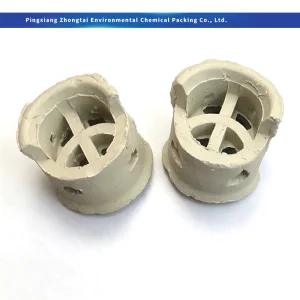
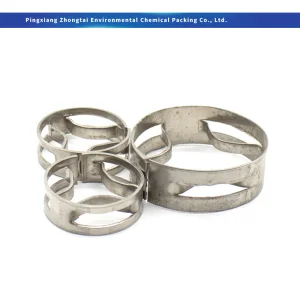
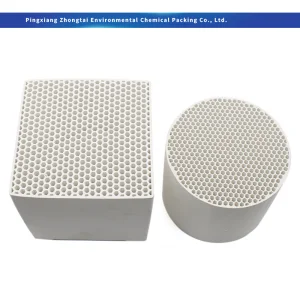
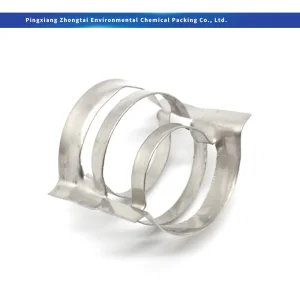
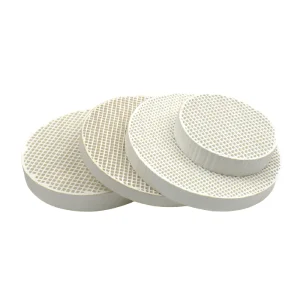
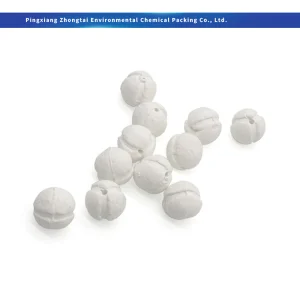
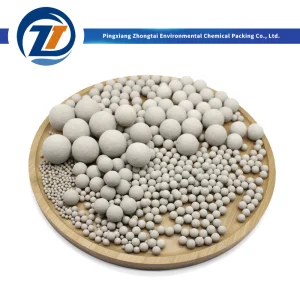
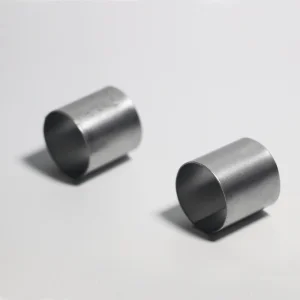
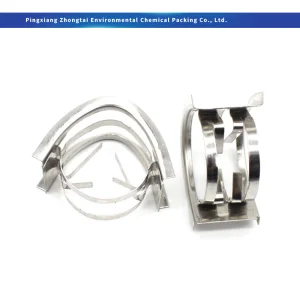
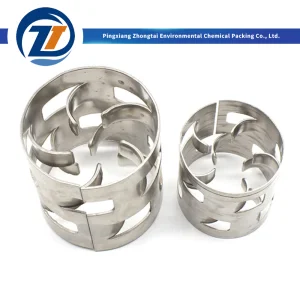
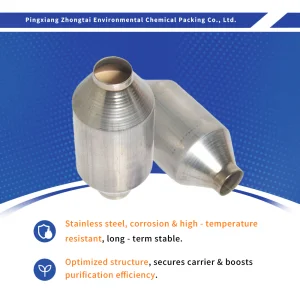
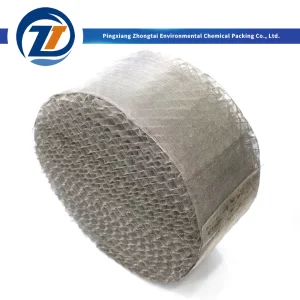
Rounding out our export portfolio: Industrial honeycomb ceramic plates, high-alumina support spheres, stainless steel structured gauze packing, and OEM catalytic converter cores.
Submit your slurry characteristics, target $D_{50}$, and mill model parameters. Our engineering department delivers custom bead charge calculations, wear test coupons, and formal volume pricing within 24 hours.
