Explore precision-formed random packings, monolithic catalyst beds, and liquid distribution systems built to ASTM, ISO 9001, and international chemical plant specifications.
A technical evaluation framework designed for chemical plant managers, simulation engineers (ASPEN / ChemCAD), and global procurement specialists evaluating mass transfer column performance.
Moving from 1st-generation Raschig rings to 3rd-generation open-lattice structures (such as Cascade Mini Rings and VSP rings) has reduced hydraulic drag by upwards of 42%. The lower aspect ratio (height-to-diameter < 0.5) induces preferential orientation parallel to gas streamlines, dramatically suppressing liquid entrainment and pressure drop (ΔP).
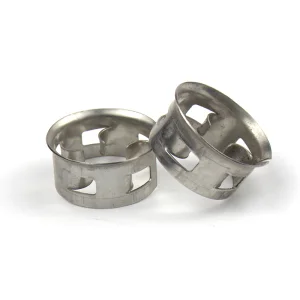
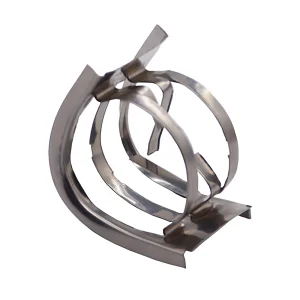
Height Equivalent to a Theoretical Plate (HETP) is governed by uniform interfacial exposure and dynamic surface renewal. Optimized internal finger tabs in modern Metal Pall Rings and Dixon Rings preserve continuous film shearing, avoiding the dead stagnant pools inherent to legacy solid cylinders, optimizing separation efficiency per packed meter.
Random packings provide broad operability envelopes with turn-down ratios routinely reaching 5:1 without weeping or bypass. When operating under fluctuating feed regimes, such as variable natural gas sweetening or batch pharmaceutical reactions, random packing guarantees operational stability unmatched by restrictive sieve trays.
| Packing Media & Configuration | Material Platforms | Surface Area (m²/m³) | Void Fraction (%) | Dry Packing Factor Fp (1/m) | Primary Industrial Application |
|---|---|---|---|---|---|
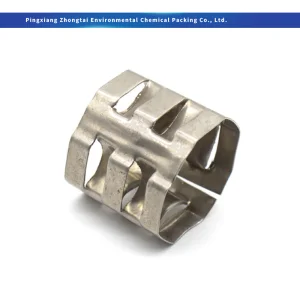
| Metal Pall Ring (25mm / 1") | SS304, SS316L, Carbon Steel | 205 – 220 | 94.5% – 96.0% | 170 – 190 | Vacuum Fractionation, CO2 Stripping Towers |
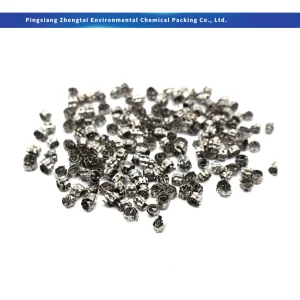
| Metal Cascade Mini Ring (CMR #2) | SS316L, Duplex, Titanium | 160 – 175 | 96.5% – 97.8% | 110 – 130 | High-capacity Revamps, Acid Gas Removal Units |
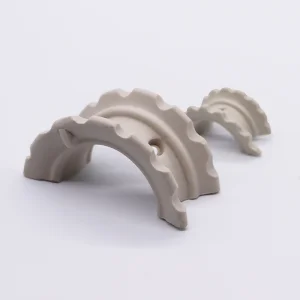
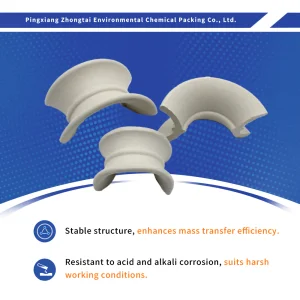
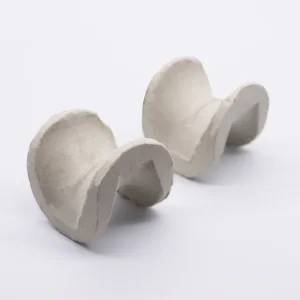
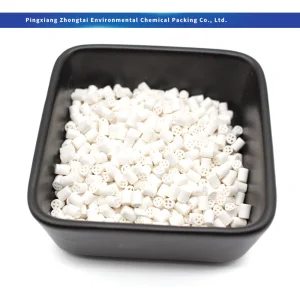
| Ceramic Intalox Saddle (50mm / 2") | Chemical Porcelain / High Alumina | 110 – 120 | 72.0% – 76.0% | 210 – 240 | H2SO4 Absorption, RTO Thermal Beds, Chlorine Gas |
| Plastic Super Intalox (38mm / 1.5") | PP, PVDF, PTFE, CPVC | 130 – 145 | 88.0% – 91.0% | 135 – 155 | Flue Gas Desulfurization (FGD), Odor Control |
| Metal Dixon / Theta Ring (Wire Mesh) | AISI 316L Wire Mesh (60-80 mesh) | 750 – 920 | 85.0% – 88.0% | 850 – 1100 | Pilot Columns, Isotope Separation, Fine Pharma |
How decades of concentrated manufacturing, raw material proximity, and technological scaling deliver an unmatched procurement equation for overseas industrial buyers.
Pingxiang, Jiangxi is widely recognized as the chemical packing capital of China. Raw mineral kaolin clays, stamping facilities, high-tonnage tunnel kilns, and precision wire mesh tooling are integrated within a 25-kilometer radius, slashing raw component logistics friction.
Procurement fraud risk is mitigated through on-site OES (Optical Emission Spectrometry) testing. Every batch of 304, 316L, or high-nickel alloy packing is tested for Cr, Ni, and Mo levels, guaranteeing compliance with EN 10204 3.1 certification protocols prior to vessel dispatch.
Operating continuous-fire kilns and automated high-speed multi-stage punching presses allows throughput up to 25 metric tons daily per product family, ensuring planned turnaround outages and emergency shutdowns in international refineries are supported without delay.
Specific mass transfer, catalytic reaction, and thermal recovery setups where Pingxiang Zhongtai random packings prove their resilience against extreme temperature, mechanical wear, and chemical attack.
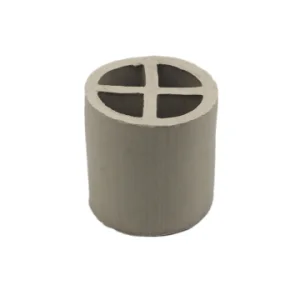
Acid-resistant ceramic Intalox saddles and Cross Rings with 0.1% water absorption and >99.5% acid resistance operate under concentrated 98% hot H2SO4 at temperatures reaching 120°C without silica leaching or bed collapse.
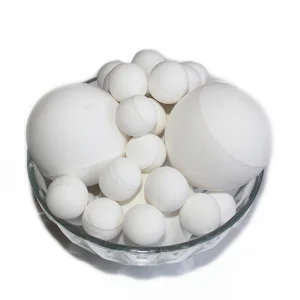
99% Al2O3 inert ceramic balls act as top catalyst hold-down and bottom grading supports in high-pressure hydrodesulfurization (HDS) reactors, withstanding extreme thermal shocks up to 1400°C without catalyst bed poisoning.
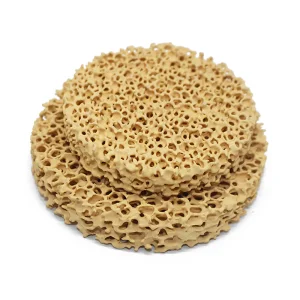
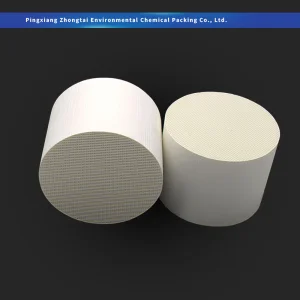
High-density cordierite/mullite honeycomb ceramic media engineered with optimized wall thicknesses (1.2mm) maximize volumetric thermal retention, slashing natural gas auxiliary fuel costs across industrial VOC abatement plants.
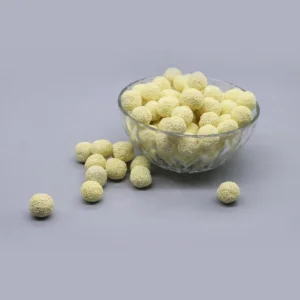
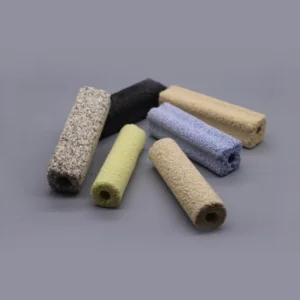
Plastic Tri-Pak balls and porous far-infrared bio-ceramic rings deployed in biological trickling towers provide expansive nitrifying micro-surface habitats (>550 m²/m³) for high-load ammonia and hydrogen sulfide degassing.
Enterprise procurement teams cannot afford downtime due to customs blockages or off-spec chemical fillers. We engineer compliance into every step of order execution.
Every shipment is supported by comprehensive documentation dossiers: Mill Test Certificates (MTC 3.1), REACH / RoHS declarations, Certificate of Origin (Form E, CO, COO), and independent SGS/Bureau Veritas third-party testing reports.
Custom packaging according to customer material requirements: multi-ply UV-treated woven bulk bags (FIBC) with water-tight inner liners, steel drums, or fumigated wooden crates secured on reinforced ISPM-15 compliant pallets for long maritime routes.
Direct communication with process engineers who evaluate your hydraulic models, Aspen tower loading diagrams, flooding points, and fluid physical parameters to ensure proper size and alloy match before production starts.
Analyzing the shift in global mass transfer technologies: carbon capture integration, energy-conserving column retrofits, and high-purity green fuel separations.
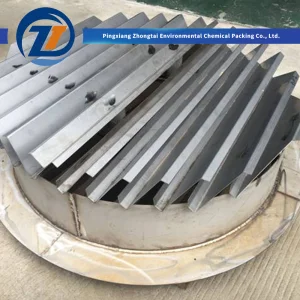
Carbon Capture, Utilization, and Storage (CCUS) facilities operating amine wash columns require huge packing volumes with minimal pressure drops. 3rd-generation metal cascade rings and specialty high-flux random packings maximize gas throughput in towers exceeding 8 meters in diameter, lowering fan blower electricity demands.
The rise of sustainable aviation fuel (SAF), cellulosic ethanol, and lithium-grade specialty solvents has boosted demand for ultra-efficient wire mesh random packings (such as Dixon and Theta rings) capable of delivering up to 6 theoretical stages per packed meter under vacuum conditions.
Global multi-national EPCs are increasingly migrating away from single-source Western branded suppliers to direct Tier-1 Chinese manufacturers who meet the same metallurgical tolerances, saving 30%–45% on capital expenditure across mega-project expansions.
Specific, specification-grade answers addressing chemistry, mechanical crush limits, pressure drop considerations, and international logistics.
Complete your mass transfer, water treatment, and acid plant requirements with specialized high-flux internals and chemical-grade biocatalytic substrates.