Explore our primary industrial packing solutions engineered for severe corrosive, thermal, and catalytic process environments.
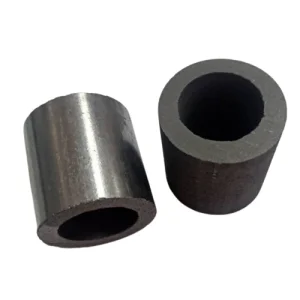
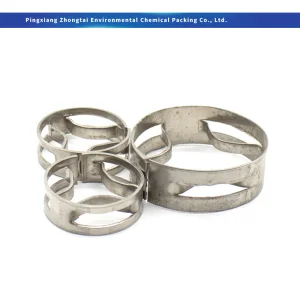
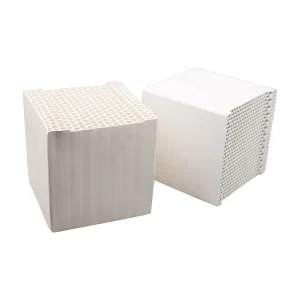
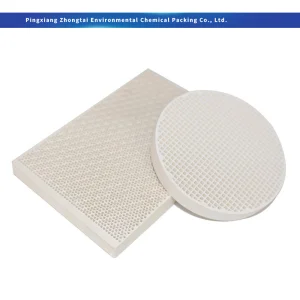
An analytical overview of Polytetrafluoroethylene (PTFE) random packing performance under extreme chemical stresses and hydrodynamic requirements.
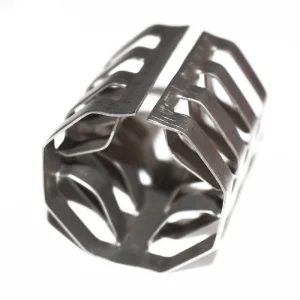
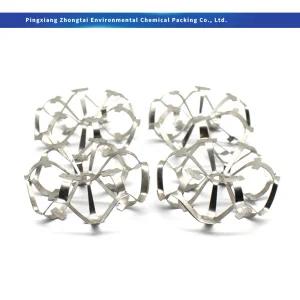
The **PTFE Pall Ring** represents a pivotal evolutionary leap from classic Raschig ring geometry. By punching open windows along the cylindrical wall and bending internal tabs inward, fluid and gas dynamic paths are radically transformed. This structural enhancement allows two distinct liquid-gas contact zones: one along the outer cylinder perimeter and a secondary high-turbulence zone within the inner web of bent tabs.
When evaluated against conventional random packings, the open-wall architecture increases total active surface area while drastically lowering resistance to gas flow. In mass transfer operations, this translates directly to reduced pressure drop ($\Delta P$) per meter of packing bed, elevated flooding velocity thresholds, and enhanced liquid redistribution capacity that prevents channel flow tendencies across packed heights.
Polytetrafluoroethylene (PTFE) possesses an extraordinarily strong carbon-fluorine ($\text{C-F}$) bond matrix, producing an unreactive, high-density polymer structure. Unlike standard polypropylene (PP) or PVDF which degrade in aggressive oxidative systems, virgin PTFE remains completely immune to attack by concentrated nitric acid, hydrofluoric acid ($\text{HF}$), oleum, hot concentrated caustic alkalis, and organic solvents.
Furthermore, PTFE exhibits zero moisture absorption (<0.01%) and maintains continuous mechanical integrity from ultra-cryogenic temperatures ($-180^\circ\text{C}$) up to $+260^\circ\text{C}$. This thermal stability ensures structural resistance to creeping or thermal collapse under the heavy weight of deep packing beds in hot distillation columns.
Understanding supply chain trends, sourcing strategies from top Chinese suppliers, and global engineering demand.
Global EPC contractors and refinery operators are increasingly shifting procurement models toward direct-from-factory suppliers in China. By leveraging China’s mature fluoropolymer raw material supply chains and advanced automated compression molding technologies, global chemical plants achieve up to 40% capital expenditure reductions without sacrificing material purity or ISO compliance standards.
Modern international process buyers demand rigorous compliance verification. Leading Chinese PTFE suppliers provide comprehensive material certifications including **FDA 21 CFR 177.1550**, **REACH**, **RoHS**, alongside full material traceability. Thermal gravimetric analysis (TGA) and FTIR spectrographic validation are standard operational protocols to prove non-recycled resin usage.
As industrial sustainability directives accelerate worldwide, PTFE Pall Rings play a pivotal role in Carbon Capture and Storage (CCS) plants, green hydrogen purification units, and zero-liquid-discharge (ZLD) wastewater treatment scrubbing towers, where packing longevity directly dictates plant energy efficiency.
| Nominal Size (mm) | Dimensions (D×H×T mm) | Specific Surface Area ($m^2/m^3$) | Free Volume (%) | Packing Factor ($m^{-1}$) | Bulk Density ($kg/m^3$) |
|---|---|---|---|---|---|
| PTFE Pall Ring 16mm | 16 × 16 × 1.0 | 340 | 88% | 420 | 280 - 320 |
| PTFE Pall Ring 25mm | 25 × 25 × 1.5 | 228 | 90% | 290 | 240 - 270 |
| PTFE Pall Ring 38mm | 38 × 38 × 1.5 | 145 | 92% | 185 | 190 - 220 |
| PTFE Pall Ring 50mm | 50 × 50 × 2.0 | 112 | 93% | 130 | 160 - 190 |
| PTFE Pall Ring 76mm | 76 × 76 × 2.5 | 74 | 94% | 85 | 130 - 150 |
Real-world chemical processing duties where PTFE Pall Ring random packing excels over metallic and ceramic alternatives.
In Chlor-Alkali production facilities, wet chlorine gas ($\text{Cl}_2$) exiting electrolytic cells presents an aggressive oxidizing environment combined with moist hydrochloric vapor. Standard 316L stainless steel fails rapidly under chloride stress corrosion cracking, while ceramics suffer from silica dissolution if alkaline traces bypass the system.
The PTFE Solution: Deploying 38mm or 50mm PTFE Pall Rings in primary chlorine drying towers and tail gas absorption scrubbers eliminates equipment failure risk. The inert fluoropolymer matrix shows zero corrosion rates when exposed to wet chlorine and concentrated sulfuric acid ($\text{H}_2\text{SO}_4$) drying agents up to $160^\circ\text{C}$.
Semiconductor manufacturing demands electronic-grade hydrofluoric ($\text{e-HF}$) and ultra-pure nitric acid with metallic impurity levels below parts-per-trillion (PPT). Traditional metal packing leaches iron, nickel, and chromium ions into the distillate stream, corrupting semiconductor wafer washing processes.
The PTFE Solution: High-purity virgin PTFE Pall Rings are strictly specified for UP-grade acid rectification columns. Free of ionic leachables and heavy metal additives, PTFE packing maintains pristine chemical purity while optimizing vapor-liquid contact to ensure high theoretical plate efficiency (HETP).
Hazardous chemical incinerators produce flue gas loaded with hydrofluoric acid ($\text{HF}$), sulfur dioxide ($\text{SO}_2$), and dioxins. The combination of high temperature, acidic gas, and fluorine compounds destroys standard ceramic saddles through hydrofluoric glass-phase etching.
The PTFE Solution: Operating in quench and secondary scrubbing sections, PTFE Pall Rings resist severe $\text{HF}$ chemical attack while providing high operational flexibility under fluctuating gas velocity rates, preventing bed packing failure during thermal spikes.
Multi-purpose API (Active Pharmaceutical Ingredient) synthesis facilities frequently switch between aggressive halogenated solvents, acids, and strong bases. Equipment must support rapid chemical changeovers without cross-contamination or packing degradation.
The PTFE Solution: PTFE’s ultra-low surface energy prevents organic tar build-up and scaling. The non-stick smooth surface enables rapid clean-in-place (CIP) washing routines using solvent flushes, dramatically cutting plant downtime between batch campaigns.
Investigating next-generation surface modifications, modified PTFE compounds, and computational fluid dynamics (CFD) modeling.
Because virgin PTFE is naturally hydrophobic (water contact angle ~110°), early-stage liquid film wetting can present challenges in low-liquid-load water-based absorption. Next-generation PTFE Pall Rings undergo chemical plasma surface etching and laser micro-patterning, reducing contact angles to under 60° without introducing impurities, yielding up to a 25% increase in effective mass transfer area.
To overcome mechanical creep under deep packing heights (>8 meters) at temperatures above 200°C, advanced research focuses on modified PTFE (such as TFM™) blended with micro-glass fiber or carbon fiber reinforcements. These composite materials raise tensile strength and reduce thermal expansion coefficients while preserving core corrosion resistance.
Utilizing high-performance Supercomputing Computational Fluid Dynamics (CFD), structural geometry is moving beyond conventional Pall ring designs. Multi-stage inner internal tab arrangements are optimized to eliminate internal dead zones, equalize gas velocity vectors, and lower pressure drop by an additional 12-15% over standard designs.
Optimizing packed column performance requires a holistic engineering approach combining packing media with custom internal hardware.
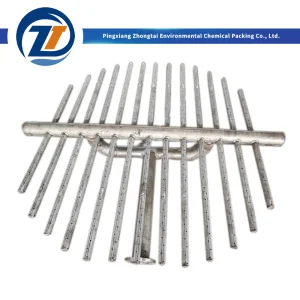
Even the highest quality PTFE Pall Ring packing will perform poorly if liquid irrigation across the bed top is uneven. Integrated systems feature engineered PTFE or lined-steel liquid distributors (trough, ladder, or orifice pan types) designed to deliver a minimum of 60 to 100 drip points per square meter, guaranteeing immediate phase equilibrium upon liquid contact.
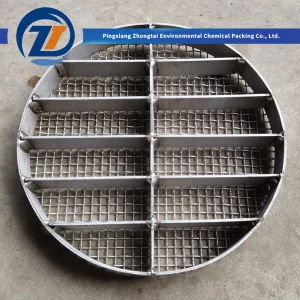
Random packing beds require robust bottom support plates with open flow areas exceeding the void space of the packing bed itself to prevent liquid choking at the base. Multi-beam PTFE support plates allow separate gas passage slots and liquid drain channels, ensuring high column capacity without localized flooding.
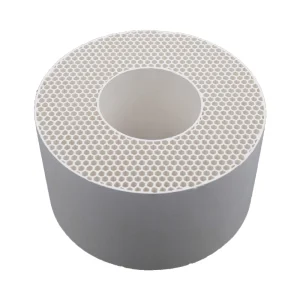
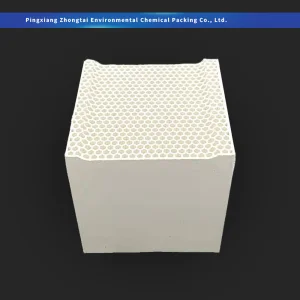
Discover additional chemical tower packings, metallic internals, thermal storage ceramics, and specialty catalysts.
Authoritative guidance from senior mass transfer engineers regarding PTFE Pall Ring specification, bed design, and installation.
PTFE Pall Rings excel in chemical inertness and temperature limits. Standard Polypropylene (PP) fails above $100^\circ\text{C}$ and degrades under strong oxidizing agents. Polyvinylidene Fluoride (PVDF) handles higher temperatures up to $150^\circ\text{C}$ but suffers degradation in strong hot caustic or amine services. Metallic packings (316L, Hastelloy) corrode rapidly in halogenated acids like $\text{HCl}$ or $\text{HF}$. Virgin PTFE provides universal chemical resistance across the entire pH 0-14 spectrum and operates continuously up to $260^\circ\text{C}$, making it the safest long-term choice for mixed chemical or high-temperature corrosive columns.
Virgin PTFE has a low surface energy resulting in a water contact angle of ~110°, which can cause aqueous liquids to droplet-bead rather than form a continuous wetting film during initial operation. To counter this, engineers optimize liquid irrigation rates, apply mechanical surface micro-grooving, or utilize chemical plasma etching during manufacturing. Once operating under equilibrium with organic or mixed chemical feeds, liquid film formation stabilizes, delivering full HETP efficiency.
Due to the relative softness and creep characteristics of PTFE at elevated temperatures, the maximum recommended single unsupported bed height is typically **3 to 5 meters**. For deeper packed beds, intermediate redistributor plates and support grids must be installed to prevent lower packing layers from deforming under crushing weight.
A standard chemical engineering rule of thumb dictates that the tower diameter ($D$) to packing nominal size ($d$) ratio should satisfy $D/d \ge 10$ to 15. For example, in a tower with a 500mm inside diameter, a 25mm or 38mm Pall ring is optimal. Using too large a packing size creates excessive wall flow, while too small a size increases pressure drop unnecessarily.
Yes. Because PTFE is naturally non-stick and chemically immune, fouling deposits, polymers, or tars rarely bond strongly to its surface. During turnaround, packing beds can be washed with concentrated acid/alkali flushes or steam cleaned without damaging the structural integrity of the packing rings.
Reliable suppliers conduct Specific Gravity tests (virgin PTFE typically ranges between 2.13 - 2.18 g/cm³), Tensile Strength testing (>20 MPa), and Differential Scanning Calorimetry (DSC) to confirm melting point characteristics ($327^\circ\text{C}$). Reputable manufacturers provide batch inspection reports and third-party laboratory verification (SGS/TÜV) upon request.
