Review our factory-direct mass transfer internals, precision-fired catalyst supports, and industrial-grade ceramic products manufactured to international ASTM and ISO standards.
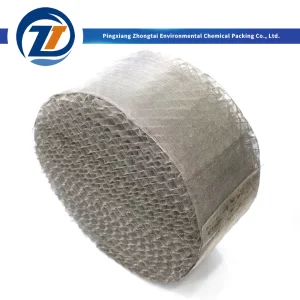
Wholesale High Efficiency 304 316L Metal Wire Gauze Structured Packing BX DX CY Type for Fine Chemical Distillation & Vacuum Columns Manufacturers, Factory
View Specifications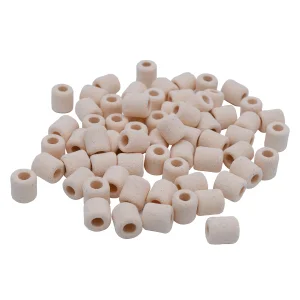
China Aquarium Accessories Filter Fish Tank Bio Filter Media Material Glass Ceramic Bio Ring Supplier, Suppliers
View Specifications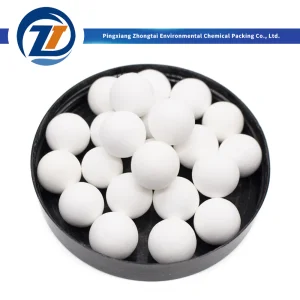
China High Wear Resistant Alumina Grinding Ceramic Ball Media for Ball Mill Manufacturer, Manufacturers
View Specifications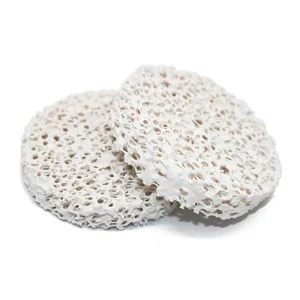
Wholesale Alumina ceramic foam filter for Steel Casting Industry Suppliers, Quotes
View Specifications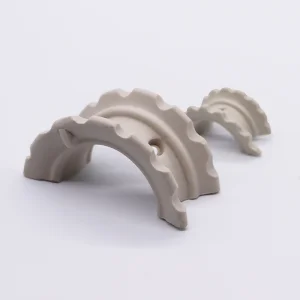
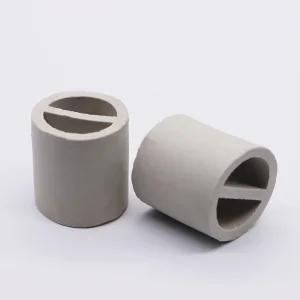
China Ceramic Super Intalox Saddle Ring Tower Packing Factory, Factories
View Specifications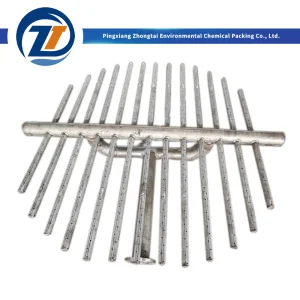
China 304 316L Stainless Steel Metal Pipe Liquid Distributor / Perforated Spray Pipe Distributor for Uniform Liquid Distribution in Packed Columns Suppliers, Pricelist
View Specifications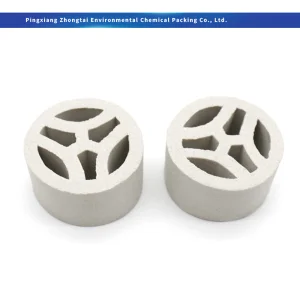
China Acid & Heat Resistant Ceramic 3Y Ring (Triple Y Ring / Tri-Y Ring) Random Tower Packing 16mm 25mm 38mm 50mm 76mm for Chemical Absorption & Scrubbing Supplier, Suppliers
View Specifications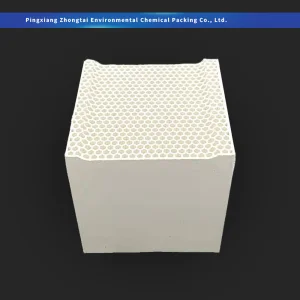
China Cordierite-Mullite Honeycomb for RTO/RCO | Advanced Thermal Storage Media Manufacturer, Suppliers
View SpecificationsAn authoritative engineering exploration into the microstructural integrity, sintered crystalline phases, and compressive mechanical tolerances of large-diameter industrial ceramic spheres (13mm to 76mm+).
Large ceramic beads utilized in deep fixed-bed reactors must withstand monumental static hydraulic burdens and dynamic gas pulsations. Using automated isostatic compaction combined with multi-stage roller shaping, our factory controls the interstitial pore diameter below 0.15 microns. Water absorption is strictly confined to <1.0% by weight, mitigating capillary fluid ingress that typically induces mechanical spalling during sudden thermal depressurization cycles.
In high-severity hydrotreating, catalytic reforming, and ammonia synthesis units, the presence of free crystalline silica (SiO₂) poses severe downstream fouling risks. At elevated operating pressures and steam temperatures exceeding 450°C, volatile gaseous silicates vaporize from standard ceramic support media, condensing on expensive noble metal catalysts. Our high-alumina beads (92% to 99.5% Al₂O₃) undergo full corundum phase transformation, locking SiO₂ into chemically inert mullite or eliminating it entirely.
In upflow and downflow packed reactors, large-diameter ceramic balls (typically 25mm, 38mm, 50mm, and 76mm) form the essential graded topping and support layers. As fluid velocity spikes, fluidization vortices can cause catalyst bed turbulence, leading to particle attrition, pressure-drop runaway, and premature emergency shutdowns. The calculated bulk density (1.40 to 2.10 g/cm³) of large ceramic balls anchors delicate active catalyst pellets firmly in place.
Pingxiang, Jiangxi Province, stands as China’s undisputed capital of chemical packing and technical ceramics. Discover how our localized supply cluster creates immense engineering and logistical advantages for global EPC contractors.
Unlike regional blenders who procure third-party calcined alumina, our manufacturing facility sits within a 50-kilometer radius of ultra-high-grade kaolin and bauxite reserves. By controlling the synthesis of basic feedstocks—including micro-fine wet ball milling and spray-drying granulation—we stabilize chemical composition variations batch after batch, keeping impurity levels (Fe₂O₃ < 0.5%, TiO₂ < 0.2%) far below commercial thresholds.
Thermal stability is the single determinant of ceramic crush resilience. Our production floor operates computerized, 120-meter continuous natural gas tunnel kilns monitored by SCADA systems. Through multi-zone programmable temperature curves, temperature variation across the kiln cross-section is restricted to ±3°C, guaranteeing that every single 50mm or 76mm bead achieves identical vitrification and mechanical hardness.
Transporting thousands of metric tons of high-density ceramic spheres requires meticulous export crating. We supply heavy-duty 1.0 to 1.25 metric ton woven FIBC jumbo bags with moisture-proof polyethylene internal liners, or heavy-gauge steel drums seated upon fumigated ISPM-15 export pallets. Rail links directly connect our warehouses to Shanghai, Ningbo, and Shenzhen ports, enabling reliable 14-day turnaround times from kiln to cargo hold.
Cross-reference dimensional diameters, chemical purity grades, bulk densities, and cold crush parameters before finalizing procurement documentation.
| Nominal Size (mm / Inch) | Al₂O₃ Content (%) | Bulk Density (kg/m³) | Single Bead Crush Strength (kN) | Max Operating Temp (°C) | Acid Resistance (wt%) | Primary Industrial Utility |
|---|---|---|---|---|---|---|
| 13 mm (1/2") | 17–23% | 1350 – 1420 | ≥ 3.5 kN | 1100°C | ≥ 99.6% | Intermediate catalyst support layer; guard beds |
| 19 mm (3/4") | 23–30% | 1400 – 1480 | ≥ 6.5 kN | 1250°C | ≥ 99.7% | Downflow reactor hold-down; molecular sieve capping |
| 25 mm (1") | 92% High Alumina | 2100 – 2250 | ≥ 18.0 kN | 1500°C | ≥ 99.8% | High-stress attrition support; ball mill comminution |
| 38 mm (1.5") | 23–30% | 1380 – 1450 | ≥ 16.0 kN | 1300°C | ≥ 99.7% | Bottom transition support layer; sulfuric acid towers |
| 50 mm (2") | 99.5% Corundum | 2200 – 2350 | ≥ 48.0 kN | 1750°C | ≥ 99.9% | Ammonia secondary reformer; severe steam services |
| 76 mm (3") | 17–23% Standard | 1300 – 1380 | ≥ 28.0 kN | 1100°C | ≥ 99.5% | Deep bottom foundation bed; hot gas regenerative media |
From Middle Eastern heavy oil hydrocrackers to Scandinavian pulp mill sulfur burners, discover where large ceramic spheres perform critical operational tasks.
Modern desulfurization reactors subject internals to pressures surpassing 150 bar and temperatures of 400°C in an aggressive hydrogen sulfide (H₂S) rich regime. Large 38mm and 50mm ceramic balls placed beneath the primary catalyst retainers provide immense load-bearing capacity without reacting with sulfur or yielding to hydrogen embrittlement.
Hot, concentrated sulfuric acid (93% to 98% H₂SO₄) at temperatures above 110°C violently corrodes conventional metals and plastics. Our vitrified ceramic beads exhibit zero acid solubility and superior thermal stability. They act as heavy ballast layers on top of ceramic structured packing or cross-partition rings, shielding mass transfer beds from high-velocity inlet gas turbulence.
Volatile Organic Compound (VOC) abatement systems demand dynamic heat storage media capable of absorbing and releasing enormous heat loads every 60 to 90 seconds. High-purity 25mm and 50mm ceramic beads act as pre-heat buffer zones in dirty gas streams, trapping particulate tars and protecting cordierite honeycombs from thermal shock cracking.
Cryogenic natural gas purification relies on 4A and 13X zeolite adsorbents. Rapid gas depressurization during bed regeneration can cause severe bed lifting. Capping the adsorbent bed with dense 19mm and 25mm inert ceramic support spheres preserves the structural geometry of the molecular sieve bed and prevents particle pulverization.
In ball mills processing non-metallic minerals like zirconium silicate, feldspar, and lithium battery precursor pastes (cathode materials), metallic grinding media causes detrimental iron contamination. Our 92% and 95% Al₂O₃ large grinding beads (20mm to 60mm) provide high impact kinetic energy with micro-wear rates under 0.01%.
Operating in steam-rich reformate at temperatures exceeding 1000°C requires our 99.5% super-high alumina corundum balls. Free from silica leaching risks, these spheres prevent downstream boiler tube scale accumulation, heat-exchanger fouling, and catalyst deactivation in downstream ammonia and methanol loops.
As global chemical processing scales toward carbon neutrality and higher energy efficiency, large ceramic media production is evolving with high-tech automation and advanced formulations.
Manual batch sampling is rapidly being replaced by high-speed inline optical sorting. High-resolution CCD cameras evaluate spherical eccentricity, surface micro-cracking, and pinhole voids across 100% of finished 25mm to 76mm batches. Ultrasonic acoustic resonance tests detect sub-surface air pockets within large ceramic spheres before kiln discharge, eliminating spheres susceptible to internal thermal stress fracturing.
In response to stringent Scope 1 and Scope 2 carbon audits by multinational chemical conglomerates, leading Pingxiang plants are transitioning tunnel kilns from coal-gasification to enriched natural gas and oxy-fuel hydrogen mixtures. Concurrently, novel nanostructured crystalline flux binders reduce firing soak times by 18% while simultaneously increasing individual sphere cold crush strengths by up to 25%.
A structured operational guide for procurement officers, chemical plant engineers, and EPC estimating leads to maximize cost efficiencies and eliminate supply chain friction.
Identify active process gas/liquid streams, maximum continuous temperature, operating pressure, presence of steam, and potential chemical corrosives (HF, concentrated caustic, halogen acids) to determine necessary alumina purity (17% vs 92% vs 99.5%).
Specify the required bed depth and diameter of your vessel. Standard catalyst bed configurations require staggered volume percentages (e.g., 20% of 50mm, 30% of 25mm, 30% of 19mm, 20% of 13mm). Calculate total metric tonnage using specified bulk densities.
Determine handling capabilities at site. Options include heavy-duty 1000kg/1200kg UV-stabilized jumbo bags with discharge spouts, or 200L hermetically sealed steel drums (typically 250kg net) on reinforced fumigated wooden pallets.
Request batch-specific Mill Test Certificates (MTC) covering XRF chemical analysis, crush strength (per ASTM C517), water absorption (ASTM C373), and acid resistance. Third-party inspections via SGS, BV, or TÜV can be coordinated prior to factory gate release.
Direct, technically rigorous answers to the critical engineering and procurement inquiries raised by process design and plant maintenance teams.
Crush strength is evaluated according to ASTM C517 or ISO 5017 standards using an automated hydraulic press equipped with calibrated load cells. A single sphere is placed centrally between two parallel hardened steel platen anvils, and compressive force is applied at a steady rate of 200–500 N/sec until structural failure occurs. To establish statistical confidence, a minimum sample size of 20 spheres per batch is tested, and the arithmetic mean value is reported alongside the absolute minimum rupture load.
Standard inert ceramic balls (17% to 23% Al₂O₃) contain 70% to 75% silicate phases (SiO₂). Under hydrotreater conditions involving operating pressures up to 150 bar, severe hydrogen partial pressures, and high steam concentrations, free silica leaches out as gaseous silanol complexes. These volatilized silicates migrate downstream and deposit onto the active pore mouths of expensive hydrocracking and noble metal catalysts, resulting in irreversible poisoning, loss of active surface area, and shortened bed cycle life.
Bed pressure drop is modeled via the modified Ergun Equation, taking into account the fractional void volume ($\varepsilon \approx 0.38 - 0.42$), superficial fluid velocity ($u$), dynamic gas viscosity ($\mu$), fluid density ($\rho$), and the equivalent spherical particle diameter ($d_p$). Because large spheres (50mm and 76mm) present significantly lower geometric surface area per cubic meter, their inclusion in bottom layers minimizes overall vessel differential pressure ($\Delta P$) while preserving critical catalyst retention.
For standard stock sizes (13mm, 19mm, 25mm, 38mm, 50mm in 17–23% and 92% Al₂O₃), standard production capacity enables container dispatch within 7 to 10 working days. Custom formulations (99.5% super-high purity corundum) or non-standard diameters require between 14 and 21 days for specialized isostatic forming, ramped kiln firing, and full batch QA/QC testing. Rail transfer to maritime hub ports (Shanghai/Ningbo) adds approximately 48 to 72 hours.
Thermal shock induces steep radial temperature gradients between a bead's exterior surface and its central core. Due to their greater thermal mass and volume, large ceramic beads (50mm+) experience higher internal tensile stresses when subjected to rapid thermal transitions ($>50^\circ\text{C}/\text{min}$). Our proprietary formulation incorporates micro-cordierite and fine-grained mullite phases with ultra-low thermal expansion coefficients ($4.5 - 5.5 \times 10^{-6}/\text{K}$), allowing spheres to withstand repeated quench cycles without spalling.
Explore the remainder of our engineered product lines, including precision structured sheet packing, random rings, bubble trays, and industrial zeolite molecular sieves.
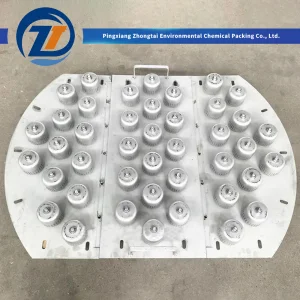
China 304 316L Stainless Steel Metal Bubble Cap Tray for High Turndown Distillation, Absorption & Stripping Columns Manufacturers, Supplier
View Specifications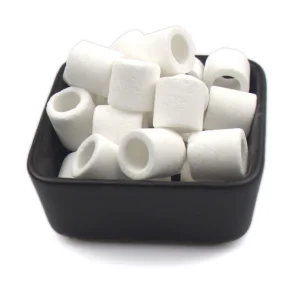
China Aquarium Ceramic Filter Media Ceramic Glass Ring Factory, Quotes
View Specifications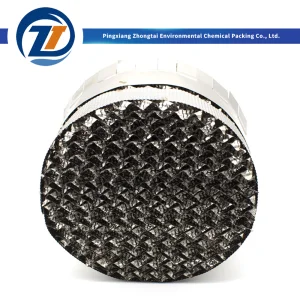
China 304 316L Stainless Steel Metal Structured Packing Corrugated Sheet for Distillation, Absorption & Scrubbing Towers Manufacturer, Factories
View Specifications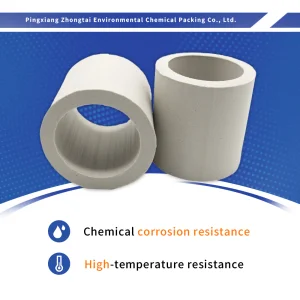
Wholesale Ceramic Raschig Ring – Random Tower Packing for Absorption, Distillation & Industrial Processing Towers Manufacturer, Suppliers
View Specifications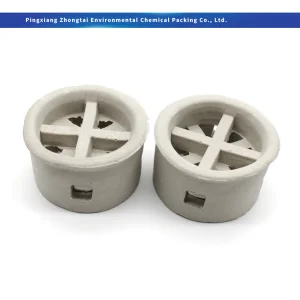
Wholesale Acid & Heat Resistant Ceramic Cascade Ring (Cascade Mini Ring) Random Tower Packing for Chemical Absorption & Scrubbing Suppliers, Pricelist
View Specifications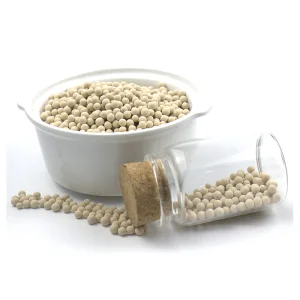
China High Quality Adsorbent Zeolite 3A Molecular Sieve Factories, Pricelist
View Specifications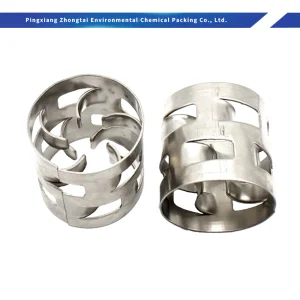
Wholesale SS304/316 Metal Pall Ring | 16-76mm Tower Packing for Chemical Scrubbers Manufacturer, Suppliers
View Specifications