Factory-direct engineering solutions manufactured under ISO 9001:2015 strict quality control protocols.
Architecting low-pressure-drop, high-throughput fractionating systems for energy-intensive chemical processing sectors.
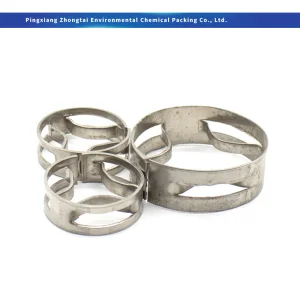
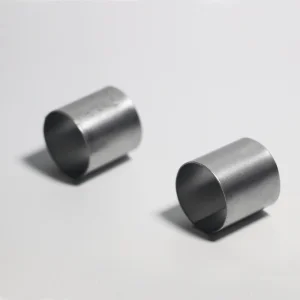
In modern petrochemical processing, oil refining, gas sweetening, and environmental scrubbing, mass transfer columns represent the critical technological backbone determining operational efficiency and energy consumption. Intalox Metal Saddle Packing (IMTP)—also widely classified as metal saddle-ring packing—was developed to solve the fluid-dynamic limitations of legacy random packings such as standard Raschig rings and early-generation Pall rings. By combining an open saddle profile with internal liquid-directing ribs, Intalox metal packing optimizes the contact interface between vapor and liquid phases while maintaining an exceptionally low resistance to gas flow.
Information Gain Engineering Insight: Hydraulic capacity tests demonstrate that Intalox metal tower packing provides up to a 40% reduction in pressure drop ($\Delta P$) and a 35% increase in operational capacity over conventional Pall rings of equivalent nominal size. This translates directly to millions of kilowatt-hours saved in compressor and blower energy across continuous distillation cycles.
China has established itself as the global manufacturing epicenter for chemical tower packing, leveraging integrated metallurgical supply chains, precision stamping automation, and advanced tooling technology. Specialized industrial clusters in Jiangxi Province (specifically Pingxiang) supply high-spec random and structured tower packing to global engineering procurement and construction (EPC) conglomerates, multinational refiners, and air pollution control equipment builders.
The arc-shaped saddle geometry prevents nesting and maintains an ultra-high void fraction ($>96\%$), reducing vapor velocity bottlenecks and liquid holdup.
Internal bent tabs and perforated fingers promote continuous lateral liquid spreading, creating dynamic micro-droplets and film renewal across the entire packed height.
Formed-in ribs and rolled edges impart superior mechanical strength, allowing for deep packed beds without physical deformation or crushed packing zones.
Precise thermodynamic properties, packing factor data, and alloy matrix selection for critical column operations.
Selecting the appropriate size and material alloy for Intalox metal tower packing requires evaluating specific mass transfer parameters including Height Equivalent to a Theoretical Plate (HETP), Specific Surface Area ($a$), Void Fraction ($\varepsilon$), and the Packing Factor ($F_p = a/\varepsilon^3$). Lower packing factors correspond directly to higher gas capacity and lower pressure drops.
| Nominal Size | Specific Surface Area ($m^2/m^3$) | Void Space ($\%$) | Bulk Density ($kg/m^3$ - SS304) | Packing Factor $F_p$ ($1/m$) | Typical HETP Range (mm) |
|---|---|---|---|---|---|
| IMTP #15 (15mm) | 295 | 96.2% | 310 | 170 | 300 - 400 |
| IMTP #25 (25mm) | 225 | 96.8% | 250 | 135 | 400 - 500 |
| IMTP #40 (40mm) | 150 | 97.3% | 210 | 85 | 500 - 650 |
| IMTP #50 (50mm) | 110 | 97.8% | 175 | 60 | 650 - 800 |
| IMTP #70 (70mm) | 75 | 98.2% | 140 | 38 | 850 - 1100 |
China's leading tower packing manufacturers supply Intalox saddles in a vast array of metallic alloys, tailored specifically to the chemical corrosivity and thermal stress of the process medium:
Understanding cost structures, volume tiers, wall thickness variables, and factory procurement metrics from Chinese suppliers.
Commercial pricing for Intalox Metal Tower Packing is generally calculated per cubic meter ($m^3$) or per metric ton ($MT$). Procurement teams must recognize that quotes are heavily dictated by steel coil raw material indexes (LME/ShFE alloy prices), sheet metal wall thickness (typically ranging from 0.3mm to 1.2mm), order volumes, and custom surface texturing requirements (such as micro-grooving for enhanced liquid film retention).
Price varies based on nominal diameter (#15 to #70) and sheet thickness (0.4mm – 0.8mm). Ideal for general chemical distillation units.
Includes nickel and molybdenum market premiums. Specified for refinery sour water strippers and corrosive acid gas scrubbers.
Custom fabricated upon contract. Requires specialized stamping dies and strict inert gas atmosphere annealing processes.
Field-proven performance across refining, petrochemical, gas processing, and environmental protection plants.
Replacing traditional tray decks or old Raschig rings with IMTP #40 / #50 in SS316L in atmospheric and vacuum tower wash zones prevents coking, lowers column pressure drop, and significantly increases heavy gas oil (HGO) yield without requiring shell replacement.
In high-pressure $CO_2$ and $H_2S$ absorption columns, Intalox metal saddle packing provides exceptional liquid-gas contact efficiency with aqueous MDEA/DEA solvents, minimizing solvent foaming and foaming-induced liquid carryover.
In high-purity demethanizers, deethanizers, and ethylbenzene/styrene fractionation units, low-HETP Intalox saddle packings enable operation at high reflux ratios while maintaining strict vapor velocity bounds.
As part of global net-zero decarbonization efforts, large-scale direct air capture (DAC) and flue-gas decarbonization scrubbers deploy custom titanium or 316L Intalox packings to maximize mass transfer per unit of fan energy.
Rigorous metallurgical validation, dimensional verification, and localized technical delivery networks.
When procuring tower packing from Chinese manufacturers, global engineering firms demand absolute reliability, complete material traceability, and adherence to international design codes. Premier manufacturers in China enforce comprehensive Quality Assurance (QA) and Quality Control (QC) frameworks throughout the production lifecycle:
Every raw steel coil undergoes Positive Material Identification (PMI) via X-ray Fluorescence (XRF) spectroscopy. Mill Test Reports (MTR) compliant with EN 10204 3.1 / 3.2 are provided with each heat batch.
Random samples are subjected to compressive load tests to measure deformation resistance under simulated static bed weights, ensuring zero structural collapsing in deep columns.
Automated optical sorting system monitors nominal geometry, edge burrs, and punch rib angles to guarantee consistent hydraulic performance and zero channel nesting.
Leading Chinese chemical packing manufacturers provide end-to-end support for international projects:
Computational Fluid Dynamics (CFD) modeling, hybrid packing geometries, and next-generation decarbonization media.
The field of tower packing manufacturing is evolving rapidly, driven by advanced modeling tools and stringent environmental regulations. China's top manufacturers are partnering with chemical engineering institutions to spearhead next-generation innovations:
Utilizing 3D Computational Fluid Dynamics (CFD) to model two-phase gas-liquid boundary layers, engineers are refining rib placement angles to eliminate dead zones and maximize active interfacial surface area.
Applying nanoscale surface modification and laser micro-engraving to stainless steel sheets dramatically increases liquid spreading velocities, enabling wet wall film formation even under ultra-low liquid flux conditions.
Technical guidance and commercial answers for process engineers and procurement officers.
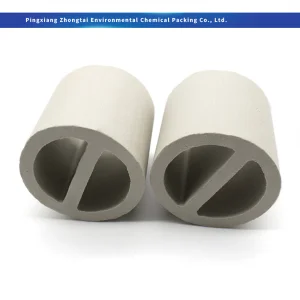
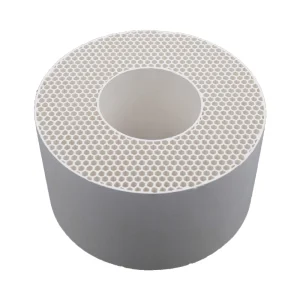
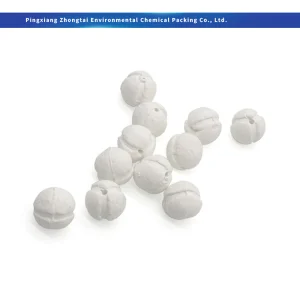
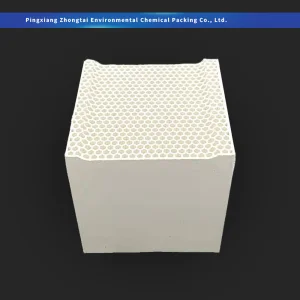
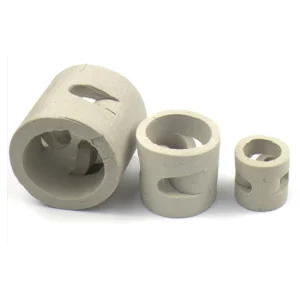
Comprehensive portfolio of random packing media for high-temperature, severe acid, and thermal storage duties.