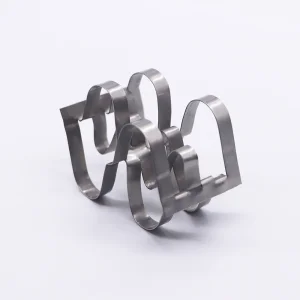
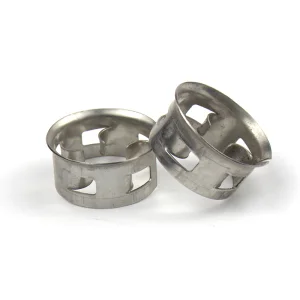
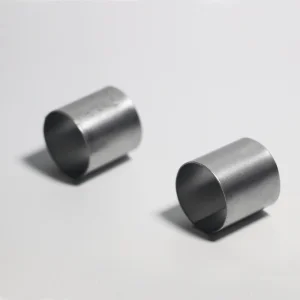
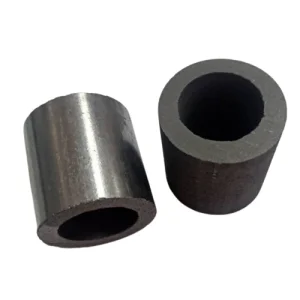
Precision-molded saddles, rings, honeycomb monoliths, and bio-filtration carriers optimized for mass transfer efficiency, low pressure drop, and chemical resistance.
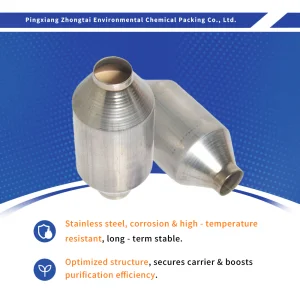
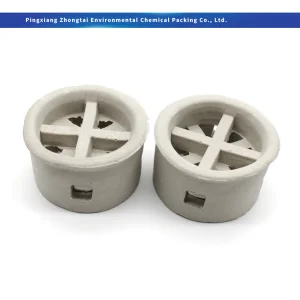
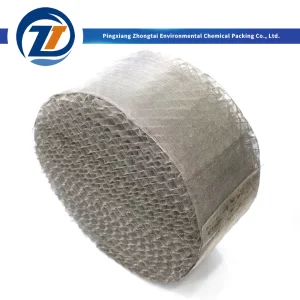
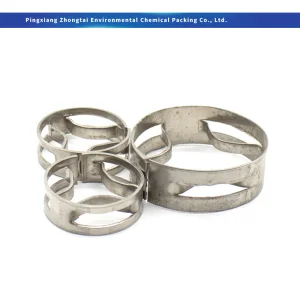
Founded in 2003, Pingxiang Zhongtai Environmental Chemical Packing Co., Ltd. leverages the world’s most concentrated industrial ceramics cluster to supply precision mass transfer media worldwide.
In modern chemical process industries (CPI), the selection of tower internals dictates overall separation efficiency, energy footprint, and system lifecycle. As the definitive capital of chemical ceramics, Pingxiang, Jiangxi Province, produces over 70% of the world's industrial acid-resistant packing materials. Within this localized ecosystem, Pingxiang Zhongtai Environmental Chemical Packing Co., Ltd. (founded in 2003) has evolved from an engineering workshop into an automated manufacturer, delivering certified mass transfer solutions to petrochemical refineries, fertilizer complexes, metallurgical acid plants, and environmental engineering firms across 60+ countries.
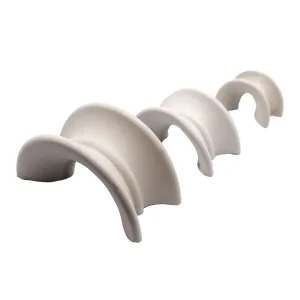
Our manufacturing base—located in the West Section Hi-Tech Industry Park of Pingxiang City—combines centuries of native geological kaolin advantages with modern Industry 4.0 thermal processing. Unlike commercial trading houses that outsource production across fragmented workshops, Zhongtai owns fully integrated continuous roller hearth and tunnel kilns, precision isostatic press molding lines, and computer-controlled formulation silos. This end-to-end integration ensures that every batch of chemical porcelain saddles, cascade mini rings, and inert catalyst support balls strictly complies with ASTM C515 (Standard Specification for Chemical-Resistant Ceramic Tower Packings) and HG/T 21556.3 industrial benchmarks.
How automated sintering, intelligent material feeding, and zero-defect quality control drive down unit cost while eliminating downtime risks for global mega-projects.
Equipped with computerized 48-point thermal monitoring, our 110-meter natural gas tunnel kilns operate continuously at 1280°C–1350°C. This steady thermal cycle eliminates temperature stratification, vitrifying silica and alumina into an impervious, glass-bonded mullite matrix with zero micro-fissuring.
Precision multi-cavity vacuum extrusion dies yield saddles, raschig rings, and cascade mini rings with uniform wall thickness (±0.2mm). Uniform structural density guarantees predictable bed packing densities, eliminating localized vapor bypass and irregular hydraulic channeling.
Every firing lot undergoes rigorous destructive crush testing, sulfuric acid solubility tests (ASTM C279), and water absorption assays (<0.5%). Complete certified metallurgical and chemical test reports accompany every single bill of lading for transparent plant compliance.
Balancing mass transfer coefficients (KLa), packing factor (Fp), and operational expenditure across aggressive chemical distillation and absorption systems.
Selecting mass transfer packing requires calculating operational hydraulic boundaries: the loading point, flood point velocity, and dry vs. wet pressure drop ($\Delta P$). While metal alloys (SS316L, Hastelloy, Titanium) excel in high-impact mechanical stress, their cost escalates dramatically under halide attack, wet chlorine, and concentrated inorganic acids. Fluoropolymer packings (PTFE, PVDF) resist chemical corrosion but deform under temperatures exceeding 140°C.
Chemical porcelain and technical ceramics serve as the benchmark choice for extreme service. Vitrified ceramic offers virtually zero chemical leaching, thermal stability up to 1000°C, and exceptional compressive rigidity under deep bed depths (>12 meters). The table below outlines our standardized ceramic packing specifications for mass transfer modeling:
| Packing Type | Nominal Size (mm) | Specific Surface Area (m²/m³) | Void Fraction (ε %) | Bulk Density (kg/m³) | Dry Packing Factor (m⁻¹) | Primary Industrial Use-Case |
|---|---|---|---|---|---|---|
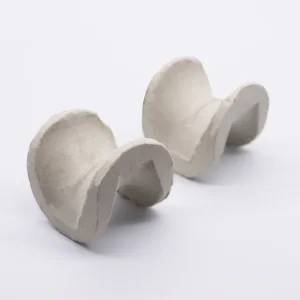
| Ceramic Intalox Saddle | 25 (1") | 255 | 73 | 650 | 210 | SO₂/SO₃ Absorption Towers, Drying Towers |
| Ceramic Intalox Saddle | 38 (1.5") | 165 | 76 | 580 | 130 | Chlor-Alkali Chlorine Scrubbers, Acid Plants |
| Ceramic Intalox Saddle | 50 (2") | 120 | 79 | 520 | 90 | Tail Gas Deodorization, High-Capacity Stripping |
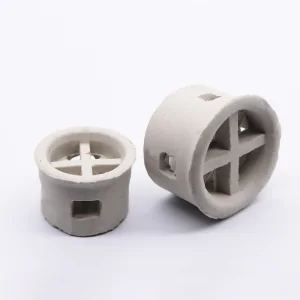
| Ceramic Cascade Mini Ring | 25 (#1) | 220 | 75 | 610 | 175 | Low ΔP Revamps, High Liquid Loading Systems |
| Ceramic Cascade Mini Ring | 38 (#2) | 150 | 78 | 540 | 110 | Regenerative Thermal Distillation, Acid Recovery |
| Ceramic Cascade Mini Ring | 50 (#3) | 110 | 81 | 480 | 75 | Petrochemical Vent Gas Quench Columns |
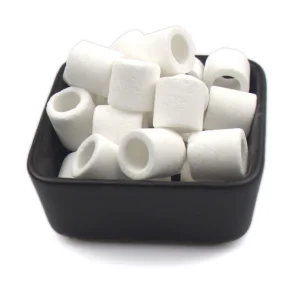
| Ceramic Raschig Ring | 25 (1") | 190 | 68 | 720 | 280 | Catalyst Support Layers, Nitric Acid Bleachers |
| Ceramic Berl Ring | 25 (1") | 240 | 70 | 680 | 240 | Fine Chemical Fractional Vacuum Distillation |
Tailored chemical packing media solving critical corrosion, thermal shock, and fouling challenges across global primary industries.
In double-absorption sulfuric acid plants (DCDA), drying and SO₃ absorption towers face extreme exotherms alongside 93–98.5% H₂SO₄ concentrations. Zhongtai's ceramic Intalox saddles and cross-partition rings provide superior resistance to sulfate stress-cracking and spalling. Their curved aerodynamic saddles continuously disrupt boundary layers, enabling near-theoretical absorption of sulfur trioxide into concentrated acid while suppressing mist formation.
Handling wet chlorine gas ($Cl_2$) at 70°C–95°C causes rapid embrittlement in stainless steels and degrades common polymers. Chemical porcelain random packings provide an impervious barrier against aggressive halogens and nascent hypochlorite ions. Combined with our acid-resistant liquid distributors, our packing maintains stable interfacial contact areas, preventing liquid channeling across tall chlorination towers.
Post-combustion CO₂ capture facilities require extensive pre-scrubbing columns to remove trace SOx, NOx, and fly ash before flue gases contact costly amine solvents (MEA, piperazine). Ceramic cascade mini rings and structured packing grids withstand aggressive condensate acids in quench columns without fouling or chemical decay, protecting amine loops from catalytic poisoning.
For volatile organic compound (VOC) abatement and industrial air purification, thermal oxidizers demand massive heat capacities. Zhongtai's cordierite and mullite honeycomb ceramic blocks feature thin-wall, high-cell-density geometries (40–60 CPSI) delivering 95%+ thermal heat recovery efficiency with exceptionally low backpressure across continuous cyclic reversals.
How next-generation material science, micro-textured surfaces, and decarbonized kilns are redefining mass transfer physics for the net-zero industrial transition.
As chemical processes intensify toward decarbonization, process equipment must operate under tighter energy margins and higher separation duties. Zhongtai’s R&D engineering center collaborates directly with national ceramic research institutes to advance three high-impact technology frontiers:
Standard vitrified ceramics exhibit liquid film contraction under low liquid irrigation rates ($L_w < 5\text{ m}^3/\text{m}^2\cdot\text{h}$). Our ongoing research applies controlled micro-porous surface etching to retain an active liquid monolayer without sacrificing bulk mechanical strength, boosting effective interfacial area by up to 18%.
Moving beyond standard random dumping, Zhongtai is expanding production lines for monolithic corrugated ceramic structured sheets. These modular assemblies achieve minimum HETP (Height Equivalent to a Theoretical Plate) under high-vacuum distillation of organic peroxides, chloroacetic acid, and aromatic halides.
In line with global corporate Scope 1 & Scope 2 decarbonization targets, Zhongtai is transitioning auxiliary kilns to green-electricity and oxy-fuel hybrid systems. This transition reduces embodied carbon per cubic meter of finished packing by an estimated 28% while improving localized kiln temperature consistency.
Eliminating procurement risk for global EPCs, turnaround contractors, and refinery procurement teams through stringent international qualification.
All ceramic tower packings manufactured by Zhongtai are certified compliant with ASTM C515 (Class 1, Class 2, and Class 3 chemical porcelain and stoneware). Our chemical porcelain grades exhibit acid solubility limits well below 0.25% when tested with boiling concentrated sulfuric acid, far surpassing industry allowances. Furthermore, all materials are completely asbestos-free, inert to volatile hydrocarbons, and comply with EU REACH requirements regarding heavy-metal and flux-agent leaching.
We operate with complete commercial and engineering transparency. Major engineering, procurement, and construction (EPC) contractors from South Korea (audited July 2018), South America (partnered 2019), Southeast Asia, and Europe routinely audit our Pingxiang manufacturing base. We maintain open-book access for independent third-party inspection agencies including SGS, BV (Bureau Veritas), and TÜV Rheinland to sample, crush-test, and verify packing dimensions prior to export crating.
Mass transfer ceramics are vulnerable to chipping and fines generation if palletized improperly. Zhongtai deploys standardized export-grade containment systems: triple-ply heavy-duty cardboard cartons, 1000kg reinforced polypropylene jumbo bags with bottom discharge spouts, or steel-strapped fumigated wooden crates (ISPM 15 certified). Every container is load-optimized with anti-impact air cushions to ensure zero breakage during intermodal transit, ocean voyages, and direct tower crane hoisting at the job site.
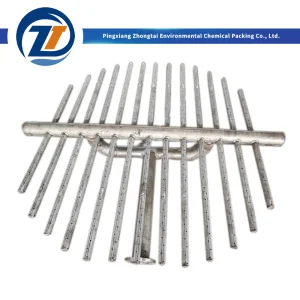
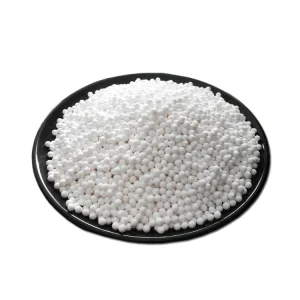
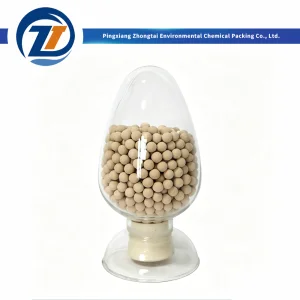
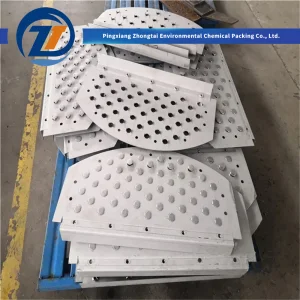
Complete process column hardware including metal structured distributors, alloy rings, carbon graphite packing, and high-performance desiccants.
Specification-level answers addressing mechanical strength, chemical compatibility, hydraulic correlations, and turnaround delivery schedules.
Connect directly with Zhongtai’s chemical ceramic engineering team. Access comprehensive product catalogs, request free physical test samples, or submit your process conditions for hydrodynamic modeling and factory-direct quotation.