
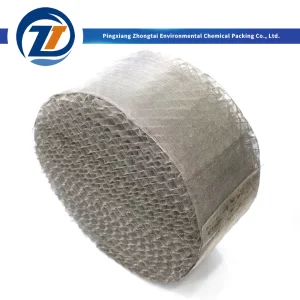
Manufactured under strict batch-level quality controls in Pingxiang, Jiangxi. Select from high-performance column packings, catalyst bed supports, and industrial adsorbents.
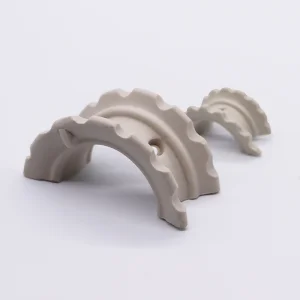
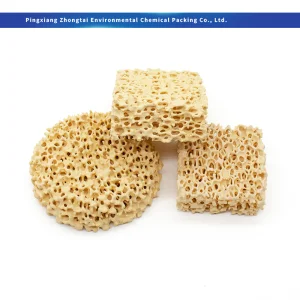
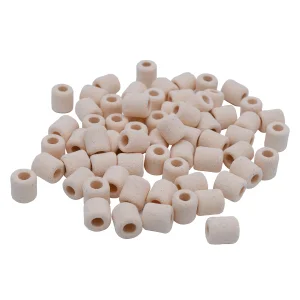
Understanding the molecular-level mass transfer dynamics behind Type 3A Zeolites is vital for process engineers seeking sub-ppm dew points without secondary olefin reactions.
Zeolite 3A is the potassium form of the Type A crystal structure (formula: 0.4K₂O · 0.6Na₂O · Al₂O₃ · 2.0SiO₂ · 4.5H₂O). By partially replacing the native sodium cations with larger potassium cations (K⁺), the critical nominal pore aperture is systematically reduced from 4Å to approximately 3Å (0.3 nm). This physical restriction is fundamental to its exclusive selective performance.
Because the kinetic diameter of polar water molecules is roughly 2.6Å, they pass effortlessly into the internal cage cavities where intense electrostatic fields hold them. In contrast, unsaturated hydrocarbons such as ethylene (3.9Å), propylene (4.5Å), and butadiene cannot enter the pore structure. This eliminates catastrophic catalytic polymerizations (green oil build-up) inside the bed.
The Mass Transfer Zone (MTZ) is governed by the intra-crystalline diffusion rate and binder tortuosity. High-performance Chinese synthetic zeolite incorporates customized attapulgite or kaolin binder systems, achieving maximum crush strength while maintaining low attrition rates (<0.1% wt) across hundreds of temperature swing adsorption (TSA) thermal regeneration cycles.
| Physical & Chemical Parameter | Bead Form (1.6 - 2.5 mm / 8×12 mesh) | Bead Form (3.0 - 5.0 mm / 4×8 mesh) | Pellet / Extrudate (1.6 mm & 3.2 mm) | Testing Protocol / Compliance |
|---|---|---|---|---|
| Nominal Pore Diameter | 3 Ångströms (0.3 nm) | 3 Ångströms (0.3 nm) | 3 Ångströms (0.3 nm) | X-ray Diffraction (XRD) |
| Bulk Density (Packed) | 0.72 – 0.78 g/mL | 0.70 – 0.76 g/mL | 0.68 – 0.74 g/mL | ASTM D4180 / ISO Standard |
| Static Water Adsorption (RH 60%, 25°C) | ≥ 21.5% wt | ≥ 21.0% wt | ≥ 20.5% wt | Static Gravimetric Desiccation |
| Point Crush Strength (Individual) | ≥ 35 N/particle | ≥ 70 N/particle | ≥ 40 N/cm (Radial) | ASTM D4179 / Automatic Tester |
| Attrition / Dusting Rate | ≤ 0.10% wt | ≤ 0.10% wt | ≤ 0.15% wt | ASTM D4058 Vibration Ball-Pan |
| Residual Moisture (As Shipped, LOI 575°C) | ≤ 1.5% wt | ≤ 1.5% wt | ≤ 1.5% wt | High-Temp Calcination Furnace |
| Typical Regeneration Temperature | 200°C – 260°C | 200°C – 260°C | 200°C – 280°C | Purge Gas Thermal Swing Adsorption |
Pingxiang, Jiangxi stands as the epicenter of industrial ceramics and mass-transfer media. Our integrated cluster infrastructure delivers competitive pricing, massive capacity, and rigorous consistency.
Our geographic location within the regional industrial mineral belt guarantees immediate, low-cost access to ultra-pure sodium aluminate, liquid sodium silicate, and high-grade potassium chloride for ion exchange. This vertical upstream integration eliminates volatility in raw material pricing.
Equipped with computerized rolling disc granulators, automated multi-zone rotary calcination kilns, and real-time screeners, our production lines sustain consistent particle sphericity, tight size distributions (e.g., 98%+ on-mesh target), and exceptional bulk density uniformity.
Direct intermodal rail and highway corridors connect our facility with Shenzhen, Ningbo, and Shanghai container ports. We offer automated vacuum-sealed hermetic steel drum packing, moisture-proof big bags with aluminum foil liners, and prompt fumigated containerization for global transit.
With multi-thousand-ton annual production runs, Pingxiang Zhongtai supports multi-bed refinery reloads and massive grass-roots petrochemical builds without manufacturing bottlenecks, maintaining dispatch timelines 30% faster than European or North American competitors.
One size does not fit all. Our laboratory customizes pore aperture, binder formulation, and particle mechanical integrity to meet specific industrial process environments.
In steam cracking units, the hydrocarbon stream contains high fractions of ethylene, propylene, and butadiene. If pores exceed 3Å, co-adsorption occurs, releasing extreme heats of adsorption and polymerizing into heavy gums that deactivate the bed. Our 3A-EP grade guarantees less than 0.1% hydrocarbon pickup, preserving tower service life beyond 4 years.
Distillation of ethanol is limited by the water-ethanol azeotrope at 95.6% purity. Our specialized 3A-ETH grade selectively captures water molecules from the vapor or liquid feed while excluding the larger ethanol molecule (4.4Å), driving output to 99.8%+ fuel-grade anhydrous alcohol without toxic entrainers like benzene or cyclohexane.
Architectural double- and triple-glazed windows require deep, continuous moisture scavenging without adsorbing air gases (argon, krypton, nitrogen). Adsorption of internal gas causes atmospheric pressure imbalances and glass deflection (deflection cracking). Our 3A-IG bead delivers ultra-low initial gas desorption and dew points below -60°C.
Compatible with hydrofluorocarbons (HFCs) like R134a, R404a, and new environmentally friendly HFO refrigerants (e.g., R1234yf). Formulated to avoid acid release from lubricant interaction while removing trace water that causes capillary tube ice-blockages and compressor corrosion.
Deep dehydration upstream of cold boxes is mandatory to forestall clathrate hydrate formation and heat exchanger freeze-ups. Molecular sieve 3A guards downstream cryogenic fractionation trains, consistently outputting less than 0.1 ppmv H₂O under high operational pressures.
In 2K polyurethane systems, trace moisture in polyols reacts with isocyanate hardeners to yield CO₂ gas bubbles, resulting in micro-foaming and loss of mechanical film integrity. Our activated 3A powder additives eliminate water before crosslinking begins.
A rigorous evaluation matrix for chief procurement officers, plant engineering directors, and logistics compliance managers looking beyond the basic price per kilogram.
Zhongtai provides comprehensive compliance packages: EU REACH SVHC non-inclusion, RoHS directive adherence, and test certifications in full agreement with ASTM standards (ASTM D4179 for crush, ASTM D3802 for ball-pan hardness, and ASTM D4180 for vibrated apparent density). Complete bilingual COA, MSDS, and non-dangerous export documentation come standard.
Low-grade sieves that generate fines create differential pressure ($\Delta P$) spikes, forcing early plant turnarounds. A Pingxiang Zhongtai 3A charge features ultra-low attrition loss (≤0.1% wt), reducing energy consumption in recirculation compressors and preventing downstream particulate fouling of dust filters, valves, and analytical instruments.
Proper bed loading is as critical as the media itself. Our engineering team assists buyers with sock loading and dense-phase loading (Snowstorm filler) procedures. Correct uniform packing density prevents channel flow, bed movement, and mechanical abrasion across cycling sequences.
As global chemical processing embraces net-zero roadmaps and energy efficiency, next-generation adsorbents are engineered for lower parasitic regeneration loads.
Traditional sieves contain up to 20% inert binder clay. Our R&D team is expanding binderless crystallization techniques, converting inert matrices into active zeolite phases. This yields a 15–20% boost in dynamic water working capacity, reducing the required vessel volume or extending the breakthrough period during each adsorption step.
Conventional TSA designs demand thermal inputs above 250°C. Refinements in our potassium cation coordination and mesopore channel distributions allow effective desiccant regeneration at 180°C–200°C. This lower thermal threshold significantly reduces fuel gas or steam utility costs in carbon-constrained refineries.
We provide chemical plant operators with kinetic breakthrough curves and multi-component equilibrium data. Integrating this thermodynamic modeling into plant SCADA systems empowers proactive scheduling of bed change-outs, avoiding unforeseen breakthroughs and maximizing turnaround efficiency.
Direct, specification-level answers to key questions asked by plant managers, process engineers, and procurement directors.
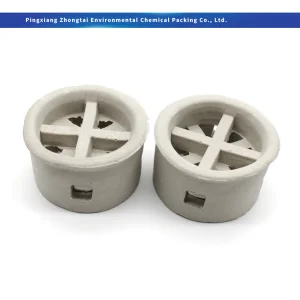
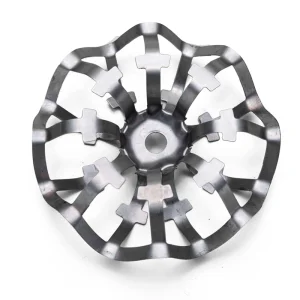
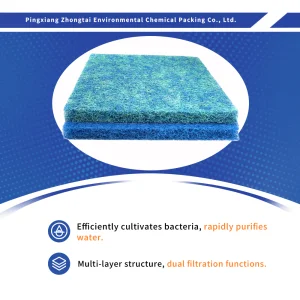
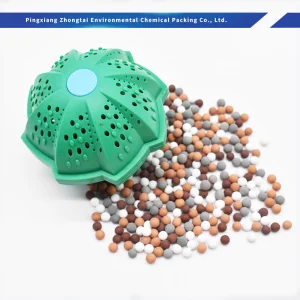
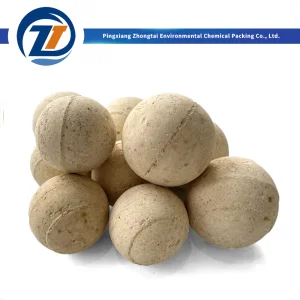
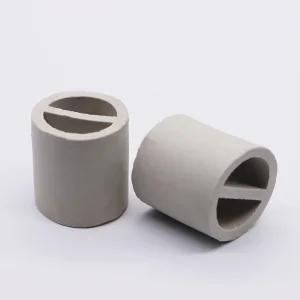
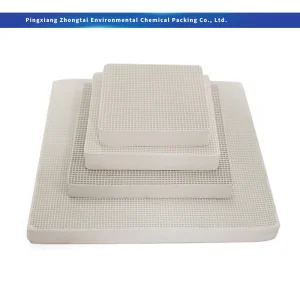
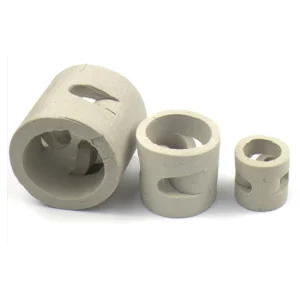
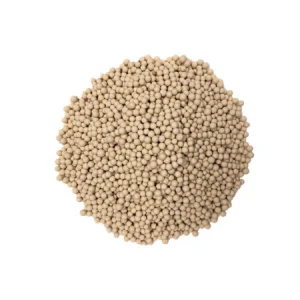
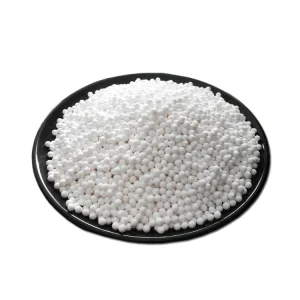
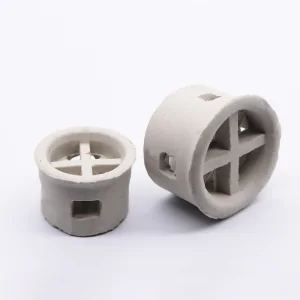
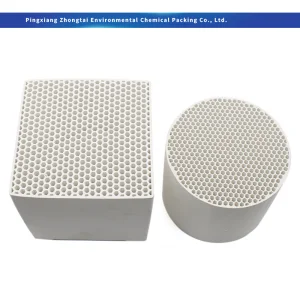
Complementary equipment and process media produced under one roof in our Pingxiang manufacturing base for chemical, environmental, and thermal plants.
Whether calculating bed volume for a grass-roots ethylene revamp, testing for trace sulfur co-adsorption, or scheduling container delivery to your terminal, our technical team provides swift, data-driven support.