Our Pingxiang manufacturing facilities supply direct-to-site mass transfer packings, catalyst bed ceramics, and specialty filtration media to EPC engineering leaders across North America, Europe, East Asia, and the Middle East.
In petrochemical fixed-bed reactors, chemical synthesis towers, and high-energy milling systems, spherical ceramic media operate as the foundational boundary between mechanical containment and reactive chemical kinetics. The 6mm ceramic ball—nominally specified across international engineering designs as 1/4 inch inert alumina sphere—represents the quintessential transition diameter. It bridges fine catalyst extrudates or molecular sieve beds (typically 1.5mm to 3.2mm in diameter) and larger structural support ceramics (13mm, 19mm, 25mm, or 50mm).
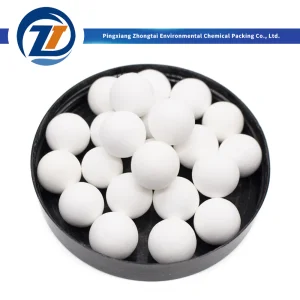
Manufactured by Pingxiang Zhongtai Environmental Chemical Packing Co., Ltd., our 6mm ceramic spheres are engineered with strict stoichiometric control over raw aluminum silicates and high-purity alpha-alumina powders. The microstructural density achieved during high-temperature tunnel kiln sintering (ranging from 1280°C up to 1750°C depending on alumina grade) eliminates internal micro-voids, providing exceptional mechanical crush strength, ultra-low water absorption (<1%), superior resistance to aggressive acid and alkali environments, and remarkable tolerance against thermal cycling shock.
Industrial applications dictate specific compositions. Zhongtai produces 6mm ceramic media in four distinct metallurgical purity tiers, tested in accordance with ASTM C279, ASTM C515, and HG/T 3683.1-2014 standards:
| Property Parameter | Standard Inert (17-23% Al₂O₃) | Medium-High Alumina (65-75% Al₂O₃) | High Alumina (90-95% Al₂O₃) | Ultra-Purity Corundum (≥99.5% Al₂O₃) |
|---|---|---|---|---|
| Al₂O₃ Content (%) | 17.0 – 23.0% | 65.0 – 75.0% | 92.0 – 95.0% | ≥ 99.5% |
| SiO₂ Content (%) | 70.0 – 76.0% | 20.0 – 28.0% | 3.5 – 5.5% | < 0.10% (Ultra-Low Silica) |
| Fe₂O₃ Content (%) | < 1.0% | < 0.6% | < 0.2% | < 0.05% (Prevent Catalyst Poisoning) |
| Bulk Density (kg/m³) | 1350 – 1420 | 1650 – 1780 | 2050 – 2200 | 2300 – 2450 |
| Individual Crush Strength (kN/bead) | ≥ 0.65 kN | ≥ 1.80 kN | ≥ 3.20 kN | ≥ 4.80 kN |
| Water Absorption Rate (%) | < 1.5% | < 0.5% | < 0.1% | < 0.05% |
| Max Operating Temperature | 1100°C | 1400°C | 1600°C | 1750°C |
| Acid Resistance (ASTM C279) | ≥ 99.2% (98% H₂SO₄) | ≥ 99.6% | ≥ 99.8% | ≥ 99.9% |
| Primary Industrial Function | General petrochemical bed support | Moderate pressure hydrotreating | High wear grinding & slurry valves | Ammonia synthesis, green H₂ reforming |
Pingxiang City, Jiangxi Province, has served as the historic and global capital of chemical packing and industrial ceramics for over seven decades. The Pingxiang manufacturing ecosystem combines indigenous mineral wealth, automated continuous firing technology, and localized supply integration that cannot be replicated elsewhere in the world.
Direct geographic proximity to premier kaolinite, refractory clays, and microcrystalline bauxite deposits across Jiangxi and neighboring provinces yields superior mineral plasticity, eliminating internal stresses and micro-fractures during granulating and forming.
Our rolling disc pelletizers and isostatic extrusion systems maintain strict sphericity tolerances of ±0.3mm across standard 6mm batches. Fully enclosed clean forming prevents iron contamination (<0.05% Fe₂O₃), safeguarding catalyst life.
Our computerized natural gas tunnel kilns exceed 120 meters in length, maintaining continuous soaking zones that ensure 100% phase transition to corundum (α-Al₂O₃) and mullite with zero thermal gradients between internal core and shell.
Modern refinery revamps, carbon abatement units, and electric vehicle battery supply chains have completely transformed the performance requirements of fine ceramic spheres over the past five years.
Refiners are trending toward smaller extrudate and trilobe catalyst sizes (1.2mm–1.8mm) to maximize outer surface area. Consequently, capping layers have shifted from 13mm to graduated 6mm and 3mm configurations to permanently eradicate interstitial fluidization.
In high-temperature methane reforming (SMR) and water-gas shift reactors, free SiO₂ volatilizes into steam, precipitating downstream onto waste heat boilers and poisoning catalyst matrices. Demand for 99.5% α-alumina 6mm balls with <0.08% SiO₂ has grown by 34% annually.
High-wear 92% and 95% Al₂O₃ 6mm ceramic spheres are increasingly specified in large horizontal bead mills as pre-grinding media for lithium iron phosphate (LFP) and cathode active slurry synthesis, where zero iron contamination is non-negotiable.
From high-pressure hydrocrackers to abrasive slurry ball valves, 6mm ceramic balls perform vital mechanical, thermal, and chemical isolation tasks throughout global continuous processing infrastructure.
In high-pressure hydroprocessing reactors (operating at 12–18 MPa and 380–430°C), gas-liquid feedstock enters through distributor trays with high kinetic turbulence. A top layer of 6mm inert ceramic balls acts as a defensive damping bed, diffusing fluid impact momentum, capturing incoming iron scale and particulates, and ensuring unyielding retention of the high-value catalyst extrudates beneath.
Inside Claus reaction furnaces and thermal converter beds handling aggressive H₂S, SO₂, and elemental sulfur vapor, ceramic support spheres must withstand severe acid leaching. Zhongtai’s 6mm porcelain and 92% alumina balls maintain >99.5% acid resistance (tested under hot 70% sulfuric acid reflux), preventing bed consolidation, channeling, or sulfur plugging.
Precision-ground 95% and 99% Al₂O₃ 6mm ceramic spheres serve as non-return check valves in chemical metering pumps, seawater reverse osmosis units, and abrasive mining slurry circuits. With Mohs hardness of 9.0 and mirror surface sphericity (Ra < 0.2 µm), they outlast tungsten carbide and SS316L ball checks by 5 to 8 times in corrosive wear service.
In wet and dry continuous industrial ball mills for electronic substrates, dental zirconia, titanium dioxide, and high-grade ceramic glaze, 6mm 92% Al₂O₃ grinding spheres provide the optimal mass-to-surface ratio for rapid micronization without product contamination or color degradation.
In petrochemical reactor engineering, packing bed failure rarely occurs from chemical decomposition alone; it stems from mechanical fluid dynamics failures. The Ergun Equation governs pressure drop per unit bed height (ΔP/L):
Where ε is bed voidage fraction, Dp is sphere diameter (0.006 m), Φ is sphericity factor, U is superficial gas velocity, and μ is fluid viscosity. Deviations in particle diameter or poor sphericity (Φ < 0.95) compress voidage ε dramatically. Because ε is cubed in the denominator, a mere 5% reduction in packed voidage increases reactor pressure drop by up to 26%.
The Zhongtai Sphericity & Size Distribution Advantage: Zhongtai’s proprietary vibratory grading screens guarantee that 98.5% of all 6mm balls fall strictly between 5.7mm and 6.3mm. This consistent uniform packing maintains an engineered void fraction between 38% and 40%, preventing premature compressor throttling, lowering electrical kilowatt loads, and preventing fluidization-induced attrition of fragile catalyst pellets.
International engineering contractors and chemical refinery turnaround managers demand absolute traceability, verifiable mill test certificates (MTC), and tamper-evident moisture-barrier packaging.
Every production heat undergoes automated optical diameter verification, X-Ray Fluorescence (XRF) spectrometry for oxide verification, and hydraulic press crushing of 30 random sample spheres per lot in compliance with ASTM C773 testing standards.
Shipped in 25kg UV-stabilized moisture-barrier woven polypropylene bags, packed inside heavy-duty 1000kg or 1200kg UN-rated FIBC super sacks, secured onto ISPM-15 heat-treated fumigated wooden pallets with multi-layer waterproof stretch hood wrapping.
With an average daily production output exceeding 45 metric tons across our Pingxiang kilns, standard 6mm ceramic balls are continuously stocked for immediate container stuffing and intermodal transit to Shanghai, Ningbo, or Shenzhen ports within 48 hours.
Get exact, technical answers to common questions regarding alumina grading, catalyst migration prevention, and ordering protocols.
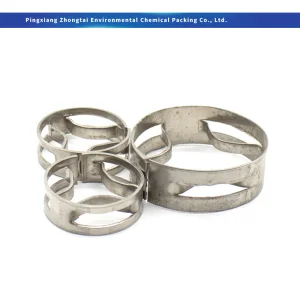
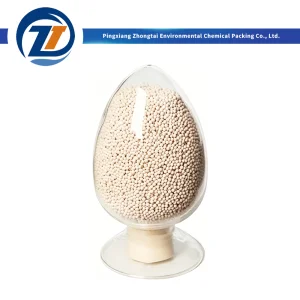
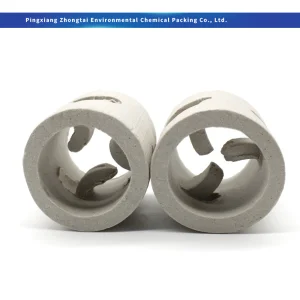
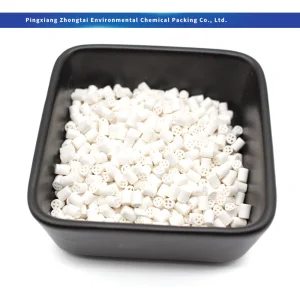
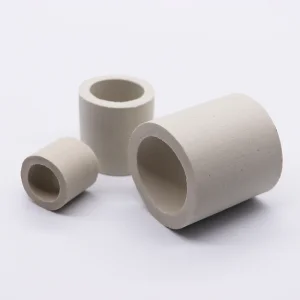
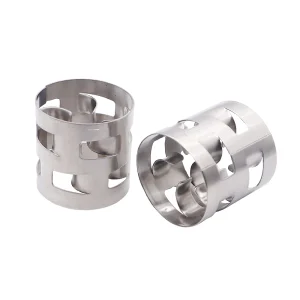
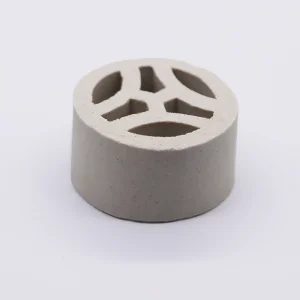
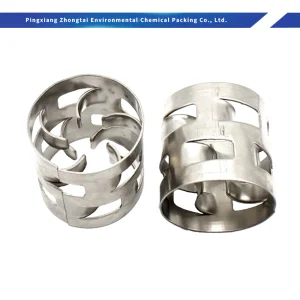
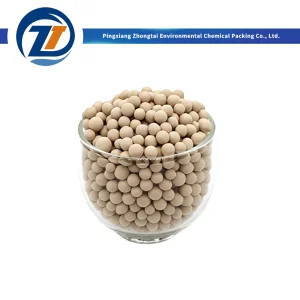
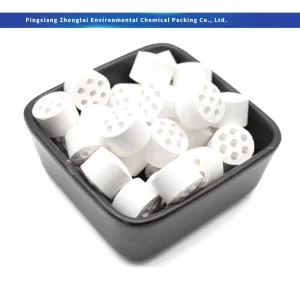
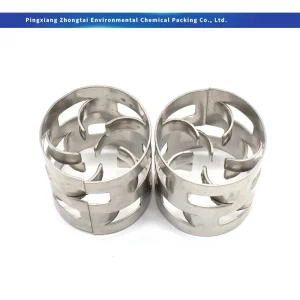
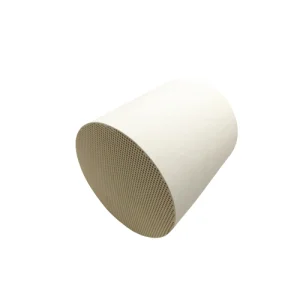
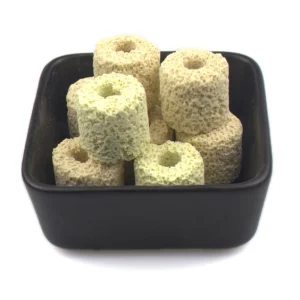
Complementing our 6mm ceramic ball production lines, Zhongtai manufactures an extensive portfolio of random packing rings, environmental ceramic monoliths, and specialized molecular sieves.
Speak directly with a Zhongtai chemical ceramic engineer. We calculate catalyst bed void distributions, confirm alumina purity suitability, and provide certified laboratory samples before production contracts are signed.
