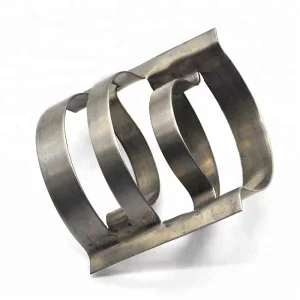
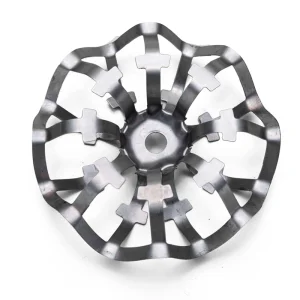
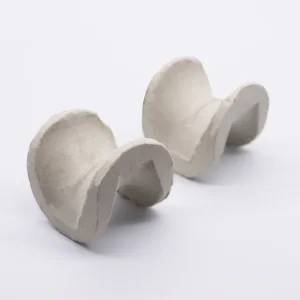
Factory-direct supply of engineered mass transfer, filtration, and dehydration products manufactured under ISO 9001 quality controls in Pingxiang, China.
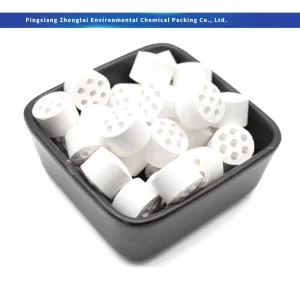
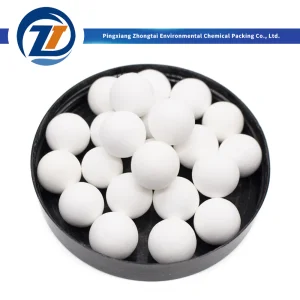
Understanding the structural chemistry of Sodium Type A Zeolite ($Na_{12}[(AlO_2)_{12}(SiO_2)_{12}]\cdot xH_2O$) for high-precision gas and liquid drying.
Synthetic 4A Molecular Sieve is an alkali metal aluminosilicate synthesized via hydrothermal crystallization. The structural framework consists of a three-dimensional network of $SiO_4$ and $AlO_4$ tetrahedra linked by shared oxygen atoms. This arrangement creates a perfectly uniform pore network centered on an 8-membered ring aperture with an effective critical diameter of 4 Ångströms (0.4 nm).
Sodium cations ($Na^+$) balancing the negative framework charge reside inside the pore openings, partially obstructing the channel entrance. This micro-pore selectivity permits the kinetic adsorption of molecules with kinetic diameters $< 4\text{ Å}$ (such as $H_2O$, $NH_3$, $H_2S$, $CO_2$, and $SO_2$) while strictly excluding larger molecules like propane, butane, and branched hydrocarbons.
The high polarity of the 4A zeolite internal cage generates an intense electrostatic field. Water molecules, possessing a strong electric dipole moment and a small kinetic diameter ($2.65\text{ Å}$), experience powerful preferential adsorption driven by ion-dipole interaction energy ($>75\text{ kJ/mol}$).
Unlike non-selective silica gels or activated alumina, 4A molecular sieve desiccants maintain extraordinary equilibrium water adsorption capacity even at extremely low relative humidities ($<10\%\text{ RH}$) and elevated temperatures (up to $75^\circ\text{C}$). This enables industrial dehydration towers to reliably achieve ultra-low gas dew points down to −70°C to −100°C (moisture content $<0.1\text{ ppm}_v$).
Why leading global EPC contractors, air separation OEMs, and chemical processing multinationals aggregate procurement in China's industrial chemical packing clusters.
Chinese 4A molecular sieve manufacturing centers in Pingxiang (Jiangxi Province) and surrounding industrial corridors benefit from immediate regional access to high-purity kaolin clay, synthetic liquid sodium silicate, and premium aluminum hydroxide. Factory-adjacent mineral synthesis eliminates raw material transport premiums, ensuring consistent batch chemical purity ($SiO_2/Al_2O_3$ molar ratio precisely controlled at $2.0 \pm 0.05$).
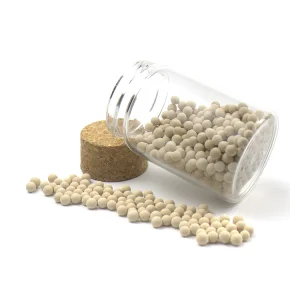
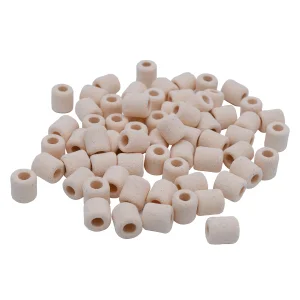
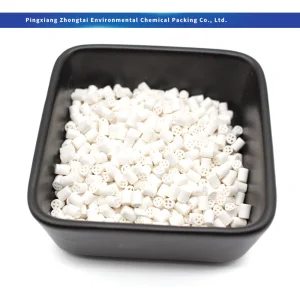
Leading Chinese factories utilize state-of-the-art continuous oil-drop bead formation and high-shear automated extrusion technologies. By adding eco-friendly clay binders (attapulgite or kaolin clay systems at $\le 15-20\%$) and optimizing sphere roundness ($>98\%$), Chinese suppliers deliver molecular sieve beads with exceptional pack density uniformity and minimal interstitial void variances in dynamic beds.
Modern Chinese manufacturing facilities have migrated from traditional batch furnaces to computer-controlled natural gas tunnel kilns. Multi-stage thermal activation at $550^\circ\text{C}-600^\circ\text{C}$ guarantees deep structural dehydroxylation without thermal framework collapse, providing robust initial adsorption capacity and high hydrothermal durability over thousands of thermal regeneration cycles.
Engineering benchmarks compliant with International ASTM and Chinese National Standards (HG/T 2524-2010).
| Physical & Chemical Parameter | Spherical Bead (1.6 - 2.5 mm) | Spherical Bead (3.0 - 5.0 mm) | Extruded Pellet (1.6 mm / 1/16") | Extruded Pellet (3.2 mm / 1/8") |
|---|---|---|---|---|
| Nominal Pore Diameter | 4 Ångströms (0.4 nm) | 4 Ångströms (0.4 nm) | 4 Ångströms (0.4 nm) | 4 Ångströms (0.4 nm) |
| Bulk Density (g/mL) | 0.68 – 0.74 | 0.66 – 0.72 | 0.64 – 0.70 | 0.62 – 0.68 |
| Static Water Adsorption (25°C, 60% RH) | ≥ 21.5 wt% | ≥ 21.5 wt% | ≥ 20.5 wt% | ≥ 20.5 wt% |
| Static Water Adsorption (25°C, 10% RH) | ≥ 15.0 wt% | ≥ 15.0 wt% | ≥ 14.0 wt% | ≥ 14.0 wt% |
| Average Crush Strength (N/piece) | ≥ 30 N | ≥ 45 N | ≥ 25 N | ≥ 35 N |
| Attrition Rate (% wt loss) | ≤ 0.05% | ≤ 0.05% | ≤ 0.10% | ≤ 0.10% |
| Package Moisture Content (as packed) | ≤ 1.0 wt% | ≤ 1.0 wt% | ≤ 1.0 wt% | ≤ 1.0 wt% |
| Achievable Effluent Dew Point | −70°C to −100°C | −70°C to −100°C | −70°C to −100°C | −70°C to −100°C |
Operational principles for dynamic Temperature Swing Adsorption (TSA) and Pressure Swing Adsorption (PSA) systems.
In fixed-bed adsorption columns, water removal takes place inside a defined boundary layer known as the Mass Transfer Zone (MTZ). The length of the MTZ depends on gas linear velocity, bed temperature, and intragranular diffusion rate inside the 4A zeolite pores.
Desorption of accumulated moisture requires supplying thermal energy to break hydrogen bonds and dipole interactions within the zeolite cavities.
Deploying 4A molecular sieve desiccant across critical manufacturing, environmental, and energy sectors.
Prior to cryogenic liquefaction of air into pure oxygen, nitrogen, and argon, molecular sieve 4A beds remove trace water vapor ($H_2O$) and carbon dioxide ($CO_2$). Preventing moisture icing inside sub-zero heat exchangers is vital for continuous operational safety.
Specialized low-dusting 4A molecular sieve matrix desiccant is incorporated into aluminum spacer bars inside double/triple pane windows. It selectively absorbs trapped moisture during assembly without co-adsorbing nitrogen or argon, preventing internal condensation and pane distortion.
Used in closed-loop automotive air conditioning and commercial refrigeration circuits (compatible with R-134a, R-1234yf, and fluorinated hydrocarbons) to trap trace moisture, eliminating acid formation and expansion valve icing.
Porous 4A powder (activated zeolite powder) is blended into solvent-free polyurethane coatings, adhesives, sealants, and elastomers (CASE) as a moisture scavenger to prevent $CO_2$ gassing, bubble formation, and structural voiding during curing.
Dehydrating sweet natural gas streams, light liquid hydrocarbons, and LPG fuels to meet strict pipeline transport specifications and prevent gas hydrate formation at high operating pressures.
Desiccant sachets and bags loaded with high-crush 4A spheres protect sensitive electronic assemblies, military equipment, pharmaceutical packaging, and optical instruments against atmospheric moisture ingress.
Emerging innovations shaping the next generation of synthetic zeolite adsorbents in China.
Conventional molecular sieves contain 15–20% inert clay binder, which reduces absolute adsorption capacity per unit volume. Next-generation Chinese production lines are scaling binder-free 4A zeolite synthesis via hydrothermal conversion of the clay matrix itself into active zeolite crystal phase. This increases dynamic water capacity by 15% to 20%, allowing EPC engineers to shrink vessel dimensions.
In response to global Net-Zero initiatives, Chinese manufacturers are developing modified framework 4A adsorbents with tailored silanol surface densities. These specialized desiccants lower the activation energy required for water desorption, enabling effective TSA bed regeneration at 150°C to 180°C, reducing refinery steam consumption significantly.
Essential verification protocols for international purchasing managers and process engineers sourcing from Chinese factories.
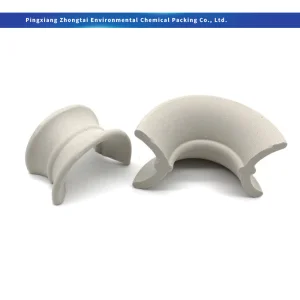
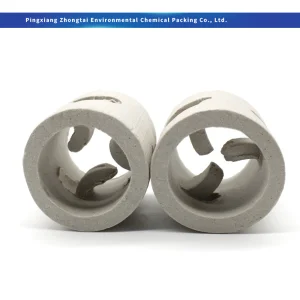
Explore our full line of ceramic balls, random tower packing, structured packing, and specialized molecular sieves.
Expert answers to common engineering questions regarding selection, operation, and factory procurement of 4A molecular sieves.
The core distinction lies in pore window size and cation exchange:
Particle size selection depends on bed fluidization constraints, allowable pressure drop ($\Delta P$), and vessel sizing:
For complete moisture removal in dynamic TSA beds, bed temperature during the heating cycle should reach 200°C to 250°C using a dry purge gas sweep. Ensure that the gas flow direction during regeneration is counter-current to the adsorption cycle to push the moisture front out of the vessel inlet. Temperature must not exceed $450^\circ\text{C}$ to prevent thermal degradation of the zeolite crystal lattice.
Molecular Sieve 4A is an alkaline aluminosilicate structure sensitive to strong mineral acids ($pH < 5$). Acidic environments lead to framework dealumination, causing rapid loss of crystalline structure and crush strength. For acidic streams containing significant $HCl$, $H_2SO_4$, or strong organic acids, acid-resistant zeolites or specialty silica gel adsorbents must be specified instead.
China factory quotes are highly competitive due to direct access to raw materials (kaolin and sodium silicate) and large-scale continuous production lines. Primary price drivers include: