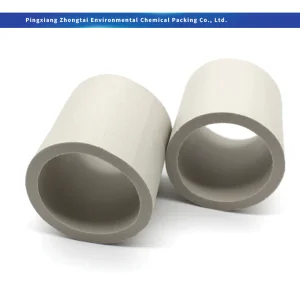
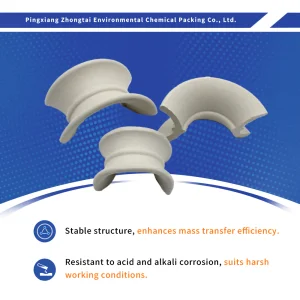
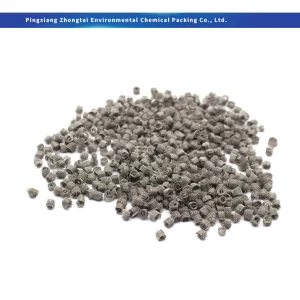
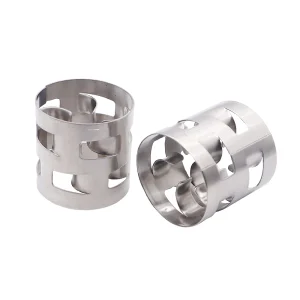
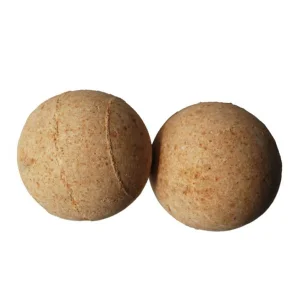
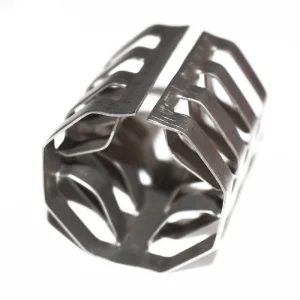
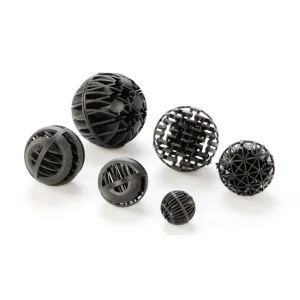
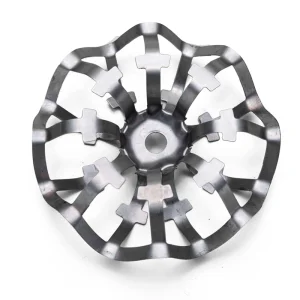
Featured mass transfer equipment, molecular sieve catalysts, and tower packings engineered by Pingxiang Zhongtai for global processing plants.
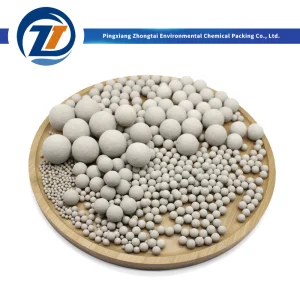
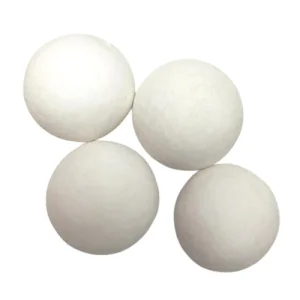
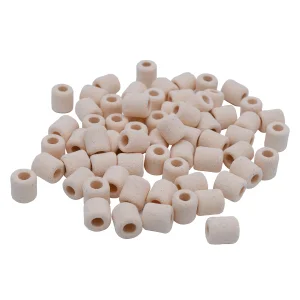
In modern petrochemical processing, biofuel refining, and natural gas treatment, Type 3A Molecular Sieve (Zeolite 3A) stands as the gold standard for selective water removal. Featuring an effective pore aperture of approximately 3 Ångströms (0.3 nm), this alkali metal aluminosilicate exclusion adsorbent selectively adsorbs water molecules ($H_2O$, kinetic diameter ~2.6 Å) while completely excluding larger hydrocarbon species such as ethylene ($C_2H_4$, ~3.9 Å), propylene ($C_3H_6$), and ethanol ($C_2H_5OH$). This strict size-exclusion behavior prevents co-adsorption, thermal polymerization, and green-oil formation within reactor beds.
However, industrial desiccant beds represent significant operational capital. As global energy transitions accelerate, process plants encounter mounting economic pressure to balance fresh adsorbent procurement (CAPEX) against regenerative cycle optimization (OPEX). Understanding the accurate China 3A Molecular Sieve Regeneration Pricelist & Quotes requires a deep technical grasp of thermal desorption kinetics, bed aging mechanisms, energy consumption per metric ton, and total lifecycle management.
Regeneration of Type 3A molecular sieves relies primarily on Temperature Swing Adsorption (TSA), occasionally augmented by Pressure Swing Adsorption (PSA) or dry purge gas displacement. The fundamental goal of thermal reactivation is to supply sufficient latent heat to break the strong polar electrostatic bonds between adsorbed $H_2O$ molecules and the intra-crystalline $K^+ / Na^+$ cations within the LTA framework (Type A zeolites).
| Regeneration Parameter | Standard Operational Range | Impact on Adsorbent Lifespan & Cost |
|---|---|---|
| Peak Bed Heating Temp | 200°C – 260°C (Optimized) / Max 315°C | Excessive heat (>350°C) causes irreversible lattice crystal degradation & capacity loss. |
| Purge Gas Dewpoint | < -40°C to -70°C | Wetter purge gas leaves residual moisture inside pores, driving up OPEX per cycle. |
| Gas Flow Direction | Strictly Counter-Current | Prevents water condensation bands from cooking and hydrothermally damaging dry zeolite zones. |
| Heating Ramp Rate | 1.5°C – 3.0°C / minute | Controlled ramp avoids rapid thermal expansion stress, preserving sphere crush strength. |
When engineering teams request a price quote for industrial 3A molecular sieves or evaluating thermal regeneration equipment costs from Chinese manufacturers, several key material and physical parameters dictate the final invoice rate. Understanding these variables prevents procurement oversights and ensures apples-to-apples commercial evaluation.
The global process chemical industry is undergoing a digital and green transformation. Traditional continuous heating cycles for desiccant reactivation are being upgraded with smart sensor networks and advanced thermal management technologies.
Integrating real-time moisture mass spectrometers and deep-learning algorithms to dynamic-switch TSA beds exactly when moisture breakthrough begins, cutting unneeded thermal heating cycles by up to 18% annually.
By applying deep vacuum systems during the heating phase, water boiling points within nanometer zeolitic channels drop significantly, enabling complete regeneration at just 140°C–160°C instead of 250°C.
Transitioning heating furnace loops from fossil fuel gas to zero-carbon green hydrogen stream heaters, reducing Scope 1 carbon footprints for large-scale LNG and ethylene production plants.
Type 3A molecular sieves manufactured by Pingxiang Zhongtai operate in heavy processing plants across over 50 countries. Key sector applications include:
| Industry Sector | Primary Feedstream | Moisture Dewpoint Target | Typical Regeneration Interval |
|---|---|---|---|
| Ethylene Cracking Units | Cracked Gas ($C_1-C_4$ mixture) | < -100°C (-148°F) | 24 to 48 Hours Dual-Bed TSA |
| Ethanol Dehydration Refineries | Azeotropic Bio-Ethanol Vapor (95%) | < 0.5% Water Fuel Grade (>99.5%) | 8 to 12 Hours Rapid TSA Cycle |
| Insulating Glass Manufacturing | Ambient air inside sealed double glazing | < -60°C Static desiccant duty | Non-regenerative permanent fill |
| LNG Pre-Treatment Units | Raw Natural Gas ($CH_4$ stream) | < 0.1 ppmv ($H_2O$) | 12 to 36 Hours Counter-Purge TSA |
Founded in 2003 in Pingxiang, Jiangxi Province—China's industrial ceramic capital—Pingxiang Zhongtai Environmental Chemical Packing Co., Ltd. maintains strict quality assurance across raw material selection, extrusion, sphere shaping, and final activation firing.
Every shipment of 3A Molecular Sieve desiccant and chemical mass transfer media comes with rigorous batch certificate testing adhering to international standards:
To avoid thermal shock, structural breakdown, and premature bed replacement, process engineers should adhere to the following standard operating procedure (SOP) during TSA regeneration cycles:
Slowly ramp down system operating pressure at < 0.5 bar/second to avoid fluidizing the bed or fracturing ceramic support balls at the base.
Introduce counter-current dry purge gas heated to 150°C initially, ramping up by 2°C/min until reaching peak temperature (220°C–260°C).
Hold at peak temperature for 4 to 8 hours until the exhaust gas moisture content reaches stability (< -50°C dewpoint reading).
Switch heater off and purge with cool dry gas until bed temperature returns to < 45°C. Slowly re-pressurize column for service restart.
Expert insights compiled by Pingxiang Zhongtai’s chemical engineering support team.
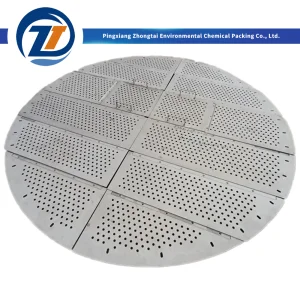
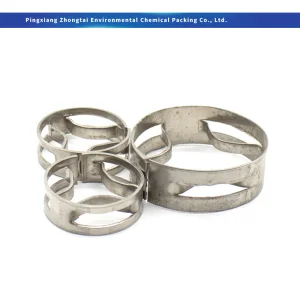
Explore specialized ceramic random packings, metal trays, and filter media for downstream gas scrubbing and liquid purification.