China 13X HP Molecular Sieve Manufacturers & Supplier

High-Purity Oxygen Adsorbents, VPSA/PSA Industrial Gas Separation Engineering, and Supply Chain Insights

13X HP Molecular Sieve: Technical Architecture & Fundamentals

An authoritative exploration of High-Performance Sodium Type X Zeolite adsorbents tailored for Pressure Swing Adsorption (PSA) and Vacuum Pressure Swing Adsorption (VPSA) systems.

93% ± 3%
O2 Purity Standard
10 Å
Effective Pore Aperture
≥ 3.0
N2 / O2 Selectivity Ratio
< 0.2%
Attrition Rate (ASTM D4058)

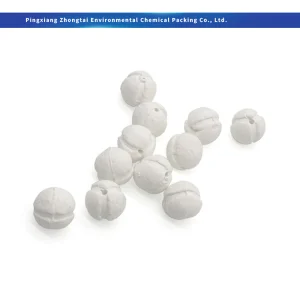
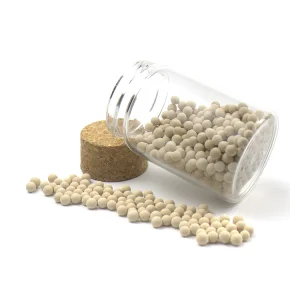
The 13X HP (High Performance) Molecular Sieve is a synthetic alkali metal aluminosilicate belonging to the sodium Type X crystalline structure (Faujasite framework). Engineered specifically for air separation and gas purification plants, its crystalline matrix exhibits a three-dimensional pore network with an aperture diameter of approximately 10 Angstroms (1.0 nm). This precise pore topology allows 13X HP to selectively adsorb polar and polarizable molecules, making it the industrial standard for non-cryogenic oxygen generation and cryogenic feed-gas pre-purification.

In oxygen separation processes, 13X HP leverages the difference in electric quadrupole moments between Nitrogen ($3.1 \times 10^{-26} \text{ esu cm}^2$) and Oxygen ($0.4 \times 10^{-26} \text{ esu cm}^2$). The localized electrostatic field generated by sodium cations ($\text{Na}^+$) within the zeolite cage interacts substantially stronger with nitrogen molecules than with oxygen molecules. Consequently, as compressed dry air passes through the adsorbent bed, nitrogen is trapped within the crystalline cages, leaving enriched oxygen (concentrations up to 95%) to pass through as the product gas stream.

Property Parameter Unit 13X HP Standard Grade 13X HP High-Capacity Grade Testing Standard Method
Crystalline Structure — NaX (Faujasite) NaX (Modified Low Silica) XRD Analysis
Nominal Pore Diameter Å (Angstrom) ~ 10 ~ 10 N2 Adsorption Isotherm
Bead Shape / Diameter mm 0.4 – 0.8 / 1.6 – 2.5 0.4 – 0.8 / 1.6 – 2.5 Sieve Analysis
Bulk Density g/mL 0.62 – 0.68 0.64 – 0.70 ASTM D3802
Crush Strength (Single Sphere) N / bead ≥ 25 (for 1.6-2.5mm) ≥ 35 (for 1.6-2.5mm) Automated Crush Tester
Static Water Adsorption wt % ≥ 26.5 ≥ 28.0 RH 60%, 25°C
N2 Adsorption Capacity cm³/g ≥ 8.0 (at 1 bar, 25°C) ≥ 11.5 (at 1 bar, 25°C) Volumetric Adsorption
N2/O2 Separation Factor Alpha ($\alpha$) ≥ 2.8 ≥ 3.2 Dynamic Breakthrough Curve
Residual Moisture Content wt % ≤ 0.5 ≤ 0.3 Loss on Ignition (575°C)
Information Gain: Kinetic Rate vs. Equilibrium Capacity

While standard 13X zeolite adsorbents focus purely on equilibrium adsorption capacity, 13X HP grades engineered by leading Chinese manufacturers prioritize mass transfer kinetics. By minimizing intra-crystalline diffusion resistance through controlled crystal sizing (1-2 $\mu\text{m}$ micro-crystals) and binder pore-network optimization, cycle times in VPSA plants can be shortened by up to 35%, significantly reducing plant power consumption per ton of oxygen produced.

Global Commercial & Industrial Market Dynamics

Macro-economic shifts, energy transition imperatives, and healthcare modernization driving demand for Chinese 13X HP molecular sieves globally.

Healthcare & Medical Oxygen

Post-global healthcare crises have highlighted the necessity of decentralized medical oxygen supply. Mobile medical oxygen concentrators and hospital-wide PSA generators rely heavily on 0.4-0.8mm 13X HP beads. The shift toward home healthcare in North America and Europe, combined with hospital infrastructure upgrades in Latin America and Asia, maintains a strong annual growth trajectory.

Metallurgy & EAF Steelmaking

Decarbonization commitments in primary metals require Electric Arc Furnace (EAF) steel mills and copper smelters to utilize oxygen enrichment for improved fuel combustion efficiency. Large-scale VPSA plants utilizing 13X HP adsorbents provide an economical alternative to traditional cryogenic liquid oxygen delivery, slashing operating expenses (OPEX) by 25-40%.

Environmental & Ozone Processing

Industrial wastewater treatment and municipal water purification rely on high-concentration Ozone ($O_3$) generated from high-purity feed oxygen. 13X HP sieves supply continuous 93%+ pure $O_2$ feed gas, minimizing trace nitrogen oxide side-reactions during silent electrical discharge generation.

Localized Application Engineering Scenarios

Precise implementation protocols for 13X HP adsorbents across industrial gas operations.

1. Medical PSA Concentrators (Portable & Stationary)

In compact medical oxygen generators, bed length is restricted, demanding fast adsorption kinetics. 13X HP (0.4-0.8 mm fine bead size) provides a short Mass Transfer Zone (MTZ). This enables rapid pressure cycling (cycles under 10 seconds) while delivering stable 93% $\pm 3\%$ oxygen purity. The formulation includes hydrophobic surface treatments to resist performance degradation in humid tropical climates.

2. Industrial VPSA Oxygen Generators (500-10,000 Nm³/h)

Large-scale Vacuum Pressure Swing Adsorption plants operate under low positive pressure during adsorption (0.3–0.6 bar gauge) and sub-atmospheric pressure during desorption (-0.4 to -0.6 bar gauge). 13X HP 1.6-2.5mm spheres are engineered with optimized macroporosity to reduce bed differential pressure ($\Delta P$), lowering the energy consumption of root blowers and vacuum pumps.

3. Cryogenic Air Separation Unit (ASU) Pre-Purification

Before ambient air is cooled to cryogenic temperatures (below -180°C), trace contaminants such as carbon dioxide ($CO_2$), water vapor ($H_2O$), and hydrocarbons (like acetylene, $C_2H_2$) must be removed to prevent freezing and explosion hazards. 13X HP adsorbents exhibit co-adsorption capabilities, capturing $CO_2$ down to $<1\text{ ppm}$ and dew points below $-70^\circ\text{C}$.

4. Natural Gas & Hydrocarbon Sweetening

In natural gas processing, 13X HP acts as a deep desulfurization agent. Its 10 Å pore opening accommodates bulky sulfur compounds such as methyl mercaptan ($CH_3SH$), ethyl mercaptan ($C_2H_5SH$), and dimethyl sulfide ($DMS$), which cannot enter smaller 4A or 5A zeolite pores. This ensures compliance with stringent pipeline gas specifications.

China Factory Supply Chain Resilience & Production Advantage

Why leading global gas engineering firms partner with Pingxiang-based synthetic zeolite manufacturers.

Pingxiang Industrial Cluster Synergy

Located in Pingxiang, Jiangxi Province—the world-recognized industrial ceramics and chemical packing hub—our manufacturing operations benefit from an integrated raw material ecosystem. Pure kaolin clay, sodium silicate, and alumina sources are located within a 50 km logistics radius, minimizing raw material supply risks and transportation carbon footprints.

Automated Synthesis & Firing Kilns

Modern production lines utilize computer-controlled hydro-thermal synthesis tanks, automated extrusion lines, oil-dripping sphere formers, and continuous gas-fired calcination tunnel kilns. Automated temperature profiling ($\pm 2^\circ\text{C}$ control) ensures homogenous crystal structure formation and eliminates lot-to-lot batch variance.

Rigorous QA/QC Testing Protocol

Every production batch undergoes strict quality control steps before shipment: X-ray Fluorescence (XRF) chemical composition verification, X-ray Diffraction (XRD) phase purity determination, static water and $N_2$ adsorption capacity tests, single-bead crush strength tests, and ASTM D4058 attrition loss evaluations.
01

Hydrothermal Synthesis

Mixing sodium silicate and sodium aluminate under controlled alkaline conditions to grow NaX micro-crystals.

02

Shaping & Binding

Combining raw zeolite powder with high-purity attapulgite or kaolin clay binders for extrusion or node forming.

03

High-Temp Calcination

Firing at 550°C – 600°C in rotary or tunnel kilns to convert clay binder, lock pore network, and maximize crush strength.

04

Dehydration & Packaging

Cooling under dry nitrogen blanket and packing immediately into hermetically sealed steel drums or vacuum bags.

Technology Roadmap & Next-Generation Developments

Emerging adsorbent breakthroughs: Binderless 13X HP and Lithium Low-Silica X (Li-LSX) Zeolites.

Binderless 13X HP Technology

Traditional molecular sieve beads contain 15%–20% non-adsorptive clay binder, which dilutes total dynamic capacity. Chinese R&D has successfully commercialized Binderless 13X HP through a secondary chemical conversion process. By transforming the inert clay binder into active NaX zeolite crystal in-situ, total adsorption capacity rises by 15-20%, allowing for smaller vessel footprints in OEM oxygen systems.

Li-LSX vs. Na-13X HP Benchmark

While Na-13X HP remains the most cost-effective solution for standard VPSA/PSA plants, Lithium-exchanged Low-Silica X zeolites (Li-LSX with $\text{Si/Al} = 1.0$) offer significantly higher $N_2$ adsorption capacity and higher $N_2/O_2$ selectivity. Leading manufacturers provide both material platforms, guiding EPC contractors through Capex vs. Opex optimization calculations.
Performance Metric Standard 13X Zeolite 13X HP (High-Performance) Binderless 13X HP Li-LSX Zeolite
Cation Type $\text{Na}^+$ $\text{Na}^+$ (Optimized) $\text{Na}^+$ (Converted Clay) $\text{Li}^+$ ($>95\%$ Exchange)
Zeolite Content ~ 80% 82% – 85% ≥ 95% (Binderless) 85% – 90%
N2 Capacity (1 bar, 25°C) 6.0 – 7.0 cm³/g 8.0 – 9.5 cm³/g 10.0 – 11.5 cm³/g 18.0 – 22.0 cm³/g
N2/O2 Selectivity ($\alpha$) 2.2 – 2.5 2.8 – 3.2 3.2 – 3.6 5.5 – 6.2
Relative Cost Factor 1.0x (Baseline) 1.3x 1.8x 4.5x – 6.0x
Primary Target Application Air Drying, CO2 Removal Standard VPSA/PSA O2 Compact PSA & High-Flow VPSA Ultra-Efficient Industrial VPSA

Global Compliance, Packaging & Technical Support

Ensuring seamless international freight, regulatory compliance, and field startup assistance.

Regulatory Compliance

All 13X HP molecular sieve shipments are fully documented with REACH registration (EU), RoHS compliance declarations, Safety Data Sheets (MSDS), and Certificate of Analysis (COA) corresponding to each production lot number. Manufacturing facilities adhere to ISO 9001:2015, ISO 14001:2015, and ISO 45001 standards.

Hermetic Export Packaging

Molecular sieves are highly hygroscopic. To ensure zero moisture gain during sea transit, products are packaged in airtight 125 kg / 150 kg airtight steel drums with inner heavy-duty vacuum-sealed polyethylene bags, nitrogen-purged 25 kg aluminum-foil bags within corrugated cartons, or 1000 kg moisture-proof jumbo bags with inner barrier liners.

Engineering Field Support

Our technical support team assists OEM engineers with bed diameter calculations, superficial gas velocity recommendations, pressure drop modeling ($\Delta P$ estimation via Ergun Equation), and site loading supervision to prevent vessel channeling and attrition during pneumatically dense loading.

Frequently Asked Questions (Technical & Procurement FAQ)

Direct answers from application engineers regarding 13X HP molecular sieve specification, operation, and logistics.
What is the primary difference between standard 13X and 13X HP molecular sieves?
While standard 13X is formulated for general gas drying, $CO_2$ removal, and solvent purification, 13X HP is specifically engineered for air separation ($N_2/O_2$ separation). 13X HP undergoes specialized cation tuning, micro-crystal sizing, and macropore structure optimization. This yields a significantly higher nitrogen adsorption capacity (≥8.0 cm³/g vs ~5.5 cm³/g) and a superior $N_2/O_2$ separation factor ($\alpha \ge 2.8$), allowing it to generate 93%±3% oxygen efficiently in PSA/VPSA systems.
How do I choose between 0.4–0.8 mm fine beads and 1.6–2.5 mm spheres?
The choice depends on the cycle speed and vessel design:
  • 0.4–0.8 mm (or 0.5–1.0 mm) Fine Beads: Best suited for small medical oxygen concentrators and rapid-cycle PSA units. Fine beads shorten intra-crystalline mass transfer pathways, producing high oxygen purity in compact beds with cycle times under 10 seconds. However, they generate higher bed pressure drop.
  • 1.6–2.5 mm (or 1.3–2.0 mm) Spheres: Standard choice for medium to large industrial VPSA/PSA plants. They provide optimal mechanical crush strength and minimize pressure drop ($\Delta P$) across high bed depths (1.5–3.0 meters).
What causes 13X HP adsorbent bed failure and how can it be prevented?
The primary causes of premature bed failure are:
  1. Liquid Water Poisoning: Hydrothermal degradation occurs if bulk liquid water reaches the zeolite bed, causing hydrothermal breakdown of the NaX crystal lattice. Prevention: Install effective inlet knock-out drums and coalescing filters, and use an upfront silica gel or activated alumina guard layer.
  2. Oil Contamination: Lubricating oil droplets from air compressors seal the 10 Å pore openings, permanently degrading capacity. Prevention: Utilize oil-free compressors or multi-stage activated carbon oil adsorber towers.
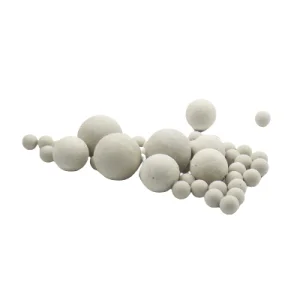
  3. Bed Fluidization & Attrition: Excessive superficial gas velocities cause bead movement, grinding the sieve into fine powder. Prevention: Design gas distribution headers properly and install top bed packing hold-down grids with inert ceramic balls.
What activation temperature is required for regenerating 13X HP molecular sieve?
For complete thermal regeneration (thermal swing adsorption - TSA mode), the bed must be heated to between 200°C and 250°C (maximum 300°C) under a dry purge gas stream (such as dry nitrogen or product oxygen). In standard PSA/VPSA systems operating at ambient temperatures, regeneration is achieved dynamically by depressurization to atmospheric pressure or applying a vacuum (-0.5 bar g) combined with a dry oxygen purge.
What lead time and packaging options are available for export orders from China?
Standard production lead time for full container loads (FCL) ranges from 7 to 14 business days. Standard export packaging includes 150 kg hermetically sealed iron drums (with inner vacuum-sealed plastic liners) stacked on ISPM-15 compliant heat-treated wooden or plastic pallets. For small medical OEM buyers, 25 kg cardboard drums or vacuum aluminum foil bags are available upon request.