Engineered to deliver exceptional thermal inertia, reduced pressure drops, and superior mechanical shock resistance for Slovakia's advanced manufacturing and chemical processing hubs.
A rigorous engineering and macroeconomic assessment of ceramic monolith deployment in Central European heavy industry, automotive assembly, and chemical manufacturing.
The Slovak Republic represents the central manufacturing heartbeat of the European automotive sector and heavy engineering corridor. With substantial automotive assembly capacity concentrated across Bratislava, Trnava, Nitra, and Žilina—alongside extensive chemical, metallurgical, and wood processing facilities in eastern and central regions like Košice and Ružomberok—the requirement for high-durability honeycomb ceramics has reached historic highs.
Slovak production facilities are governed by stringent European Union environmental protocols, including the Industrial Emissions Directive (IED 2010/75/EU) and tightening Euro 6d/Euro 7 exhaust emissions standards. Plant operators face twin challenges: reducing volatile organic compound (VOC) emissions below regulatory thresholds while optimizing thermal recovery to counteract elevated European natural gas tariffs. Honeycomb ceramic monoliths serve as the mission-critical medium addressing both demands.
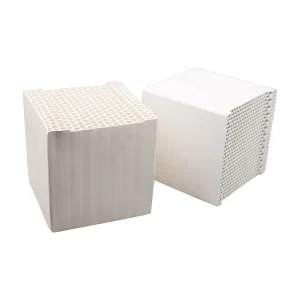
Solvent emissions from automated paint application booths require Regenerative Thermal Oxidizers (RTO). Our 150×150×150 mm cordierite-mullite honeycomb media provides thermal capacities up to 1,050 J/kg·K, sustaining 95%+ heat exchange efficiency and slashing burner fuel consumption in Slovak paint facilities.
In facilities around Bratislava and Šaľa, continuous synthesis produces corrosive organic byproducts and acid gases. Specially formulated alumina-modified honeycombs withstand chemical etching while maintaining catalytic structural integrity under extreme continuous thermal cycling.
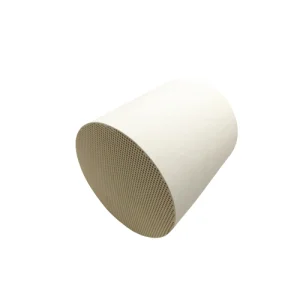
For engine and exhaust manufacturers supplying passenger and commercial vehicles, our high-cell-density cordierite substrates (up to 400–600 CPSI) deliver thin-wall architecture, micro-porosity for optimal washcoat adherence, and robust mechanical integrity against highway vibration.
How Pingxiang Zhongtai's direct manufacturing infrastructure eliminates intermediaries, safeguards supply continuity, and guarantees EU-compliant material consistency.
Globally, the market for structural ceramics is experiencing a bifurcation. High processing costs across Western Europe—exacerbated by high natural gas and electricity expenses in local kilns—have constrained traditional continental producers. In contrast, Zhongtai operates directly out of Pingxiang, Jiangxi Province, recognized globally as the premier cluster for industrial ceramics and mass-transfer packing.
By consolidating upstream raw material selection (kaolin, talc, synthetic cordierite, calcined alumina), automated continuous extrusion, high-tonnage precision die pressing, and computerized tunnel kiln firing within a single geographic radius, our production base controls batch-to-batch coefficient of thermal expansion (CTE) and cold crushing strength with absolute repeatability.
As industrial operators prepare for European carbon neutrality goals (Fit for 55) and the Euro 7 framework, Zhongtai's ongoing R&D pipeline targets three core technical advancements:
Developing 2.5 mil and 3.0 mil cell wall thicknesses for catalyst substrates to accelerate light-off times, drop backpressure by up to 22%, and reduce fuel consumption during cold-start sequences.
Compounding high-purity cordierite with refractory silicon carbide aggregates to withstand localized exothermic flashpoints up to 1,350°C in complex chemical decomposition reactors.
Engineered multi-modal porosity (25–45% bulk porosity with tailored pore-size distribution between 3–15 μm) facilitating unhindered washcoat anchoring without flaking under rapid thermal transients.
Full spectrum of structural ceramic formats: from EPA-compliant catalyst blocks to ultra-high-temperature alumina bird-nest filter supports.
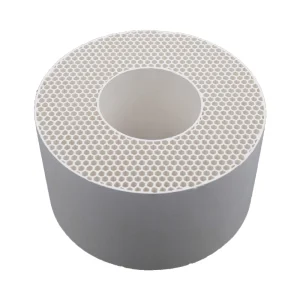
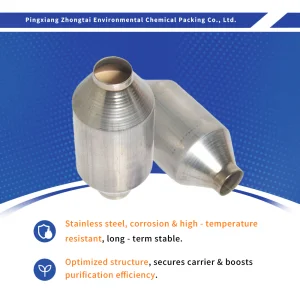
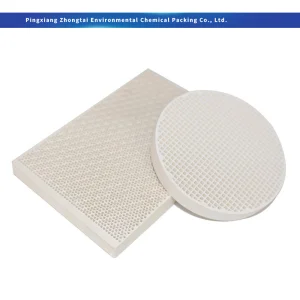
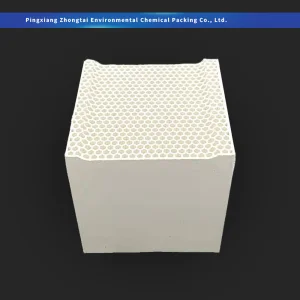
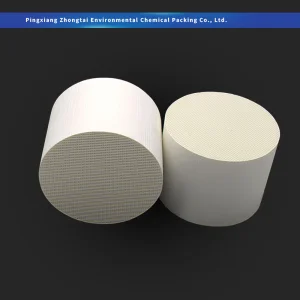
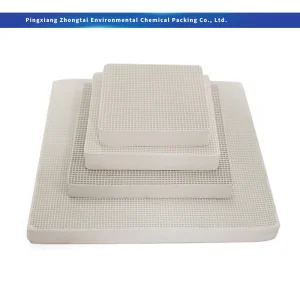
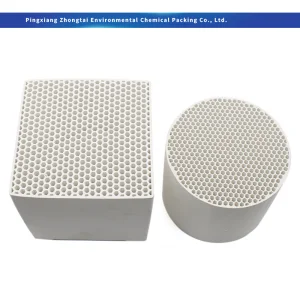
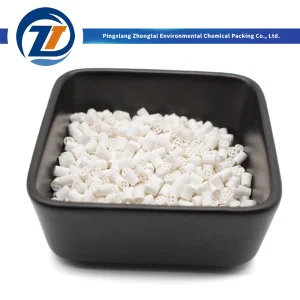
Seamless execution from factory floor to Slovak job sites: rigorous batch certification, EU customs clearance readiness, and damage-proof transit.
Every shipment is backed by accredited laboratory Mill Test Certificates (MTC) documenting bulk density, total water absorption, thermal shock resistance (ΔT ≥ 850°C water-quench cycles), and crush strength (axial ≥ 12–15 MPa, radial ≥ 3.0 MPa).
Consolidated ocean freight via Hamburg, Koper, or Gdansk ports connects directly with direct rail and truck freight routes into Bratislava, Žilina, and Košice logistics corridors. Full EU TARIC classification and EUR.1 documentation supplied.
Honeycomb blocks are individually shrink-wrapped, segregated by cellular foam spacers, nested into heavy-duty triple-wall corrugated cartons, and strapped onto heat-treated, fumigated ISPM-15 wooden pallets with corner armor protectors.
Direct technical responses addressing material selection, pressure drops, thermal shock thresholds, and international procurement logistics.
