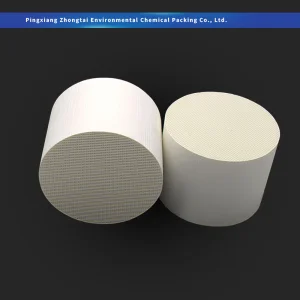
Direct factory supply of certified cellular ceramic blocks featuring optimized void fractions, superior thermal shocks, and tailored cpsi profiles for severe operating duties.
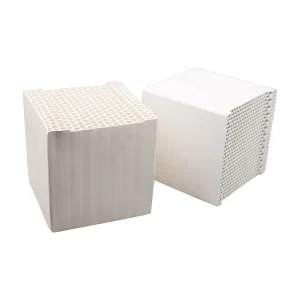
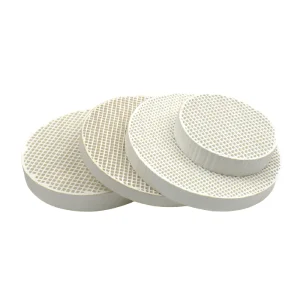
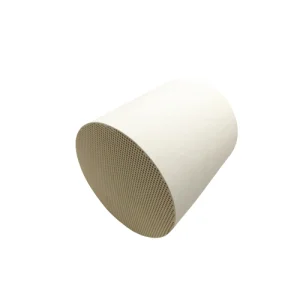
Accelerating decarbonization, rigorous emissions mandates under MMA (Ministerio del Medio Ambiente), and intensive copper metallurgy are reshaping technical ceramic consumption across Chile.
Mining operations throughout the Antofagasta and Atacama regions face severe thermal and environmental standards. The smelting of copper sulfides creates corrosive sulfur dioxide (SO₂) off-gas streams. Structured cordierite and mullite honeycomb beds act as high-durability thermal storage in Regenerative Thermal Oxidizers (RTO) and Regenerative Catalytic Oxidizers (RCO), surviving cyclical acid exposure and fluctuating thermal loads.
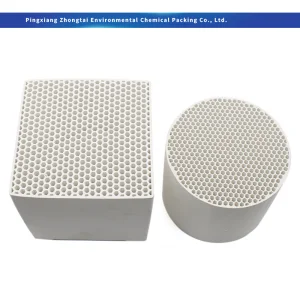
The Biobío and Maule regions host Chile’s massive pulp and wood processing facilities. These manufacturing plants deploy massive RTO complexes to eliminate volatile organic compounds (VOCs), pinene, and hazardous terpenes. High-cell-density honeycomb blocks (40x40 and 50x50 channels) optimize gas retention time while preventing particulate clogging and lowering blower electricity demands.
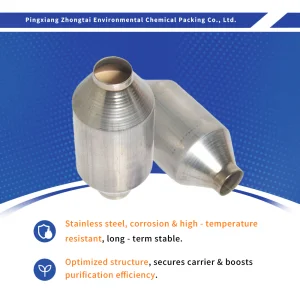
Chile's Supreme Decree No. 138 and related regional atmospheric regulations impose stringent particulate matter and NOx restrictions on both stationary industrial boilers and heavy non-road diesel mining equipment. Wall-flow cordierite diesel particulate filters (DPF) and extruded catalytic converter monoliths serve as essential components for ongoing compliance audits.
Transitioning from standard bulk media to micro-engineered extruded monoliths delivers superior mass transfer, low backpressure, and high structural resilience.
Traditional single-phase cordierite offers an ultra-low coefficient of thermal expansion (CTE) but exhibits limited softening temperatures under heavy mechanical loads. Hybrid cordierite-mullite formulations integrate interlocking acicular mullite crystals within a cordierite matrix, boosting mechanical crush strength above 15 MPa while maintaining thermal endurance up to 1,350°C.
Next-generation RTO operations demand higher specific surface areas (up to 1,200 m²/m³) without causing massive static pressure penalties. Advanced multi-screw extrusion dies now allow continuous fabrication of honeycomb monoliths featuring wall thicknesses below 0.6 mm, yielding open frontal areas exceeding 72% and slashing plant auxiliary electrical consumption by 18-24%.
Industrial processes in Chile’s northern mining operations feature process vapors saturated with sulfur oxides and halide compounds. High-purity alumina-doped cordierite structures reduce silica extraction, prevent phase transition blistering, and guarantee operational lifespans beyond 40,000 continuous hours in aggressive off-gas contactors.
| Material Formulation | Bulk Density (g/cm³) | Water Absorption (%) | Thermal Expansion (×10⁻⁶/°C) | Max Operating Temp (°C) | Primary Industrial Application |
|---|---|---|---|---|---|
| Pure Cordierite | 1.80 – 2.10 | ≤ 1.5 | 1.2 – 1.8 (20–800°C) | 1,200 | Automotive & Mine Equipment Exhaust DOC/DPF |
| Cordierite-Mullite | 2.00 – 2.30 | ≤ 2.0 | 2.0 – 2.8 (20–1000°C) | 1,350 | Industrial RTO/RCO Thermal Energy Storage |
| High Alumina (Corundum) | 2.70 – 3.20 | ≤ 0.5 | 6.5 – 7.5 (20–1000°C) | 1,600 | Direct Flame Thermal Contact & Smelter Scrubbing |
| Silicon Carbide (SiC) Composite | 2.40 – 2.80 | ≤ 1.0 | 3.8 – 4.5 (20–1000°C) | 1,450 | Severe Corrosive Hot Dust & Acidic Filtration |
Overcoming the operational obstacles of thermal stress cracking, catalyst attrition, and severe logistics constraints facing industrial buyers across Chile.
Thermal gradients inside industrial RTO regenerator beds can exceed 400°C between reverse cycles, causing monolithic block shear fractures. We provide engineered segmented beds utilizing graduated wall thicknesses—rugged, heavy-wall honeycomb units at the combustion chamber top interfaces, transitioning to high-surface-area thin-wall monoliths at the bottom cold-face.
For Chilean plants executing catalytic de-NOx and VOC decomposition, washcoat de-lamination represents an ongoing risk. Our honeycomb monolith matrices feature micro-etched surfaces and tailored gamma-alumina washcoat interfaces. This microstructure secures high dispersed loads of Pt, Pd, and Rh catalysts without thermal flaking under severe gas velocities.
Trans-Pacific ocean transit can expose brittle cellular ceramics to vibration and moisture damage. Zhongtai enforces rigid export packaging protocols: each honeycomb block is sealed in moisture-barrier film, nested in custom honeycomb cardboard separators, and loaded onto heavy fumigated pallets with edge-reinforcement bands to guarantee zero chipped edges upon arrival.
Explore our complete export line of thermal, filtration, and catalytic honeycomb ceramics engineered for heavy process applications.
Expert answers addressing the selection, durability, customs clearance, and engineering design of honeycomb ceramics for high-duty applications.
For installations handling sticky terpenes, pinene, and heavy organic exhausts—such as those near Concepción or Valdivia—we recommend 25x25 or 40x40 cpsi honeycomb geometries. Larger channel diameters mitigate premature tar particulate fouling and simplify high-pressure steam cleaning cycles without creating high delta-P penalties.
Standard cordierite provides optimal resistance against violent thermal shock due to its low CTE, but it loses compressive integrity above 1,200°C. In copper smelting converters where bed temperatures regularly spike, cordierite-mullite composite materials offer greater mechanical creep resistance and higher thermal capacitance.
Every shipment contains full factory batch test reports (crush strength, chemical composition by XRF, bulk density, and CTE analysis), Certificates of Origin (Form F for China-Chile FTA to secure zero-tariff clearance), detailed packing lists with pallet serials, and fumigation certificates compliance stamped.
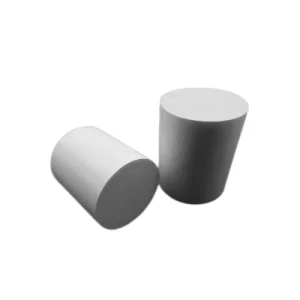
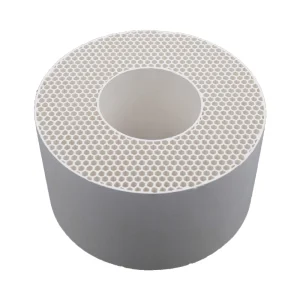
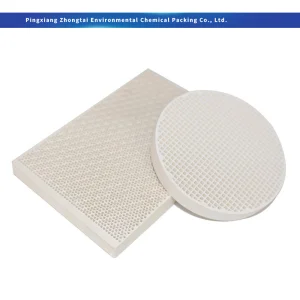
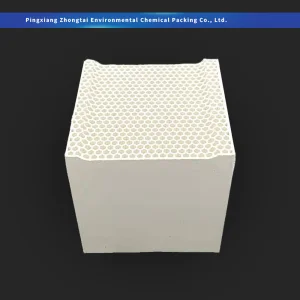
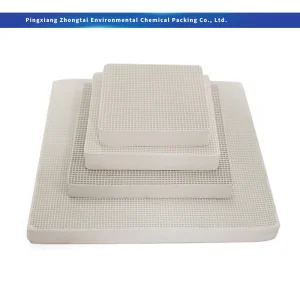
Yes. Our extrusion tooling covers square blocks from 100×100 mm to 150×150 mm, with custom heights up to 300 mm. We also engineer cylindrical monoliths, custom radiused segments for round RTO chambers, and slotted channels designed to optimize thermal gas distribution.
