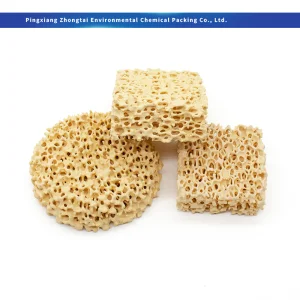
Premium grade CFF solutions optimized for strict metallurgical cleanliness demands across Japanese automotive casting and precision steel smelting plants.
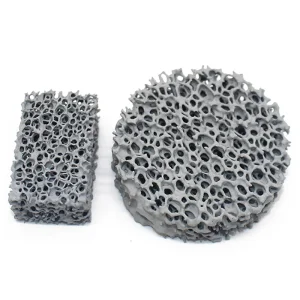
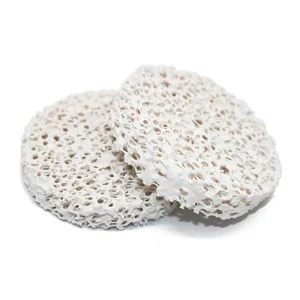
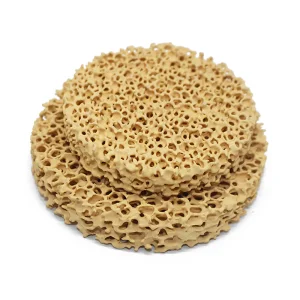
A rigorous industrial environment governed by zero-defect requirements, high-mix low-volume flexibility, and carbon neutrality roadmaps.
The rise of high-integrity integrated die-castings (Giga-casting alternatives) by Japanese automotive OEMs in Aichi, Shizuoka, and Hiroshima requires total inclusion capture. Sub-millimeter non-metallic particles and dross cause catastrophic yield failures in ultra-thin automotive aluminum structures.
Foundries operating across the Kansai and Kanto corridors face escalating electricity and LNG overheads. Every misrun, oxidized scrap, or inclusions-related internal pore that triggers component rejection magnifies molten-metal remelting costs, driving urgent demand for reliable 10–50 PPI filters.
As senior casting veterans retire across Japan's domestic foundries, casting facilities are shifting from artisan manual operations to deterministic, automated gating lines. Porosity, turbulent flow, and gating-induced inclusion must be controlled scientifically at the runner interface via robust ceramic foam filters.
Combining automated polyurethane sponge impregnation, multi-zone tunnel kilns, and real-time dimensional verification to serve Japanese buyers.
Manual squeezing causes non-uniform strut density and blind pores. Our Pingxiang production lines use servo-controlled mechanical roll-squeezing presses. This locks in uniform slurry distribution across the continuous open-pore polyurethane skeleton, achieving steady laminar flow rates without premature metal choking.
High thermal shock resistance demands exact firing cycles. Our digitally mapped gas tunnel kilns monitor thermal curves continuously up to 1680°C. Finished batches undergo cold compressive strength tests, hot bending strength analysis, and ultrasonic cleaning to remove loose ceramic particulate before gasket sealing.
| Material Matrix | Primary Pouring Metals | Refractoriness (°C) | Cold Compressive Strength | Porosity (PPI) |
|---|---|---|---|---|
| Alumina (Al₂O₃) | Aluminum alloys, Al-Mg, Zinc, Bronze | 1200°C | ≥ 1.5 MPa | 10 / 20 / 30 / 40 / 50 / 60 |
| Silicon Carbide (SiC) | Gray iron, Ductile (Nodular) iron, Cu alloys | 1500°C | ≥ 2.5 MPa | 10 / 15 / 20 / 30 |
| Zirconia (ZrO₂) | Carbon steel, Stainless steel, Superalloys | 1760°C | ≥ 3.0 MPa | 10 / 15 / 20 |
Targeted thermal media specifications adapted to Japanese manufacturing clusters and production styles.
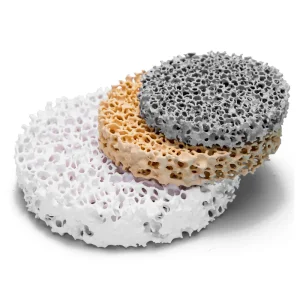
Foundries across Aichi, Mie, and Shizuoka producing ductile iron engine brackets, steering knuckles, and aluminum housings deploy our SiC and Alumina foam filters. The ceramic substrate dampens turbulent pouring rushes, turning vortex flows into smooth laminar streams to eliminate entrained oxide crusts.
Heavy hydraulic casting centers and pump builders in Osaka and Hyogo demand defect-free ductile iron valves capable of passing hydrostatic tests. Our 15–20 PPI SiC filters capture micro-dross that traditional glass fiber mesh or punched ceramic disks fail to hold under continuous head pressures.
Precision aerospace foundries and high-alloy turbine blade fabricators in northern Honshu and Kyushu run our Zirconia ceramic foam filters. These filters resist thermal shock up to 1760°C and maintain inert chemical stability without silica breakdown during high-grade vacuum induction melting.
Clarifications on supply reliability, custom tolerances, packing certifications, and logistics for Japanese trading firms.
All ceramic foam filters undergo secondary industrial ultrasonic dusting before gasket application. We offer custom heat-resistant fiber expansion gaskets (expandable ceramic fiber or graphite wool) around all four sides. Export cartons sit on fumigation-free ISPM-15 compliant pallets wrapped in multi-layer vacuum moisture barriers for sea transit directly into Nagoya, Tokyo, Yokohama, or Kobe ports.
Yes. Automated lines run by modern DISA or sand molding equipment in Japanese plants require strict dimensional stability to avoid core-jam errors. Our filters feature diamond-ground edges that keep dimension variances within ±0.5 mm on length/width and ±1.0 mm on thickness.
Every commercial delivery includes a comprehensive Mill Test Certificate (MTC) and Certificate of Analysis (COA) containing pore-density ratings (PPI via optical tracking), cold compressive strength values, bulk density, and loss on ignition (LOI). Third-party test reports (SGS/TUV) are available upon request.
We provide standard pre-production testing packages within 5 to 7 working days. Our foundry engineering team works directly with your technical directors to configure pore structures, flow velocity limits, and pour-weight ratios tailored to your mold runners.
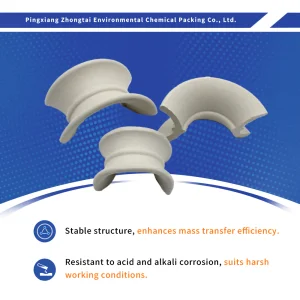
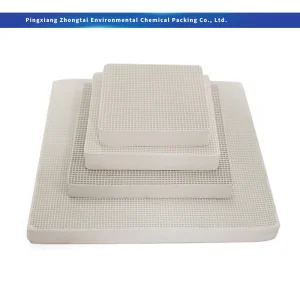
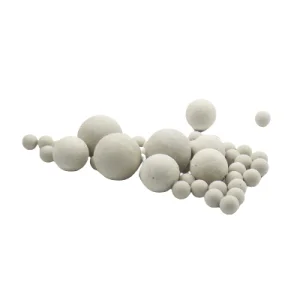
Explore our complete export line spanning foundry filtration, environmental RTO honeycomb, and chemical mass transfer solutions.