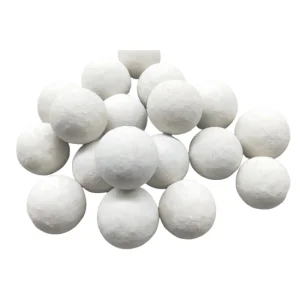
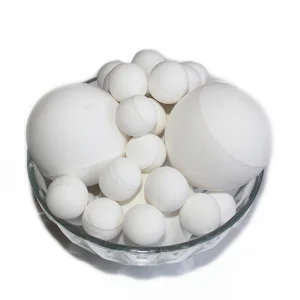
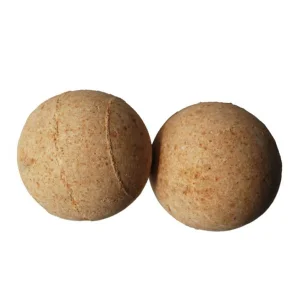
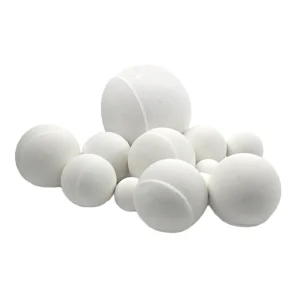
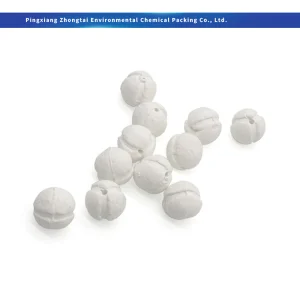
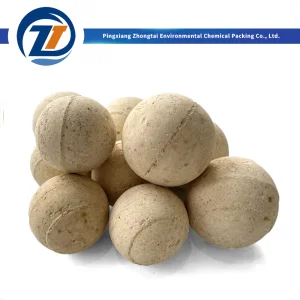
Engineered Inert Catalyst Support, Desiccant Media, and High-Alumina Grinding Solutions tailored for India's Refining, Petrochemical, Fertilizer, and Advanced Manufacturing corridors.
Precision-manufactured adsorption and inert support balls engineered to resist severe thermal shock, hydraulic hammer, and aggressive chemical degradation in high-throughput reactors.
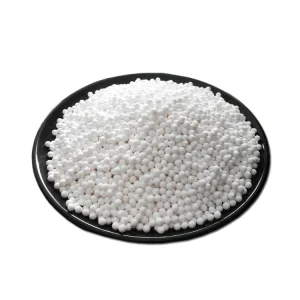
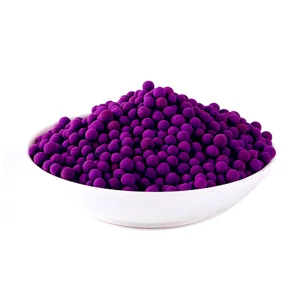
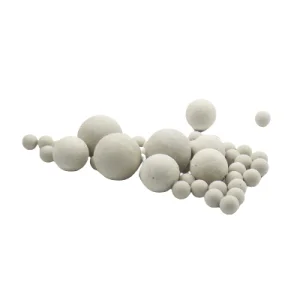
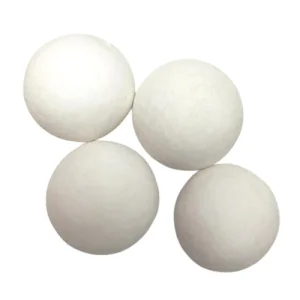
As India accelerates toward a $5-trillion economy driven by massive investments under 'Make in India' and national self-reliance initiatives, chemical mass transfer components play an indispensable strategic role.
India represents the second-largest refining capacity hub in Asia. Massive petrochemical complexes in Gujarat (Jamnagar, Dahej), Maharashtra, Andhra Pradesh (PCPIR corridors), and Odisha (Paradip) operate severe hydrocracking, desulfurization, and catalytic reforming units. In these severe catalytic loops, catalyst bed failure caused by crushed ceramic support balls results in multimillion-dollar unplanned downtime. The domestic Indian market increasingly relies on ultra-reliable inert ceramic support balls that guarantee high crush strength, zero dusting, and high chemical resistance against sulfuric, nitric, and organic organic acid vapor streams.
Worldwide, the petrochemical sector is transitioning to cleaner fuels, low-carbon ammonia, and green hydrogen syntheses. This industrial transition demands higher operating temperatures and severe chemical environments where conventional support ceramics fail. Super-high-purity alumina media (≥99% Al2O3) are increasingly mandatory worldwide to prevent silica leaching in high-temperature steam services, which irreversibly poisons expensive precious-metal catalysts (such as platinum, palladium, and nickel-molybdenum beds). Zhongtai bridges global high-volume sintering capacities directly with Indian industrial procurement.
Precision engineering criteria to eliminate catalyst degradation, channel flow maldistribution, and thermal collapse in fixed-bed reactors and mass transfer columns.
| Alumina Grade | Al2O3 (%) | SiO2 (%) | Bulk Density (g/cm³) | Water Absorption (%) | Crush Strength (1/2" Ball) | Recommended Industrial Service |
|---|---|---|---|---|---|---|
| Standard Inert | 17 – 23% | 70 – 75% | 1.35 – 1.45 | < 3.0 | ≥ 1.2 kN/particle | Secondary bed layers, fertilizer prilling towers, mid-pressure desulfurizers |
| Medium Alumina | 23 – 30% | 65 – 70% | 1.40 – 1.55 | < 2.0 | ≥ 2.5 kN/particle | Hydroprocessing units, gas scrubbers, natural gas molecular sieve protection |
| High Alumina Media | 90 – 92% | < 6.5% | 2.00 – 2.25 | < 1.0 | ≥ 5.5 kN/particle | Wet mineral ball mills, ceramic tile glaze processing, abrasive pigment micronization |
| Super High Purity | ≥ 99.2% | < 0.15% | 2.10 – 2.30 | < 0.5 | ≥ 8.0 kN/particle | Secondary ammonia reformers, hydrogen SMR furnaces, high-pressure ethylene reactors |
Each batch undergoes cold crushing strength (CCS) certification. Balls withstand structural hydraulic surges, eliminating powdering that creates dead zones, channel fouling, and differential pressure spikes across bottom support grids.
In steam reforming environments (1,000°C+), silica volatilizes into steam and coats cooler downstream catalyst matrices. Our 99% pure alumina balls inhibit silica volatilization, extending primary catalyst bed longevity up to 48 months.
Precision sphericity and tight size tolerance classification (1/8", 1/4", 1/2", 3/4", 1", 1.5", 2") ensure uniform interstitial voids, mitigating bypass currents and providing laminar vapor-liquid distribution across the catalytic cross-section.
Navigating complex logistics, port handling customs, and industrial standards across India's premier manufacturing belts.
Complete logistical integration with India's principal maritime corridors: Nhava Sheva (JNPT), Mundra, Hazira, Chennai, and Visakhapatnam. Shipments are packed in heavy-duty ocean-rated ton bags or sealed steel drums on treated fumigated pallets, meeting Strict Central Board of Indirect Taxes and Customs (CBIC) import clearance prerequisites.
Materials comply rigorously with ASTM C515 (Chemical Porcelain and Stoneware), HG/T 3683.1-2014, and relevant Bureau of Indian Standards (BIS) parameters. Full traceability is accompanied by EN 10204 3.1 Mill Test Certificates detailing accurate X-Ray Fluorescence (XRF) elemental assays and compressive strength test curves per lot.
Refinery and petrochemical planned turnarounds require prompt batch deliveries without demurrage risks. We provide pre-shipment buffer staging, rapid sea freight booking, and dedicated point-of-contact support to synchronize seamlessly with Indian plant shutdown schedules.
Our lead chemical process engineers supply comprehensive sizing calculations, void fraction modeling, and QA dossiers tailored for Indian EPC and plant managers.
Pioneering sustainable, low-emissions manufacturing kilns and advanced structured ceramic architectures to meet India's 2030 industrial energy-efficiency targets.
Digital continuous monitoring of firing temperature profiles up to 1,600°C, ensuring zero micro-fracturing and consistent crystal grain consolidation across all 17–99% alumina spheres.
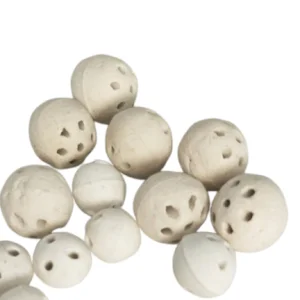
Formulating engineered macro/meso-porous structured ceramic balls designed to trap particulate foulants, iron scale, and heavy metals prior to entering active catalytic beds.
Advanced high-density regenerative ceramic balls and honeycomb structures optimizing thermal retention up to 95% in VOC thermal oxidizers for pharma clusters in Hyderabad and Gujarat.
High-entropy, zero-silica ceramic substrates formulated specifically for Carbon Capture, Utilization & Storage (CCUS) strippers and ultra-high-temperature syngas reforming furnaces.
Detailed technical and commercial answers addressing refinery operations, chemical resistance, customs import, and bed design.
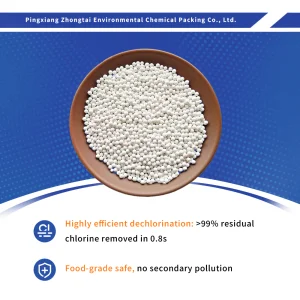
Explore our full manufacturing spectrum, covering high-density heat storage, precision ball mill grinding media, porous support catalysts, and industrial dechlorination.