Engineered to withstand rigorous downstream processing conditions in UAE sour gas treatment plants, ethylene steam crackers, and moisture scrubbing vessels.
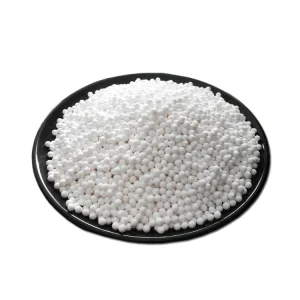
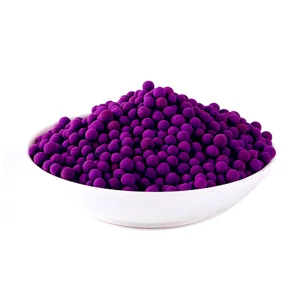
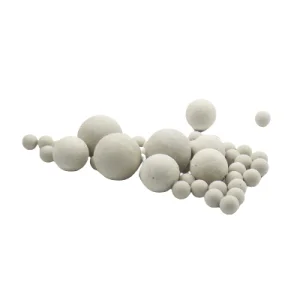
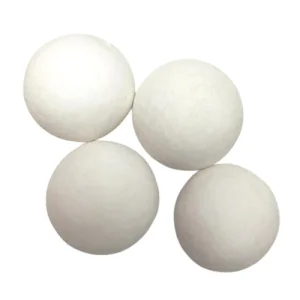
Empowering multi-million barrel hydroprocessing assets, sour gas sweetening, and massive industrial infrastructure throughout the Arabian Gulf.
The industrial ecosystem in the United Arab Emirates represents one of the world's most concentrated demands for specialized chemical ceramics and mass transfer packing media. Spurred by national transformation projects like Operation 300bn and the continued multi-billion-dollar expansions across ADNOC's Ruwais Refining and Petrochemicals complex, UAE operators are upgrading primary refining units to process heavier crudes and ultra-sour gas reserves. These severe duties place unyielding mechanical and chemical stress on fixed-bed reactors, requiring inert catalyst support ceramic balls to provide uncompromising thermal endurance, near-zero silica leaching, and superior cold crushing strength.
In mega-complexes such as Borouge 4, TA'ZIZ Industrial Chemical Zone, and gas sweetening hubs at Habshan and Bab, ceramic balls are not merely structural fillers; they are critical operational enablers. They distribute multi-phase feedstocks evenly across active catalyst beds, prevent costly catalyst migration, protect sensitive valves from fines entrainment, and optimize hydraulic pressure drops across tall reactors operating beyond 150 bar and 450°C.
Targeted solutions developed for specific operational hazards across Middle Eastern process plants.
Mitigating silica contamination in hydrocracking units where steam vapor can leach volatile SiO2. Our 99% high-alumina formulation ensures inertness, preventing downstream poisoning of expensive noble-metal catalysts.
Refinery turnarounds introduce severe temperature swings. Our mullite-phase fused ceramic matrix withstands rapid cycling up to 1,400°C without spalling, cracking, or generating dust that causes bed fouling.
Perforated and high-porosity spherical designs offer up to 28% lower hydraulic delta-P compared to solid spheres, extending operating cycles and cutting compressor power requirements in major Middle Eastern gas plants.
| Chemical Property / Grade | 17-23% Alumina (Standard) | 23-30% Alumina (Medium) | 92% Alumina (Grinding/Refractory) | 99% Super Alumina (Ultra-Pure) |
|---|---|---|---|---|
| Al2O3 Content (%) | 17.0 - 23.0 | 23.0 - 30.0 | ≥ 92.0 | ≥ 99.2 |
| SiO2 Content (%) | 68.0 - 74.0 | 62.0 - 68.0 | ≤ 5.5 | ≤ 0.2 |
| Water Absorption (%) | ≤ 2.0 | ≤ 1.5 | ≤ 0.05 | ≤ 0.08 |
| Bulk Density (g/cm³) | 1.35 - 1.45 | 1.40 - 1.55 | 2.10 - 2.30 | 2.20 - 2.45 |
| Acid Resistance (%) | ≥ 99.0 | ≥ 99.2 | ≥ 99.6 | ≥ 99.8 |
| Operating Limit (°C) | 1,100 | 1,200 | 1,500 | 1,650 |
Explore our complete production line of inert, perforated, heat storage, and ultra-high alumina media with certified delivery to UAE ports.
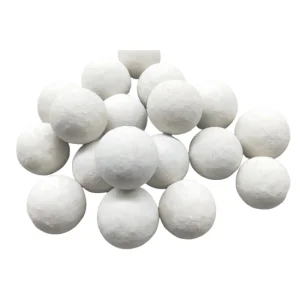
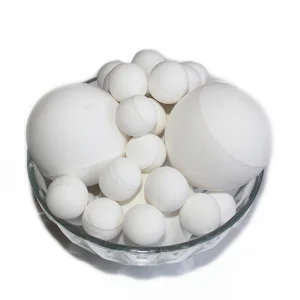
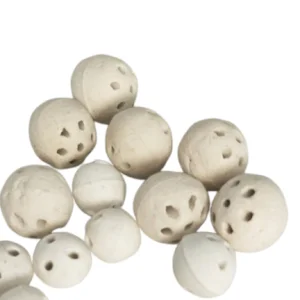
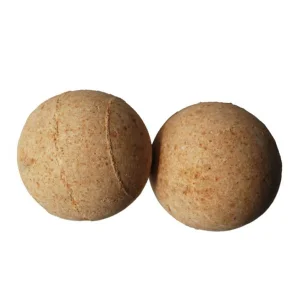
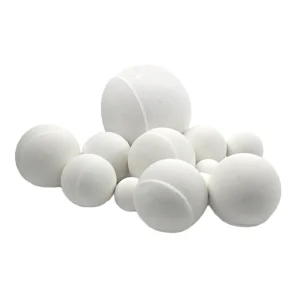
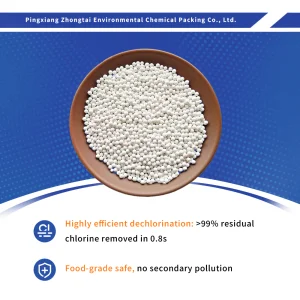
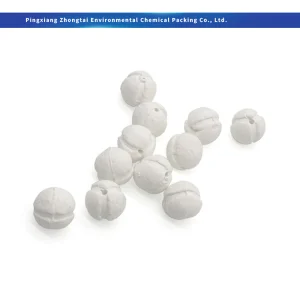
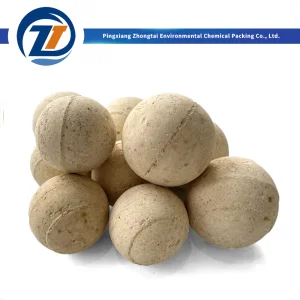
Reliable supply chains engineered for zero-defect field installation during plant turnarounds.
Procurement departments and project engineers working on UAE projects require rigorous QA/QC documentation to meet stringent internal and ADNOC vendor requirements. Pingxiang Zhongtai operates integrated production in China's industrial ceramics center, providing factory-direct pricing alongside international quality compliance:
Every shipment is accompanied by detailed Mill Test Certificates (MTC) verifying chemical assay (XRF), cold crush strength testing, Le Roy acid insolubility verification, and water absorption rates tested according to ASTM C373 and DIN 51102 standards.
Packed specifically for harsh Gulf marine shipping and desert yard storage: 1,000 kg UV-resistant, moisture-barrier jumbo bags or steel-reinforced poly drums mounted onto heat-treated ISPM-15 compliant fumigated wooden pallets.
Coordinated sailings directly to UAE entry points including Jebel Ali Port (Dubai), Khalifa Port (Abu Dhabi), and Port of Fujairah. Expedited production slots accommodate emergency turnaround schedules and planned shutdowns.
Direct technical answers addressing catalyst support design, chemical degradation, and logistics into the United Arab Emirates.
Under high partial pressures of steam, lower-grade ceramic balls release free silica (SiO2) into the gas phase. This volatile silica migrates downstream, coating and permanently deactivating expensive platinum, rhenium, or nickel catalysts, or causing severe fouling on downstream heat exchanger tubes. Our 99% Al2O3 grade contains ≤ 0.2% silica, eliminating leaching risks.
Proper bed construction uses graded sizing to transition flow while preventing catalyst migration. A common bottom support arrangement begins with 1-1/2" to 2" balls at the bottom grid, followed by successive layers of 1", 1/2", 1/4", and 1/8" media supporting the catalyst. At the top of the bed, a retention layer of 1/4" to 1/2" balls distributes the inlet stream and shields catalysts from direct momentum impact.
Every shipment includes verified Certificate of Origin, signed Commercial Invoice and Packing List, Certificate of Analysis (COA/MTR) stating batch-specific physical and chemical attributes, Bill of Lading, and phytosanitary fumigation certificates for non-manufactured wood packaging materials, ensuring seamless customs clearance.
Perforated ceramic balls feature engineered pass-through holes that provide dual benefits: they increase the interstitial geometric surface area and lower the overall bed resistance to gas-liquid flow. In high space-velocity reactors, substituting solid spheres with perforated media reduces differential pressure by 20% to 30%, which extends run lengths and cuts compression power consumption.
