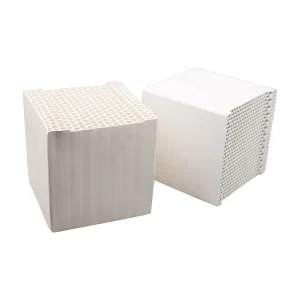
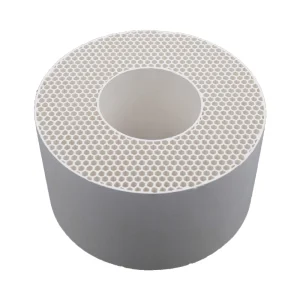
Precision-extruded cordierite, cordierite-mullite, and industrial catalytic structures formatted for regenerative thermal oxidizers (RTO) and high-throughput engine exhaust treating.
Decarbonization, VOC abatement, and energy cost controls drive engineering demand for advanced ceramic monoliths across Turkey's industrial heartland.
The industrial spine encompassing Gebze Organized Industrial Zone (GOSB), Tuzla Chemical Industrial Estate, and Dilovası heavy manufacturing plants relies heavily on continuous regenerative thermal oxidation (RTO) to abate toxic Volatile Organic Compounds (VOCs) and hazardous air pollutants (HAPs). High natural gas tariffs across Turkey require heat recovery efficiencies of ≥95%, achievable solely via high-purity cordierite-mullite honeycomb media.
Turkish manufacturers face rigorous environmental scrutiny under the Ministry of Environment, Urbanization and Climate Change (Çevre, Şehircilik ve İklim Değişikliği Bakanlığı) alongside the EU’s Carbon Border Adjustment Mechanism (CBAM). Honeycomb ceramics directly minimize scope 1 emission penalties by conserving megawatt-hours of fuel gas in metal finishing, rotogravure printing, coil coating, and synthetic leather plants.
The Marmara-Bursa-Kocaeli automotive belt forms the primary European logistics junction. Tier-1 exhaust aftertreatment developers and retrofitting centers require cordierite and metallic substrates for DOC, DPF, and SCR configurations compliant with Euro 5 and Euro 6 emission norms. Our direct-supply routes ensure immediate availability without European distributor markups.
Evaluate exact mineral compositions, cell densities (CPSI), crushing strengths, and fluid dynamic backpressures tailored to your specific process parameters.
| Material Phase | Al₂O₃ (%) | SiO₂ (%) | MgO (%) | Bulk Density (g/cm³) | CTE (×10⁻⁶/K, 25-1000°C) | Compressive Strength (MPa) | Recommended Service Duty |
|---|---|---|---|---|---|---|---|
| Standard Cordierite | 34.0 – 38.0 | 49.0 – 52.0 | 12.0 – 14.5 | 0.75 – 0.88 | ≤ 1.35 | ≥ 14.0 (Axial) | Automotive DOC/SCR, Clean-gas RTO units |
| Cordierite-Mullite | 48.0 – 55.0 | 38.0 – 43.0 | 6.0 – 9.0 | 0.85 – 0.98 | 1.8 – 2.2 | ≥ 18.5 (Axial) | High-particulate industrial RTO/RCO, Chemical incinerators |
| High-Alumina Monolith | 88.0 – 92.0 | 6.0 – 8.5 | ≤ 0.5 | 1.45 – 1.65 | 6.5 – 7.2 | ≥ 35.0 (Axial) | Hydrogenation reactors, Refinery bed guard filters |
| Silicon Carbide (SiC) | Trace | Trace | — | 1.60 – 1.85 | 3.8 – 4.4 | ≥ 25.0 (Axial) | Heavy diesel DPF, Aggressive chemical soot trapping |
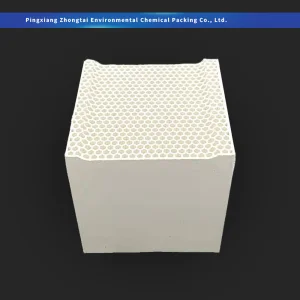
Channel geometries (square, hexagonal, triangular) directly balance fluid shear stresses against geometric surface area. A 40 CPSI block delivers ~720 m²/m³ of volumetric specific surface with negligible pressure drop (ΔP), safeguarding continuous blower motors from excessive electrical consumption.
Thermal cycling between 800°C and 150°C during 90-second valve reversal intervals introduces extreme radial and longitudinal stress gradients. Zhongtai’s proprietary cordierite formula resists over 40 quench cycles (water quench at 800°C) without structural cleavage or mechanical spalling.
Micro-porosities calibrated between 25% and 35% with an optimal median pore diameter of 4–8 μm provide mechanical anchors for gamma-alumina washcoats and precious metal (Pt/Pd/Rh) dispersions, preventing peeling during turbulent exhaust pulsations.
Factory-direct volume pricing, standard container loadings, and freight schedules direct from our Pingxiang manufacturing base to Marport, Kumport, and Haydarpaşa terminals.
| Product Code / Description | Dimensions (mm) | Cell Density | Material | FOB China (USD / pc) | CIF Istanbul Port (USD / pc)* | MOQ |
|---|---|---|---|---|---|---|
| ZT-RTO-150C (Standard RTO Block) | 150 × 150 × 300 | 40 / 43 CPSI | Cordierite | $4.20 – $5.80 | $4.80 – $6.50 | 500 pcs |
| ZT-RTO-150CM (Thermal Shock Media) | 150 × 150 × 300 | 40 / 50 CPSI | Cordierite-Mullite | $5.10 – $7.20 | $5.80 – $8.10 | 500 pcs |
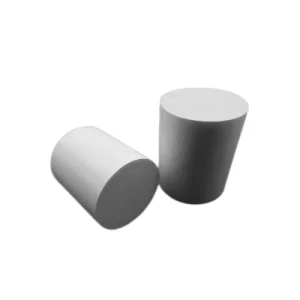
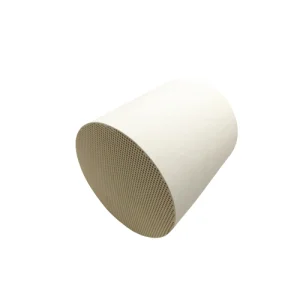
| ZT-CAT-400 (Automotive Substrate) | Φ 100 – 144, L 100 | 400 CPSI | Ultra-Low CTE Cordierite | $2.80 – $4.60 | $3.30 – $5.20 | 1,000 pcs |
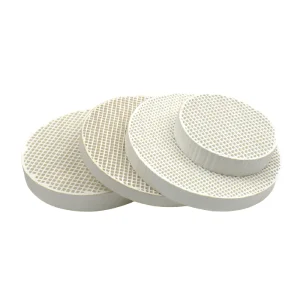
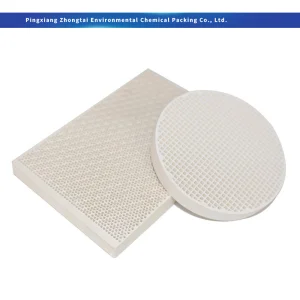
| ZT-IRP-132 (Infrared Burner Plate) | 132 × 92 × 12 | Pattern 8-Hole | Cordierite | $0.48 – $0.85 | $0.58 – $0.98 | 2,000 pcs |
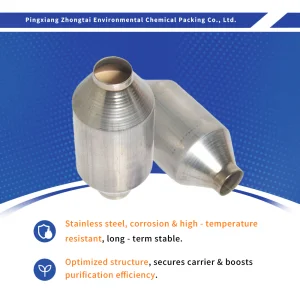
| ZT-MET-CAT (Metallic Substrate) | Custom Cylindrical | 100 – 300 CPSI | FeCrAl Alloy Core | $6.80 – $14.50 | $7.60 – $15.80 | 200 pcs |
| ZT-NEST-90A (Catalyst Bed Protection) | Φ 150 × 100 | Bird-Nest Perforated | 90% Al₂O₃ Corundum | $12.50 – $18.00 | $14.00 – $20.20 | 100 pcs |
*Note: CIF Istanbul estimates assume standard 20GP/40HQ container shipments to Ambarlı Port (Kumport/Marport) or Gebze Yılport. Exact freight costs fluctuate according to global shipping indices. Custom sizing, specialized wall thicknesses (e.g., 2.5 mil ultra-thin wall), and catalyst washcoating services are quoted upon engineering review.
Consignments ship via ocean carriers (COSCO, Maersk, MSC) reaching Ambarlı (European side) or Evyap/Yılport (Asian side) within 16–22 days. We furnish full documentation sets: ATR Certificates, Non-Fumigation Declarations, Batch Analysis Reports, and Commercial Invoices optimized for Turkish Customs tariff classification (HS Code 6909.12 / 6909.19).
Honeycomb ceramics are fragile if mishandled. We implement vacuum plastic shrink wrapping, edge board cushioning, drop-tested 5-ply corrugated master cartons, and fumigated timber pallets bolted with reinforced steel strapping, guaranteeing zero edge-breakage during maritime crossing and highway hauling across E-5 and TEM highways.
Our raw materials comply with EU REACH requirements (Regulation EC No 1907/2006) and RoHS frameworks as enforced by the Turkish Ministry of Trade. Free from asbestos, lead, cadmium, and hazardous leachable heavy metals, allowing worry-free disposal and recycling during routine plant turnarounds.
Why Tier-1 industrial buyers worldwide source direct from Jiangxi Pingxiang—the world's chemical packing and thermal ceramics epicenter.
Equipped with computerized continuous screw and hydraulic extruders capable of sustained 18 MPa injection pressures. Die design with micron-level tolerances ensures wall thickness variance stays within ±0.02 mm across every square centimeter of channel surface area.
Natural gas fired 160-meter multi-zone continuous tunnel kilns with digitized PID temperature feedback. Firing profiles balance the exothermic formation of synthetic cordierite crystals, eliminating free silica inclusions that trigger catastrophic thermal cracking.
Every firing lot undergoes automated laser dimensional inspection, bulk density evaluation, destructive crush testing, and X-ray fluorescence (XRF) phase purity verification. Test documentation accompanied by factory certificates is provided before goods depart.
As Istanbul manufacturing enters deep decarbonization phases, combustion fuels transition toward green hydrogen blends and bio-methane. Conventional ceramics suffer rapid structural recrystallization under high water-vapor partial pressures produced by hydrogen oxidation. Zhongtai R&D is currently deploying second-generation cordierite-mullite composite matrices with localized nano-zirconia grain boundary stabilizers, preserving mechanical durability up to 1400°C in high-humidity atmospheres.
Explore specialized catalyst substrates, direct-fit replacement monoliths, high-temperature burner plates, and refinery reactor bed media.
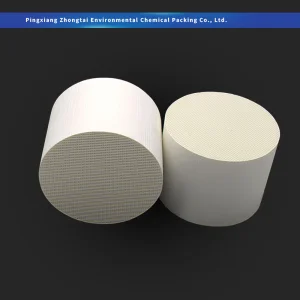
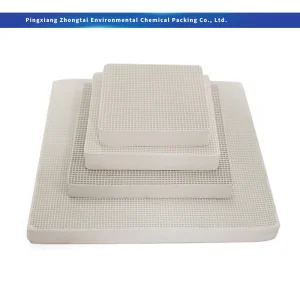
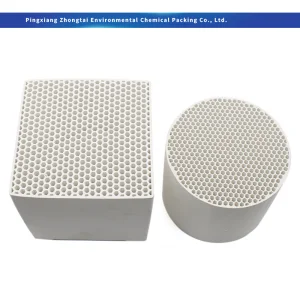
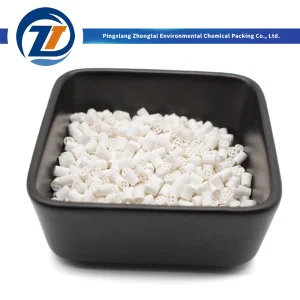
Avoid costly bed failures, high fan pressure drops, and premature replacement cycles by applying systematic procurement parameters.
Document the presence of halogenated solvents, silicone vapors, alkali particulates, and acidic species (SOx/HCl). Halogens demand silica-lean cordierite formulations, while high silica-rich coatings require specialized acid-resistant compositions to prevent pore blinding and glass-phase melting.
For modern multi-bed RTO systems with 60–90 second cycle rates, specify low thermal expansion cordierite (≤1.3×10⁻⁶/K). In metallurgical holding furnace exhaust lines exceeding 1200°C continuous temperatures, cordierite-mullite or fused corundum media should replace generic cordierite.
Balance volumetric heat transfer against electrical power drawn by system draft fans. Shifting from 40 CPSI (720 m²/m³) to 50 CPSI (880 m²/m³) increases heat transfer by ~22%, but increases gas pressure drop by up to 35% if gas velocity exceeds 2.2 m/s.
During RTO rebedding turnarounds, always apply 15–20 mm ceramic fiber blanket seals around reactor perimeter walls to prevent cold gas bypassing. Stagger block layers with cross-stacked joints (90-degree rotations between layers) to optimize convective mixing while avoiding vertical column misalignment.
Specific engineering and operational answers for plant managers, purchasing directors, and environmental EPC contractors.
Send your project parameters (operating temperatures, gas volume in Nm³/h, channel cell density, and target delivery port) to receive a direct factory engineering evaluation and CIF Istanbul quotation within 24 hours.
Send Inquiry Now