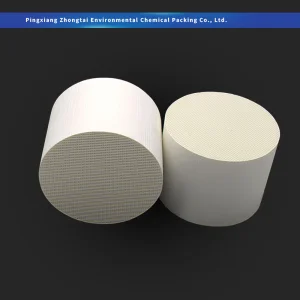
Direct factory supply of structural cordierite substrates configured for high volumetric heat capacity, low backpressure, and extreme thermal cycling tolerance.
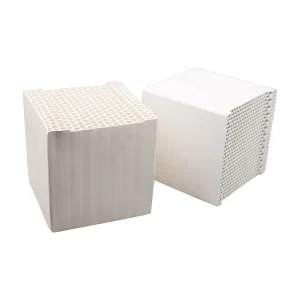
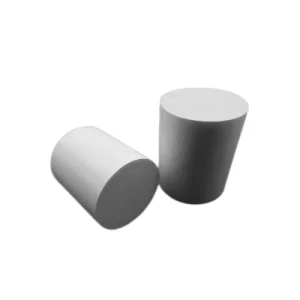
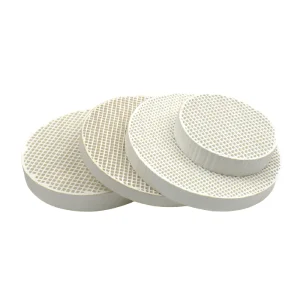
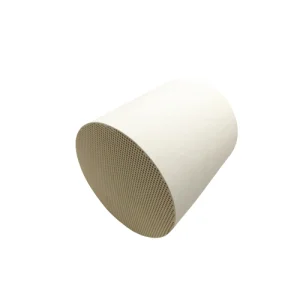
As the manufacturing heartland of Central-Eastern Europe, Hungary has transformed into a critical epicenter for advanced automotive propulsion, battery cell gigafactories, and downstream chemical synthesis. The Hungarian industrial landscape—spanning tier-one automotive plants in Győr, Kecskemét, and Debrecen, alongside colossal chemical complexes in Kazincbarcika and Tiszaújváros—faces unprecedented dual pressures: the aggressive decarbonization demands of the European Green Deal and stringent compliance with the EU Industrial Emissions Directive (IED 2010/75/EU).
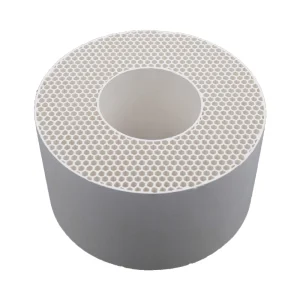
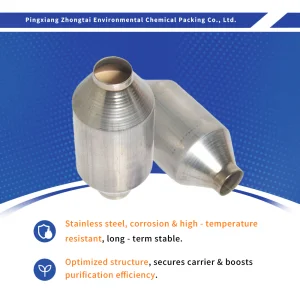
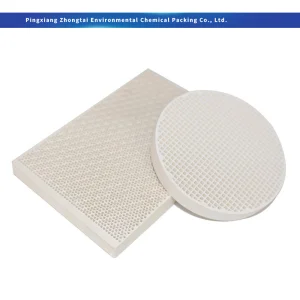
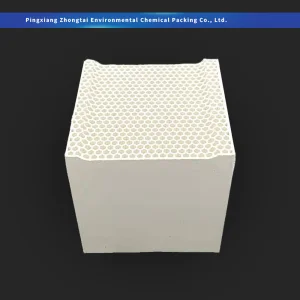
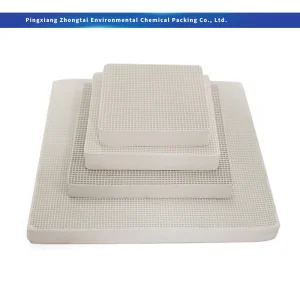
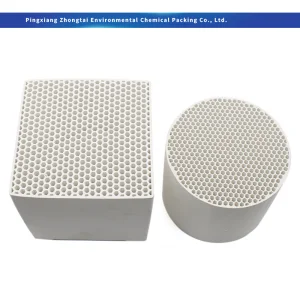
Within this hyper-demanding regulatory and operational paradigm, honeycomb ceramic monoliths serve as foundational functional media. Whether deployed as high-temperature regenerative thermal oxidizer (RTO) media to capture volatile organic compounds (VOCs) from massive automotive paint shops, or as washcoat catalyst carriers (DOC/DPF/SCR) for high-efficiency internal combustion and hybrid powertrains, precision extrusion ceramics directly determine energy recovery rates, backpressure dynamics, and legislative compliance.
Pingxiang Zhongtai Environmental Chemical Packing Co., Ltd. delivers over twenty years of direct ceramic synthesis, mineral formulation, and precision die-extrusion expertise to Hungarian plant engineers, system integrators, and procurement directors. By maintaining localized supply-chain logistics and providing full batch traceability from raw kaolin, talc, and synthetic mullite to high-temperature tunnel kiln sintering, we address the exact procurement criteria required by the Hungarian industrial market: minimal thermal degradation, resistance to alkali/acid vapor condensation, and custom cell geometry for minimal blower power consumption.
Specialized acid-resistant cordierite-mullite packings engineered to withstand N-Methyl-2-pyrrolidone (NMP) solvent recovery exhausts without surface glazing or micro-fracturing.
Ultra-thin wall (2.5 mil to 3.5 mil) cordierite monolith substrates delivering high geometric surface area (GSA) and rapid light-off kinetics for advanced hybrid emissions platforms.
High-alumina corundum and synthetic mullite regenerative beds designed to resist volatile organic cracking, polymer fouling, and cyclic thermal shocks up to 1350°C.
Globally, the honeycomb ceramic sector is experiencing a monumental transition driven by three macro catalysts: industrial energy efficiency mandates, transition to hydrogen-augmented fuels, and hyper-stringent particulate matter (PM) and non-methane hydrocarbon (NMHC) thresholds. Historically, regenerative thermal oxidizers operated on standard 25×25 or 40×40 cell count configurations with wall thicknesses exceeding 1.0 mm. Today, the global standard has pivoted sharply toward high-density, low-thermal-expansion structures capable of operating under continuous pressure differentials without mechanical failure.
With European industrial natural gas pricing experiencing sustained volatility, operating an RTO without maximum thermal recovery efficiency is an untenable cost center. Premium cordierite-mullite composite monoliths feature specific heat capacities ($C_p$) surpassing $1050 \text{ J/(kg}\cdot\text{K)}$ at $800^\circ\text{C}$ and bulk densities optimized around $0.85\text{–}1.05 \text{ g/cm}^3$. This thermo-physical balance enables regenerative systems to achieve thermal recovery efficiencies above 96.5%, allowing self-sustaining auto-thermal operation down to solvent concentrations as low as $1.5\text{–}2.0 \text{ g/Nm}^3$.
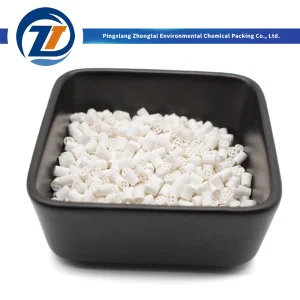
In Hungary's industrial zones, replacing degraded random ceramic saddles or first-generation block media with structured honeycomb matrices reduces natural gas consumption in 3-bed RTO units by up to 28%, significantly lowering EU ETS carbon liability.
As the European Parliament adopts refined Euro 7 frameworks, automotive engineers in Hungary are redesigning exhaust aftertreatment architectures. The new standards target not only tailpipe nitrogen oxides ($NO_x$) and soot particulates, but also ultra-fine particles down to 10 nm and cold-start emissions occurring within the first 60 seconds of operation.
This necessitates catalytic converter monoliths with significantly reduced thermal mass (facilitating instantaneous heat transfer from exhaust gases) coupled with higher cellular counts (up to 600–900 CPSI). Zhongtai’s proprietary high-purity synthetic cordierite achieves wall thicknesses down to 2.5 mils (approx. 0.063 mm), creating an ultra-high geometric surface area while avoiding channel bridging during robotic washcoat slurry impregnation.
Careful material selection ensures optimal longevity under severe industrial atmospheres. Below is the verified physical property matrix from our Pingxiang manufacturing base:
| Property Parameter | Standard Cordierite (2MgO·2Al₂O₃·5SiO₂) | Engineered Cordierite-Mullite | Corundum-Mullite (>85% Al₂O₃) | Silicon Carbide (SiC) Composite |
|---|---|---|---|---|
| Primary Sintering Phase | Orthorhombic Cordierite (>85%) | Cordierite + Needle Mullite | Corundum + Secondary Mullite | Recrystallized SiC Matrix |
| Working Temp. Limit (°C) | 1200 °C | 1350 °C | 1450 °C | 1550 °C |
| Bulk Density (g/cm³) | 0.80 – 0.95 | 0.95 – 1.15 | 1.30 – 1.65 | 1.60 – 1.95 |
| Thermal Expansion CTE (20–1000°C) | 0.9 – 1.4 × 10⁻⁶/K | 1.8 – 2.4 × 10⁻⁶/K | 4.5 – 5.8 × 10⁻⁶/K | 4.0 – 4.6 × 10⁻⁶/K |
| Thermal Shock Resistance (ΔT) | > 800 °C (Air Quench, 30 cycles) | > 700 °C (Air Quench, 30 cycles) | > 450 °C (Air Quench, 20 cycles) | > 900 °C (Rapid Water Quench) |
| Crush Strength (Axial, MPa) | ≥ 12.0 MPa | ≥ 18.5 MPa | ≥ 35.0 MPa | ≥ 45.0 MPa |
| Acid Resistance (ASTM C279) | ≥ 97.5% | ≥ 98.8% | ≥ 99.4% | ≥ 99.8% (Except HF) |
| Target Industrial Service | Automotive DOC/DPF, Standard RTO | Chemical RTO/RCO, Paint Shops | Petrochemical Furnaces, Molten Iron | Severe Diesel DPF, Corrosive Slags |
Operating high-temperature thermal purification systems in Central Europe involves unique operational challenges. Below are the targeted engineering solutions designed by Zhongtai for specific regional application hubs:
The Problem: A premium OEM manufacturing facility near Central Hungary operated a 3-chamber 60,000 Nm³/h RTO utilizing legacy 25×25 CPSI ceramic honeycombs. Particulate lint carryover and rapid switching cycles (60 to 90 seconds) caused channel plugging, localized thermal spalling, and an escalating pressure drop reaching 3,800 Pa, triggering frequent ID fan inverter trips.
The Solution: Zhongtai engineered a zoned regenerative ceramic configuration. The top thermal impact layer (300 mm) utilized high-mechanical-strength, bevel-edged 40×40 CPSI cordierite-mullite blocks designed to deflect abrasive dust without chipping. The middle and lower sections utilized high-density 50×50 CPSI cordierite with micro-grooved channel walls to maximize convective surface area ($A_s \ge 1100 \text{ m}^2/\text{m}^3$).
The Result: System pressure drop decreased to a stable 2,150 Pa (a 43% delta-P reduction), thermal efficiency increased to 96.2%, and auxiliary burner fuel usage was eliminated under continuous paint line solvent loading.
The Problem: A newly erected lithium battery cell manufacturing cluster in Eastern Hungary required emission abatement for its NMP drying furnaces. The flue stream contained traces of fluorinated compounds (organofluorine degradation products from PVDF binders) along with elevated moisture levels, posing a severe threat of acid hydrolysis and chemical dissolution to standard ceramic compositions.
The Solution: We deployed an alkali-stabilized, high-purity synthetic corundum-mullite composite monolith containing under 0.2% free quartz ($SiO_2$). This prevented high-temperature glassy-phase crystallization and silica volatilization, while resisting intermittent hydrofluoric and organic acid attack.
The Result: Over 18 months of continuous service verified through on-site boroscopic inspections showed zero surface vitrification, zero structural spalling, and uniform temperature retention across all regenerative beds.
Zhongtai continues to invest significantly in material science and automated tooling to address emerging decarbonization paradigms:
Provide your gas volume, chemical composition, and chamber dimensions. Our process specialists will deliver CFD simulation data, custom cell geometries, and competitive CIF Budapest/Debrecen price quotations within 24 hours.
Preserving complete technical specifications across automotive emission monoliths, catalytic substrates, high-temperature infrared plates, and refinery bed supports.
Direct engineering responses addressing logistics, technical compliance, material characterization, and operational installation in Hungary and the broader Central European common market.
