Essential catalyst bed hold-downs, gas dehydration desiccants, and acid-resistant support media tailored for Mediterranean industrial units and regional transshipment requirements.
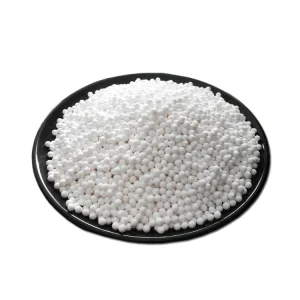
Larnaca Gas Drying Adsorbent Desiccant Activated Alumina Spheres
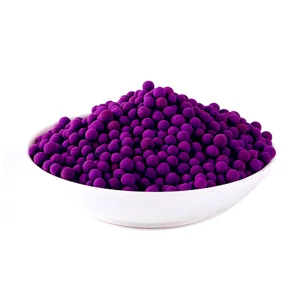
Cyprus Marine & Industrial Odor Scrubbing KMnO4 Activated Alumina
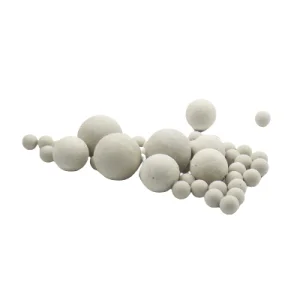
Vasiliko-Larnaca Reactor Bed Support 17% Inert Ceramic Porcelain Balls
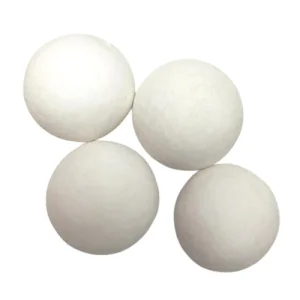
Larnaca Desalination & Chemical Process 23% Inert Porcelain Media Balls
Positioned on Cyprus’s southern coastline, Larnaca represents an essential operational node connecting the Eastern Mediterranean gas fields with European shipping corridors and municipal utility infrastructure.
The Larnaca Seawater Reverse Osmosis (SWRO) facility supplies up to 64,000 cubic meters of potable water daily. Ceramic balls and structured filter beds serve as indispensable pre-filtration layers, ensuring non-compressible media beds that trap suspended colloidal solids and marine silt before saline streams reach high-pressure spiral membranes.
Located adjacent to the Larnaca district, the Vasiliko Energy Hub consolidates Cyprus's primary oil storage, LNG regasification infrastructure, and industrial power generation. Hydrotreating units, amine sweetening towers, and fuel storage vapor scrubbers require high-crush-strength alumina inert balls to maintain uniform fluid distribution under elevated thermal swings.
Larnaca Port's ongoing modernization establishes it as a vital logistical transshipment center for the Levant Basin and offshore natural gas operations (Aphrodite, Cronos, Calypso fields). Direct containerized shipping of high-density ceramic packing avoids handling damage and reduces turnaround costs for offshore drilling contractors.
Selecting the optimal inert ball composition requires balancing mechanical crush resistance, chemical inertia, thermal conductivity, and silica threshold to prevent downstream catalyst fouling.
| Property Parameter | Standard Inert (17–23% Al2O3) | Mid-Alumina (50–65% Al2O3) | High-Purity Corundum (99.2% Al2O3) | Porous Catalyst Hold-Down |
|---|---|---|---|---|
| Bulk Density (kg/m³) | 1,350 – 1,420 | 1,650 – 1,750 | 2,050 – 2,150 | 1,100 – 1,250 |
| Crush Strength (1/2" Sphere) | > 5.5 kN / particle | > 11.0 kN / particle | > 22.0 kN / particle | > 4.0 kN / particle |
| SiO2 Content (%) | 70.0 – 76.0% | 30.0 – 42.0% | < 0.20% (Ultra-Low) | 65.0 – 72.0% |
| Water Absorption Rate (%) | < 1.5% | < 0.8% | < 0.2% | 15.0 – 28.0% |
| Max Operating Temperature | 1,100 °C | 1,350 °C | 1,650 °C | 1,050 °C |
| Acid Resistance (ASTM C279) | 99.2% (excluding HF) | 99.6% (excluding HF) | > 99.8% (Full pH Range) | 98.5% |
| Target Larnaca Application | General water filtration, light amine beds | Refinery gas driers, thermal stores | Secondary reformers, sour gas scrubbers | Catalyst support, high voidage hold-downs |
Process Engineer’s Operational Note: In high-temperature steam environments such as synthesis gas reforming or primary natural gas desulfurization, silica leaching represents a critical risk factor. Silica vaporizes into the process stream, depositing downstream on cooler heat exchangers and catalytic cracking catalysts. For Larnaca LNG, hydrogen, or sulfur recovery units operating above 400 °C in steam presence, our ≥99% Al2O3 corundum inert balls are strictly required to ensure zero catalyst poisoning.
Combining inert ceramics, structured internals, and advanced adsorbent media to stabilize tower hydrodynamics across demanding operational settings.
Improper bed grading leads to severe channeling, elevated pressure drops, and catastrophic catalyst migration. Zhongtai provides multi-layer graduated bed configurations (from 2" support spheres at the bottom grid, stepping up through 1", 1/2", 1/4", to 1/8" capping layers). This design mitigates fluid turbulence and prevents fluidization of expensive catalysts under surging gas flow.
Vasiliko and neighboring refining assets operate sulfur recovery systems under thermal fluctuations. Our high-density thermal storage and refractory ceramic balls offer superior resistance to elemental sulfur deposition, sulfuric acid condensation during unit turnarounds, and repetitive thermal cycling up to 1,400 °C.
Given Cyprus's severe climatic water scarcity, reclaimed wastewater from the Larnaca Sewerage and Drainage Board (LSDB) requires tertiary treatment for agricultural irrigation. Our food-grade calcium sulfite dechlorination ceramics break down residual free chlorine within milliseconds without hazardous chemical dosing.
Send our process team your tower diameter, bed height, gas/liquid velocities, and operating parameters for a complimentary hydrodynamics and sizing recommendation.
As Cyprus aligns with EU Green Deal goals and transitions toward offshore natural gas and clean hydrogen networks, our R&D team continuously advances ceramic substrate capabilities.
Optimizing micro-pore topologies in activated alumina and zeolite spheres to increase dynamic adsorption capacities by 18% for regional fuel gas desulfurization.
Engineered zero-alkali alumina supports configured for ammonia cracking and high-pressure methane steam reforming without carbon deposition.
Silicon Carbide and fused mullite-corundum matrices designed for concentrated solar power (CSP) and thermal energy storage across southern European solar fields.
Biochemically functionalized micro-porous ceramic beads designed for targeted pharmaceutical and micro-pollutant breakdown in municipal effluent streams.
Every manufacturing campaign is certified against strict ASTM, DIN, and ISO protocols, ensuring rapid clearance at the Port of Larnaca and immediate site installation.
All products shipped to Larnaca comply with European Union REACH regulations (EC 1907/2006), verifying the complete absence of Substances of Very High Concern (SVHC). Products are certified heavy-metal free, non-hazardous, and accompanied by comprehensive Material Safety Data Sheets (MSDS) and batch Certificates of Analysis (COA).
Before release from our Pingxiang kilns, samples from every 20-ton batch undergo hydraulic press crushing tests, helium pycnometry for density verification, and X-ray fluorescence (XRF) spectrometry for elemental purity. Test coupons and stamped inspection reports are archived for 5 years per ISO 9001 quality audits.
Our dedicated logistics desk coordinates direct container bookings with major shipping lines (MSC, COSCO, Maersk) connecting Chinese maritime gateways directly to Port of Larnaca or Limassol. Standard shipping utilizes 25 kg woven bags with inner PE liners, stacked on heat-treated ISPM-15 wooden pallets and stretch-wrapped in anti-UV film.
Complete product range for high-temperature reformers, mineral ball mills, regenerative thermal oxidizers, and corrosive mass transfer columns.
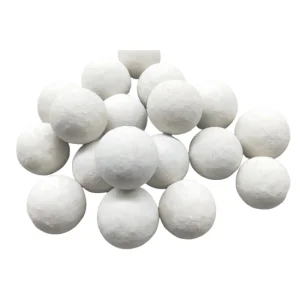
Larnaca Tower Packing Mid-Alumina Inert Ceramic Ball Media
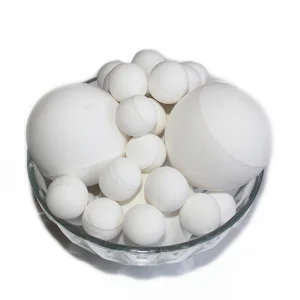
Vasiliko High-Temperature 99% AL2O3 Inert Alumina Ceramic Spheres
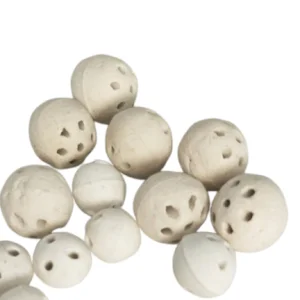
Cyprus Chemical Porous Ceramic Ball for Catalyst Bed Hold-Down
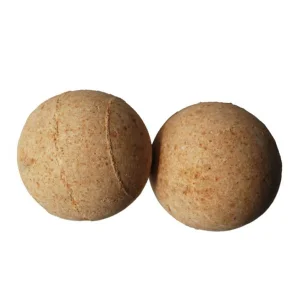
Larnaca Kilns & Furnaces High Temperature Refractory Ceramic Balls
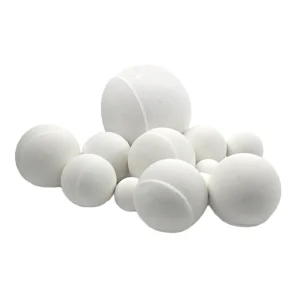
Cyprus Mineral & Cement Plants High-Density Alumina Grinding Balls
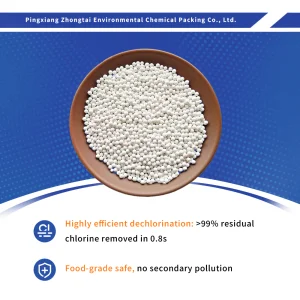
Larnaca Water Treatment Food-Grade Calcium Sulfite Dechlorination Balls
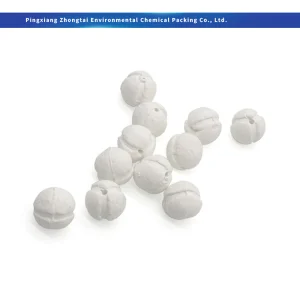
Vasiliko High-Flow Perforated Porous Ceramic Catalyst Support Media
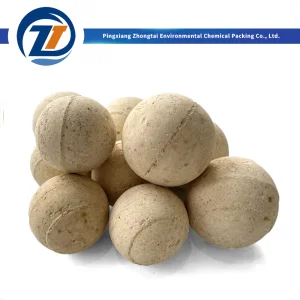
Larnaca RTO & Incinerator Heat Storage Regenerative Ceramic Balls
In-depth responses covering process design, chemistry selection, transit timelines, and site integration across Larnaca industrial projects.
Connect directly with Pingxiang Zhongtai’s international engineering team. Receive factory-direct pricing, certified test reports, and tailored delivery schedules for your project site in Cyprus.
