Pre-selected engineered ceramic materials calibrated to fulfill strict API-standards across Santos Basin and Rio de Janeiro downstream units.
Navigating Brazil's industrial transformation, regulatory import regimes, and heavy industrial catalyst demands.
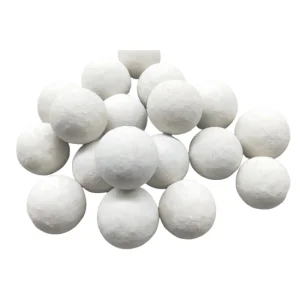
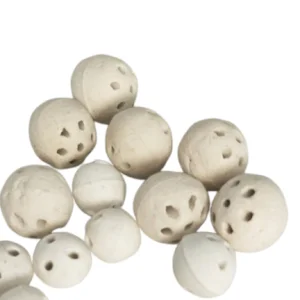
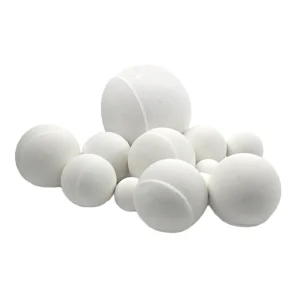
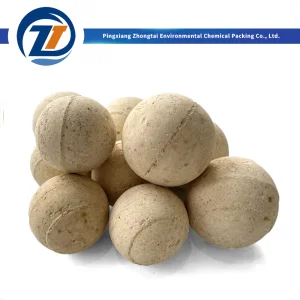
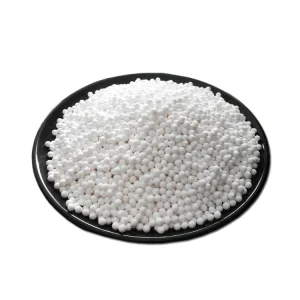
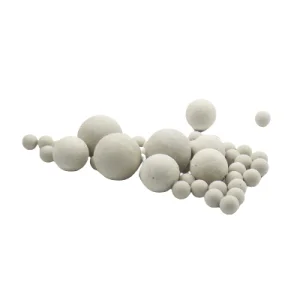
Petrobras refineries like REPLAN and REVAP require hydroprocessing (HDT/HDS) catalyst bed top-topping and bottom-retention media designed to resist high differential pressures. Our standard 17-23% and 99% inert ceramic spheres endure violent hydrodynamics without spalling or causing severe backpressure drops.
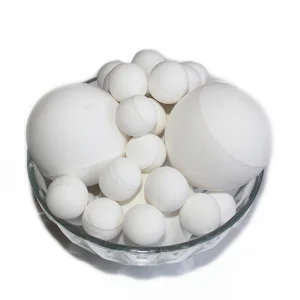
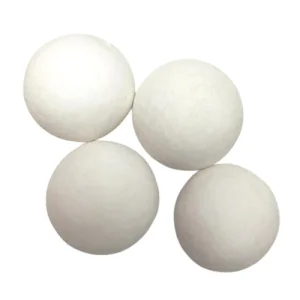
Operating in Brazil's iron ore corridor necessitates microstructural integrity under heavy wear. In grinding circuits, conventional steel balls introduce excessive iron contamination and consume significant operational power. Zhongtai's 92% high-alumina wear-resistant balls dramatically prolong ball-mill longevity while minimizing contamination.
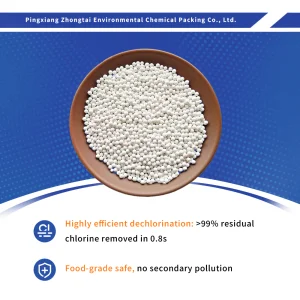
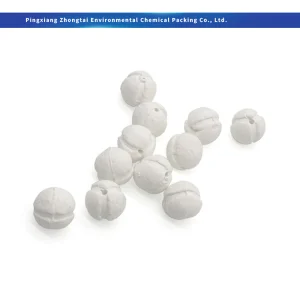
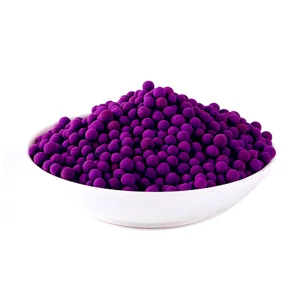
Brazil dominates worldwide ethanol fuel distribution. Modernizing distillation towers with high-performance random packings, accompanied by molecular sieve and desiccant activated alumina balls, ensures precise azeotropic breaking and high anhydrous grade output with minimal energy dissipation.
Factory-direct FOB China pricing vs. typical Santos/Paranaguá landed benchmarks, fully compliant with Petrobras N-1618 engineering guidelines.
| Classification | Al₂O₃ Purity | Cold Crush Strength (1/2") | Water Absorption | Chemical Resistance | Indicative Price Range (USD/MT) |
|---|---|---|---|---|---|
| Standard Inert Bed Support | 17% – 23% | > 5.5 kN/ball | < 3.0% | Acid > 99.5%, Alkali > 85% | $450 - $750 / MT |
| Medium Alumina Support | 23% – 30% | > 8.0 kN/ball | < 1.5% | High Thermal Shock Proof | $600 - $880 / MT |
| High Alumina Grinding Media | 90% – 92% | Mohs Hardness 9.0 | < 0.02% | Wear loss < 0.01% (Self-grind) | $1,150 - $1,650 / MT |
| Ultra-Pure Catalyst Top Retainer | ≥ 99.0% | > 12.0 kN/ball | < 1.0% | SiO2 < 0.2%, Zero Steam Leaching | $1,850 - $2,600 / MT |
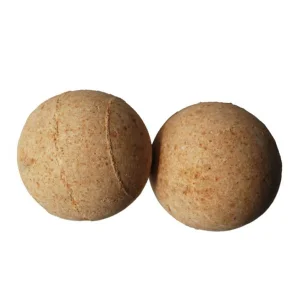
| Thermal Storage Refractory Ball | 25% – 65% | Refractoriness > 1750°C | < 2.5% | Cyclic Heat Capacity > 1.05 kJ/kg·K | $700 - $1,200 / MT |
Eliminating logistics delays, Siscomex clearance frictions, and technical compliance headaches.
We supply dedicated export documentation aligned with Mercosur Common Nomenclature (NCM 6909.19 and 6909.12), ensuring predictable II (Import Tax) and ICMS calculations, expediting green channel clearance through Brazilian customs authorities without unexpected administrative holds.
Long oceanic voyages through humid equatorial waters risk bag degradation. Zhongtai enforces heavy-duty 1,000 kg UV-resistant PP jumbo bags featuring double polyethylene vapor-barrier liners, anchored on phytosanitary IPPC heat-treated wooden pallets designed for port handling.
Advancing our proprietary micro-crystalline formulation reduces interstitial crystal boundary defect rates, pushing crush resistance limits beyond 15 kN for extreme gasification plants while lowering overall sintering carbon footprint to support corporate Net Zero targets across South America.
Key technical and procurement questions answered by our export engineering team.
At high reactor operating temperatures and elevated partial pressures of steam, low-purity ceramic balls release volatile silicic acid into the hydrocarbon feed stream. This free silica deposits irreversibly onto active hydrotreating catalysts (CoMo/NiMo), blinding catalyst pores and accelerating bed deactivation. In these severe scenarios, Zhongtai specifies ≥99% alpha-alumina ceramic spheres with <0.2% silica content.
Transit duration from our Pingxiang facility via Ningbo or Shanghai port to major Brazilian maritime terminals (Santos, Paranaguá, Rio de Janeiro, Suape) generally spans 35 to 45 sea days. We maintain safety stock buffers of standard sizes (1/8", 1/4", 1/2", 3/4", 1", and 2") to dispatch containers within 7 working days upon LC issuance or deposit clearance.
Yes. Our in-house technical team provides full reactor grading configuration advice based on reactor diameter, fluid velocities, and catalyst pellet dimensions. We help determine exact grading layer depths (typically graduated from 2" at the support grid down to 1/8" beneath the main catalyst bed) to optimize fluid distribution and prevent particle entrainment.
Explore our complete export series designed for wet grinding, thermal oxidizers, dechlorination, and acid recovery columns.