DIN EN ISO 9001 Certified • German Process Plant Engineering Grade

China Ceramic Ball Manufacturers & Factory for the Germany Market

High-purity inert alumina support media, catalyst bed topping spheres, and mass-transfer packing engineered in Pingxiang for strict deployment across German chemical hubs, refineries, and environmental systems.

Direct-From-Factory Solutions

High-Performance Adsorbents & Standard Inert Support Spheres

Specifically matched for gas phase separation, air drying, and initial hydroprocessing beds across German industrial chemical corridors.
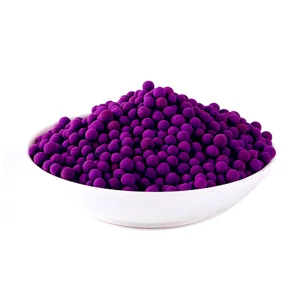
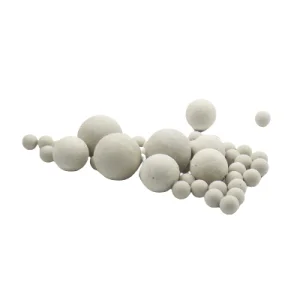
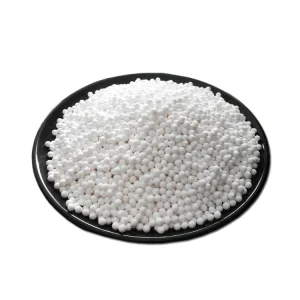
Wholesale Adsorbent Desiccant Activated Alumina Ball Manufacturer, Manufacturers
Gas Dehydration Media

Activated Alumina Adsorbent Desiccant Ball for German Air Separation

Explore Product
Wholesale Potassium Permanganate Activated Alumina Manufacturers, Factories
H2S / VOC Chemisorption

Potassium Permanganate Impregnated Alumina for Industrial Emission Control

Explore Product
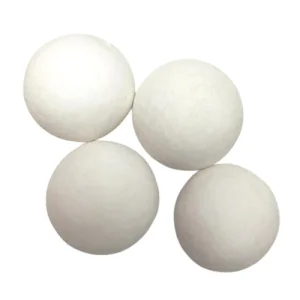
China 17%AL2O3 Inert Alumina Ceramic Ball Manufacturer, Factories
Cost-Engineered Support

17% Al2O3 Inert Alumina Ceramic Ball for Fixed Bed Reactors

Explore Product
China 23%AL2O3 Inert Alumina Ceramic Ball support media porcelain balls Factory, Factories
High Crush Strength

23% Al2O3 Support Media Porcelain Ball for Heavy Hydrocracking Units

Explore Product
Industry Whitepaper • Market Dynamics

The Commercial & Industrial Landscape of Ceramic Support Media in Germany

Germany maintains its status as Europe's primary chemical powerhouse, generating massive demand for high-integrity refractory and inert ceramic packing solutions. From the integrated Verbund structures of BASF in Ludwigshafen to the specialized petrochemical clusters in North Rhine-Westphalia (Ruhr Valley), ChemCoast Park Stade, and the Leuna chemical complex in Saxony-Anhalt, German industrial facilities operate under rigorous operating parameters. Ceramic balls serve not merely as structural vessel fillers, but as mission-critical components in fixed-bed catalytic reactors, steam methane reformers (SMR), gas purification columns, and regenerative thermal oxidizers (RTO).

As European chemical operators navigate fluctuating energy costs and accelerate decarbonization programs, operating efficiency depends profoundly on the mechanical endurance and chemical inertia of ceramic support spheres. A catalytic reactor turnaround (Stillstand) at a German refinery can incur hundreds of thousands of Euros per day in downtime costs. Consequently, German process engineers demand spherical media with zero catastrophic fragmentation risk, exceptionally low silica leaching rates, and predictable pressure drop distributions across millions of operational cycles.

Key Engineering Finding for German Buyers: In high-pressure hydrotreating and desulfurization processes, low-grade ceramic balls suffer from hydrothermal micro-fissuring. When exposed to continuous high-pressure steam at temperatures above 400°C, soluble silica (≤SiO2) migrates out of the porcelain matrix, forming volatile silicic acid species that irreversibly coat downstream precious-metal catalysts (such as platinum, palladium, and nickel-molybdenum beds). Zhongtai's engineered 99% alpha-alumina formulation curtails free silica content to strictly <0.1%, safeguarding multi-million-Euro catalyst inventories.

Petrochemical & Refining

Widely utilized in hydrodesulfurization (HDS), hydrocracking, catalytic reforming, and Claus sulfur recovery units across major German refineries in Schwedt, Gelsenkirchen, and Burghausen.

Cost & Supply Chain Resilience

German EPC firms and procurement teams benefit directly from Chinese economies of scale, mitigating domestic energy surcharges and achieving 30–45% total procurement savings without compromising QA.

German Compliance & LkSG Ready

Full adherence to the German Supply Chain Due Diligence Act (Lieferkettensorgfaltspflichtengesetz - LkSG), EU REACH regulation, zero asbestos certification, and complete material batch traceabilities.

Material Science • Engineering Standards

Technical Matrix & Comparative Engineering Properties

To satisfy the rigorous safety requirements of German technical inspection associations (TÜV) and plant operators conforming to DIN standards (DIN EN ISO 10545 for physical properties, ASTM D4179 for single-pellet crush strength), our ceramic balls are classified into precise chemical formulations. Each sphere undergoes precise forming via isostatic pressing or mechanical granulating, followed by multi-stage thermal conditioning in automated high-temperature tunnel kilns operating up to 1650°C.

Ceramic Media Grade Al2O3 Content (%) Bulk Density (kg/m³) Crush Strength (Ø 25mm) Water Absorption (%) Max Operating Temp Primary Application in Germany
Standard Inert Alumina 17 – 23% 1350 – 1420 > 2.5 kN / ball ≤ 1.5% 1100 °C Catalyst support in light hydrotreaters, pre-beds
Mid-High Alumina 23 – 30% 1400 – 1480 > 3.8 kN / ball ≤ 1.0% 1250 °C Secondary reforming, severe gas dehydration columns
High Alumina Media 90 – 92% 1950 – 2050 > 12.0 kN / ball ≤ 0.05% 1500 °C Abrasive wear milling, deep hydrocracker support grids
Ultra-Pure Alpha-Alumina ≥ 99.2% 2100 – 2250 > 22.0 kN / ball ≤ 0.02% 1650 °C Steam methane reforming, zero silica leaching tolerance
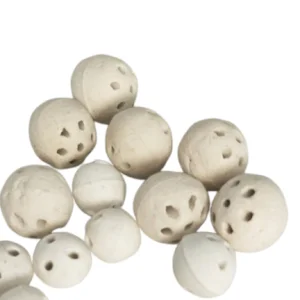
Porous / Perforated Support 20 – 28% 1200 – 1300 > 2.0 kN / ball 12 – 18% 1150 °C Low-ΔP flow distribution, particulate filtration
Thermal Storage Refractory High Cordierite/Mullite 1350 – 1450 > 3.0 kN / ball ≤ 2.5% 1350 °C RTO beds in automotive paint shops and chemical oxidizers
Precision Manufacturing Hub

Why Sourcing from Pingxiang, Jiangxi Outperforms European Distribution Intermediaries

Direct integration into the world's dense chemical ceramic cluster gives our manufacturing facility uncompromised raw material access, precision kiln engineering, and unmatched scale.

20+
Years Continuous Engineering & Export Track Record
35,000
Metric Tons Annual Output Capacity Across Multiple Lines
≤ 0.05%
Strict Batch-Level Free Silica Tolerance on High-Purity Lines
100%
XRF Spectrometry & Compressive Crush Verification
Pingxiang, Jiangxi is globally recognized as the historic capital and manufacturing nexus for industrial packing and catalyst support ceramics. By establishing our manufacturing plant directly within this regional cluster, Pingxiang Zhongtai Environmental Chemical Packing Co., Ltd. controls the complete mineral extraction-to-sintering supply chain. We procure premium calcined bauxite, high-grade alpha-alumina powder, and plasticizing clays directly at source. High-tonnage isostatic pressing equipment eliminates internal voids, micro-bubbles, and lamination defects that commonly cause catastrophic stress fractures in cheaper roll-formed alternatives. Furthermore, our computerized tunnel kilns guarantee uniform temperature distribution across every single ceramic spherical layer, eliminating uneven thermal expansion stresses.
Supply Chain • QA & Compliance

Seamless Compliance with German Industrial Procurement Standards

German corporate procurement policies are governed by uncompromising standards of safety, environmental stewardship, and legal transparency. European plant directors cannot afford supply chain liabilities. When ordering from Zhongtai, German enterprises receive full institutional backing, structured documentation, and regulatory compliance that mirror domestic European manufacturers:

EU REACH Compliance & SVHC Absence

Certified absence of Substances of Very High Concern (SVHC) under European Regulation (EC) No 1907/2006. Inert ceramic structures are chemically stable, fully vitrified, and completely non-hazardous during handling and bed turnaround.

Logistics via Hamburg, Bremen & Duisburg

Direct sea-freight routing through the Port of Hamburg and Bremerhaven, or accelerated rail transport through the Yiwu-Madrid / Chongqing-Duisburg rail lines. All shipments are palletized on fumigation-free or heat-treated ISPM-15 IPPC-certified EPAL euro-pallets.

Third-Party Inspection (TPI) Endorsed

Every export shipment can be inspected by independent international testing agencies, including SGS, TÜV Rheinland, Bureau Veritas, or Intertek. Batch Certificates of Analysis (COA) with atomic emission spectrometry are included inside every batch consignment.

Complete Industrial Product Catalog

Engineered Packing, High-Alumina Grinding Media & Specialized Reactor Spheres

Complete ceramic solutions engineered for distillation columns, chemical reactors, high-temperature heat exchange, and water conditioning systems across Europe.
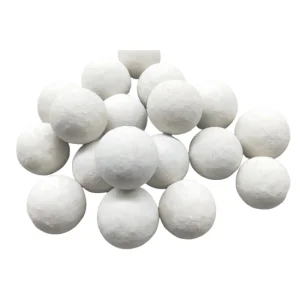
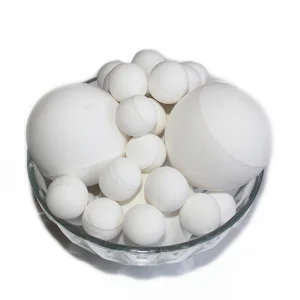
Wholesale Mid-Alumina Ceramic Ball Tower Packing Manufacturer, Quotes
Random Tower Packing

Mid-Alumina Ceramic Ball Random Packing for German Acid Absorbers

Explore Product
China 99%AL2O3 Inert Alumina Ceramic Ball Manufacturer, Supplier
Ultra-Low Silica <0.1%

99% Al2O3 Inert Alumina Ceramic Ball for Severe SMR Ammonia Duty

Explore Product
China Porous Ceramic Ball for catalyst covering and supporting material Manufacturer, Manufacturers
Flow Distribution

Porous Ceramic Ball Catalyst Covering & Support Media

Explore Product
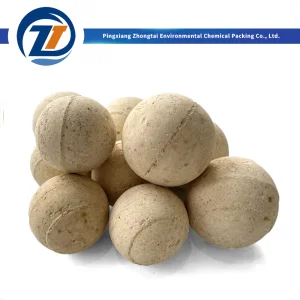
Wholesale High temperature resistance ceramic refractory ball Manufacturers, Suppliers
High Temp Sintered

High-Temperature Refractory Ceramic Ball for German Steel Furnaces

Explore Product
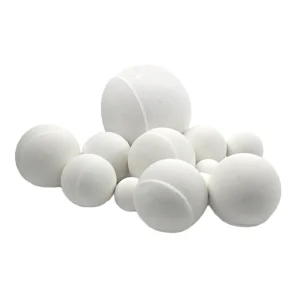
Wholesale Alumina Grinding Ball used in ball mill Suppliers, Factory
Ultra-Low Wear Rate

92% Al2O3 Grinding Ball for Ultrafine Mineral & Glaze Processing

Explore Product
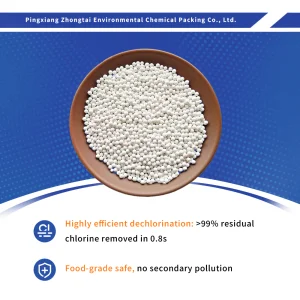
Wholesale Food Grade Calcium Sulfite Ceramic Dechlorination Media Balls Manufacturer, Quotes
Drinking Water Grade

Calcium Sulfite Ceramic Dechlorination Media for European Water Conditioning

Explore Product
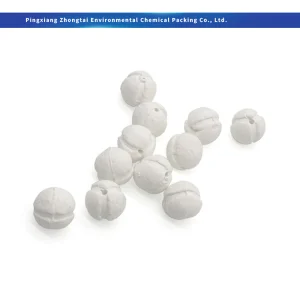
Wholesale High Performance Perforated Ceramic Ball Porous Catalyst Support Media for Chemical Reactor Manufacturer, Manufacturers
Perforated Macro-Pore

Perforated Hole Ceramic Ball for High-Velocity Reactor Flow Redistribution

Explore Product
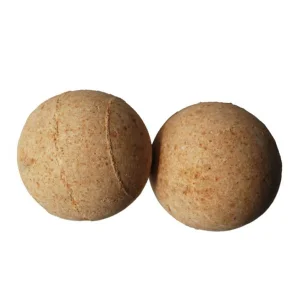
Wholesale High Density Heat Storage Ceramic Ball Refractory Regenerative Ball for RTO and Heating Furnace Suppliers, Quotes
RTO Heat Recovery

High-Density Regenerative Ceramic Heat Storage Ball for Environmental RTOs

Explore Product
Industry Trajectory • Energy Transition

Next-Generation Applications: Hydrogen (H2) Economy, Carbon Capture & Sustainable Manufacturing

Germany's commitment to achieving climate neutrality by 2045 via the "Energiewende" has sparked profound technological adaptations across chemical synthesis and heavy manufacturing. Massive capital investments are pouring into blue and green hydrogen infrastructure across Northern Germany (such as Clean Hydrogen Coastline around Wilhelmshaven and Rostock) and direct reduced iron (DRI) steelmaking in Duisburg and Salzgitter. Ceramic ball technology is rapidly adapting to support these next-generation thermodynamic environments:

1. Green Hydrogen Electrolysis & Gas Purification: Ultra-dry hydrogen generation via pressurized alkaline and PEM electrolyzers requires activated alumina desiccant beds and high-surface-area molecular sieves capable of reducing moisture levels down to dew points of −70°C. Our activated alumina spheres achieve uniform bulk density and zero particle dusting, ensuring that downstream compressors and fuel cell membrane electrodes remain free from fine particulate blinding.

2. Direct Reduced Iron (DRI) Syngas Pre-Heating: Transitioning German blast furnaces to hydrogen and reformed synthetic gas demands refractory regenerative media that withstand intense cycling between reducing hydrogen atmospheres and high-temperature flue gases. Zhongtai's cordierite-mullite composite balls exhibit minimal thermal expansion coefficients, effectively preventing spalling during rapid emergency depressurizations.

3. Direct Air Capture (DAC) and Carbon Utilization: Emerging carbon capture, utilization, and storage (CCUS) demonstration facilities along the Rhine-Ruhr river basin utilize structured ceramic saddles and perforated packing media to optimize contact between capture amines and high-volume flue gases while keeping operational fan electrical loads minimal.

Expertise • Authoritativeness • Trust

Frequently Asked Technical & Procurement Questions for German Engineers

Spec-level engineering answers addressing crushing metrics, silica contamination, customs documentation, and plant integration.

What are the key technical differences between 17-23% Al2O3 and 99% Al2O3 ceramic balls in German hydrocracking reactors?
The fundamental distinction lies in chemical composition, crystalline structure, and free silica (≤SiO2) migration risk. Standard 17-23% inert porcelain balls consist primarily of a mullite and vitreous silica phase. While mechanically robust (>2.5 kN crush strength) and highly cost-efficient for ambient gas dehydration, pre-beds, and atmospheric distillation, the free silica phase can solubilize in high-temperature steam (>350°C) environments. For severe hydrotreating, hydrocracking, secondary reforming, and ammonia synthesis, German operators specify 99% alpha-alumina (α-Al2O3 corundum matrix) spheres. These have less than 0.1% SiO2, exceptional single-pellet crush strengths exceeding 20 kN, and zero tendency to leach volatile silicic acids that foul downstream noble-metal catalysts.
How does Zhongtai ensure compliance with the German Supply Chain Due Diligence Act (LkSG)?
We operate fully audited, vertically integrated manufacturing facilities governed by ISO 9001 (Quality Management), ISO 14001 (Environmental Management), and ISO 45001 (Occupational Health & Safety). Our supply chain protocols strictly forbid any form of child labor, forced labor, or unsafe working environments, aligning directly with the statutory obligations of German Tier-1 purchasers under the Lieferkettensorgfaltspflichtengesetz (LkSG). We provide our German partners with transparent compliance documentation, environmental impact disclosures, and open audit access for third-party auditing firms.
What packing standards and pallet specifications are utilized for sea freight to German ports?
To integrate directly into European high-bay automated warehouses and ensure zero dockside handling delays, all shipments destined for Germany are packed in 25 kg multi-wall woven PE bags or 1000 kg heavy-duty UV-stabilized jumbo ton bags (FIBC). These are secured on standardized 1200 × 800 mm or 1200 × 1000 mm heat-treated, ISPM-15 IPPC-stamped fumigation-free wooden or composite euro-pallets. Pallet stacks are fully shrink-wrapped with waterproof PE foil and fitted with heavy-duty edge protectors to endure maritime container routes arriving at the Port of Hamburg or Bremerhaven.
Can German customers request custom sizing, graded bed configurations, and third-party testing?
Yes. A primary operational advantage of ordering directly from our manufacturing facility is custom gradation. Typical reactor support beds require layered size distributions from top to bottom (e.g., 3mm, 6mm, 10mm, 13mm, 19mm, 25mm, up to 50mm) to minimize pressure drop and prevent catalyst pellets from slipping into the support grid. We produce exact dimensional tolerances (±1mm on diameter) and can coordinate independent batch testing (crushing strength, bulk density, acid solubility, XRF spectral analysis) with SGS, TÜV Rheinland, or Bureau Veritas prior to container sealing.
What is the typical ocean freight transit time and customs clearance protocol for deliveries to Germany?
Standard ocean freight from Chinese major ports (Shanghai, Ningbo, Shenzhen) to Hamburg or Bremerhaven takes approximately 28 to 35 calendar days on direct vessel schedules. For accelerated plant turnaround requirements, the China-Europe Railway Express (Yiwu/Chongqing to Duisburg/Hamburg) provides an overland transit time of 16 to 20 days. We furnish complete commercial invoices, packing lists, original bills of lading, Certificates of Origin, and detailed MSDS/TDS documentation to guarantee instantaneous customs processing via German ATLAS electronic clearance systems.

Equip Your German Process Columns with Certified Ceramic Media

Connect directly with our chemical ceramics engineering team in Pingxiang. We deliver tailor-made quotes, full batch Certificates of Analysis, physical laboratory samples, and customized logistics to Hamburg, Duisburg, or your plant doorstep.

Send Inquiry Now