Core ceramic media engineered for ENI refineries, Versalis polymer facilities, and Northern Italian industrial air treatment plants requiring rigorous thermal shock durability.
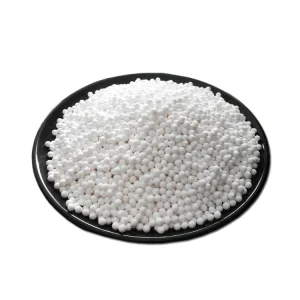
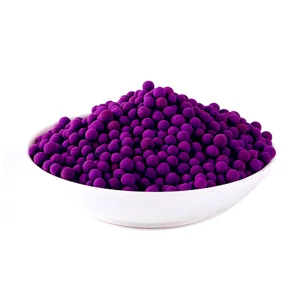
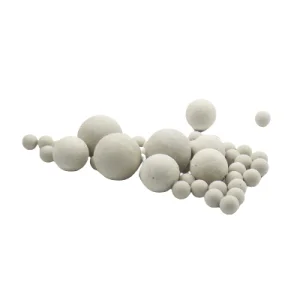
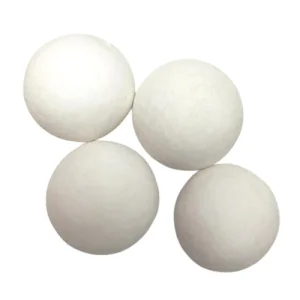
Understanding the transition from traditional processing to decarbonized refining within Italy's prime industrial manufacturing belts.
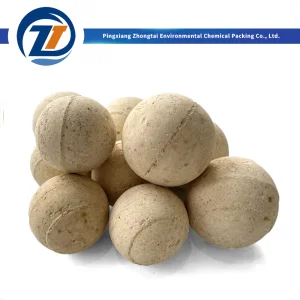
Italy maintains one of Southern Europe’s most complex refining footprints, concentrated around Sannazzaro de' Burgondi, Milazzo, Priolo Gargallo, and Venice (Porto Marghera bio-refinery). These processing assets demand high-crush-strength inert ceramic spheres capable of resisting harsh cyclic steaming, desulfurization hydrogenation, and deep hydrocracking environments with strict limits on silica dissolution.
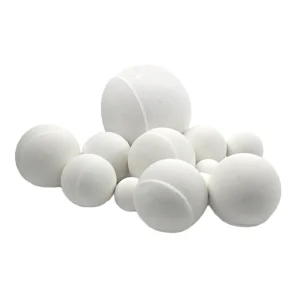
The Emilia-Romagna ceramic cluster (Sassuolo, Fiorano Modenese) represents the world’s benchmark for ceramic surfaces. Continuous wet ball mills require premium alumina grinding balls (92% Al₂O₃) with microscopic wear loss rates to eliminate discoloration of ultra-white porcelain body slips and fine glazes, driving total energy savings per ton of milled slip.
Under EU ETS caps and Italian Legislative Decree D.Lgs 152/2006 (Testo Unico Ambientale), manufacturing sectors in Lombardy and Veneto deploy Regenerative Thermal Oxidizers (RTOs). High-density heat storage ceramic balls provide critical sensible thermal storage to capture 95%+ of process waste heat, radically curbing natural gas consumption.
Comparative physical and chemical properties matching European norms (ASTM D2442 / DIN EN 993) for reactor bed support optimization.
| Property Parameter | 17% Al₂O₃ Inert | 23% Al₂O₃ Support | Mid-Alumina (50-70%) | 99% High Purity Alumina |
|---|---|---|---|---|
| Al₂O₃ + SiO₂ Content (%) | > 90.0 | > 92.0 | > 96.0 | > 99.3 |
| Leachable SiO₂ (ppm) | Standard Inert Support | < 150 ppm (Low Leach) | < 50 ppm | < 10 ppm (Critical Low Leach) |
| Bulk Density (g/cm³) | 1.35 - 1.45 | 1.40 - 1.50 | 1.65 - 1.80 | 1.95 - 2.15 |
| Water Absorption (%) | < 3.0 | < 2.0 | < 1.0 | < 0.5 |
| Crush Strength (Ø 25mm / kN) | > 5.5 kN | > 7.5 kN | > 12.0 kN | > 25.0 kN |
| Thermal Shock Resistance | Resists 600°C to cold water | Resists 800°C to cold water | Resists 950°C to cold water | Resists 1100°C to cold water |
| Recommended Duty in Italy | Secondary base support, air scrubbers | HDS units, Claus sulfur units, amine treater beds | Deep fixed-bed gas dehydrators, steam reformers | Secondary reforming, ammonia plants, bio-diesel catalysts |
Seamless supply chain integration connecting our industrial kilns in Pingxiang to Italian industrial gateways.
Every shipment to Italian ports is supplied with complete documentation verifying EU REACH compliance (EC 1907/2006). With Europe's Carbon Border Adjustment Mechanism (CBAM) coming into effect, Zhongtai monitors embodied emissions across kiln operations to assure long-term regulatory compliance for our European importers.
Direct ocean routing from Ningbo/Shanghai ports to northern logistics corridors: Port of Genoa (servicing the Milan-Turin industrial triangle), Port of Livorno (Tuscany), and Port of Trieste (Veneto/Eastern Europe transit). Standard 25-30 day sailing windows supported by ISPM 15 heat-treated fumigated wooden pallets and moisture-sealed jumbo packaging.
Every lot undergoes pre-shipment quality auditing: cold crushing strength tests, chemical assay via XRF, acid solubility testing per industrial standard, and water absorption verification. Mill Test Certificates (MTCs) and third-party inspection reports (SGS / BV) can be supplied alongside each commercial invoice.
High-purity support balls, macro-porous reactor media, and regenerative heat storage elements built to European engineering designs.
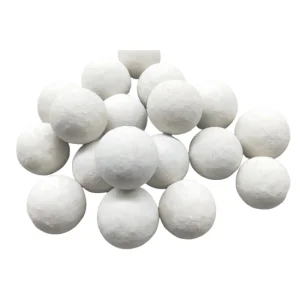
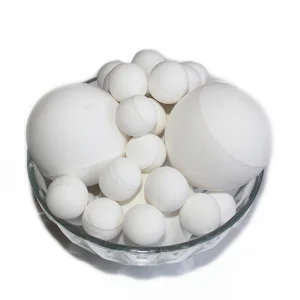
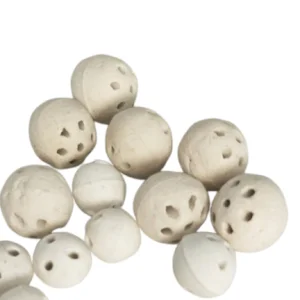
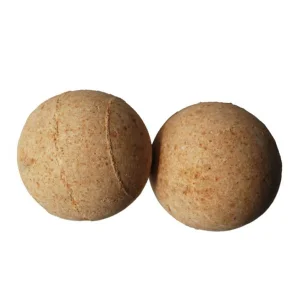
How continuous kiln innovations and morphology optimizations address evolving reactor efficiency demands across Europe.
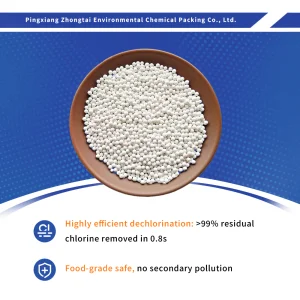
High-temperature synthesis kilns producing α-alumina support matrixes with crystalline corundum phases exceeding 99.4%. Eliminates downstream silica foulings in high-pressure steam methane reformers (SMR) and modern bio-methane catalytic synthesis loops.
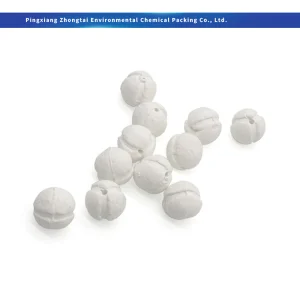
Transitioning conventional solid support beds to 5-hole and 7-hole perforated cylinders and grooved spherical balls. Increases void fraction by up to 28%, significantly decreasing column pressure drop (ΔP) and reducing parasitic compressor power draw for European operators.
Deploying advanced oxygen-enriched and liquefied natural gas firing technologies in our Pingxiang manufacturing base. Directly driving down Scope 1 & 2 carbon intensity per ton of finished chemical packing to simplify European customer CBAM tracking.
Addressing technical, regulatory, and logistics inquiries for plant managers, process engineers, and procurement teams in Italy.
Get batch datasheets, free sample packages shipped to Italy via DHL, and factory-direct volume quotations for your next turnaround or overhaul.
