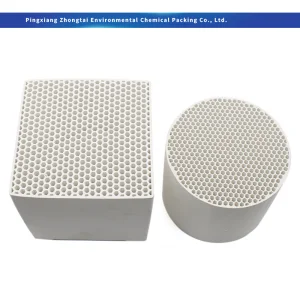
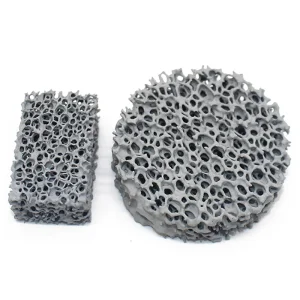
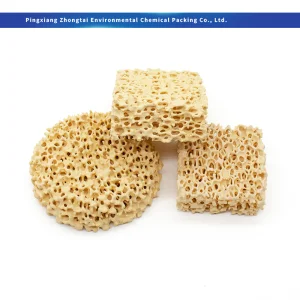
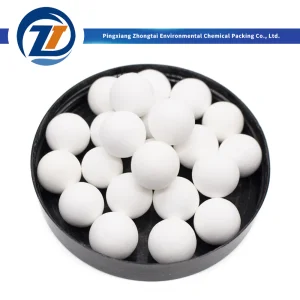
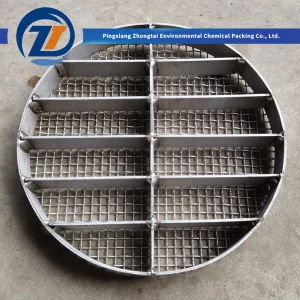
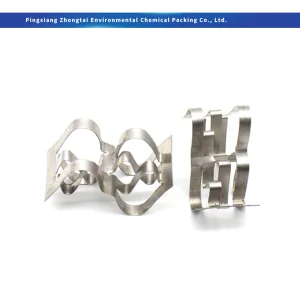
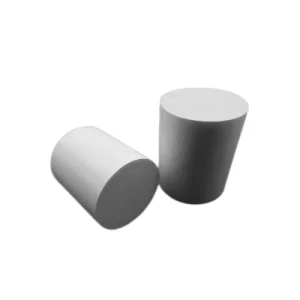
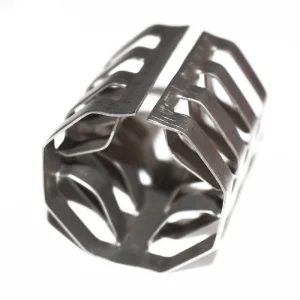
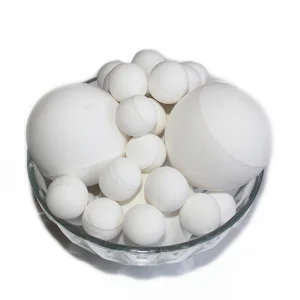
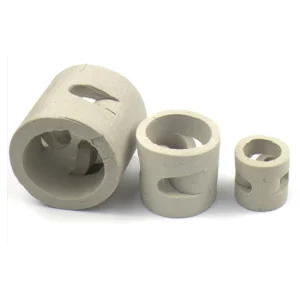
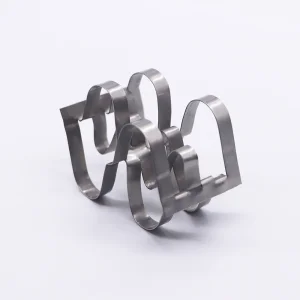
Comprehensive manufacturing lineup spanning specialty ceramic media, tower internals, and catalyst substrates.
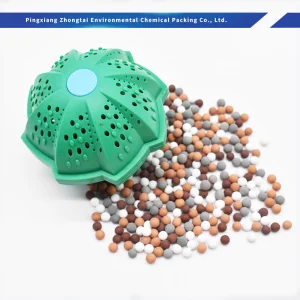
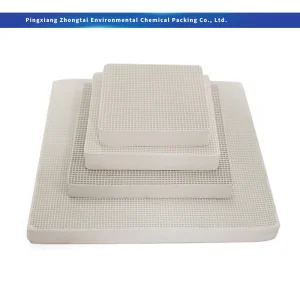
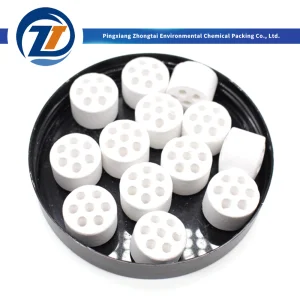
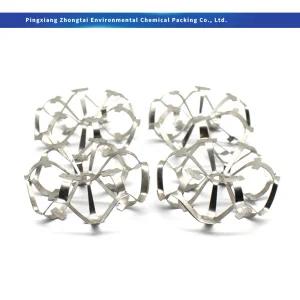
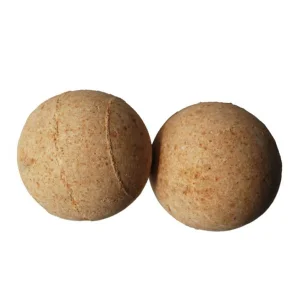
Operating from Pingxiang, Jiangxi Province—the world's premier chemical packing industrial cluster—Pingxiang Zhongtai Environmental Chemical Packing Co., Ltd. combines raw material proximity with high-speed automated progressive stamping and robotic extrusion systems.
For metal pall rings (SS304, SS316L, Carbon Steel), high-speed continuous punching presses deliver flawless internal tongues, open cylinder walls, and zero burrs, avoiding flow maldistribution under high liquid loads.
Ceramic pall rings and inert balls utilize micro-processor controlled 1400°C tunnel kilns to guarantee crystalline phase purity, uniform thermal shock endurance, and negligible water absorption rates below 0.5%.
Custom resin formulations incorporating 100% virgin PP, PE, PVDF, and PTFE combined with anti-oxidants and UV-stabilizers to prevent environmental stress-cracking in severe corrosive vapor environments.
Factory-direct bulk rates are computed on real-time LME metal indices, virgin polymer resin indices, energy consumption metrics, and volumetric packaging efficiency.
| Nominal Size | Material Class | Specific Surface Area | Void Fraction (%) | Bulk Density (Approx.) | Indicative Price (USD/m³) |
|---|---|---|---|---|---|
| 16 mm (5/8") | Stainless Steel 304 | 340 m²/m³ | 93% | 360 kg/m³ | $980 – $1,250 |
| 25 mm (1") | Stainless Steel 304 / 316L | 220 m²/m³ | 94% | 250 kg/m³ | $750 – $1,050 |
| 38 mm (1.5") | Stainless Steel 316L | 150 m²/m³ | 95% | 190 kg/m³ | $680 – $920 |
| 50 mm (2") | Polypropylene (Virgin PP) | 110 m²/m³ | 90% | 65 kg/m³ | $220 – $380 |
| 50 mm (2") | PVDF / PTFE High Performance | 110 m²/m³ | 90% | 120 kg/m³ | $1,450 – $2,100 |
| 25 mm (1") | Chemical Grade Ceramic | 190 m²/m³ | 72% | 650 kg/m³ | $320 – $480 |
| 50 mm (2") | Chemical Grade Ceramic | 100 m²/m³ | 78% | 540 kg/m³ | $280 – $420 |
*Pricing fluctuates according to London Metal Exchange (LME) spot rates and FOB/CIF seaport logistics terms. Technical data sheets (TDS) and Mill Test Certificates (MTC 3.1) are furnished alongside every commercial dispatch.
Addressing next-generation chemical separation challenges through fluid dynamic simulations, hybrid material synthesis, and decarb-driven process efficiency.
Engineered for Post-Combustion CO₂ Capture and Amine Scrubbers. Optimized Pall Ring geometries reduce specific pressure drop by up to 28%, significantly decreasing operating reboiler energy penalties in massive 10-meter diameter gas stripping absorption columns.
For wet sulfuric acid plants, SO₂ drying towers, and hydrochloric gas absorption, our ceramic pall rings incorporate high-crystallinity cordierite-mullite networks that guarantee zero deterioration under boiling acid contact up to 1000°C.
Replacing legacy bubble cap and sieve trays with metallic 316L/304 Pall Rings increases hydraulic column throughput by over 40% while preventing localized stagnant zone formation, foaming, and fouling in crude distillation revamp projects.
Meeting the strict technical specifications demanded by global EPC contractors, engineering bureaus, and multinational plant operators.
All alloys conform strictly to ASTM A240/A240M and EN 10088. Comprehensive Positive Material Identification (PMI) testing using calibrated XRF spectrometers verifies that nickel, chromium, and molybdenum thresholds align with 3.1 certification.
Full conformance to European REACH regulations, RoHS III hazardous substance directives, and ASME Boiler & Pressure Vessel technical packing guides. Non-toxic polymer formulations meet FDA standards for food and pharmaceutical solvent handling.
Heavy-duty, weather-resistant PP woven super-sacks (jumbo bags with inner moisture liners), fumigation-free ISPM-15 heat-treated plywood crates, and shrink-wrapped palletization for complete moisture-proof and drop-proof handling across international sea lanes.
Everything process engineers and procurement officers need to know when sizing, ordering, and validating Pall Rings.
Engineered to deliver high surface contact, minimal pressure drop, and exceptional mechanical longevity across petrochemical, casting, and environmental facilities.