Factory-direct chemical tower packing, synthetic zeolites, and high-performance mass transfer components manufactured by Pingxiang Zhongtai Environmental Chemical Packing Co., Ltd.
The global shift toward net-zero carbon emissions has catalyzed an unprecedented expansion in the hydrogen production and purification landscape. As green hydrogen (produced via water electrolysis powered by renewables) and blue hydrogen (produced via Steam Methane Reforming combined with Carbon Capture, Utilization, and Storage) replace legacy fossil fuel feedstocks, the technical specifications for hydrogen purity have become infinitely more rigorous. Ultra-pure hydrogen is no longer merely a chemical reagent; it is an energy carrier and a critical input for high-sensitivity applications including proton exchange membrane (PEM) fuel cells, semiconductor fabrication, and metallurgical reduction operations.
In this context, high-performance synthetic molecular sieves serve as the primary operational backbone of industrial-scale Pressure Swing Adsorption (PSA) and Vacuum Pressure Swing Adsorption (VPSA) units. Standard crude hydrogen streams generated via reforming or gasification contain substantial concentrations of impurities—predominantly Carbon Monoxide (CO), Carbon Dioxide (CO₂), Methane (CH₄), Nitrogen (N₂), and Water Vapor (H₂O). Achieving fuel cell grade hydrogen (ISO 14687-2 Grade D, requiring hydrogen purity ≥ 99.97% with strict upper limits of CO < 0.2 ppm and H₂O < 5 ppm) necessitates advanced multi-bed adsorbent configurations capable of high co-adsorption capacity, sharp mass transfer zones, and long-term cyclic mechanical integrity.
SEO & Sourcing Takeaway: Procurement officers and chemical process design engineers sourcing wholesale molecular sieves for hydrogen purification must evaluate adsorbents not only on static equilibrium capacity, but on dynamic dynamic-breakthrough capacity, crushing strength under pressure fluctuation, and attrition resistance in continuous cyclic operation.
Molecular sieves are crystalline aluminosilicates characterized by uniform pore structures of molecular dimensions. The separation of trace contaminants from hydrogen gas relies on three fundamental mechanisms: thermodynamic selectivity (differences in adsorption equilibrium affinity), kinetic selectivity (differences in intra-crystalline diffusion rates), and molecular sieving (steric exclusion based on kinetic diameter differences).
Because the kinetic diameter of molecular hydrogen (H₂) is exceptionally small (2.89 Å), it exhibits negligible quadropole moment and low polarizability compared to surrounding contaminant molecules. This allows polar synthetic zeolites to selectively adsorb larger or more polarizable molecules while letting H₂ pass through the adsorption bed unhindered at high pressure.
Utilized in the initial guard layer of hydrogen purification vessels. With pore apertures of ~3 Å and ~4 Å respectively, these adsorbents remove deep trace H₂O moisture down to dew points below -70°C, preventing downstream competitive adsorption on gas-selective zeolites.
Featuring a ~5 Å effective aperture, 5A molecular sieve is optimized for the co-adsorption of linear hydrocarbons (CH₄, C₂H₆) and Carbon Dioxide (CO₂). Calcium ion exchange provides strong electrostatic fields that bind polarizable carbon species during pressure swing cycles.
Faujasite (FAU) structure with pore openings of ~10 Å. 13X and modified Lithium/Calcium exchanged variants exhibit exceptionally high adsorption capacities for Carbon Monoxide (CO) and Nitrogen (N₂), enabling final hydrogen polish to 99.999% purity.
| Zeolite Type | Nominal Pore Aperture | Target Impurity Stream | Bulk Density (g/mL) | Crush Strength (N/Bead) | Adsorption Duty |
|---|---|---|---|---|---|
| Molecular Sieve 3A | 3.0 Å | H₂O, Moisture | 0.68 - 0.74 | ≥ 35 N (1.6-2.5mm) | Pre-bed Dehydration Guard |
| Molecular Sieve 4A | 4.0 Å | H₂O, CO₂, H₂S | 0.68 - 0.73 | ≥ 40 N (1.6-2.5mm) | Desiccant & Light Gas Guard |
| Molecular Sieve 5A | 5.0 Å | CH₄, CO₂, C₂-C₄ | 0.69 - 0.75 | ≥ 45 N (1.6-2.5mm) | Bulk Impurity Extraction Layer |
| Molecular Sieve 13X-HP | 10.0 Å | CO, N₂, CH₄, CO₂ | 0.64 - 0.70 | ≥ 38 N (1.6-2.5mm) | High-Purity PSA Polishing Layer |
| Li-X / Ca-X Modified | 9.8 Å | N₂, Trace CO (<0.5 ppm) | 0.62 - 0.68 | ≥ 35 N (1.6-2.5mm) | Ultra-Pure Fuel Cell Grade H₂ |
When engineering procurement teams, EPC (Engineering, Procurement, and Construction) contractors, and industrial gas plant managers source wholesale molecular sieves for hydrogen purification factories, evaluation parameters extend far beyond unit price per metric ton. The selection of an adsorbent supplier directly impacts total bed volume design, capital expenditure (CAPEX), operating expenditure (OPEX), and plant operational longevity.
Key technical parameters demanded by tier-1 global buyers include:
PSA hydrogen purification beds undergo rapid pressure fluctuations (ranging from 10 bar to 35 bar depressurization/pressurization cycles thousands of times per month). Sub-standard adsorbents crumble under mechanical stress, creating fine dust that clogs downstream valves, causes channel flow, and drastically increases pressure drop across the vessel.
A compact Mass Transfer Zone allows smaller bed heights, reducing initial sieve inventory and vessel fabrication costs. Pingxiang Zhongtai’s optimized bead sphericity and binder formulations maximize mass transfer coefficients and minimize pore diffusion resistance.
Regeneration efficiency determines the energy penalty of the hydrogen purification system. High working capacity ensures maximum hydrogen recovery percentages (typically 85% to 92% recovery in modern multi-bed PSA installations).
Hydrogen purification is not a one-size-fits-all process. Depending on the raw gas generation pathway, the contaminant composition and operating temperatures vary significantly. Pingxiang Zhongtai delivers specialized adsorbent bed configurations tailored to major industrial gas production setups:
Syngas from SMR plants typically contains ~70-75% H₂, 15-20% CO₂, 3-6% CH₄, and 1-3% CO. A layered bed consisting of Activated Alumina / 4A (water removal), Zeolite 5A (bulk CO₂ and CH₄ removal), and Zeolite 13X / Li-X (final CO polishing) ensures high recovery and 99.999% purity.
Electrolyzer hydrogen streams (PEM or Alkaline) are free from carbon oxides but are saturated with moisture and contain oxygen carryover (H₂O saturated, O₂ 100-2000 ppm). A dual-bed setup combining a Deoxo Catalyst (Palladium/Alumina) followed by a deep-drying Molecular Sieve 3A / 4A bed suppresses moisture dew points below -70°C.
Refinery tail gas and COG contain complex mixtures of heavy hydrocarbons, tar traces, sulfur compounds (H₂S, COS), CO, and CO₂. Custom multi-layer protective guard beds integrated with high-capacity 13X-HP molecular sieves prevent irreversible catalyst poisoning and bed fouling.
The continuous innovation in industrial adsorption technology focuses on increasing energy efficiency, decreasing cycle times, and improving selectivity for low-concentration impurities. Pingxiang Zhongtai's R&D department collaborates with chemical research institutes to advance several next-generation adsorbent architectures:
Conventional molecular sieves contain 15-20% inert clay binder, which adds weight but contributes no adsorption capacity. Binderless molecular sieves convert the clay matrix into active zeolite crystals, providing 15-20% higher volumetric adsorption capacity and allowing smaller vessel design.
Engineered core-shell beads combine a high-strength inert ceramic core with a thin, highly active molecular sieve outer shell. This structure drastically reduces intra-particle diffusion pathways, permitting ultra-fast PSA cycle times (rapid PSA / RPSA) without kinetic lag.
Combining pressure swing dynamics with low-grade waste heat regeneration (<100°C) enables virtually complete desorbing of strongly bound CO and N₂ molecules, yielding recovery rates exceeding 95% in large-scale hydrogen hubs.
Located in Pingxiang, Jiangxi Province—China's world-renowned manufacturing capital for industrial ceramics and chemical tower packing—Pingxiang Zhongtai Environmental Chemical Packing Co., Ltd. has delivered process media to global petrochemical, refinery, and environmental engineering plants since 2003.
Our manufacturing footprint features automated production lines, precision temperature-controlled static kilns, and comprehensive laboratory testing units. Every wholesale batch of molecular sieves for hydrogen purification undergoes stringent Quality Assurance (QA) and Quality Control (QC) protocols before dispatch:
Full traceability from raw clay and sodium silicate synthesis through to final calcination. Batch-level Mill Test Certificates (MTC) record chemical composition, bulk density, static water adsorption, loss on ignition (LOI), and particle size distribution.
Adsorbents are air-tight sealed in steel drums (150L/200L), air-tight jumbo super sacks with aluminum foil inner liners, or reinforced cartons with vacuum polyethylene bags, ensuring zero moisture pickup during ocean freight.
Zhongtai process specialists assist client design teams with bed packing calculations, hydrodynamic pressure drop modeling, and multi-bed sequencing advice to guarantee operational success.
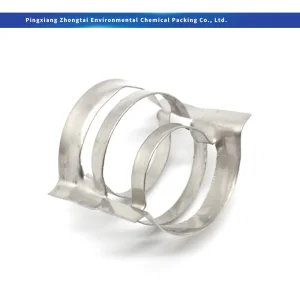
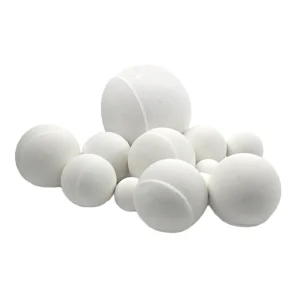
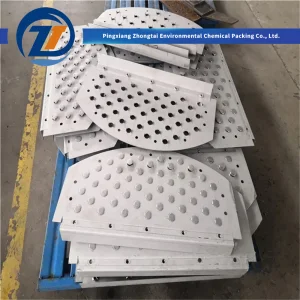
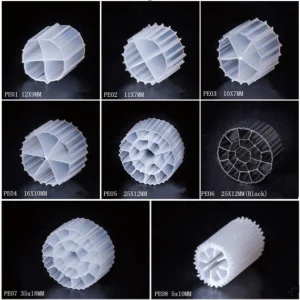
Complete your mass transfer towers, structured packing, and bed support installations with factory-direct supply from Pingxiang Zhongtai.
Direct answers to technical procurement questions from chemical engineers, plant operators, and EPC project managers.
Get direct technical support, custom bed sizing calculations, and factory-direct wholesale pricing from Pingxiang Zhongtai Environmental Chemical Packing Co., Ltd.
