Standard and custom-formulated media manufactured under rigorous ASTM and ISO quality standards for thermal regenerative drying and mass transfer towers.
A granular, engineering-grade analysis of deep moisture extraction, Mass Transfer Zone (MTZ) kinetics, and dual-bed regenerative desiccant drying systems.
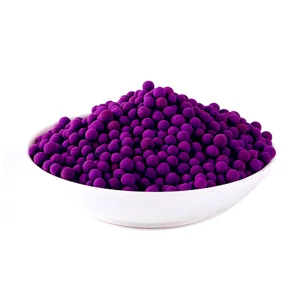
Synthetic zeolites (Types 3A, 4A, 5A, and 13X) represent aluminosilicate crystal frameworks containing precisely uniform, sub-nanometer micropores. Unlike silica gel or standard alumina which exhibit broad pore size distributions, molecular sieves operate on steric exclusion and dipolar electrostatic affinity, capturing polar water molecules even at fractional relative humidity below 1.5%.
In twin-tower Pressure Swing Adsorption (PSA) or Temperature Swing Adsorption (TSA) dryers, the adsorption bed develops three dynamic sections: the Equilibrium Zone, the Mass Transfer Zone (MTZ), and the Active Zone. Industrial vessel design must maintain a superficial gas velocity between 0.15 m/s and 0.40 m/s to prevent bed fluidization while maximizing dynamic capacity prior to breakthrough.
While mechanical refrigeration systems reach limits near +3°C PDP (Pressure Dew Point), and activated alumina dryers stabilize near -40°C PDP, Pingxiang Zhongtai molecular sieve charge packs achieve critical ultra-dry specifications: down to -70°C to -100°C PDP (< 0.1 ppmv moisture), which is vital for cryogenic fractionation and semiconductor lithography gas feeds.
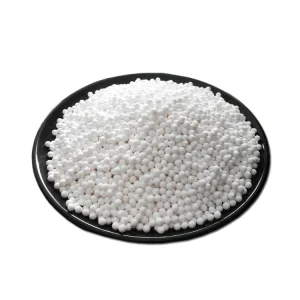
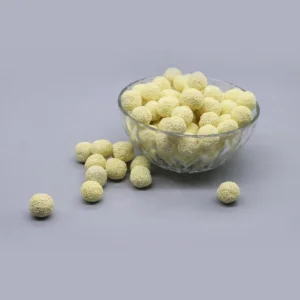
Industrial desiccant vessels subject to inlet gas with possible liquid condensate slugs should never run pure molecular sieve beds. We recommend placing a 15–30% buffer layer of Activated Alumina Desiccant Balls at the inlet gas side, supported by high-crush Inert Alumina Ceramic Support Balls, and finishing with 70–85% Molecular Sieve 4A or 13X beads. This configuration prevents capillary liquid fracture and hydrothermal shock during thermal regeneration cycles.
Navigating regional supply dependencies, energy balance optimizations, and capital vs. operational expenditure in large-scale compressed air and process gas drying.
Desiccant media represents less than 7% of total dryer life-cycle cost, while compressed air purge losses accounts for up to 75% of operational expense in heatless PSA systems. Upgrading to high-capacity 13X or 4A spherical sieves reduces required purge volume from 15% down to 7%, yielding tens of thousands in annual power savings per 1000 SCFM capacity.
Pingxiang, Jiangxi Province is China's historic cluster for chemical packing, industrial ceramics, and advanced adsorbents. With direct access to high-purity kaolin clay and raw precursors, localized tunnel kilns, and integrated mass-transfer fabrication plants, Pingxiang Zhongtai delivers factory-direct pricing without distributor overhead.
Global supply disruptions often halt refinery and petrochemical plant revamps. Zhongtai maintains ready stocks of raw spherical extrudates, SS304/SS316L packing rings, and ceramic catalyst beds, guaranteeing export customs clearance documentation, COA validation, and container stuffing within 7–14 business days.
| Adsorbent Media Type | Pore Diameter | Bulk Density | Static H₂O Adsorption (RH 60%) | Crush Strength (N/bead) | Typical Regeneration Temp | Primary Industrial Role |
|---|---|---|---|---|---|---|
| Molecular Sieve 3A | ~3 Å (0.3 nm) | 0.68 – 0.74 g/mL | ≥ 21.5 wt% | ≥ 35 N (2-3mm) | 180°C – 240°C | Cracked gas, ethanol, insulated glass units |
| Molecular Sieve 4A | ~4 Å (0.4 nm) | 0.66 – 0.72 g/mL | ≥ 22.0 wt% | ≥ 40 N (2-3mm) | 200°C – 260°C | Compressed air PSA/TSA dryers, instrument air |
| Molecular Sieve 5A | ~5 Å (0.5 nm) | 0.65 – 0.70 g/mL | ≥ 21.5 wt% | ≥ 45 N (2-3mm) | 220°C – 280°C | Normal/iso-paraffin separation, PSA H₂ drying |
| Molecular Sieve 13X (NaX) | ~10 Å (1.0 nm) | 0.62 – 0.68 g/mL | ≥ 24.0 wt% | ≥ 35 N (2-3mm) | 200°C – 300°C | Cryogenic air pre-purification (CO₂ + H₂O removal) |
| Activated Alumina Balls | Macroporous | 0.68 – 0.75 g/mL | ≥ 16.0 wt% | ≥ 120 N (3-5mm) | 150°C – 200°C | Protective buffer layer, -40°C PDP heatless dryers |
Why chemical engineers design desiccant dryer towers with ceramic support balls, metal mist eliminators, and structured column packings.
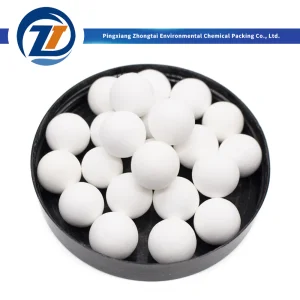
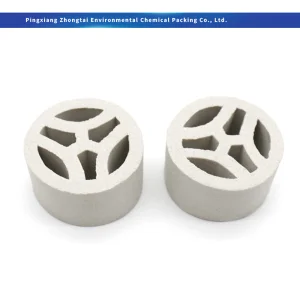
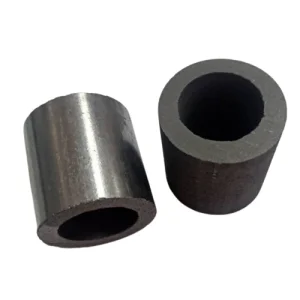
Placed at the bottom grid (1/2" to 1" balls) and top retainment layer (1/4" to 3/8" balls). With Al₂O₃ content from 17% up to 99%, Zhongtai inert ceramic balls deliver crush strength exceeding 15 kN/particle, preventing bed movement and gas channel formation.
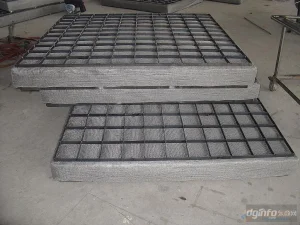
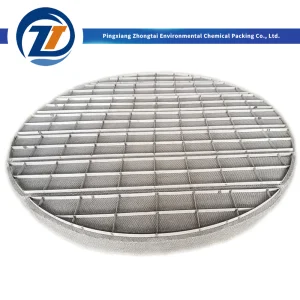
Installed at top gas outlets, 304 or 316L wire mesh demisters arrest desiccant dust particles (< 5 microns) and condensed liquid droplets, shielding downstream valve actuators, micro-filters, and pneumatic instruments from contamination.
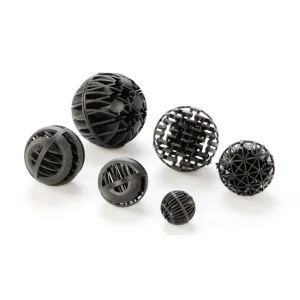
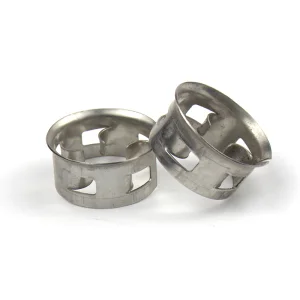
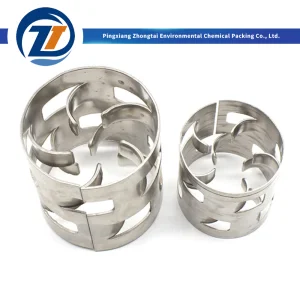
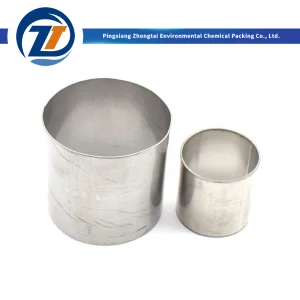
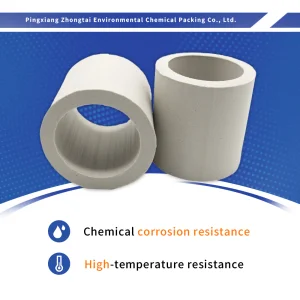
For combined scrubbing and adsorption systems, Pall Rings and Wire Gauze Structured Packings ensure maximum surface area (up to 500 m²/m³) with negligible pressure drops (less than 1.5 mbar per theoretical stage).
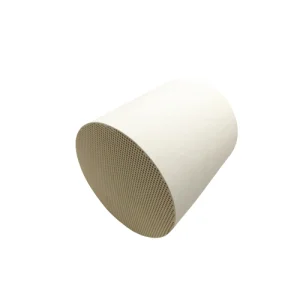
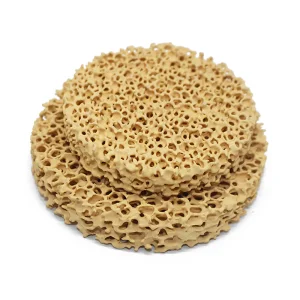
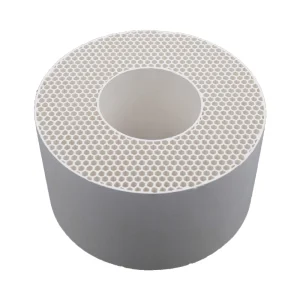
In thermal swing exhaust loops and VOC remediation, cordierite and mullite honeycomb ceramic matrices provide high volumetric heat capacity (> 2200 kJ/m³·K) with exceptional thermal shock resistance across 1000°C thermal cycles.
From LNG cryogenic liquefaction to high-purity battery manufacturing dry rooms, examine where and why Zhongtai desiccant media is specified.
In Air Separation Units (ASU), trace moisture and carbon dioxide will freeze into solids inside cryogenic heat exchangers (-170°C). Zhongtai Molecular Sieve 13X-APG delivers co-adsorption of CO₂ (< 0.5 ppmv) and H₂O (< 0.1 ppmv), preventing equipment blockage and catastrophic shutdowns.
Raw natural gas saturated with light hydrocarbons, H₂S, and water vapor is purified using tailored Molecular Sieve 4A and 5A beds. Resisting hydrocarbon co-adsorption and acidic sour gas fouling, our spherical beads provide stable cycle lifetimes surpassing 36 months.
Battery cathode coating requires moisture levels below -50°C to -60°C dew point to avoid toxic HF generation from LiPF₆ electrolytes. Desiccant wheel dry rooms incorporate our activated alumina/zeolite hybrid formulations, maintaining extreme dry air stability round-the-clock.
Rigorous batch-level verification ensuring every cubic meter of adsorbent conforms to ASME, CE/PED, and ASTM testing benchmarks.
Every lot undergoes automated crush testing across 50 random beads. High crush resistance (≥ 40 N on 2.0–3.0 mm spheres) ensures that deep industrial columns up to 6 meters in height do not suffer bed compaction, fines attrition, or excessive pressure drop.
Mechanical tumbling tests verify attrition rates below 0.15 wt%. Zero dusting preserves downstream particle filters and avoids bed channeling that leads to premature moisture breakthrough and emergency plant turnarounds.
Zhongtai provides complete regulatory certification dossiers with each maritime consignment: Certificate of Analysis (COA), REACH and RoHS declarations, non-dangerous goods export declarations, and certified fumigation-free palletization.
Next-generation MOF hybrids, AI-governed dynamic cycle regeneration, and energy reduction pathways in modern gas drying systems.
Traditional molecular sieves mandate thermal desorption at 200°C–280°C. Zhongtai R&D is formulating modified framework cations (Ce-doped NaA/NaX) that reduce regeneration temperatures down to 130°C–150°C, unlocking direct utilization of industrial waste heat and solar thermal energy.
Moving away from fixed 10-minute timer cycles, modern automated twin towers employ AI-driven adaptive algorithms that measure real-time moisture front velocity. Bed switching occurs precisely before breakthrough, cutting purge consumption by up to 35% during partial load conditions.
Water-electrolysis hydrogen generation yields H₂ saturated with wet water vapor. Zhongtai provides specialized molecular sieve packages that strip water vapor down to < 5 ppmv at high operating pressures (30–50 bar) without hydrogen embrittlement or structural degradation.
Detailed answers to the operational, technical, and logistical questions engineers and global buyers ask when sourcing molecular sieve desiccants and tower internals.
Complete process column packing solutions, gas-liquid mist eliminators, and molten metal filters manufactured in Pingxiang.
Provide your system specifications (Airflow CFM/Nm³/h, Operating Pressure, Inlet Temperature, Desired Dew Point) and receive an engineering review, adsorption bed sizing, and quotation within 24 hours.
