Direct factory wholesale catalog for petrochemical, refining, environmental, and gas treatment applications.
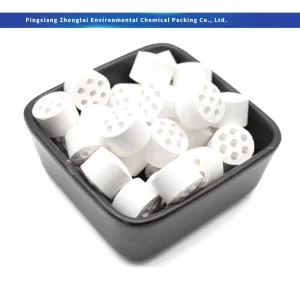
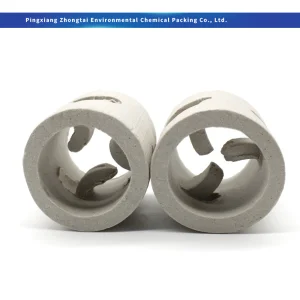
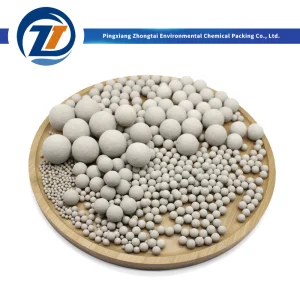
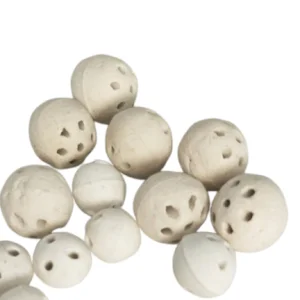
A rigorous evaluation of random tower packing geometry, wall thickness dynamics, and mass transfer performance parameters for modern industrial columns.
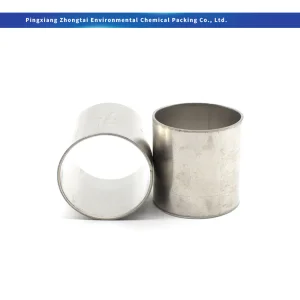
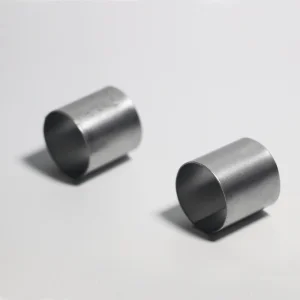
Metal Raschig Rings represent the foundational milestone of random tower packing technology in chemical process engineering. Invented by German chemist Friedrich Raschig, these cylindrical metallic packing elements feature an height-to-diameter ratio equal to 1:1. Despite the advent of second- and third-generation random packings such as Pall Rings and Cascade Mini Rings, Metal Raschig Rings remain an indispensable specification across oil refineries, petrochemical synthesis, fertilizer processing, and gas scrubbing columns due to their exceptional mechanical integrity, thermal shock immunity, and predictable hydraulic behavior under harsh operation parameters.
When evaluated within mass transfer operations—such as fractional distillation, absorption, desorption, stripping, and liquid-liquid extraction—the efficiency of Metal Raschig Rings is dictated by their hydrodynamic characteristics. The open tubular structure provides an extended metallic surface area ($a$, measured in $\text{m}^2/\text{m}^3$) for interfacial contact between rising gas/vapor phases and descending liquid streams. Concurrently, the internal void fraction ($\varepsilon$, expressed as a percentage) determines the column's free cross-sectional area, directly governing pressure drop ($\Delta P/H$) and gas throughput capacity before reaching flooding limits.
Engineers specifying wholesale metal Raschig rings must balance hydraulic efficiency against physical bed stability. Below is a standard metallurgical and structural specification baseline for commercial tower design:
| Nominal Size (mm / Inch) | Outer Diameter × Height × Thickness (mm) | Specific Surface Area ($a$, $\text{m}^2/\text{m}^3$) | Void Fraction ($\varepsilon$, %) | Bulk Density ($\text{kg}/\text{m}^3$, SS304) | Packing Factor ($F_p$, $\text{m}^{-1}$) |
|---|---|---|---|---|---|
| 10 mm (3/8") | 10 × 10 × 0.8 | 485 | 88.5% | 910 | 1150 |
| 15 mm (1/2") | 15 × 15 × 1.0 | 330 | 90.2% | 770 | 720 |
| 25 mm (1") | 25 × 25 × 1.0 / 1.2 | 215 | 93.5% | 510 | 380 |
| 38 mm (1.5") | 38 × 38 × 1.2 / 1.5 | 140 | 95.0% | 390 | 230 |
| 50 mm (2") | 50 × 50 × 1.5 / 2.0 | 105 | 96.2% | 300 | 160 |
| 80 mm (3") | 80 × 80 × 2.0 / 2.5 | 68 | 97.5% | 200 | 95 |
The selection of wall thickness plays a crucial financial and mechanical role in procurement quotes. A thinner wall (e.g., 1.0mm for a 25mm ring) lowers raw material mass per cubic meter, directly reducing freight costs and product unit price. However, in tall beds exceeding 6 to 8 meters without intermediate support grids, thicker wall variations (e.g., 1.2mm to 1.5mm) are essential to prevent structural crushing under compressive static load at the column base.
Deployment strategies across heavy chemical industries, high-temperature distillation columns, and aggressive corrosive scrubbers.
Utilized in quench towers, depropanizers, and secondary fractionation units where predictable mechanical strength prevents bed compaction under high thermal transients.
High voidage allows deep gas penetration with minimal pressure loss in amine wash columns, caustic scrubbers, and high-pressure absorption units.
In ammonia synthesis plants and nitric acid production facilities, heavy-duty stainless steel and alloy Raschig rings resist intense thermal cycling and chemical corrosion.
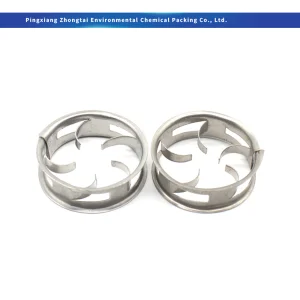
Liquid maldistribution is the primary culprit behind reduced mass transfer efficiency in packed towers. Because smooth cylindrical Raschig ring walls can induce liquid channeling toward the column inner shell (wall flow effect), modern tower designs recommend installing liquid re-distributors every 3 to 5 bed diameters or combining Raschig ring bed bases with high-performance packing internals like Pall Rings or Cascade Mini Rings near liquid entry points.
Why direct-factory sourcing from China's industrial chemical packing clusters delivers unmatched cost efficiency and quality assurance.
Modern production of wholesale metal Raschig rings has evolved far beyond manual press operations. Advanced China Industry 4.0 facilities utilize automated high-speed multi-stage progressive stamping presses integrated with continuous alloy coil feeding units. This ensures that every ring produced achieves strict dimensional tolerances ($\pm 0.2\text{mm}$) on diameter, height, and edge burr suppression.
Furthermore, inline visual inspection systems utilize high-resolution optical cameras to scan finished rings for micro-fractures, improper wall closure, or oil contamination before entering degreasing and passivation stages. This automation translates directly into consistent packing factor performance inside the buyer's process column.
Cost competitiveness in wholesale metal tower packing relies heavily on raw material procurement efficiency and metallurgical purity. Leading Chinese manufacturers maintain strategic partnerships with premier steel mills (such as TISCO, Baosteel, and POSCO), enabling raw alloy coil sourcing at scale.
| Alloy Grade | UNS Designation | Max Operating Temp (°C) | Corrosion Resistance Profile | Relative Cost Index (SS304 = 1.0) |
|---|---|---|---|---|
| Carbon Steel (Q235B) | K02501 | 400°C | Dry gases, non-corrosive hydrocarbons, alkaline media | 0.45 |
| Stainless Steel 304 | S30400 | 600°C | General chemical synthesis, nitric acid, organic media | 1.00 |
| Stainless Steel 316L | S31603 | 650°C | Chloride environments, organic acids, SO2 scrubbers | 1.42 |
| Duplex 2205 | S31803 | 300°C | High pressure, high chloride, marine gas stripping | 2.10 |
| Hastelloy C-276 | N10276 | 1000°C | Wet chlorine gas, hydrofluoric acid gas mixtures, severe oxidizers | 7.80 |
Innovation trajectories in random tower packings, carbon capture integration, and surface technology enhancements.
As global decarbonization mandates accelerate, industrial amine-based direct air capture (DAC) and post-combustion flue gas $CO_2$ absorption columns require massive volumes of packing media. Advanced metal Raschig rings with optimized wall perforations and micro-textured surface treatments are undergoing field trials to lower amine solvent degradation and reduce pressure drop in giga-ton scale capture projects.
Traditional metal surfaces suffer from liquid film breakdown under low irrigation rates ($\text{L} < 5 \text{m}^3/\text{m}^2\cdot\text{h}$). Emerging chemical laser etching and plasma nano-coating techniques transform smooth metallic ring walls into superhydrophilic textures. This drastically boosts liquid film spreading, eliminating dry spots and elevating mass transfer efficiency by up to 18% without increasing pressure drop.
Ensuring seamless international quality verification, customs clearance, and logistical integrity for EPC contractors.
For international procurement directors, purchasing managers, and EPC project leaders, acquiring wholesale metal Raschig rings involves strict adherence to chemical process engineering standards and international trade compliance. A reliable factory quotation must be backed by full material transparency and robust export packaging.
Every shipment of commercial metal tower packing should be supplied with rigorous quality documentation, including:
Metal Raschig rings are packed in high-density format to prevent mechanical deformation during transoceanic transit. Standard export options include heavy-duty woven jumbo bags (1.0 to 1.2 cubic meters capacity), reinforced steel drums, or fumigated wooden crates. Containers are loaded with moisture absorbents and wrapped in waterproof shrink film to prevent sea-fog oxidation during transit.
Understanding wholesale pricing mechanics to secure optimal commercial terms and precise technical quotes.
Wholesale quotations for metal Raschig rings are primarily calculated based on **volume ($\text{m}^3$) or weight ($\text{Metric Ton}$)**. When submitting a Request for Quotation (RFQ), engineering buyers should provide the following critical parameters to receive an accurate, factory-direct quotation within 24 hours:
| RFQ Parameter | Engineering Impact | Pricing Variable Factor |
|---|---|---|
| Nominal Size & Wall Thickness | Directly influences specific weight ($\text{kg}/\text{m}^3$) and total steel consumption per column bed. | High impact: Thicker walls increase steel tonnage per $\text{m}^3$. |
| Alloy Grade Designation | Determines corrosion resistance and continuous operating temperature limits. | Critical impact: SS316L costs ~40% more than SS304; Hastelloy costs 7-8x more. |
| Total Bed Volume ($\text{m}^3$) | Drives production batch efficiency and coil purchasing leverage. | Volume discounts apply for full container loads (20' GP / 40' HQ). |
| Degreasing / Pickling Requirement | Removes residual oil film to prevent solvent contamination or column foaming. | Minor cost addition for specialized chemical wash cycles. |
| Destination Port & Incoterms | FOB, CIF, CFR, or DDP delivery arrangements. | Logistics pricing varies based on freight rates and packaging type. |
In-depth answers to common engineering questions regarding Metal Raschig Ring specification, pricing, and installation.
Explore our full range of high-performance random packing, structured packing, and ceramic media options.