Manufactured according to ISO 9001:2015 and ASTM standards. High-density, chemically inert formulations engineered to eliminate batch contamination and maximize kinetic throughput.
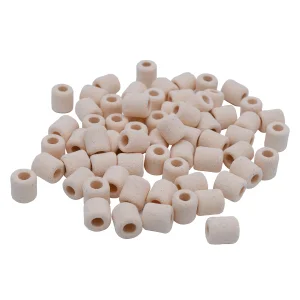
Why modern ultrafine milling applications in advanced materials, electronics, and mining are abandoning forged steel in favor of high-purity microcrystalline alumina and zirconia composite media.
In modern industrial comminution, grinding is no longer categorized merely as a volumetric reduction process. Today, in high-tech manufacturing sectors such as lithium-ion battery precursor synthesis (NCM/LFP), electronic multilayer ceramic capacitors (MLCC), nano-grade zirconium silicate processing, and ultra-white glaze manufacturing, grinding is a precision surface engineering protocol. The selection of wholesale ceramic ball mill media determines not only final particle size distribution (PSD) and specific surface area (BET), but also governs batch purity, electrical performance, and overall plant energy consumption.
Historically, mineral beneficiation and coarse ceramic slips relied heavily on natural flint pebbles, forged high-chromium steel balls, or low-grade silica rocks. However, the advent of high-speed stirred mills, attritors, planetary mills, and large-scale continuous ball mills has exposed the severe kinetic limitations of metallic and natural media. The comminution of abrasive materials causes rapid metallic degradation, contaminating target slurries with iron impurities ($Fe^{2+}$ / $Fe^{3+}$) exceeding strict PPM thresholds. In electronic pastes, lithium battery cathode synthesis, and dental ceramic blanks, even 5 PPM of iron contamination is sufficient to ruin electrical insulation, reduce electrochemical capacity, or trigger irreversible visual discoloration.
Ball milling represents up to 65% of the total electrical energy expended in industrial mineral processing. High-density alumina media ($3.60 - 3.75\text{ g/cm}^3$) drastically shortens residence time compared to natural stone ($2.60\text{ g/cm}^3$), slashing kilowatt-hours per metric ton of milled product by up to 35%.
By transitioning from traditional wet-slip rolling to isostatic dry pressing followed by high-temperature sintering in gas-fired roller kilns ($1600^\circ\text{C}-1700^\circ\text{C}$), modern factories lock $\alpha\text{-Al}_2\text{O}_3$ micro-grains into an interlocking corundum matrix with virtually zero internal porosity.
Strict environmental and technical purity mandates have accelerated the adoption of 92%, 95%, and 99% high-alumina media. Extremely low autogenous self-wear rates ($<0.01‰\text{/24h}$) protect mineral brightness, transparency, and dielectric constants across sensitive chemical slurries.
Analytical comparison of physical metrics, hardness values, crush strength thresholds, and microstructural phase compositions engineered at our Pingxiang manufacturing plants.
A fatal mistake in global procurement is evaluating wholesale ceramic ball mill media purely on unit price per ton. Because comminution media operates in aggressive three-body abrasion environments (media-slurry-liner), the total cost of ownership (TCO) is directly governed by specific gravity, Mohs/Vickers hardness, and fracture toughness ($K_{IC}$). Lower-grade ceramic balls suffer from micro-chipping (spalling) under high kinetic impact forces, turning round spheres into irregular fragments that destroy expensive polyurethane or alumina mill linings.
| Property Parameter | Standard Inert Support Ball | Medium Alumina Grinding Media | 92% High Alumina Media (Standard) | 95% Super-Duty Alumina Media | 99% Corundum High-Purity Media | ZTA (Zirconia Toughened Alumina) |
|---|---|---|---|---|---|---|
| $\text{Al}_2\text{O}_3$ Content (%) | 17% – 23% | 68% – 75% | $\ge 92.0\%$ | $\ge 95.0\%$ | $\ge 99.2\%$ | $\approx 80\% \text{ Al}_2\text{O}_3 + 20\% \text{ ZrO}_2$ |
| Bulk Density ($\text{g/cm}^3$) | 1.35 – 1.45 | 1.95 – 2.10 | 2.25 – 2.35 | 2.35 – 2.45 | 2.45 – 2.55 | 2.60 – 2.80 |
| Specific Density ($\text{g/cm}^3$) | 2.30 – 2.40 | 3.15 – 3.30 | $\ge 3.60$ | $\ge 3.70$ | $\ge 3.90$ | $\ge 4.25$ |
| Mohs Hardness / Vickers (HV) | 6.5 Mohs | 8.0 Mohs | 9.0 Mohs (1450 HV) | 9.0 Mohs (1550 HV) | 9.0 Mohs (1700 HV) | 9.2 Mohs (1650 HV) |
| Self-Wear Rate (‰/24h) | N/A (Static Support) | $< 0.035$ | $< 0.012$ | $< 0.008$ | $< 0.005$ | $< 0.003$ |
| Crush Strength ($\varnothing30\text{mm}$, kN) | $\ge 5.5$ | $\ge 12.0$ | $\ge 18.5$ | $\ge 22.0$ | $\ge 26.0$ | $\ge 32.0$ |
| Water Absorption (%) | $< 1.5$ | $< 0.02$ | $< 0.01$ | $< 0.01$ | $< 0.005$ | $< 0.002$ |
| Dominant Manufacturing Method | Extrusion / Rolling | Rotary Rolling | Isostatic Pressing / Rolling | Cold Isostatic Pressing (CIP) | Isostatic Dry Pressing | High-Pressure Dripping / CIP |
How global plant engineers and corporate supply chain directors eliminate downtime and prevent catastrophic mill shutdowns by moving beyond invoice price comparisons.
Initial FOB purchase price accounts for barely 15% of total comminution operational overhead. Plant directors assess: (1) Media replenishment frequency per 1,000 tons of output; (2) Wear impact on brick/polyurethane mill liners; (3) Electrical draw changes caused by tumbling trajectory slippage.
A single size of media is unable to grind efficiently. Large spheres ($50\text{mm}-70\text{mm}$) shatter oversized feed particles via impact fracture, while smaller spheres ($20\text{mm}-35\text{mm}$) fill interstitial voids to conduct high-frequency attrition shear on fine particles. Wholesale procurement must provide precise size distribution ratios tailored to feed mesh.
Maximum kinetic grinding occurs when the ball mill operates at $70\% - 78\%$ of critical rotational speed ($N_c = 42.3 / \sqrt{D}$), and charge volumetric filling fraction ($J$) is maintained between $40\% - 50\%$. High-density microcrystalline media ensures parabolic cataracting action rather than unproductive cascading slip.
Engineered media installations across demanding processing verticals where microstructural integrity and chemical purity are mission-critical.
Processing Lithium Iron Phosphate ($\text{LiFePO}_4$), Ternary NCM precursors, and silicon-carbon anode composites requires sub-micron ($D_{50} < 0.8\,\mu\text{m}$) dispersion. Ultra-pure 95% Alumina or Zirconia Toughened Alumina (ZTA) beads prevent metallic inclusion spikes that induce thermal runaway in cell pouch architectures.
Producing opacifiers for ceramic tiles and fused quartz for semiconductor crucibles demands zero iron discolouration. Our 92% and 95% high-wear alumina balls maintain $L^*$ brightness values over 96.5 while resisting high-viscosity slurry shear in continuous vibratory and stirred pearl mills.
Titanium dioxide ($\text{TiO}_2$), carbon black, and automotive transparent pigments require intense hydrodynamic shear without media shattering. Precision-sintered ceramic micro-spheres ($0.5\text{mm} - 3.0\text{mm}$) eliminate pin-hole spalling, protecting internal mechanical seals in horizontal sand mills.
Beyond tumbling ball mills, industrial chemical towers rely heavily on inert ceramic balls ($17\% - 99\% \text{Al}_2\text{O}_3$). As licensed fabricators based in Pingxiang, our inert support balls protect expensive precious-metal catalysts from thermal shock, liquid surging, and downstream silica contamination in hydrocrackers and steam reformers.
Inside our Pingxiang, Jiangxi industrial ceramic facilities: raw bauxite purification, automated isostatic pressing, and laser-monitored tunnel kiln firing curves.
Calcined $\alpha\text{-Al}_2\text{O}_3$ raw powders are wet-milled with micro-grain modifiers ($MgO$, $CaO$, $SiO_2$) in closed circuits to achieve fine sub-micron slurry consistency ($D_{90} < 2\,\mu\text{m}$).
Slurry is atomized in large-capacity spray drying towers under tight thermal controls to form free-flowing, spherical micro-granules with precise internal bulk density and moisture content ($< 0.5\%$).
For large sizes ($\varnothing30\text{mm}-\varnothing70\text{mm}$), automated cold isostatic dry pressing (CIP) exerts omnidirectional pressures exceeding $200\text{ MPa}$, eliminating density gradients, voids, and micro-laminations.
Green bodies travel through 120-meter high-temperature gas-fired tunnel kilns at $1600^\circ\text{C}-1700^\circ\text{C}$. Strict sintering curves prevent abnormal crystal grain growth and micro-cracking.
After firing, all ceramic media undergo autogenous tumble self-polishing to remove flash, burrs, and seam marks, followed by automated optical sorting to verify diameter tolerances within $\pm0.5\text{mm}$.
Every 20-ton manufacturing heat is sampled for true density (Archimedes method), crush resistance, chemical assay via XRF, and accelerated 48-hour wet tumbling attrition tests before packaging certification.
Comprehensive export documentation and heavy-duty maritime packaging designed to endure transoceanic transit without bag failure or moisture absorption.
Our production facilities maintain strict compliance with ISO 9001:2015, ISO 14001, REACH, and RoHS frameworks. Chemical leachability assays guarantee that free silica, heavy metals, and radioactive elements ($Ra^{226}, Th^{232}, K^{40}$) fall well below international threshold limits.
Standard packaging configurations include UV-stabilized, multi-ply 1,000 kg woven polypropylene FIBC bulk jumbo bags with inner moisture liners, or double-wall 25 kg PE/PP sacks stacked on ISPM-15 fumigated solid wood or composite plastic pallets strapped with edge corner protectors.
Every commercial consignment is accompanied by formal batch Certificate of Analysis (CoA), Mill Test Certificates (MTC), particle size distribution curves, Safety Data Sheets (SDS), and custom Bill of Lading declarations to ensure frictionless customs clearance worldwide.
Anticipating the next wave of advanced manufacturing requirements: nanometer grain boundary engineering, high-entropy oxide doping, and smart acoustic mill load monitoring.
By shifting to nanoscale raw precursor synthesis and microwave-assisted sintering, next-generation alumina media achieves internal crystal grain sizes below $0.5\,\mu\text{m}$. Smaller grain boundaries drastically hinder crack propagation under severe impact, cutting attrition loss by an additional 40%.
Multi-component ceramic formulations incorporating ceria ($CeO_2$), yttria ($Y_2O_3$), and scandia stabilized zirconia within an alumina matrix (Ce-TZP/Alumina) are being commercialized to deliver exceptional fracture toughness ($K_{IC} > 12\text{ MPa}\cdot\text{m}^{1/2}$) for extreme mining comminution.
Modern industrial plants are increasingly integrating AI-based acoustic sensors on ball mill shells. By analyzing frequency harmonics, neural networks predict exact media wear rates and automate the pneumatic injection of replacement ceramic spheres without interrupting production.
Straightforward, engineering-level answers regarding ball mill media sizing, wear testing, charge calculations, and factory production tolerances.
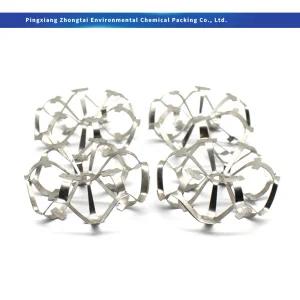
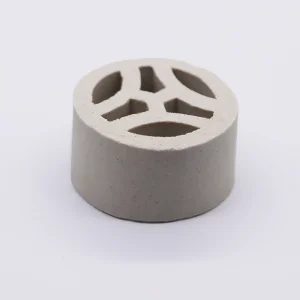
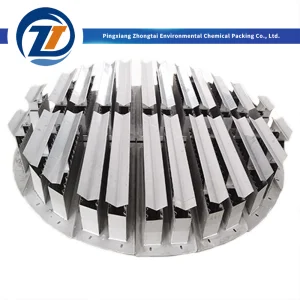
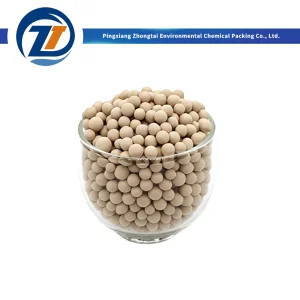
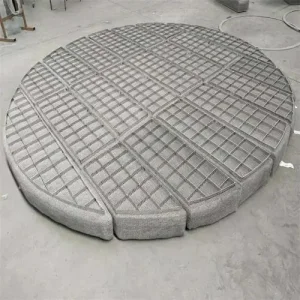
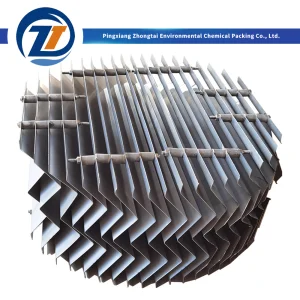
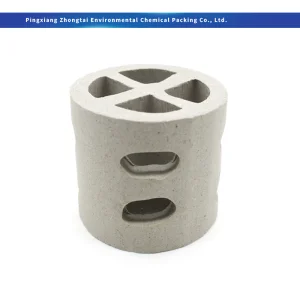
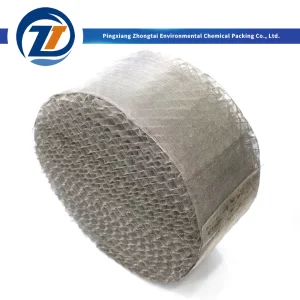
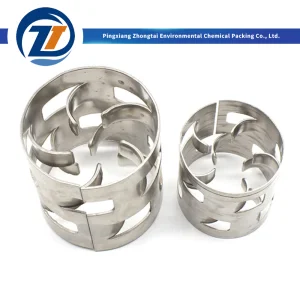
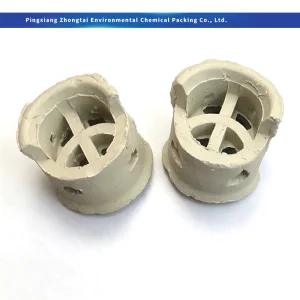
Engineered mass transfer internals, molecular sieves, mist eliminators, and structured distillation packings manufactured for chemical plants, air separation units, and scrubbing columns.
Partner directly with Pingxiang Zhongtai Environmental Chemical Packing Co., Ltd. Our engineering team assists with mill charge calculations, wear rate simulations, and custom chemical tower packing recommendations.
