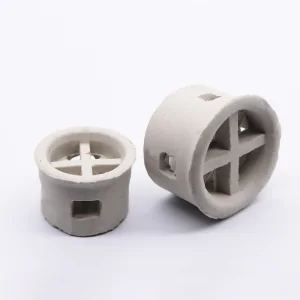
Featured industrial packing media, filtration ceramics, and catalyst bed hardware engineered to complement heavy-duty grinding mills and chemical column assemblies.
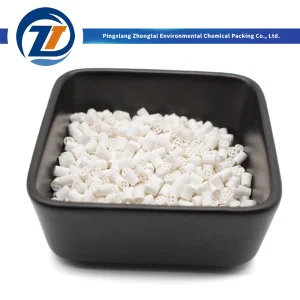
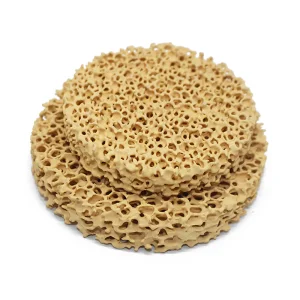
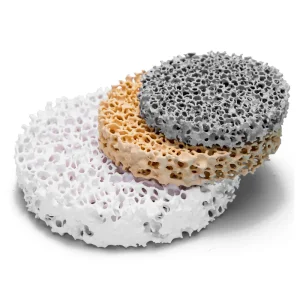
China 90% Al2O3 Honeycomb Ceramic Proppant Filter Bird Nest Support Media for Hydrogenation Units & Catalyst Bed Protection Factory, Pricelist
Request Pricelist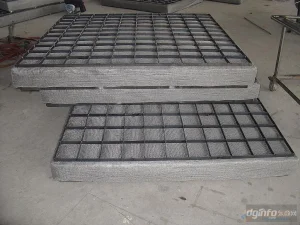
Wholesale High quality stainless steels metal wire gauze structured packing for gas-liquid separation Factory, Quotes
Get Factory Quotes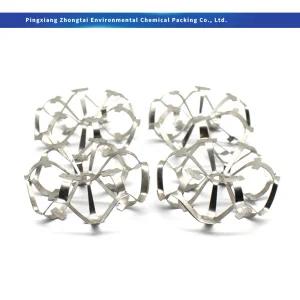
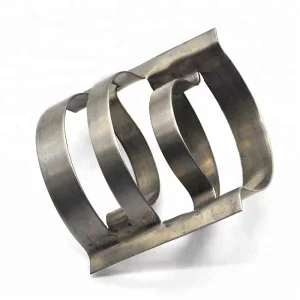
Wholesale High Wear Resistance 304 & 316 Stainless Steel Metal Teller Rosette Ring Flower Shape Tower Packing 25mm 38mm 50mm Supplier, Pricelist
Download Pricelist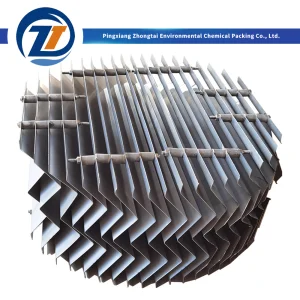
China 304 316L Stainless Steel Metal Chevron Vane Mist Eliminator for High Liquid Load Scrubbing & Gas-Liquid Separation Manufacturers, Factory
Factory Direct Order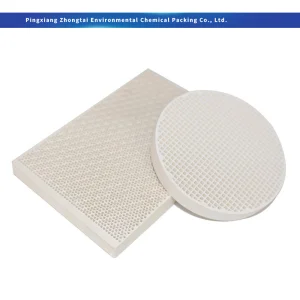
Wholesale 400 CPSI Cordierite Heater Plate | High-Temp Infrared Industrial Heater Supplier, Factory
Engineering Inquiry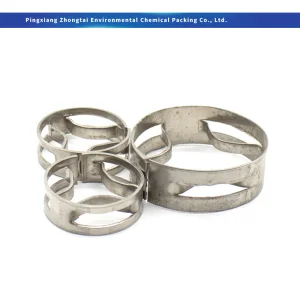
China High Quality 304 & 316 Stainless Steel Metal SMR-Super Mini Ring 25mm 38mm 50mm Metal Tower Packing Suppliers, Factories
Check Batch QuotesHow stringent contamination standards across battery chemistries, technical ceramics, and specialty chemicals are redefining ceramic-lined tumbling ball mill engineering worldwide.
Traditional manganese steel and forged iron tumbling mills yield metallic wear debris ranging between 50 to 250 ppm. In contrast, modern battery cathode processing (LFP, NCM) and multilayer ceramic capacitor (MLCC) dielectric formulations require iron contamination thresholds strictly below 5 ppm.
Ceramic ball mill machines fitted with isostatically pressed high-alumina (92%–99% Al₂O₃) or polyurethane linings completely neutralize metallic attrition, ensuring uninterrupted crystal lattice purity.
Comminution accounts for over 50% of total electrical energy expenditure in fine mineral beneficiation and high-grade ceramic slip preparation. The transition from heavy metallic ball charges to engineered high-density ceramic grinding media reduces total rotational deadweight by 35% to 42%.
Combined with variable-frequency synchronous motor drives and fluid-coupling systems, factory operators achieve measurable energy savings exceeding 28 kWh per ton of milled dry solids.
Unimodal versus bimodal particle distribution directly governs sintering densification and slurry rheology. Ceramic ball mills operate under precision cascade and cataracting regimes, allowing tight control over the $D_{50}$ and $D_{90}$ particle sizing metrics.
Through tailored media sizing gradients (ranging from 15mm down to 1.5mm high-alumina micro-beads), mills consistently attain narrow sub-micron distributions without localized overheating or agglomeration.
The convergence of localized calcined bauxite reserves, high-temperature tunnel kilns, and multi-disciplinary machining expertise creates unmatched wholesale efficiency.
Pingxiang, Jiangxi Province represents the historical and technological epicentre of China's advanced industrial ceramics sector. Because raw high-purity alumina sourcing, precision hydraulic press manufacturing, robotic brick laying, and heavy plate rolling exist within a 25-kilometer industrial perimeter, procurement friction is virtually eliminated.
For international buyers, this geographic centralization yields significant capital expenditure advantages. Mill drums are fabricated from certified Q235B or Q345R pressure vessel steel plates, rolled on CNC four-roll hydraulic machines, annealed to relieve internal welding stress, and precision-lined with interlocking tongue-and-groove ceramic bricks under continuous quality audits.
By uniting drum mechanical engineering and ceramic refractory metallurgy under one roof, Zhongtai eliminates the traditional 20–30% markup levied by overseas engineering firms that subcontract lining fabrication to secondary plants.
100% ultrasonic weld testing on drum seams; dynamic balancing verification across variable RPM thresholds.
Pre-wired Siemens/Schneider VFD panels, heavy-duty structural steel skids, and standardized sea-freight cradling.
Material test reports (MTR), alumina chemical purity essays, and Mohs hardness inspection logs provided per batch.
Standard drum models (0.5T to 15T) dispatched within 25–35 days; fully custom batch mills delivered in under 8 weeks.
Evaluating mechanical drive trains, trunnion bearing assemblies, lining interlocks, and dynamic media loading kinematics.
Configured for closed-loop, batch-wise ultra-fine preparation of specialty formulations, glazes, and electronic ceramic slurries. Features hermetically sealed feed/discharge manholes lined with custom trapezoidal alumina blocks.
Enables operators to perform precise wash-downs between recipe changes with zero cross-contamination. Operates under wet grinding conditions or dry comminution under inert gas blankets (Nitrogen/Argon).
Tailored for high-throughput continuous manufacturing plants including quartz powder beneficiation, glass frits, and feldspar processing. Material feeds continuously via a hollow trunnion shaft and discharges through peripheral or diaphragm grates.
Engineered with multi-chamber internal classifying diaphragms that segregate progressively smaller alumina ball media down the length of the cylinder to maximize crushing efficiency.
Drum longevity hinges upon lining design. We employ tongue-and-groove interlocking high-alumina bricks (40mm to 100mm thickness) bonded with high-bond vinyl ester or epoxy silica mortar formulations resistant to severe thermal cycles up to 140°C.
For acid-leaching slurries, natural rubber or vulcanized polyurethane backings are positioned between the steel shell and ceramic tiles to cushion impact and prevent corrosive under-creep.
| Model Parameter | Batch Ceramic Mill (0.5T–5T) | Industrial Batch Mill (10T–25T) | Continuous Ceramic Mill (Feed 5–30 t/h) |
|---|---|---|---|
| Target Operational Mode | Closed Batch (Wet / Dry) | Heavy Batch Slurry Production | Continuous Closed-Circuit with Classifier |
| Internal Cylinder Lining | 92%–95% High Alumina Brick / PU | 92% Alumina Brick (60–90mm thick) | Stepped Alumina Lifter Bars + Grate Plates |
| Grinding Media Specification | 92% Al₂O₃ Micro-Balls (ø2–ø20mm) | 92% Al₂O₃ Ceramic Balls (ø20–ø60mm) | Graded Alumina Media Charge (ø15–ø50mm) |
| Drive Mechanism | V-Belt / Reducer Direct Coupling | Main Gear Ring & Pinion / Gearbox | Synchronous Motor / Air Clutch Transmission |
| Critical Speed Fraction ($N_c$) | 65% – 72% | 68% – 74% | 72% – 78% |
| Discharge Fineness Achievable | $D_{95} < 2.5\,\mu\text{m}$ (Sub-micron) | 200 – 400 Mesh ($38\,\mu\text{m}$) | 325 – 1250 Mesh ($10\,\mu\text{m}$ with air classifier) |
| Main Applications | Battery Cathode, Glazes, Bio-ceramics | Sanitaryware, Mineral Frits, Silicates | High-purity Quartz Sand, Feldspar, Zircon |
*Note: All ball mill models can be customized with jacketed cooling/heating drums for temperature-sensitive chemical slurry grinds.
From advanced clean-tech battery gigafactories to ultra-pure semiconductor silica, our ceramic ball mill solutions ensure consistent particle size reduction.
Milling of Lithium Iron Phosphate ($LiFePO_4$), synthetic graphite anodes, and solid-state sulfide electrolytes requires strictly zero ferromagnetic contamination to prevent internal micro-short circuits in finished battery cells.
Barium titanate ($BaTiO_3$) and dielectric capacitor formulations require wet-batch comminution down to $D_{50} = 0.3\,\mu\text{m}$. Alumina lined drums prevent color shifts, ionic poisoning, and dielectric breakdown in fired chips.
Production of optical glass sand, fused silica for chip packaging, and micronized zirconium silicate ($ZrSiO_4$) for opacifiers demands exceptional liner wear resistance under highly abrasive slurries.
Comminution of calcium carbonate, food-grade titanium dioxide, and active pharmaceutical excipients under sanitary CIP (Clean-In-Place) wash protocols with complete chemical inertness and FDA-compliant lining adhesives.
How acoustic telemetry, intelligent charge tracking, and regenerative drive topologies are defining next-generation ceramic ball mill installations.
Non-invasive piezoelectric microphones mounted on the mill shell monitor the sonic signature generated by ball impacts. Machine learning algorithms process frequency variations in real-time to distinguish between cascading (abrasion) and cataracting (impact) regimes.
The system automatically fine-tunes mill rotational speed via VFD to maintain optimum energy delivery, preventing catastrophic ceramic liner spalling caused by direct ball-on-shell strikes when slurry pulp density drops.
Large ball mill cylinders hold enormous rotational momentum. Modern industrial switchgear integrates four-quadrant regenerative VFDs capable of capturing dynamic braking energy during controlled decel and feed-stop operations, redirecting up to 14% of braking energy back into the plant grid.
Soft-start ramping protocols limit startup torque in-rush spikes to under 1.25x rated current, protecting utility transformers and preserving pinions.
To break through the micron barrier without excessive residence time, high-density zwitterionic composite media (Alumina-Zirconia Toughened - ATZ) are replacing standard ceramic balls in secondary polishing stages. Density reaching 3.7–4.2 g/cm³ delivers greater kinetic shear per revolution, truncating milling cycle times by over 30%.
Essential checklist for EPC engineers and global procurement directors to assess manufacturing integrity, life-cycle costs, and factory compliance before contract signing.
Verify that the mill shell uses Q245R/Q345R vessel-grade steel plate of minimum 12mm to 25mm thickness (dependent on diameter). Demand complete post-weld ultrasonic test reports (UT) and evidence of full thermal annealing to prevent circumferential drum deflection under cyclic ball load.
Do not accept generic "ceramic" claims. Request verified laboratory pycnometer density tests confirming $\ge 3.60\,\text{g/cm}^3$ for 92% Al₂O₃, with Rockwell hardness HR45N $\ge 78$. Ensure the bonding agent matches your slurry pH range and maximum processing temperature.
For high-capacity continuous mills, confirm whether the vendor provides double-row spherical roller bearings (SKF / Timken) housed in dust-tight Plummer blocks or hydrodynamic Babbitt metal sleeve bearings with forced dual-circuit oil circulating lubrication stations.
Before issuing final dispatch authorization, ensure your third-party inspection agency (SGS/TÜV/Bureau Veritas) validates: (1) 4-hour continuous unloaded dry spin test checking bearing temperature rise ($\le 35^\circ\text{C}$ over ambient); (2) Noise level analysis below $82\,\text{dB(A)}$ at 1 meter; (3) Shell run-out tolerance within $\pm 1.5\,\text{mm}$; (4) Complete integrity test of emergency inching jog controls and hydraulic lid-locking mechanisms.
In-depth technical answers addressing operational mechanics, charge ratios, liner wear rates, and sizing considerations.
Consult with Zhongtai’s senior process engineers for customized drum sizing calculations, ball charge weight distributions, and competitive wholesale factory quotes.
Explore our full line of corrosion-resistant random tower packings, alumina wear media, and structured column internals manufactured under strict batch-level QC.
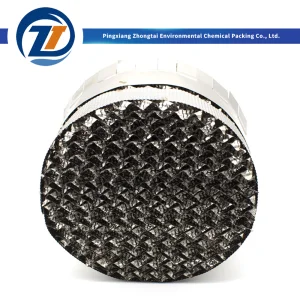
China 304 316L Stainless Steel Metal Structured Packing Corrugated Sheet for Distillation, Absorption & Scrubbing Towers Manufacturer, Factories
Check Wholesale Specs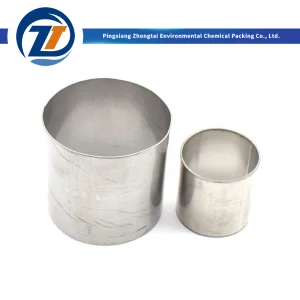
China High Strength 304 316L Stainless Steel Metal Raschig Ring Random Tower Packing 16mm 25mm 38mm 50mm 76mm for High Temperature & High Pressure Columns Manufacturers, Factories
Request Catalog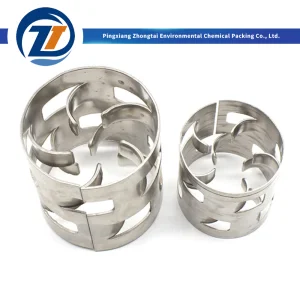
Wholesale High Strength 304 316L Stainless Steel Metal Pall Ring Random Tower Packing 16mm 25mm 38mm 50mm 76mm for Distillation & Absorption Factory, Quotes
Get Custom Quote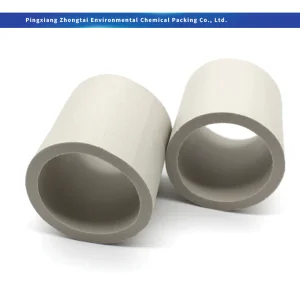
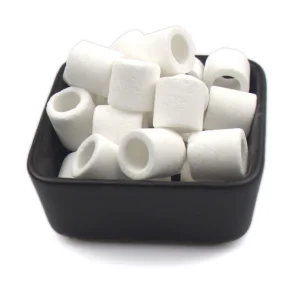
China Acid & Heat Resistant Ceramic Raschig Ring Random Tower Packing 16mm 25mm 38mm 50mm 76mm for Chemical Absorption & Scrubbing Supplier, Quotes
Inquire Pricelist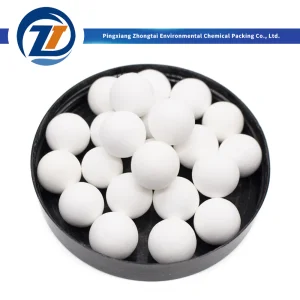
China High Wear Resistant Alumina Grinding Ceramic Ball Media for Ball Mill Manufacturer, Manufacturers
Order Grinding Media