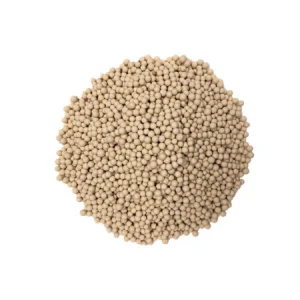
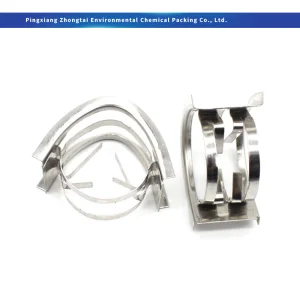
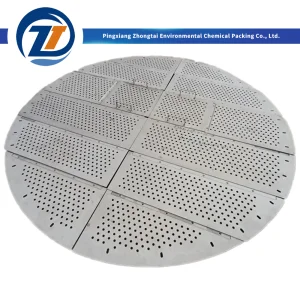
Explore our foundational series of high-capacity mass transfer components, structural saddle systems, and precision crystalline sieves deployed across global industrial towers.
A rigorous examination of geometric surface renewal, phase transformation under high sintering temperatures, and fluid dynamics in packed columns.
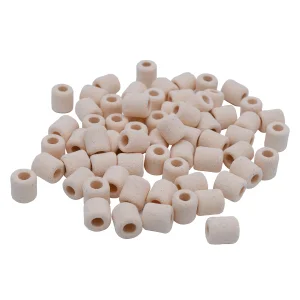
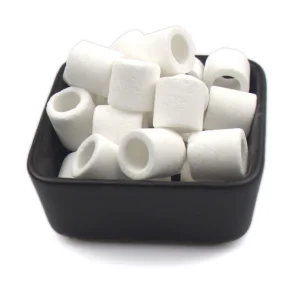
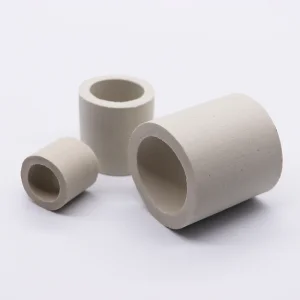
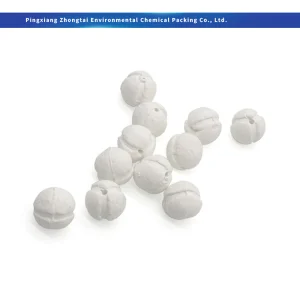
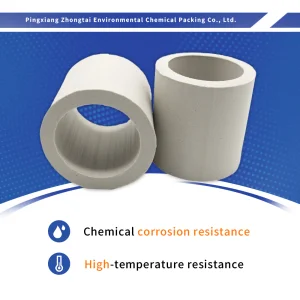
Alumina Raschig Rings manufactured by Zhongtai undergo high-temperature vitrification inside computer-monitored tunnel kilns operating between 1380°C and 1650°C. During this thermo-chemical cycle, intermediate gamma and theta phases completely recrystallize into dense, hexagonal alpha-corundum crystal matrices. This eliminates interstitial micro-cavities, driving water absorption rates down below 0.5% and creating unparalleled mechanical crush strength capable of sustaining deep catalyst beds without hydraulic collapse.
The open-cylinder geometry of the Raschig ring establishes an optimized ratio between geometric surface area ($a$) and open void fraction ($\varepsilon$). Fluid descending through random packing beds undergoes continuous film breakage, liquid redisposition, and gas contact renewal. This micro-turbulent mixing mitigates the gas boundary resistance described by the Whitman Two-Film Theory, drastically lowering the Height Equivalent to a Theoretical Plate (HETP) across distillation and scrubbing cycles.
Standard silicate porcelains are prone to silica leaching when exposed to elevated temperatures and steam atmospheres, which causes downstream catalyst poisoning in reforming reactors. Our high-alumina variants (>99% Al₂O₃, <0.2% SiO₂) offer absolute thermodynamic resistance against hot mineral acids, dry and wet chlorine, organic solvents, and sulfur dioxide. They resist all media with the exception of concentrated hydrofluoric acid and boiling concentrated alkaline liquors.
Comprehensive physical property benchmarks across standard industrial grades of Zhongtai Alumina Raschig Rings.
| Property Parameter | Standard Ceramic (17-23% Al₂O₃) | Medium-High Alumina (75-85%) | High Purity Alpha Alumina (90-95%) | Super Corundum Grade (≥99.2%) |
|---|---|---|---|---|
| Al₂O₃ Content (%) | 17.0 – 23.0% | 75.0 – 85.0% | 90.0 – 95.0% | ≥ 99.2% |
| SiO₂ Content (%) | 70.0 – 76.0% | 12.0 – 18.0% | 3.0 – 6.5% | ≤ 0.15% |
| Fe₂O₃ Content (%) | < 1.0% | < 0.4% | < 0.2% | ≤ 0.08% |
| Bulk Density (g/cm³) | 2.10 – 2.30 | 2.70 – 2.95 | 3.20 – 3.45 | 3.60 – 3.80 |
| Water Absorption (%) | < 1.5% | < 0.5% | < 0.1% | ≤ 0.05% |
| Acid Resistance (ASTM C515) | ≥ 99.2% | ≥ 99.6% | ≥ 99.8% | ≥ 99.9% |
| Alkali Resistance (%) | ≥ 85.0% | ≥ 90.0% | ≥ 94.0% | ≥ 98.0% |
| Max Service Temperature (°C) | 1100 °C | 1400 °C | 1550 °C | 1650 °C |
| Piecewise Crush Strength (1" Ring) | ≥ 2.2 kN | ≥ 4.5 kN | ≥ 5.8 kN | ≥ 7.2 kN |
From metallurgical smelter acid plants in North America to deep-bed syngas carbon capture columns across Southeast Asia and the Middle East.
In double-absorption metallurgical sulfuric acid plants, absorption towers operate under hot, concentrated sulfuric acid (98.0% to 98.5% H₂SO₄) at temperatures reaching 125°C. Traditional packings degrade or suffer silica loss. High-purity alumina Raschig rings maintain crystalline stability against oleum and thermal shocks, preventing bed settling, pressure drop build-up, and catastrophic mist carryover into gas distribution headers.
Within ammonia synthesis loops and petroleum hydrotreaters, process gas streams enter reactors at severe space velocities with temperatures exceeding 1000°C. Alumina Raschig rings are installed as topping and support layers for active nickel or cobalt-molybdenum catalysts. Their mechanical mass and high density lock the bed in place, preventing bed fluidization, distributing inlet process fluids evenly, and serving as thermal heat buffers.
Chlorinated hydrocarbon synthesis, hydrochloric acid distillation columns, and wet chlorine gas scrubbing towers present harsh corrosive regimes where specialty alloys (Hastelloy, titanium) fail due to pitting or high cost. Low-porosity ceramic alumina Raschig rings provide an inert, corrosion-free contact medium with superior surface energy, achieving near-perfect liquid film spread and high chlorine recovery.
How localized raw material supply, automated extrusion, and continuous kiln firing deliver 25–40% cost efficiency and rapid delivery times for global operators.
Pingxiang, located in Jiangxi Province, serves as the historic center of China's chemical packing industry. Pingxiang Zhongtai operates with immediate regional access to top-grade calcined bauxite, synthetic tabular alumina, and high-purity kaolin deposits. By integrating raw material micronization, dry-pressing, and vacuum hydraulic extrusion under one production footprint, we eliminate third-party processing markups and protect buyers against global commodity shocks.
Our multi-channel tunnel kilns and digital shuttle kilns run continuously on automated temperature-control loops. This guarantees steady, repeatable sinter vitrification and yields batch-to-batch physical consistency that Western resellers and decentralized suppliers struggle to match.
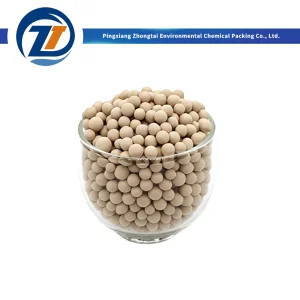
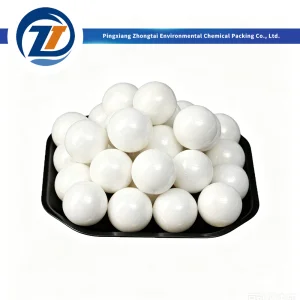
Unplanned plant shutdowns and sudden catalyst changes demand urgent packing deliveries. A broken packing bed can cost a major refinery upwards of $200,000 per day in lost production. Zhongtai maintains an active buffer stock of standard alumina Raschig ring sizes (15mm, 25mm, 50mm, 76mm) and inert ceramic balls ready for immediate crating.
Direct rail and highway corridors connect our Pingxiang manufacturing base to Shanghai and Ningbo maritime hubs within 36 hours. For mission-critical emergency plant turnarounds across North America, Europe, or the Persian Gulf, we offer priority air-cargo dispatch in certified heavy-duty steel-drum and crate packaging.
A strategic comparison between structured packing configurations and high-alumina random tower packings in severe service regimes.
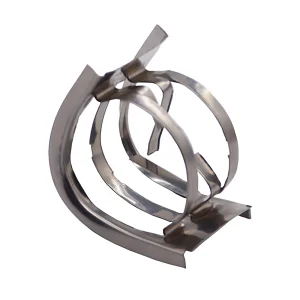
While corrugated structured packing provides lower dry pressure drop under clean hydrocarbon conditions, its fine sheets foul rapidly in dirty, particulate-laden, or coke-forming operating environments. Alumina Raschig rings deliver an optimal balance of robust fouling resistance, high bed load-bearing capacity, and significantly lower initial capital expenditure (CAPEX).
Global Engineering, Procurement, and Construction (EPC) contractors increasingly bypass Western intermediaries to contract directly with accredited Chinese manufacturers. Zhongtai supplies comprehensive design submittals, hydraulic loading charts, dimensional inspection records, and dual-certified MTRs to ensure smooth integration into EPC capital projects.
Stricter industrial emissions mandates (EU ETS, US Clean Air Act, and regional carbon limits) require continuous upgrades to wet scrubber and off-gas acid abatement trains. Alumina Raschig rings provide the thermal and chemical durability needed for reliable long-term operations in critical environmental scrubbers.
Our long-term engineering program focused on nano-grain microstructures, clean-burning hydrogen kilns, and high-efficiency carbon capture contactors.
By doping alpha-alumina matrices with trace concentrations of rare-earth oxides (yttria and zirconia sub-micron powders), our metallurgists are arresting inter-granular crack propagation. This modification raises thermal shock resistance ($\Delta T \ge 850^\circ\text{C}$), protecting packing beds during rapid emergency depressurization cycles.
Traditional smooth ceramics can suffer from liquid channeling along wall interfaces. Our advanced extrusion dies impart micro-grooved, hydrophilic surface topographies that actively draw fluid into wide, even liquid films. This micro-texturing lowers the effective HETP by up to 14% without elevating column pressure drop.
In step with global industrial decarbonization, Zhongtai is transitioning tunnel kilns to dual-fuel natural gas and clean hydrogen blends. This shift cuts Scope 1 manufacturing carbon intensity by over 30%, supplying downstream energy firms with verifiable, low-carbon certified tower packings.
Carbon Capture, Utilization, and Storage (CCUS) scrubbers use advanced amine solvents that degrade when exposed to dissolved metal ions. Our low-iron, high-alumina ceramic formulations resist amine absorption chemistry, providing clean, non-catalytic mass transfer for point-source carbon capture facilities.
Every manufacturing campaign is validated through standardized laboratory testing, lot-traceable documentation, and multi-tier third-party certifications.
Our industrial chemical ceramic products meet or exceed ASTM C515 (Standard Specification for Chemical Stoneware and Porcelain Tower Packings), ASTM C20 (Apparent Porosity, Water Absorption, and Apparent Specific Gravity), and related European industrial criteria. Test documentation covers crush strength, boiling sulfuric acid resistance, and bulk density per production run.
We work regularly with internationally accredited inspection agencies, including SGS, TÜV Rheinland, and Bureau Veritas. Inspectors can perform on-site factory audits, oversee witness crushing tests, verify XRF elemental compositions, and review custom packing protocols prior to container sealing.
To eliminate breakage during ocean transit and on-site mechanical dumping, our export packing follows strict protocols: double-walled 1000kg reinforced polypropylene jumbo bags with internal anti-moisture liners, heavy-duty fiberboard drums on heat-treated ISPM-15 fumigated wooden pallets, or banded steel drums for high-alumina bed hold-down grades.
In-depth technical answers addressing hydrodynamic design limits, silica contamination risks, installation protocols, and wholesale procurement.
Complete your mass transfer, hot gas purification, and fine-grinding specifications with our extended portfolio of industrial ceramic components.
Our chemical process engineers are available to review your tower specifications, pressure drop targets, and service media parameters. We provide verified chemical data sheets, physical samples, and firm commercial proposals within 24 business hours.
Need immediate engineering support for an upcoming plant turnaround or EPC bidding deadline?
Initiate RFQ & Technical Review Download Complete Product Catalog