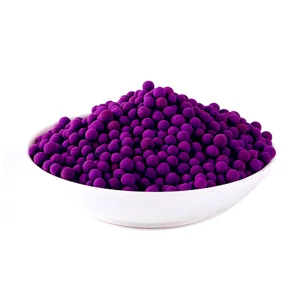
Direct supply from Pingxiang chemical packing hub — ISO Certified mass transfer media, ceramic filter elements, and high-performance grinding spheres.
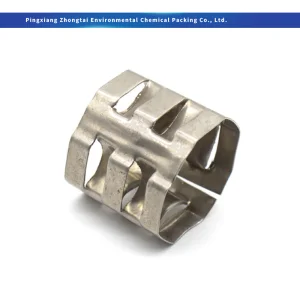
China 304 316 Stainless Steel Metal VSP Ring (Very Special Packing) / 84 Mellaring for Chemical Absorption, & High Flux Supplier, Factory
View Product Specs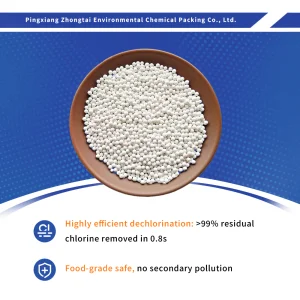
Wholesale Food Grade Calcium Sulfite Ceramic Dechlorination Media Balls Manufacturer, Quotes
View Product Specs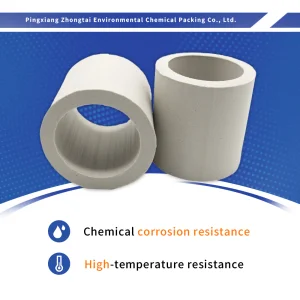
Wholesale Ceramic Raschig Ring – Random Tower Packing for Absorption, Distillation & Industrial Processing Towers Manufacturer, Suppliers
View Product Specs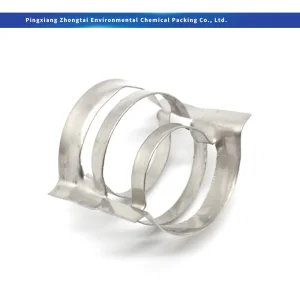
Wholesale Stainless Steel Metal Conjugate Ring 25mm 38mm 50mm High Efficiency Low Pressure Drop Tower Packing for Chemical Distillation Supplier, Factory
View Product Specs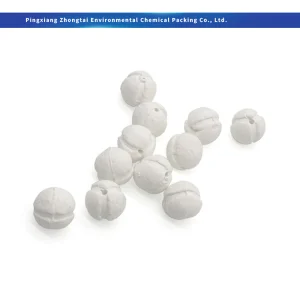
Wholesale High Performance Perforated Ceramic Ball Porous Catalyst Support Media for Chemical Reactor Manufacturer, Manufacturers
View Product Specs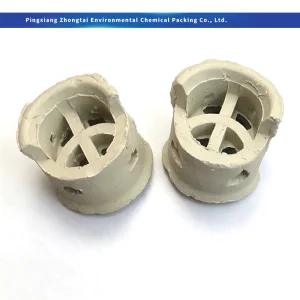
Wholesale Acid & Heat Resistant Ceramic Conjugate Ring Random Tower Packing 25mm 38mm 50mm 76mm for Chemical Absorption, Distillation & Scrubbing Supplier, Factories
View Product Specs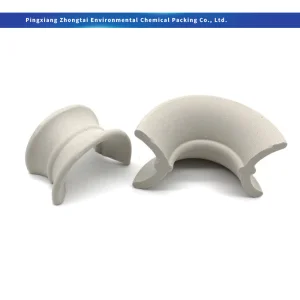
China Acid & Heat Resistant Ceramic Intalox Saddle Ring Random Tower Packing 16mm 25mm 38mm 50mm 76mm for Chemical Absorption & Scrubbing Manufacturers, Pricelist
View Product SpecsComprehensive technical breakdown of alpha-alumina ceramic grinding balls in high-stress industrial wet/dry micronization processes.
The global demand for high-density Al2O3 ceramic grinding balls has experienced exponential growth over the past decade. Driven by the aggressive shift toward advanced energy storage materials, precision electronics, and high-volume mineral processing, industrial plants require grinding media that deliver high kinetic energy transfer with minimal self-wear rates.
Modern ultrafine comminution operations—particularly in lithium-iron-phosphate (LFP) cathode synthesis, zircopax glaze refining, and non-metallic mineral processing (kaolin, GCC, PCC)—cannot tolerate iron contamination. High-purity alumina ceramic balls (ranging from 68% to 99% Al2O3 content) have established themselves as the world standard, replacing legacy forged steel balls and natural flint pebbles.
At the core of an alumina ceramic ball's performance is its microstructural phase composition. Manufactured primarily from fine calcined alpha-alumina ($\alpha$-$\text{Al}_2\text{O}_3$), these balls undergo ultra-high-pressure isostatic forming or automated roll-forming, followed by high-temperature sintering in gas-fired tunnel kilns at temperatures ranging from 1550°C to 1700°C.
The resulting corundum crystal structure exhibits a Mohs hardness of 9 and a Vickers hardness exceeding 1200 HV10. The micro-crystalline matrix minimizes grain boundary pull-out under severe impact conditions inside high-speed stirred mills and ball mills, leading to ultra-low wear rates ($<0.005\%$ per hour in wet grinding tests).
Quantitative performance metrics validated through ISO 9001 quality audits and automated batch verification.
Analyzing the industrial cluster effects, raw material integration, and continuous manufacturing technology in Pingxiang, Jiangxi.
Pingxiang City in Jiangxi Province represents China's premier cluster for industrial ceramics and chemical mass transfer media. This localized ecosystem brings raw material suppliers (high-purity bauxite and calcined alumina plants), kilns builders, and automated equipment manufacturers within a 30-minute radius. This spatial proximity drastically reduces logistics overhead and lead times for bulk orders.
Chinese factories have largely migrated from traditional wet rolling methods to computer-controlled Cold Isostatic Pressing (CIP) and high-speed multi-cavity mechanical automatic presses. CIP technology exerts uniform hydrostatic pressure ($>200 \text{ MPa}$) from all directions, eliminating internal voids, density gradients, and structural micro-cracks before firing.
Legacy batch shuttle kilns suffer from thermal fluctuations, leading to inconsistent ball hardness within the same batch. Chinese OEM export factories utilize ultra-long continuous natural gas tunnel kilns (exceeding 100 meters in length). Microprocessor-controlled temperature zones ensure identical thermal soaking times for every single sphere.
Compare standard chemical composition, physical properties, and operational envelope across different commercial grades.
| Alumina Grade | Al2O3 Content (%) | Bulk Density (g/cm³) | Equivalent Spherical Hardness | Water Absorption (%) | Primary Industrial Application |
|---|---|---|---|---|---|
| Medium Alumina (68-75%) | $\ge 68\%$ | $\ge 2.95$ | Mohs 7.5 | $< 0.02\%$ | Traditional Ceramic Body Grinding, Feldspar, Clay |
| High Alumina (92%) | $\ge 92\%$ | $\ge 3.60$ | Mohs 9.0 | $< 0.01\%$ | Ceramic Glazes, Mineral Milling, Zirconium Silicate |
| Ultra-High Alumina (95%) | $\ge 95\%$ | $\ge 3.68$ | Mohs 9.0 | $< 0.005\%$ | Lithium Battery Cathode Slurry, Paint Dispersions |
| Purity Grade (99% / 99.5%) | $\ge 99\%$ | $\ge 3.80$ | Mohs 9.0+ | $< 0.001\%$ | Semiconductor Powders, Electronic Ceramics, Bio-implants |
| Inert Support Sphere (17-23%) | $17 - 23\%$ | $\approx 1.4 - 1.6$ (Packed) | High Crush Resistance | $< 5.0\%$ | Refinery Reactor Support, Catalyst Bed Topping |
How global plant operators configure Al2O3 grinding spheres across diverse processing environments.
In modern lithium-ion energy storage manufacturing, the synthesis of Lithium Iron Phosphate ($\text{LiFePO}_4$) and NCM (Nickel-Manganese-Cobalt) precursor powders requires target particle sizes down to the sub-micron scale ($D_{50} < 0.5 \mu m$).
Operational Setup: Vertical and horizontal pin-type stirred mills loaded with small-diameter high-purity Al2O3 ceramic micro-spheres ($0.5 \text{ mm}$ to $2.0 \text{ mm}$). The ultra-high purity ensures zero metallic iron ($\text{Fe}$) contamination, which would otherwise lead to internal micro-short circuits in finished battery cells.
Large-scale processing plants for Ground Calcium Carbonate (GCC), Precipitated Calcium Carbonate (PCC), Kaolin, and Quartz require continuous, high-throughput wet grinding in large ball mills and tower mills.
Operational Setup: Grinding charges are typically graded using a calculated charge-mix matrix consisting of $30 \text{ mm}$, $40 \text{ mm}$, and $50 \text{ mm}$ high-density 92% Al2O3 ceramic balls. The high kinetic impact shatters crystalline minerals rapidly, maintaining precise slurry viscosity without dynamic temperature spikes.
In sanitary ware and porcelain tile production, enamel glazes must be milled until zero residue remains on a 325-mesh sieve. Any wear debris from the grinding media will cause black specking or pinholes after final firing in tile kilns.
Operational Setup: Continuous ceramic-lined batch ball mills operating at 65-70% critical speed. Utilizing 92% Al2O3 balls reduces mill run time from 16 hours (with natural pebbles) down to under 8 hours, doubling plant capacity without capital expansion.
In petrochemical refineries, hydrocrackers, and ammonia synthesis towers, inert Al2O3 ceramic spheres act as supportive packing layers rather than grinding media.
Operational Setup: Layered arrangements at the top and bottom of catalyst beds. Smaller spheres ($3 \text{ mm} - 6 \text{ mm}$) rest directly against catalyst particles to distribute liquid/gas feedstock uniformly, while larger spheres ($13 \text{ mm} - 50 \text{ mm}$) anchor the bed against high differential pressure surges.
A standardized framework for procurement managers to audit suppliers and specify technical requirements.
Always specify the sphericity tolerance in your RFQ. Standard commercial grade allows a $\pm 1.0 \text{ mm}$ variance in diameter, whereas precision micronization requires high-sphericity media ($\ge 95\%$ roundness ratio) to prevent mill screen blinding and hydraulic packing inside horizontal sand mills.
Demand certified laboratory test reports using the standard wet planetary jar test method: 1kg of media milled with water for 24 hours at 80 RPM. Verify that wear loss is certified below $0.01\%$, and request third-party verification via SGS or Intertek prior to vessel loading.
High-density media can cause bag bursting during transshipment. Best practices dictate double-walled 25kg woven PP inner bags packed into heavy-duty 1.0 or 1.2-metric-ton jumbo bags, secured on fumigated wooden pallets or plastic ISPM-15 compliant skids.
Detailed technical responses addressing common engineering and commercial queries from industrial buyers.
Inert alumina ceramic balls (typically containing 17% to 99% Al2O3) are engineered specifically for chemical reactor support and column packing. They possess high thermal stability, low water absorption, and high resistance to chemical corrosion, but are not optimized for impact energy transfer. Their primary function is to support catalyst beds and equalize gas/liquid flow.
Alumina ceramic grinding balls (typically 92% to 99% Al2O3) are high-density, wear-resistant spheres optimized for kinetic energy transfer in ball mills, stirred mills, and attritors. They undergo specialized high-pressure compaction and microstructural sintering to maximize hardness (Mohs 9) and minimize self-wear loss under continuous impact and attrition forces.
The standard formula for calculating total ball charge mass ($M$) in a ball mill is:
$M = V_{mill} \times \%_{fill} \times \rho_{bulk}$
Where $V_{mill}$ is the total net internal volume of the mill cylinder, $\%_{fill}$ is the target loading percentage (typically 45% to 50% of mill volume for conventional ball milling), and $\rho_{bulk}$ is the bulk density of the media (for 92% Al2O3 balls, bulk density is approximately $2.2 \text{ metric tons/m}^3$ or $2200 \text{ kg/m}^3$).
Yes, Al2O3 ceramic balls are widely used in dry grinding processes for cement raw meal, silica sand, and ceramic body materials. However, in dry grinding environments, media wear rates are generally higher than in wet milling due to the lack of a liquid slurry cushion. To mitigate media cracking and excessive wear, dry milling operations often incorporate specialized grinding aids (such as triethanolamine or glycol compounds) and use tough, high-density 92% or 95% isostatically pressed balls with smooth surface polishes.
In high-temperature chemical reactors, steam reformers, and secondary ammonia converters, silica present in lower-grade ceramic packing can react with high-temperature steam to form volatile silicic acid ($\text{Si(OH)}_4$). This gaseous silica migrates downstream and deposits onto cooler heat exchanger tubes and catalyst beds, poisoning expensive catalysts and causing severe fouling.
Selecting 99% Super High Alumina spheres (which contain less than 0.2% silica trace content) effectively eliminates silica leaching risk, protecting downstream capital assets in high-pressure steam environments.
For standard stocked sizes ($20\text{mm}, 30\text{mm}, 40\text{mm}, 50\text{mm}, 60\text{mm}$ in 92% Al2O3), lead time is typically 7 to 10 days from order confirmation. For custom sizes, high-purity micro-spheres ($<1\text{mm}$), or specialized formulas, production cycles range from 15 to 25 days depending on continuous kiln schedules. Minimum Order Quantities (MOQ) generally start at 1 metric ton for standard sizes, with full container load (FCL) shipments offering maximum ocean freight economy.
Explore our complete portfolio of metal packing, structured packing, ceramic foam filters, and proppants.
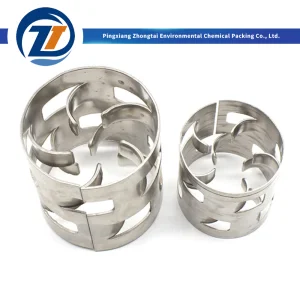
Wholesale High Strength 304 316L Stainless Steel Metal Pall Ring Random Tower Packing 16mm 25mm 38mm 50mm 76mm for Distillation & Absorption Factory, Quotes
View Product Specs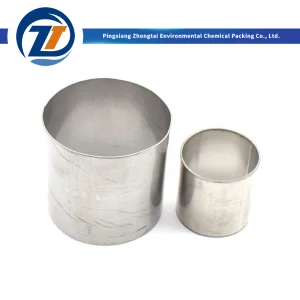
China High Strength 304 316L Stainless Steel Metal Raschig Ring Random Tower Packing 16mm 25mm 38mm 50mm 76mm for High Temperature & High Pressure Columns Manufacturers, Factories
View Product Specs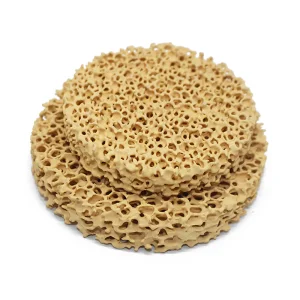
Wholesale Zirconia Ceramic Foam Filters for Casting Filtration Suppliers, Pricelist
View Product Specs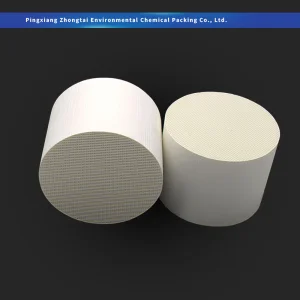
China Metal Honeycomb Catalyst Substrate | Ceramic-Coated Monolithic Structure Manufacturer, Suppliers
View Product Specs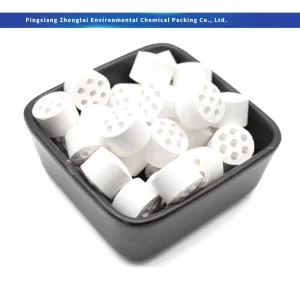
China Ultra-High Crush Resistance Ceramic Proppant 20/40 30/50 40/70 Mesh for Oil & Gas Hydraulic Fracturing Manufacturer, Factory
View Product Specs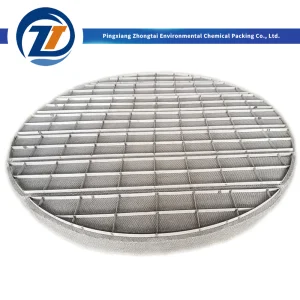
China 304 316L Stainless Steel Metal Wire Mesh Mist Eliminator Demister Pad for Chemical Scrubbing, Distillation & Gas-Liquid Separation Manufacturer, Factories
View Product Specs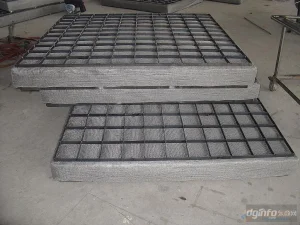
Wholesale High quality stainless steels metal wire gauze structured packing for gas-liquid separation Factory, Quotes
View Product Specs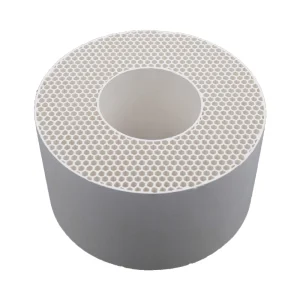
China Thermal Storage Rto/Rco Honeycomb Ceramic as Catalytic Converter for Heat Recovery Manufacturers, Quotes
View Product Specs