Export-grade random packing, ceramic supports, and gas-liquid separation internals manufactured in Pingxiang under strict ISO 9001:2015 quality protocols.
Understanding the microcrystalline mullite-corundum composite phase that bridges the performance-cost gap between standard inert refractory balls and ultra-pure tabular alumina.
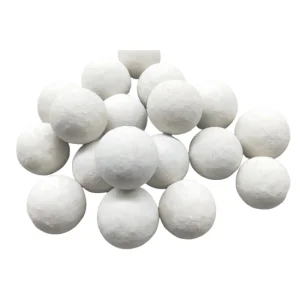
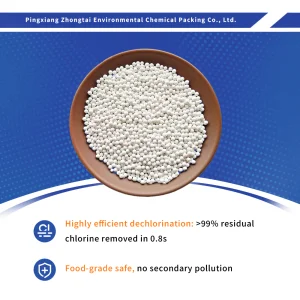
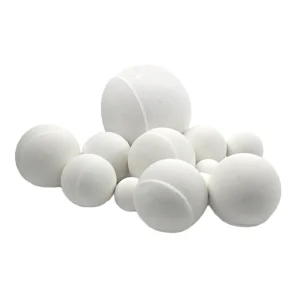
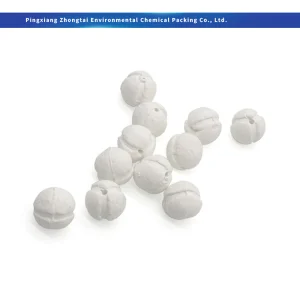
In the discipline of chemical reactor engineering and high-energy comminution, 68% Alumina Balls (commonly categorized within the industry as mid-to-high alumina ceramic media) represent a meticulously balanced structural compromise. Engineered with an optimized ratio of approximately 68% aluminum oxide (Al2O3) and balance silica (SiO2) alongside trace flux oxides, this material is synthesized through high-temperature sintering at temperatures ranging between 1450°C and 1520°C. The resulting microstructure features interlocking acicular mullite crystals embedded with α-alumina grains, delivering substantial improvements in fracture toughness, chemical inertness, and volumetric mass relative to low-alumina clays.
| Performance Parameter | Standard Inert (17-23% Al₂O₃) | 68% Alumina Ball (Mid-Grade) | 92% High Alumina | 99.5% Corundum |
|---|---|---|---|---|
| Al₂O₃ Content (%) | 17.0 – 23.0% | 68.0 – 70.0% | 92.0 – 93.5% | ≥ 99.5% |
| Bulk Density (g/cm³) | 1.35 – 1.45 | 1.85 – 2.05 | 2.20 – 2.35 | 2.45 – 2.55 |
| Apparent Porosity / Absorption | ≤ 2.0% | ≤ 0.5% (Water Abs. ≤ 0.2%) | ≤ 0.02% | ≤ 0.01% |
| Mohs Hardness | 6.0 – 6.5 | 7.5 – 8.0 | 9.0 | 9.0+ |
| Cold Crushing Strength (25mm sphere) | ≥ 3,500 N/piece | ≥ 9,500 N/piece | ≥ 18,000 N/piece | ≥ 22,000 N/piece |
| Max Working Temperature (°C) | 1100 °C | 1450 °C | 1600 °C | 1750 °C |
| Acid Resistance (ASTM C279, %) | ≥ 99.0% | ≥ 99.6% | ≥ 99.8% | ≥ 99.9% |
| Primary Mechanical Role | Hold-down / Gas Distribution | Deep Reactor Bed Support & Grinding | High-Wear Wet Milling | Severe High-Temp Steam Reformers |
While conventional 20% alumina ceramic balls exhibit glassy silicate boundaries susceptible to reactive dissolution in high-temperature alkaline streams, 68% alumina formulations bind silica chemically into a rigid mullite (3Al₂O₃·2SiO₂) crystal matrix. This boundary state suppresses silica leaching below critical parts-per-billion thresholds, preventing downstream heat exchanger fouling and catalyst poisoning in hydrocracking units.
The microcrystalline matrix synthesized during high-temperature tunnel kiln firing provides outstanding mechanical energy dissipation under deep-bed compressive loads.
Spherical uniformity, verified by digital sphericity analyzers, ensures calculated void fractions of 38% to 42% in random dense packing arrangements.
When deployed as milling media, 68% alumina provides self-wear rates below 0.015%/h, eliminating batch discoloration in ceramic and pigment processing.
Leveraging 100+ years of industrial ceramic history, automated pressing technology, and vertically integrated mineral resources to provide uncompromised batch stability.
Pingxiang sits directly on China's premier mineral corridors for calcined bauxite and kaolinite clays. By maintaining captive calcining and ball-milling preparation centers within a 30km haulage radius, factories maintain total control over Fe₂O₃ and alkali metal impurities before slip preparation begins.
Modern facilities employ automated hydraulic isostatic presses for large spherical diameters (30mm to 75mm) and high-speed rotary granulation drums for small support beads (3mm to 13mm). This dual-forming line capability guarantees internal body density consistency and roundness without air inclusions.
Computer-controlled 120-meter tunnel kilns burning clean natural gas ensure uniform soaking curves with temperature differentials under ±5°C across the kiln car profile. This eliminates the brittleness and thermal stress fractures common in small batch shuttle kilns.
How international engineering firms specify 68% alumina media to balance mechanical reliability, bed hold-down hydraulics, and long-term operating costs.
Procurement specialists representing major international oil companies (IOCs), petrochemical producers, and EPC contractors approach catalyst support selection through strict risk-mitigation frameworks. Bed failure, media attrition, or catalyst migration leads to unscheduled plant turnarounds costing upwards of $500,000 per day in downtime. Consequently, 68% alumina balls must fulfill specific mechanical, dimensional, and certification criteria:
Standard multi-layer catalyst support architectures mandate precise dimensional gradation. Typical bed support layering utilizes a sequential stacking methodology:
International purchasing orders require verifiable Quality Assurance protocols before port dispatch:
For mineral processing, white cement, and ceramic slip ball mills, 68% alumina balls deliver an exceptional ROI compared to steel or forged media:
Tailored engineering protocols addressing operational pressures, chemical streams, and regional regulatory mandates across global markets.
In Gulf Cooperation Council (GCC) refineries handling sour crudes with elevated H₂S and organic nitrogen, 68% alumina balls serve as rugged bed hold-down media. Their high bulk density withstands high superficial gas velocities without bed disturbance, while low free iron content prevents unwanted sulfidation reactions.
Shipments to European downstream facilities comply fully with EU REACH regulations and RoHS directives. Because our raw clays undergo thorough chemical de-metallization, our 68% balls release zero leachable heavy metal ions (Pb, Cd, As) into process condensates or municipal wastewater streams.
Deployed widely across US and Canadian natural gas sweetening plants, 68% alumina acts as the primary bottom support and top capping ballast for 4A/13X molecular sieve beds. Their high roundness prevents abrasion against adjacent zeolite beads during rapid bed depressurization cycles.
To withstand multi-modal maritime transit, shipments feature heavy-duty 25kg double-layer woven polypropylene bags inside reinforced 1000kg/1200kg UV-stabilized jumbo bulk bags. Pallets are heat-treated according to ISPM-15, enclosed in multi-layer stretch wrap with corner edge protectors to eliminate moisture ingress.
Technological roadmaps, decarbonization in kiln operations, and next-generation reactor demands shaping the 2025–2030 chemical packing landscape.
Leading Pingxiang manufacturers are actively transitioning high-temperature tunnel kilns to oxy-fuel and electric pre-heating configurations. By blending green hydrogen into natural gas burner arrays, Scope 1 operational carbon emissions per ton of sintered alumina media will drop by 30% by 2028, aligning with EU CBAM carbon border mechanisms.
Manual visual batch screening is rapidly being replaced by high-speed dual-camera vision systems capable of inspecting up to 20 metric tons of spheres per hour. Automated systems identify surface micro-cracks, elliptical distortions, and internal gas pockets down to 0.1mm, ensuring zero-defect quality before packaging.
Refinery turnaround contractors are demanding closed-loop recovery services. Advanced ultrasonic cleaning and acid-stripping processes now allow used 68% alumina balls to be cleaned of metal contaminants (V, Ni), re-screened, and repurposed into downstream agricultural acid neutralization or non-critical wastewater stripping towers.
Authoritative answers to the most common engineering and logistical questions raised by refinery process engineers, plant buyers, and distributors.
Standard inert balls (17-23% Al₂O₃) contain a large amorphous glass phase (silicates) that softens under elevated temperatures and is susceptible to chemical attack by steam and alkalis. In contrast, 68% alumina balls feature a dense, crystalline mullite-corundum composite phase. This composition delivers more than double the cold crushing strength (≥9,500 N vs. 3,500 N for a 25mm ball), lower water absorption (≤0.5%), and prevents silica leaching that can poison downstream reforming and hydrotreating catalysts.
Yes. 68% alumina balls (often termed mid-alumina grinding balls) are widely used in raw material grinding for ceramics, sanitaryware, glaze slips, and industrial pigments. With a Mohs hardness of 7.5–8.0 and a bulk density around 1.95–2.05 g/cm³, they offer an exceptional balance between grinding efficiency and media cost. Compared to natural pebble flints, they reduce grinding times by 20–30%, while avoiding the high capital expense of 92% or 95% high-alumina media.
Standard nominal sizes range from 3mm (1/8") up to 75mm (3"). The most commonly produced imperial and metric diameters include 3mm (1/8"), 6mm (1/4"), 10mm (3/8"), 13mm (1/2"), 19mm (3/4"), 25mm (1"), 38mm (1.5"), 50mm (2"), and 75mm (3"). Custom diameters can also be formed via precision isostatic tooling to suit unique reactor vessel screen openings.
Every production batch undergoes strict quality control according to ASTM C517 (Standard Specification for Ceramic Ball Catalyst Supports) and ISO 9001 quality management guidelines. A minimum of 20 randomly sampled balls per pallet lot are subjected to compressive load testing using calibrated hydraulic crush testers. Additionally, batches undergo dye penetration tests to identify micro-cracks, water absorption verification via vacuum boiling (ASTM C373), and X-Ray Fluorescence (XRF) elemental chemical composition analysis.
68% alumina balls have a continuous service temperature limit of up to 1450°C (2642°F) and a refractoriness under load rating exceeding 1500°C. This makes them well-suited for secondary reformers, shift converters, Claus thermal reactors, and regenerative thermal oxidizers (RTOs) where thermal cycling is frequent.
Silica leaching occurs in high-pressure steam environments when free glassy silica (SiO₂) reacts with water vapor to form volatile silicic acid [Si(OH)₄]. This vapor travels downstream, condensing on cooler heat exchanger tubes and catalyst active sites. In 68% alumina balls, almost all silica is bonded into synthetic mullite (3Al₂O₃·2SiO₂), which shows negligible reactivity with high-temperature steam. For ultra-critical ammonia or hydrogen secondary reformers operating above 1200°C, 99% low-silica alumina balls (<0.2% SiO₂) are recommended.
Our standard export packaging includes 25kg multi-wall woven plastic bags palletized into 1.0 or 1.2 metric ton units, secured with heavy-duty stretch film and corner guards. Alternatively, 1000kg flexible intermediate bulk containers (FIBC jumbo bags) with moisture-proof PE liners, or 200-liter reconditioned steel drums for high-vibration applications, can be provided. All wooden pallets comply with ISPM-15 heat-treatment standards.
For standard sizes (such as 13mm, 25mm, and 50mm), we maintain buffer stocks of 500+ tons in our Pingxiang warehouse, enabling container dispatch in as little as 5 to 7 business days. For customized dimensions or project-specific formulations requiring dedicated kiln runs, production lead time is typically 14 to 20 days per 100 metric tons.
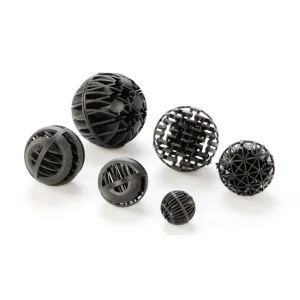
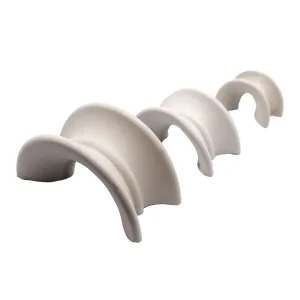
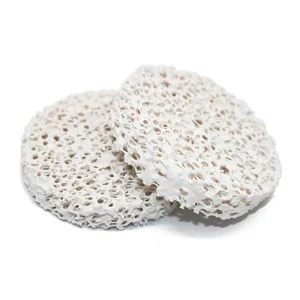
Explore our broader industrial portfolio spanning structured gauze packing, random saddles, bio-filtration media, and ceramic foam filters for steel and non-ferrous foundry operations.
Connect directly with our Pingxiang chemical engineering team to evaluate bed support loading schedules, calculate hydrodynamic pressure drops (ΔP), or request physical test samples for lab qualification.