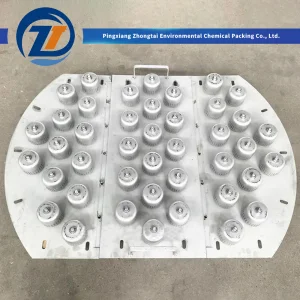
Engineered adsorbents and column internals manufactured under ISO 9001:2015 quality standards.
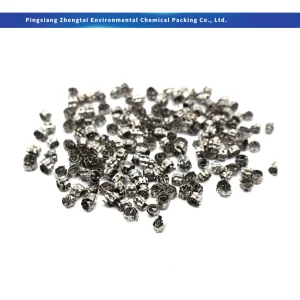
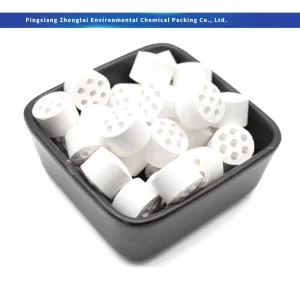
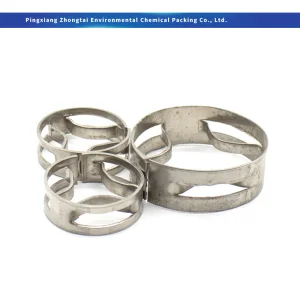
Synthetic 4A Molecular Sieve represents an essential pillar of modern industrial mass-transfer and fluid-purification engineering. Structurally designated as the sodium form of the Type A crystal structure—chemically expressed as Na12[(AlO2)12(SiO2)12]·xH2O—the 4A zeolite possesses an effective pore opening of approximately 4 Angstroms (0.4 nm). This discrete crystalline framework enables precise kinetic molecular sieving based on molecular dimensions, polar affinity, and shape selectivity.
The three-dimensional aluminosilicate framework features interconnected alpha cages (11.4Å diameter) accessed via 8-membered oxygen rings, providing exceptionally high structural integrity and thermal resistance up to 600°C.
The high concentration of localized sodium cations (Na+) creates strong electrostatic fields within the pore cavities, yielding superior adsorption capacity for highly polar molecules like water vapor even at extremely low partial pressures.
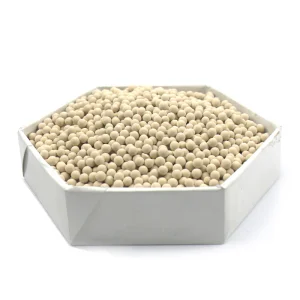
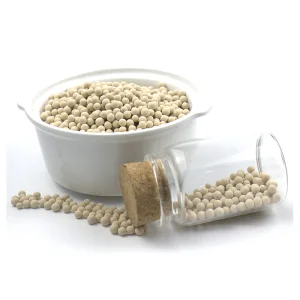
Formulated into robust spherical beads or cylindrical extrudates using high-purity clay binders, engineered for minimal attrition rates (<0.05% wt) and optimized bed voidage to minimize pressure drop in high-velocity gas beds.
When selecting a wholesale 4A molecular sieve factory, process engineers must evaluate physical, chemical, and adsorption parameters to ensure operational efficiency in thermal swing adsorption (TSA) and pressure swing adsorption (PSA) systems.
| Property Parameter | Test Standard | Spherical Bead (1.6–2.5 mm) | Spherical Bead (3.0–5.0 mm) | Cylindrical Extrudate (1.6 mm / 3.2 mm) |
|---|---|---|---|---|
| Nominal Pore Diameter | XRD Crystallography | 4 Angstroms (0.4 nm) | 4 Angstroms (0.4 nm) | 4 Angstroms (0.4 nm) |
| Bulk Density (g/mL) | ASTM D4180 | ≥ 0.72 g/mL | ≥ 0.70 g/mL | ≥ 0.68 g/mL |
| Crush Strength (N) | ASTM D4179 | ≥ 35 N / bead | ≥ 80 N / bead | ≥ 30 N / particle |
| Static H2O Adsorption (RH 60%) | HG/T 2524-2010 | ≥ 21.5% wt | ≥ 21.5% wt | ≥ 21.0% wt |
| Dynamic H2O Adsorption | Industrial Gas Bed Test | ≥ 15.5% wt (Breakthrough) | ≥ 15.0% wt (Breakthrough) | ≥ 14.8% wt (Breakthrough) |
| Attrition Rate (% wt) | ASTM D4058 | ≤ 0.05% | ≤ 0.05% | ≤ 0.10% |
| Package Moisture Content | Karl Fischer Titration | ≤ 1.0% wt | ≤ 1.0% wt | ≤ 1.0% wt |
| Regeneration Temperature | Thermal Analysis | 200°C – 250°C | 200°C – 250°C | 200°C – 250°C |
The global demand for high-purity molecular sieves is undergoing significant transformation driven by energy transition mandates, decarbonization regulations, and advanced manufacturing standards.
As Liquefied Natural Gas (LNG) and compressed natural gas (CNG) consumption expands worldwide, ultra-deep gas dehydration using 4A and 3A molecular sieves is critical to prevent hydrate formation and cryogenic freezing down to dew points of -100°C.
Green building mandates across Europe and North America require double and triple-pane insulated glass units (IGU). Specialized 4A desiccation formulations ensure long-term moisture and solvent adsorption without trapped air displacement, preventing structural glass bowing.
The transition toward low-GWP (Global Warming Potential) hydrofluoroolefins (HFOs) and natural refrigerants in mobile and stationary air-conditioning units demands chemically stable, high-crush 4A molecular sieves to absorb trace moisture and avoid fluorinated acid generation.
Industrial buyers, EPC contractors, and refinery plant managers require standardized verification processes when selecting a wholesale manufacturer. Low-quality adsorbents can cause premature bed dusting, excessive pressure drop, channel formation, and costly unscheduled shutdowns.
Centralized manufacturing clusters offer significant cost efficiencies, supply chain security, and quality control capabilities. Pingxiang City in Jiangxi Province, China, represents the premier global manufacturing hub for industrial chemical packing, catalyst support media, and synthetic zeolites.
Modern Chinese factories, such as Pingxiang Zhongtai Environmental Chemical Packing Co., Ltd., employ fully automated hydro-thermal crystallization systems and computerized tunnel kilns. Precise temperature profiling guarantees uniform pore size and high mechanical strength.
Direct proximity to kaolin clay reserves and sodium silicate production facilities reduces raw material transit times and mitigates global supply disruption risks. This integration yields up to a 20-30% cost advantage over Western manufacturers.
Direct rail and highway links connecting Pingxiang to deep-water ports (Ningbo, Shanghai, Shenzhen) enable seamless export fulfillment with lead times as short as 7 to 14 days for bulk containerized deliveries.
Type 4A molecular sieves serve critical drying and purification functions across a wide range of industrial processes.
In industrial air separation units (ASU), pre-purification beds packed with 4A sieves remove trace moisture and carbon dioxide from incoming air before entering low-temperature distillation columns, preventing equipment freezing and gas contamination.
In polyurethane formulations, moisture leads to unwanted foaming and bubble defects via carbon dioxide generation. Activated 4A molecular sieve powder added directly into polyol blends acts as a fast-acting moisture scavenger without altering system viscosity.
Stationary heat pumps and automotive air conditioners utilize integrated 4A desiccant cores to trap free water within closed fluorocarbon or hydrocarbon refrigerant loops, preventing expansion valve icing and copper plating corrosion.
Petrochemical refiners utilize 4A sieve beds to dry solvent streams such as methanol, ethanol, cyclohexanes, and hydrocarbon fractions where molecular sizes prevent pore entry, resulting in high selectivity and zero stream contamination.
Operating Conditions: Ambient temperatures exceeding 45°C with high inlet feed gas humidity levels.
Engineering Solution: Implementation of high-thermal-stability 4A molecular sieve spheres (3-5 mm) optimized with high crush resistance (>90N) prevents bed crushing under severe pressure swings and thermal cycles.
Operating Conditions: Continuous high-vibration environments in transport refrigeration compressors.
Engineering Solution: Low-attrition (<0.02% wt) 1.6 mm 4A extrudates packed in vibration-resistant copper canisters eliminate desiccant dust from eroding compressor seals and valve plates.
Operating Conditions: High-speed automated spacer filling demanding low-dust, free-flowing beads.
Engineering Solution: Highly spherical 0.5–0.9 mm 4A micro-beads engineered for maximum packing density and immediate moisture absorption down to -70°C dew point thresholds.
Detailed engineering insights addressing common procurement and operational inquiries for Type 4A Zeolite adsorbents.
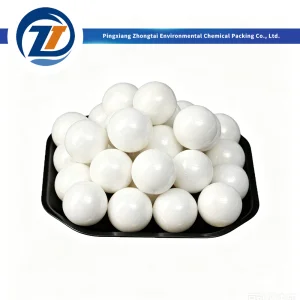
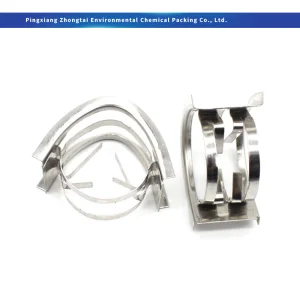
Explore our complete inventory of mass transfer packings, ceramic beads, and specialty distillation components.