Direct access to primary export products manufactured under ISO quality management standards in Pingxiang industrial hub.
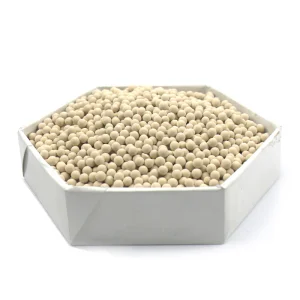
In high-shear ultra-fine wet grinding, severe fluid cavitation, and high-pressure chemical dosing systems, traditional alumina ($Al_2O_3$) and glass media frequently fail due to micro-cracking, rapid volumetric wear, and catastrophic fracture. As global manufacturing transitions toward sub-micron and nanometer-scale particle size distribution (PSD), Zirconium Oxide ($ZrO_2$) Ceramic Balls have emerged as the definitive material for high-energy processing equipment.
The extraordinary toughness of modern zirconia ceramics stems from a physical phenomenon known as Stress-Induced Phase Transformation Toughening. Pure zirconia undergoes a phase transition during cooling: from cubic ($c$) at high temperature, to tetragonal ($t$) at intermediate temperature, down to monoclinic ($m$) at room temperature. This $t \rightarrow m$ transition is accompanied by a volumetric expansion of approximately 3% to 5%. By stabilizing the tetragonal phase at room temperature using rare-earth oxides—most notably Yttria ($Y_2O_3$) or Ceria ($CeO_2$)—engineers lock the crystal lattice in a metastable state.
Formulated with 3mol% $Y_2O_3$, Y-TZP yields exceptionally fine grain structures (<0.5 µm), maximum flexural strength (>1,200 MPa), and extreme wear resistance in ultra-fine battery slurry milling.
Stabilized with Ceria ($CeO_2$), this high-density variant (6.2 g/cm³) resists hydrothermal aging and low-temperature degradation (LTD) under acidic or steam environments.
A composite structure blending 10%–30% zirconia into an alumina matrix, delivering a cost-effective performance balance for large-volume industrial ball mills.
The international demand for high-purity China zirconia ceramic spheres has surged exponentially over the past five years, driven by structural shifts in green energy, semiconductor manufacturing, bio-pharmaceuticals, and high-performance coatings. Global procurement directors are re-engineering their vendor lists to ensure supply security, physical lot-to-lot consistency, and compliance with stringent contamination limits.
The global expansion of EV battery manufacturing demands sub-micron grinding of Lithium Iron Phosphate (LFP), Nickel Manganese Cobalt (NMC), and silicon-carbon anodes. Pin-type high-energy agitator bead mills require Y-TZP media with diameters down to 0.05 mm – 0.3 mm to reach $D_{90} < 200\text{ nm}$ without iron contamination.
In Chemical Mechanical Planarization (CMP), polishing slurries for silica, alumina, and ceria demand zero oversize particles or media-shredding debris. Zirconia beads sintered via Isostatic Pressing ensure precise sphericity and zero internal voids, preventing micro-scratches on silicon wafers.
In lithium extraction, desulfurization scrubbers, and offshore oil exploration, metallic valve balls erode within weeks. Precision-ground Grade 10 to Grade 28 zirconia balls serve as check valve internals, offering complete resistance to hydrofluoric acid traces, slurry abrasion, and high thermal shock.
Different industrial environments demand tailored grain boundary engineering, dopant concentrations, and sintering curves. Below are four macro-level operational scenarios solved by Pingxiang Zhongtai’s advanced zirconia bead lines.
Challenge: API (Active Pharmaceutical Ingredient) micronization in horizontal agitator mills suffered from heavy metal contamination caused by wear of glass and standard ceramic media.
Engineering Solution: Implementation of 0.4–0.6mm Y-TZP beads manufactured from nano-scale zirconia powder prepared via co-precipitation. Sintered at 1450°C in cleanroom kilns, these beads achieve a mirror finish ($Ra < 0.02\text{ µm}$) and a wear rate below 2 ppm/day, fulfilling US FDA and GMP guidelines.
Challenge: Continuous high-energy milling of LFP battery slurries caused bead breakage, clogging mill discharge screens and halting automated lines.
Engineering Solution: Application of High-Density Ceria-Stabilized Zirconia (Ce-TZP) beads ($6.2\text{ g/cm}^3$). The elevated density permits lower agitator shaft speeds while maintaining identical kinetic energy impact ($E_k = \frac{1}{2}mv^2$), eliminating bead breakage and extending screen life by 300%.
Challenge: High-pressure metering pumps in titanium dioxide plants suffered from rapid seat erosion due to acidic slurry backflow.
Engineering Solution: Deployment of precision-machined Y-TZP ceramic valve balls meeting ISO 3290-1 Grade 10 sphericity tolerances. The stress-induced phase transformation prevents surface micro-cracking even under 40 bar pulse pressure.
Technical evaluation data compiled across standardized physical test protocols (ASTM C1424, ISO 6872, DIN EN 843-1). Use this matrix to benchmark material properties against system design parameters.
| Physical / Technical Property | 3mol% Y-TZP (Yttria Zirconia) | Ce-TZP (Ceria Zirconia) | ZTA (Zirconia Toughened Alumina) | High Alumina (95% $Al_2O_3$) |
|---|---|---|---|---|
| Chemical Composition | $ZrO_2 \approx 95\%$, $Y_2O_3 \approx 5\%$ | $ZrO_2 \approx 80\%$, $CeO_2 \approx 20\%$ | $Al_2O_3 \approx 80\%$, $ZrO_2 \approx 20\%$ | $Al_2O_3 \ge 95\%$ |
| Specific Density (g/cm³) | $\ge 6.00$ | $\ge 6.20$ | $4.10 - 4.50$ | $3.65 - 3.75$ |
| Bulk Density (g/cm³) | $3.70 - 3.80$ | $3.85 - 3.95$ | $2.50 - 2.70$ | $2.20 - 2.30$ |
| Vickers Hardness (HV10) | 1,250 – 1,300 GPa | 1,150 – 1,200 GPa | 1,400 – 1,500 GPa | 1,100 – 1,200 GPa |
| Flexural Strength (MPa) | 1,100 – 1,400 MPa | 800 – 1,000 MPa | 600 – 800 MPa | 300 – 400 MPa |
| Fracture Toughness ($K_{IC}, \text{MPa}\cdot\text{m}^{1/2}$) | $9.0 - 12.0$ | $12.0 - 15.0$ | $5.5 - 7.0$ | $4.0 - 4.5$ |
| Crush Strength (Ø 2.0mm) | $\ge 2,500\text{ N}$ | $\ge 2,200\text{ N}$ | $\ge 1,200\text{ N}$ | $\ge 600\text{ N}$ |
| Weibull Modulus ($m$) | $12 - 18$ | $10 - 14$ | $8 - 12$ | $6 - 9$ |
| Thermal Shock Tolerance ($\Delta T, ^\circ\text{C}$) | $250^\circ\text{C}$ | $280^\circ\text{C}$ | $200^\circ\text{C}$ | $180^\circ\text{C}$ |
Evaluating tier-1 China zirconia ceramic ball factories requires auditing beyond simple price-per-kilogram quotes. Substandard zirconia media suffers from hidden micro-porosity, uneven dopant phase distribution, and residual internal stress, which lead to high wear rates and costly plant downtime.
We utilize sub-micron primary zirconia powders manufactured via chemical co-precipitation rather than coarse solid-state phase mixing. This ensures atomic-level yttria distribution and prevents localized monoclinic phase clustering.
For micro-beads (< 0.3mm), precision electrolyte droplet titration forms round green spheres with exact uniform diameter. Larger sizes (1mm to 60mm) are cold isostatically pressed (CIP) at >200 MPa to eliminate internal density gradients.
Digital control over the 1450°C sintering curve prevents abnormal grain growth. Grain size is maintained within 0.2–0.5 µm, which is essential to lock in maximum fracture toughness.
Every production lot undergoes full chemical assay via XRF, density verification via Archimedes method, microstructural imaging using Scanning Electron Microscopy (SEM), and high-energy planetary mill stress testing.
As particle engineering pushes deeper into the nanometer regime, China’s ceramic manufacturing sector is advancing toward ultra-refined grain structures and zero-carbon processing technologies.
Development of multi-element co-doped stabilizer systems (Yttria-Neodymium-Ceria blends) aimed at restricting grain boundaries below 50 nanometers, suppressing Hydrothermal Aging (LTD) even in boiling acidic media.
Transitioning from conventional gas-fired tunnel kilns to ultra-fast microwave flash sintering, reducing thermal dwelling times from hours to minutes while achieving >99.8% theoretical density.
Implementing chemical re-purification systems to reclaim worn zirconia media from spent milling lines, converting used ceramic media back into high-purity industrial powders under zero-landfill goals.
Practical answers to common technical queries regarding material selection, crushing strength calculations, lead times, and batch testing protocols.
Explore our wider chemical process media, bio-filtration products, and metallic column internals.
Evaluating zirconia media for a new grinding mill or high-pressure check valve line? Speak directly with our chemical ceramics engineering team in Pingxiang.
Contact Engineering Team ([email protected])