Direct factory production from Pingxiang Zhongtai Environmental Chemical Packing Co., Ltd., engineered to withstand rigorous hydraulic loads, corrosive multi-component acids, and severe thermal cycles.
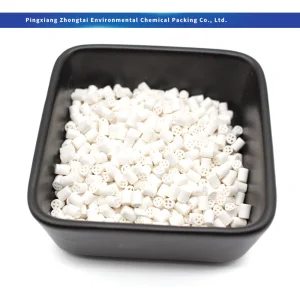
Unlike particulate air filters that arrest dust via mechanical impingement, chemical molecule filters operate at sub-nanometer angstrom dimensions (3 Å to 10 Å). By utilizing precision synthetic aluminosilicate matrices with controlled Si/Al ratios, these media discriminate molecules based on thermodynamic polarizability, electrostatic field gradients, and steric kinetic diameters.
For trace contaminant mitigation down to parts-per-billion (ppb) levels, impregnated molecular matrices deploy targeted in-situ reagents. Alkaline gases, acidic volatile compounds, and low-molecular-weight siloxanes are chemically reacted into non-volatile inorganic salts, preventing downstream catalyst coking, turbine corrosion, and microelectronic wafer haze.
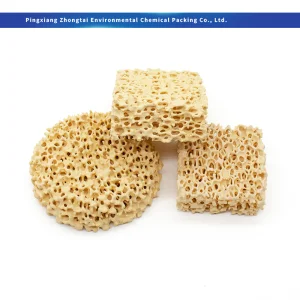
Thermal oxidizers and molten purification vessels mandate rigorous thermo-mechanical stability. Utilizing synthetic cordierite, mullite, and silicon carbide formulations, our micro-channeled honeycomb and reticulated foam geometries guarantee minimal pressure drop (ΔP), optimized heat exchange efficiency, and total slag inclusion retention up to 1650°C.
Operating from Pingxiang, Jiangxi Province—the historic epicenter of global industrial ceramics and chemical mass transfer media—Zhongtai bridges critical minerals to finished reactor internal assemblies under single-source quality oversight.
Direct local access to high-purity kaolin clay deposits, gibbsite bauxite refinement channels, and high-crystallinity synthetic silica sources provides continuous chemical feedstock stability. This proximity decouples our production schedules from global supply interruptions and raw commodity volatility.
Equipped with computerized tunnel kilns extending over 100 meters, our production facilities enforce real-time, 16-zone digital PID thermal profiling. This process prevents phase crystallization fractures, eliminates residual internal micro-fissures, and guarantees rock-solid crush strengths up to 99% alpha-alumina ratings.
Alongside ceramic forming, Zhongtai maintains fully automated CNC stamping and wire-mesh weaving lines for austenitic (SS304, SS316L, 904L) and nickel-base superalloys (Hastelloy, Monel, Titanium). We execute customized tower internal geometries with lead times reduced by up to 45% compared to Western counterparts.
Data-driven selection parameters cross-referencing chemical composition, hydrodynamic performance, and thermal thresholds for fixed-bed adsorption and counter-current column distillation.
| Adsorbent / Media Family | Pore Window (Å) | Nominal Bulk Density | Crush Strength (N/pellet) | Water Capacity (25°C, 60% RH) | Thermal Stability (°C) | Primary Industrial Utility |
|---|---|---|---|---|---|---|
| Zeolite Molecular Sieve 3A | ~3.0 Å | 0.68 – 0.74 g/mL | >45 N (1/8") | ≥21.0 wt% | Up to 600°C | Cracked gas, ethylene, LNG deep dehydration |
| Zeolite Molecular Sieve 4A | ~4.0 Å | 0.66 – 0.72 g/mL | >40 N (1/8") | ≥21.5 wt% | Up to 600°C | Closed-loop air braking, refrigerant moisture arrest |
| Zeolite Molecular Sieve 5A | ~5.0 Å | 0.68 – 0.73 g/mL | >45 N (1/8") | ≥21.5 wt% | Up to 600°C | Normal-paraffin separation, PSA hydrogen purification |
| Zeolite Molecular Sieve 13X | ~10.0 Å | 0.64 – 0.70 g/mL | >35 N (1/8") | ≥24.0 wt% | Up to 650°C | Cryogenic air pre-purification (CO₂ & H₂O scrub) |
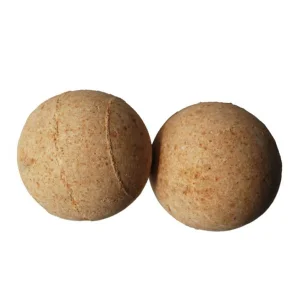
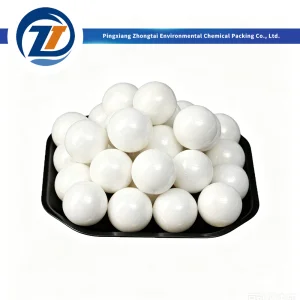
| Inert Alumina Support Balls (99%) | Non-porous | 2.00 – 2.20 g/mL | >2200 N (1/2") | <1.0 wt% | Up to 1650°C | Secondary reforming, severe steam hydrocracking |
| RTO Cordierite Honeycomb | Custom Cells | 0.45 – 0.65 g/cm³ | >12.0 MPa (Axial) | N/A | Up to 1350°C | VOC regenerative thermal oxidizer heat reservoirs |
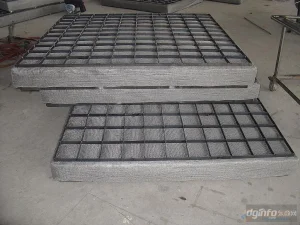
| SS316L Wire Gauze Structured | Engineered | 120 – 350 kg/m³ | High Hydraulic Rigidity | N/A | Up to 450°C | High-vacuum pharmaceutical separation, isotope enrichment |
Engineered installations where precision media pore mechanics and mass transfer efficiency determine plant run-lengths, solvent recoverability, and ultra-trace contaminant mitigation.
In liquefied natural gas trains operating below -160°C, trace water causes devastating cryogenic hydrate freeze-ups. Zhongtai 3A and 4A molecular sieves provide steady dynamic adsorption capacities, dropping moisture below 0.1 ppmv with high attrition resistance under frequent thermal pressure swing regeneration cycles.
Sub-7nm wafer fabrication processes are vulnerable to Airborne Molecular Contamination. Packed bed chemical filters utilizing modified zeolite honeycombs absorb volatile bases (ammonia, NMP), acid vapors (SOx, HF, HCl), and condensable high-boiling organics to protect extreme ultraviolet (EUV) photolithography optics.
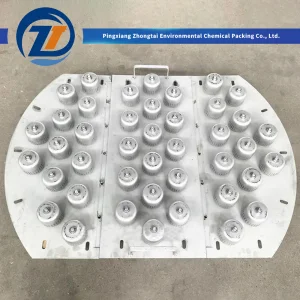
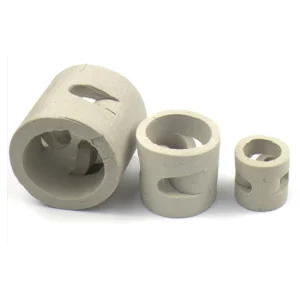
Corrosive, hot, concentrated H₂SO₄ environments require inert materials. Our ceramic Intalox saddles and high-turndown bubble cap assemblies withstand sustained sulfuric acid exposure, maximizing interfacial mass contact area while eliminating packing dissolution and channel fouling.
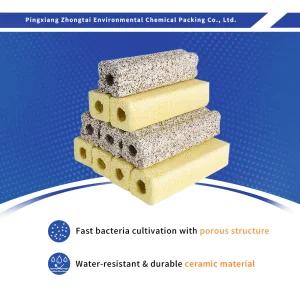
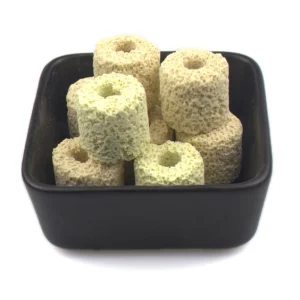
Intensive closed-circuit recirculating aquaculture systems (RAS) demand dense microbial colonies. Zhongtai Far-Infrared Bacterial Houses provide over 3,200 m²/m³ of porous, biologically colonizable surface area, accelerating enzymatic conversion of toxic un-ionized ammonia into benign nitrates.
Strategic research initiatives bridging current synthetic aluminosilicates with next-generation crystalline hybrid materials to advance decarbonization, CCUS, and green hydrogen supply networks.
Metal-Organic Frameworks (MOFs) and Covalent Organic Frameworks (COFs) provide specific surface areas exceeding 5,000 m²/g. Zhongtai's pilot synthesis pipelines focus on low-temperature composite extrusions that prevent mechanical crystal collapse, enabling high-selectivity carbon capture and post-combustion CO₂ scrubbing with a 40% reduction in regeneration energy.
Hydrogen distribution requires the removal of water vapor and hydrocarbon traces from low-temperature water electrolysis loops. We are engineering sub-nanometer carbon molecular sieve (CMS) hollow-fiber membranes that achieve continuous H₂/CH₄ separation factors over 150 without cyclic thermal swing swings.
Traditional calcination generates direct thermal exhaust during pore water activation. Our facility is migrating primary sintering kilns to microwave-assisted electromagnetic heating arrays. This directly excites bound molecular dipole moments, tightening crystal pore distributions while reducing factory carbon emissions by 62% per ton.
Every production run is documented with batch-traceable physical-property testing to meet international refinery, environmental, and metallurgical plant standards.
Each production run undergoes comprehensive mechanical validation:
Seamless international shipping clearance backed by standardized certification:
Direct technical assistance for overseas EPCs and plant maintenance managers:
Specification-level answers regarding adsorption regeneration, material selection, mechanical integrity, and direct Chinese factory procurement.
The selection is governed by the kinetic diameter of the target molecules versus co-existing bulk stream components. For example, in ethylene or ethanol dehydration, 3A (~3 Å) is selected because water (~2.8 Å) enters the crystal cage while larger olefins (~3.9 Å) are sterically excluded, preventing destructive in-pore co-adsorption and polymerization. If drying non-reactive compressed air, 4A (~4 Å) provides superior moisture kinetics at lower cost. 5A is chosen for normal/iso-paraffin separation and PSA hydrogen generation, whereas 13X (~10 Å) is required for heavy mercaptan removal and simultaneous CO₂/H₂O capture in cryogenic air separation pre-purification units (APUs).
For downflow vertical fixed beds, superficial velocities typically run between 0.15 m/s to 0.45 m/s depending on gas density and operating pressure. To ensure beads do not crush or turn into dust under cyclic operational friction, mechanical bed hold-down springs or ceramic support balls (graded from 1/8" up to 1") must be layered over the top. Attrition resistance must meet ASTM D4058 thresholds, with maximum allowable mass loss below 0.2 wt% per cycle.
In high-temperature reforming and secondary shift converters exposed to high-pressure steam, free SiO₂ present in low-grade ceramic balls (17–23% Al₂O₃) dissolves into vapor-phase silicic acid [Si(OH)₄]. As the process gas cools downstream in waste heat boilers and synthesis loops, this gaseous silica precipitates onto delicate shift catalysts and turbine blades, causing irreversible poisoning and fouled heat-exchanger surfaces. For these services, 99.2% ultra-low silica alpha-alumina balls (<0.2% SiO₂) are mandatory.
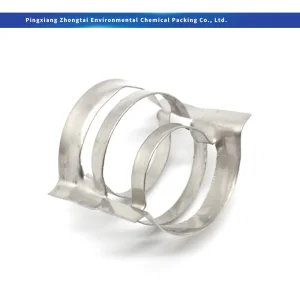
To model HETP accurately, our engineering team requires: tower diameter and bed depth; system vapor-liquid equilibrium (VLE) characteristics; operating pressure and temperature; liquid and vapor mass flow rates; surface tension; viscosity; and density of both phases. Using modern Norton and Billet-Schultes mass transfer correlations, we optimize the packing size (e.g., 25mm vs. 38mm metal conjugate or pall rings) to balance low pressure drop per theoretical stage against tower flooding limits.
Active zeolites are hygroscopic and begin adsorbing atmospheric moisture on exposure. Zhongtai uses airtight steel drums (55 US gallon / 200L) with inner hermetic heat-sealed polyethylene barrier liners, or double-wall heavy polypropylene supersacks containing inner moisture-barrier foils. Drums and bags are palletized on fumigated wooden or plastic pallets wrapped in multi-layer stretch film with desiccant packs, guaranteeing an uncompromised shelf life of 24 to 36 months when stored unopened in dry warehouses.
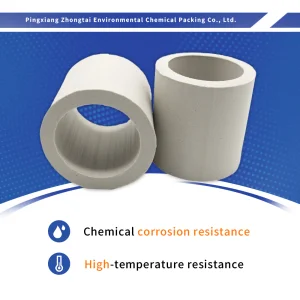
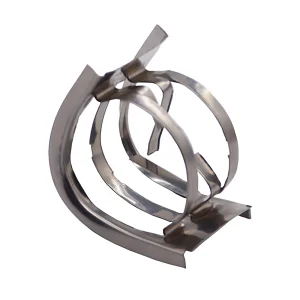
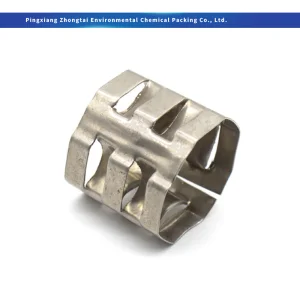
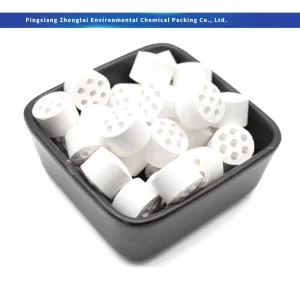
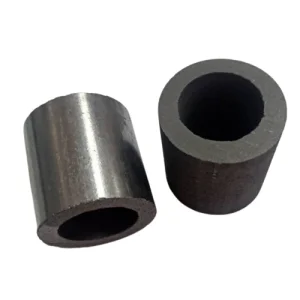
Precision-fabricated structured packings, random ceramic rings, high-temperature balls, and porous foam filters designed for heavy industrial separation duty.