Engineered media manufactured within our specialized Pingxiang industrial facility, delivering verified crush strength, high chemical resistance, and optimal hydrodynamic contact.
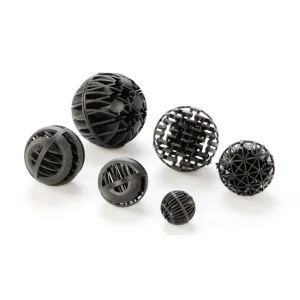
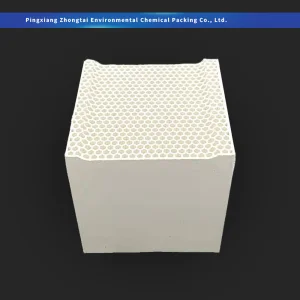
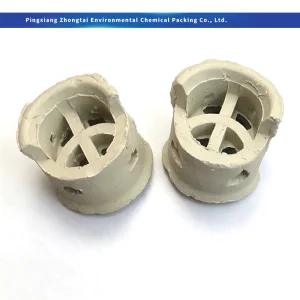
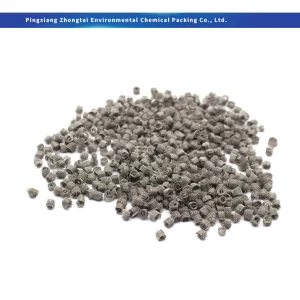
A comprehensive examination of crystallographic structures, thermal activation thermodynamics, and multi-bed adsorption dynamics engineered by Pingxiang Zhongtai Environmental Chemical Packing Co., Ltd.
In process chromatography and fixed-bed dynamic mass transfer, the term "molecular sieve activation" represents far more than superficial drying. It is the precise endothermic desolvation and dehydroxylation of intracrystalline zeolitic coordination spheres. Synthetic zeolites—principally type A (LTA topology) and type X/Y (FAU topology)—crystallize with water molecules completely saturating their internal uniform micropores. Without rigorous industrial calcination under strictly regulated partial pressure profiles, capillary water remains entrapped within the sodalite cages and supercages. This blocks adsorption active sites, quenches the electrostatic field generated by localized balancing cations (such as Na+, K+, Ca2+, or Li+), and severely degrades equilibrium working capacity.
Zhongtai deploys indirect-fired rotary calcination kilns equipped with multi-stage counter-current hot nitrogen sweeps, ensuring that moisture is evacuated cleanly at temperatures between 450°C and 620°C without inducing lattice collapse, dealumination, or hydrothermal amorphization. The resulting activated sieves achieve residual moisture contents below 1.0 wt% (and under 0.5 wt% upon customer specification), empowering process plants across Europe, North America, Southeast Asia, and the Middle East to attain gas moisture dew points down to -80°C (-112°F) and lower.
Rapid heating of hydrated zeolites in a stagnant vapor environment triggers hydrothermal attack, where internal steam hydrolyzes Si-O-Al framework linkages, permanently destroying up to 40% of the cage micropore volume. Zhongtai’s production protocol maintains a continuous low-humidity purge gas across the entire heating gradient, maintaining crystallographic integrity and optimizing the Mass Transfer Zone (MTZ).
Tailored aperture control, cation exchange configurations, and mechanical resilience parameters for industrial air separation, hydrocarbon sweetening, and solvent dehydration.
Potassium ion exchange provides an effective aperture of ~3Å. Excludes hydrocarbons and solvents while adsorbing water vapor exclusively. Crucial for ethylene, propylene, cracked gas, and anhydrous fuel ethanol dehydration.
Standard sodium-form LTA framework with an aperture of ~4Å. Capable of adsorbing H2O, CO2, SO2, and small hydrocarbons. Widely deployed in static desiccation, pneumatic brake air systems, and closed refrigerant loops.
Divalent calcium cation exchange yields an open pore diameter of ~5Å. Rapidly separates normal paraffins from branched and cyclic hydrocarbons via size exclusion. The cornerstone of hydrogen PSA purification trains.
Features a spacious ~10Å pore aperture and large internal supercages. Demonstrates exceptional polar molecule adsorption. Engineered specifically for Cryogenic Air Separation Units (ASU) to co-adsorb trace CO2, N2O, and H2O.
Highly exchanged lithium faujasite with elevated N2/O2 selectivity driven by extraordinary electrostatic gradient fields. The premier adsorbent choice for high-efficiency Vacuum Pressure Swing Adsorption medical and metallurgical O2 plants.
| Zeolite Grade | Pore Size (Å) | Bulk Density (g/ml) | Static H2O Adsorption (wt%) | Crush Strength (N/bead, Ø3-5mm) | Attrition Rate (wt%) | Standard LOI (550°C, wt%) |
|---|---|---|---|---|---|---|
| Type 3A | ~3.0 | 0.68 – 0.74 | ≥ 21.0% | ≥ 65 N | ≤ 0.10% | ≤ 1.0% |
| Type 4A | ~4.0 | 0.66 – 0.72 | ≥ 21.5% | ≥ 60 N | ≤ 0.10% | ≤ 1.0% |
| Type 5A | ~5.0 | 0.68 – 0.73 | ≥ 21.5% | ≥ 70 N | ≤ 0.12% | ≤ 1.0% |
| Type 13X | ~10.0 | 0.62 – 0.68 | ≥ 24.0% | ≥ 55 N | ≤ 0.15% | ≤ 1.0% |
| Type 13X-APG | ~10.0 | 0.64 – 0.70 | ≥ 24.5% (CO2 cap ≥ 18 mg/g) | ≥ 75 N | ≤ 0.08% | ≤ 0.75% |
| LiX High Purity | ~10.0 | 0.61 – 0.66 | ≥ 25.0% (N2/O2 α ≥ 3.2) | ≥ 45 N | ≤ 0.15% | ≤ 0.50% |
Deploying activated molecular sieves across harsh industrial duty cycles requiring exceptional thermal cycling tolerance, minimal dusting, and deep moisture suppression.
LNG trains operate at cryogenic temperatures (-162°C) where trace water crystallizes into solid hydrates that clog heat exchangers and expander turbines. Zhongtai's 4A and 13X sieves scrub water down to <0.1 ppmv while selectively removing hydrogen sulfide, mercaptans, and carbon dioxide to prevent cold-box freeze-ups.
Pre-purification units (PPU) utilize dual-bed thermal swing adsorption (TSA) packed with activated alumina guard layers and 13X-APG zeolite. This multi-layer bed removes atmospheric humidity, CO2, and explosive trace hydrocarbons (acetylene, ethane) before entering primary distillation columns.
Distillation columns cannot separate the water-ethanol azeotrope past 95.6% purity. Zhongtai 3A sieves feature precisely calibrated 3Å pore structures that admit water while entirely rejecting ethanol, enabling continuous vapor-phase dehydration into 99.8%+ anhydrous biofuel without benzene entrainers.
Double and triple-pane architectural glazing units rely on matrix-filled 3A molecular sieves in spacer bars. The material adsorbs internal humidity without co-adsorbing nitrogen or oxygen, preventing window deflection, seal rupture, and optical fogging over a 30-year operational design life.
Hydrogen produced via steam methane reforming (SMR) or water electrolysis requires high purification to protect proton-exchange membrane (PEM) fuel cells from carbon monoxide poisoning. 5A and 13X beds operating in rapid PSA cycles achieve 99.999% H2 purity with minimal pressure drop.
Post-combustion capture and biogas biomethane upgrading require robust adsorbents capable of operating under high moisture and moderate temperature swings. Customized large-pore faujasites and functionalized zeolites offer high capacity and sharp desorption kinetics during vacuum desorption.
How the geographical concentration of high-purity kaolin clay, synthetic silicate hydrogels, and mature ceramic engineering creates unrivaled supply chain stability and cost efficiency.
Pingxiang, Jiangxi is globally recognized as the historic capital of chemical packing and technical ceramics. Our factory is encircled by high-purity kaolinite deposits, silicate manufacturing units, and advanced refractory kiln fabricators. This geographic density eliminates long-distance transport costs for raw precursors and insulates production from geopolitical or maritime raw material disruptions.
Unlike batch furnace manufacturers who suffer from hot-spot variations and non-uniform LOI, Zhongtai operates high-volume rotary calcination tunnels. Computer-controlled temperature zoning, automated feed monitoring, and continuous laser-guided sorting guarantee that millions of beads achieve uniform activation profiles from center to shell.
From primary clay digestion and hydrogel gelation to binder mixing (using clay-free, attapulgite, or bentonite systems), pellet extrusion/granulation, calcination, and nitrogen packaging—every manufacturing step is executed in-house. This direct oversight ensures complete traceability, backed by batch-specific certificates of analysis (COA).
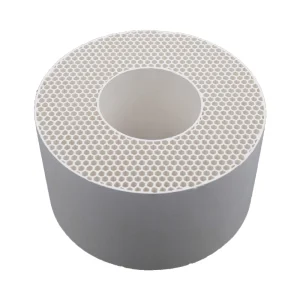
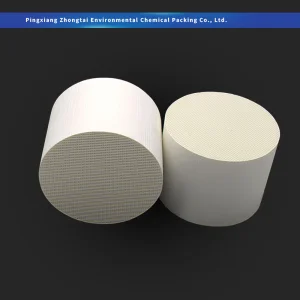
Founded in 2003, Pingxiang Zhongtai Environmental Chemical Packing Co., Ltd. has systematically expanded its global footprint. In July 2018, Korean chemical engineering buyers completed an extensive on-site audit of our ceramic and molecular sieve lines prior to major contract awards. In 2019, South American industrial partners collaborated with us at the Canton Fair to develop specialized honeycomb substrates. In 2024, Zhongtai showcased its advanced packing and desiccant portfolio at the China International E-commerce Industry Expo and the Indonesia Product Selection Exhibition, expanding direct support throughout Southeast Asian petrochemical revamps.
Anticipating the technological shift toward ultra-low energy swing regeneration, electrified microwave desolvation, and binderless hierarchically structured zeolites.
Traditional molecular sieves incorporate 10–20 wt% inert clay binders that provide mechanical crush strength but dilute volumetric adsorption capacity. Zhongtai is scaling binderless hydrothermal crystallizations that convert internal binding clays directly into active zeolitic phases, boosting dynamic capacity by 15-20% and reducing bed footprint in tight offshore installations.
Thermal swing adsorption consumes significant parasitic heat energy during the desorption cycle. Our R&D team is developing microwave-responsive zeolite formulations containing localized dielectric active sites. This enables rapid, volumetric, low-temperature desorption that reduces cycle times by 60% and slashes utility steam consumption in large-scale carbon capture.
Direct Air Capture (DAC) demands extraordinary selectivity for CO2 at 420 ppm concentrations alongside atmospheric humidity. Zhongtai is engineering surface-modified core-shell structures combining durable crystalline aluminosilicate cores with hyper-branched amine metal-organic frameworks (MOFs) to drive net-zero industrial transitions globally.
Prevent premature bed failure, excessive pressure drops, and catastrophic liquid carryover with standardized calculation criteria and bed stratification designs.
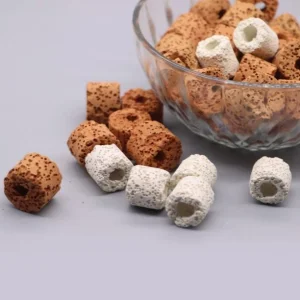
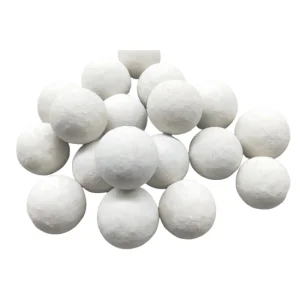
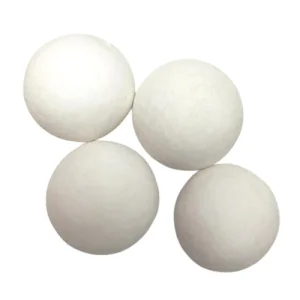
Catalyst beds require robust support media to resist hydraulic shocks and thermal cycling without shattering. Zhongtai provides inert ceramic balls spanning 17–23% Al2O3 for standard desulfurizers, 23–30% for higher crush strength in heavy-duty reactors, and 99% super-high purity alumina for secondary reformers where silica volatilization poisons nickel catalysts.
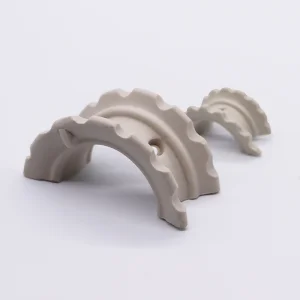
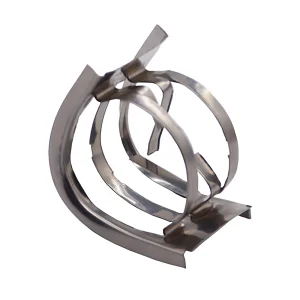
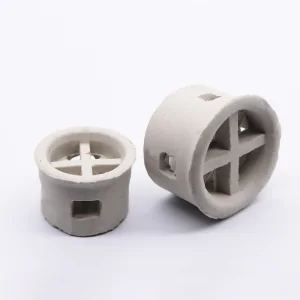
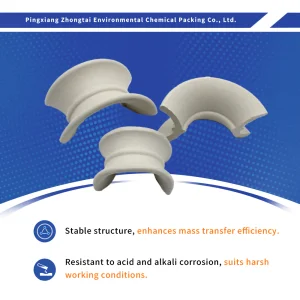
Balancing HETP (Height Equivalent to a Theoretical Plate) against pressure drop is critical. Stainless steel 304/316L corrugated structured packings (250Y/350Y) provide minimal pressure drop per theoretical stage for deep vacuum crude towers, while ceramic Intalox saddles and conjugate rings handle boiling sulfuric and nitric acids without degradation.
A molecular sieve bed must be protected from free liquid water droplets, heavy poly-aromatics, and entrained compressor lube oils. The optimal bed configuration incorporates inert ceramic balls at the bottom, followed by an activated alumina protective guard layer, capped with active molecular sieve beads (3A/4A/13X) held firmly in place by a top hold-down grid.
We analyze process temperature, static pressure, flow rate, hydrocarbon composition, and inlet dew point to establish accurate MTZ profiles.
We calculate dynamic mass transfer zones, fluidization velocities, bed diameters, and cycle durations to prevent premature moisture breakthroughs.
Rotary kiln thermal activation under continuous dry nitrogen sweep achieves residual moisture (<0.5 wt%) and verified attrition resistance.
Nitrogen-blanketed packaging inside 55-gallon hermetic steel drums or foil-lined big bags guarantees factory-fresh activity upon site delivery.
Dense-phase snow-storm loading instructions, pressure drop baseline validation, and hot gas regeneration protocols ensure turnkey startup.
Rigorous chemical analysis, mechanical crush testing, and international logistics designed for seamless customs clearance and hassle-free site delivery.
Operating under strict ISO quality and environmental frameworks, Zhongtai tests raw aluminosilicates, in-line slurry moisture, dry crush strength, and dynamic equilibrium capacity per ASTM D3802 and ASTM D4180 standards.
Adsorbent media is packaged in 25kg vacuum-sealed foil-lined kraft cartons, 125kg airtight steel drums with nitrogen blanket caps, or 1000kg weather-proof jumbo bags on heat-treated ISPM-15 compliant wooden pallets.
We supply full export dossier sets for customs and environmental audits, including Certificate of Origin (Form E, CO, etc.), full REACH compliance statements, safety data sheets (SDS/MSDS), and independent SGS/TÜV batch reports.
Direct communication channels via email ([email protected]) and engineering hotlines (+86 182 7099 7020 / +86 139 7992 2265) ensure fast turnaround for tower revamps, hydraulic modeling, and custom adsorbent formulations.
Key technical answers for process engineers, procurement executives, and EPC project managers evaluating Chinese suppliers.
Comprehensive plant solutions engineered for harsh operating environments, high thermal resistance, and long-term chemical durability.