Industrial Chemical Engineering Whitepaper

China Molecular Sieve 3A Factory & Quotes

Comprehensive Engineering Guide on Potassium-Exchanged Type A Zeolite Adsorbents: Kinetic Selectivity, Olefin Dehydration Dynamics, Thermal Regeneration Protocols & Direct Factory Purchasing Analysis

Direct Factory Catalogue

High-Performance Industrial Mass Transfer & Chemical Packing (Part I)

Featured certified products manufactured by Pingxiang Zhongtai Environmental Chemical Packing Co., Ltd.
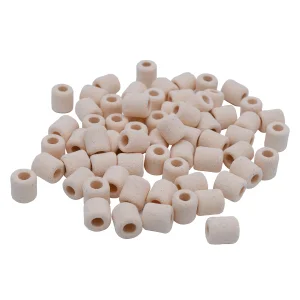
China Aquarium Accessories Filter Fish Tank Bio Filter Media
China Aquarium Accessories Filter Fish Tank Bio Filter Media Material Glass Ceramic Bio Ring Supplier
Explore Specifications
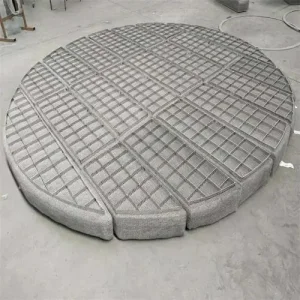
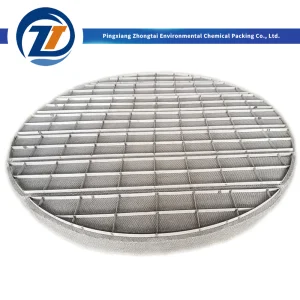
China Stainless Steel Wire Mesh Mist Eliminator
China 304 316L Stainless Steel Metal Wire Mesh Mist Eliminator Demister Pad
Explore Specifications
Ultra-High Crush Resistance Ceramic Proppant
China Ultra-High Crush Resistance Ceramic Proppant 20/40 30/50 40/70 Mesh
Explore Specifications
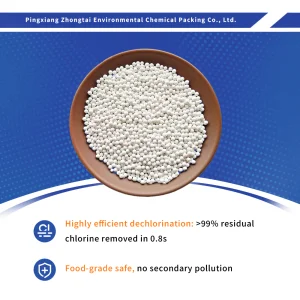
Calcium Sulfite Ceramic Dechlorination Media Balls
Wholesale Food Grade Calcium Sulfite Ceramic Dechlorination Media Balls
Explore Specifications
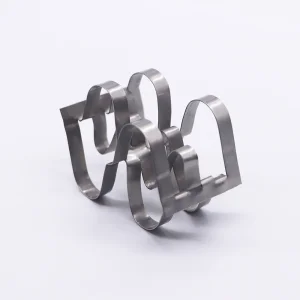
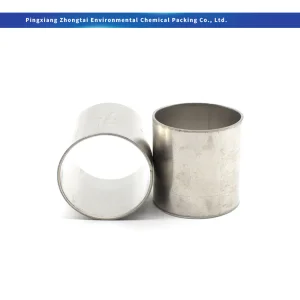
China Metal Super Raschig Ring Tower Packing
China Metal Super Raschig Ring Tower Packing Factory & Direct Quotation
Explore Specifications
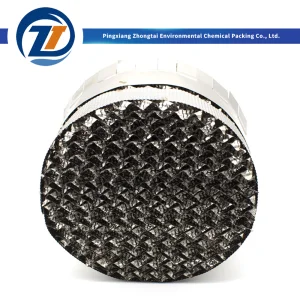
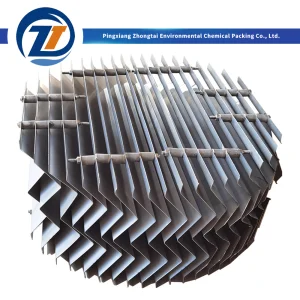
Stainless Steel Metal Structured Packing Corrugated Sheet
China 304 316L Stainless Steel Metal Structured Packing Corrugated Sheet
Explore Specifications
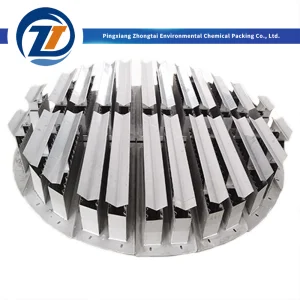
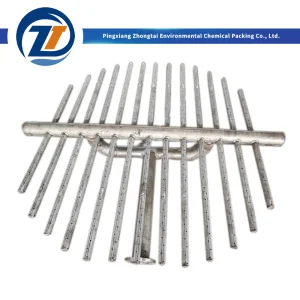
Stainless Steel Metal Trough Liquid Distributor
China 304 316L Stainless Steel Metal Trough Liquid Distributor
Explore Specifications
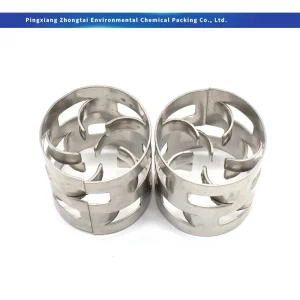
Metal Pall Ring High Efficiency Tower Packing
Wholesale Metal Pall Ring 16mm 25mm 38mm 50mm High Efficiency Packing
Explore Specifications
Executive Technical Briefing

1. Crystallographic Fundamentals & Kinetic Selectivity of Molecular Sieve 3A

In modern petrochemical processing, gas separation, and ultra-deep dehydration systems, Molecular Sieve 3A serves as a critical synthetic alkali-metal aluminosilicate adsorbent. Specifically synthesized by exchanging the sodium ions of a Type 4A (LTA framework) crystal structure with potassium ions, its nominal chemical formula is represented as:

Chemical Formula: KnNa(12-n)[(AlO2)12(SiO2)12] · xH2O  |  (where K+ exchange ratio typically exceeds 40-60% to enforce an effective pore aperture of ~3 Ångströms / 0.3 nm).

The core operating mechanism of Type 3A molecular sieve relies entirely on size-exclusion kinetic selectivity. Water molecules ($H_2O$), possessing a critical kinetic diameter of approximately 2.65 Ångströms, easily penetrate the crystalline cages of the zeolite matrix. Conversely, unsaturated hydrocarbons such as ethylene ($C_2H_4$, kinetic diameter ~3.9 Å), propylene ($C_3H_6$, ~4.5 Å), butadiene, and ethanol ($C_2H_5OH$, ~4.5 Å) are strictly excluded from entering the internal micropores due to steric hindrance.

This strict molecular sieving effect prevents co-adsorption of reactive olefins. In olefin cracking towers, if a larger-pore desiccant (such as 4A or activated alumina) were employed, ethylene and propylene would adsorb within the pores, undergoing exothermic polymerization ("green oil" formation). Green oil foulants rapidly clog adsorbent pore necks, cause severe pressure drop spikes, shorten bed life, and lead to catastrophic thermal runaways during high-temperature regeneration cycles.

Property Parameter Spherical Bead (1.6 - 2.5 mm) Spherical Bead (3.0 - 5.0 mm) Extrudate / Pellets (1.6 mm & 3.2 mm) Test Standard Method
Nominal Pore Aperture 3 Ångströms (≈ 0.3 nm) 3 Ångströms (≈ 0.3 nm) 3 Ångströms (≈ 0.3 nm) Crystallographic XRD
Bulk Density (g/mL) 0.70 − 0.74 0.68 − 0.72 0.66 − 0.70 ASTM D3802 / GB/T 10504
Crush Strength (N/particle) ≥ 35 − 45 N ≥ 80 − 105 N ≥ 30 − 50 N Single-Bead Tester
Static Water Adsorption (25°C, RH 60%) ≥ 21.5 wt% ≥ 21.0 wt% ≥ 20.5 wt% Gravimetric Desiccator
Attrition Rate (wt%) ≤ 0.10 % ≤ 0.10 % ≤ 0.15 % Rotating Drum Method
Package Water Content (as shipped) ≤ 1.0 wt% ≤ 1.0 wt% ≤ 1.5 wt% Loss on Ignition (LOI 550°C)
Effluent Gas Dew Point −80°C to −100°C −70°C to −90°C −70°C to −85°C Hygrometer / Moisture Analyzer
Market Dynamics & Global Use-Cases

2. Global Industrial Applications & Demand Breakdown for 3A Zeolites

Analyzing procurement intent across global petrochemical hubs, energy projects, and manufacturing sectors.

Ethylene, Propylene & Cracking Gas Dehydration

The largest global demand driver for Molecular Sieve 3A is pyrolysis gas drying in steam crackers. Raw cracked gas leaving acid gas scrubbers contains high moisture levels (water-saturated). Passing this gas through 3A beds reduces water concentrations to < 0.5 ppmv, completely preventing hydrate formation in cryogenic cold boxes (down to −100°C) while guaranteeing zero olefin co-adsorption.

Insulating Glass (IG) Units Desiccant

In architectural glazing, specialized low-dust 3A beads are filled into hollow aluminum spacer bars inside double or triple-pane insulated windows. Because 3A adsorbs water without adsorbing nitrogen, oxygen, or argon gas, it avoids pressure differentials inside the sealed glass unit, preventing window pane deflection, seal failure, and internal fogging across extreme ambient temperature swings.

Fuel Ethanol & Bio-Refinery Dehydration

Bio-ethanol production yields a water-ethanol azeotrope (~95.6 wt% ethanol). Traditional benzene distillation has been replaced globally by Pressure Swing Adsorption (PSA) or Vapor-Phase Temperature Swing Adsorption (TSA) using 3A molecular sieves. The 3A pore selectively strips water molecules out of the vapor stream, delivering anhydrous fuel-grade ethanol (>99.9 wt%) with minimal energy consumption.

LNG Pre-treatment & CNG Gas Drying

Compressed Natural Gas (CNG) filling stations and Liquefied Natural Gas (LNG) liquefaction trains utilize 3A or tailored 3A/4A composite beds to prevent ice and methane hydrate formation inside cryogenic heat exchangers, ensuring continuous pipeline flow without freeze-ups.

Manufacturer Authority & Quality Control

3. Sourcing from China: Factory Operations, Quality Benchmarks & Cost Drivers

As a leading manufacturing hub based in Pingxiang City, Jiangxi Province—the global epicenter for industrial ceramic packing and chemical adsorbents—Pingxiang Zhongtai Environmental Chemical Packing Co., Ltd. (operating since 2003) maintains a fully integrated supply chain spanning hydrothermal zeolite synthesis, clay binding, extrusion/spheronization, and high-temperature rotary kiln calcination.
Why Potassium Exchange Ratio Dictates Product Quality

When requesting quotes for Molecular Sieve 3A from Chinese factories, engineering buyers must verify the Potassium Exchange Rate ($K^+$ exchange). Raw Na-LTA zeolite (Type 4A) has an intrinsic pore size of ~4.2 Å. Exchanging sodium ions with larger potassium ions ($K^+$, ionic radius ~1.33 Å) constricts the pore window to ~3 Å.

  • Sub-standard 3A Zeolites (< 35% K+ exchange): Cheaper to manufacture, but possess unconstricted 4A pore pockets. When deployed in olefin service, they co-adsorb ethylene, resulting in bed overheating, rapid carbon deposition (coking), and premature desiccant destruction within 6−12 months.
  • Premium Industrial-Grade 3A Zeolites (≥ 45−55% K+ exchange): Synthesized by Pingxiang Zhongtai, guaranteeing zero ethylene co-adsorption, ultra-low delta-T during initial gas bed loading, and an extended service lifespan exceeding 3 to 5 years (1,000+ regeneration cycles).

Understanding Attrition Rate & Mechanical Crush Strength

In high-pressure dual-tower TSA systems operating at 4.0 to 7.0 MPa, molecular sieve beads are subjected to intense hydrodynamic shear and thermal shocks during switching cycles. Dust generation caused by friction leads to severe consequences: bed channeling, pressure drop buildup, downstream valve abrasion, and filter clogging.

2003
Established in Pingxiang
1,000+
TSA Regeneration Cycles
<0.10%
Ultra-Low Attrition Rate
-100°C
Maximum Effluent Dew Point
R&D Horizons & Innovation

4. Next-Generation Molecular Sieve Technology & Environmental Roadmap

As global chemical processing moves toward carbon neutrality, lower energy consumption, and circular economy principles, the technological development of Molecular Sieve 3A centers on three main structural innovations:

A. Binderless Zeolite 3A Formulations

Standard molecular sieves contain 15% to 20% inert clay binder (such as attapulgite, kaolin, or bentonite) to bind the fine zeolite crystals into durable beads. However, clay binders contribute zero adsorption capacity. Next-generation Binderless 3A Molecular Sieves undergo post-synthesis chemical conversion (zeolitization) where the clay binder is transformed into active crystalline LTA phase. This yields a 15−20% increase in static and dynamic water equilibrium capacity, allowing chemical plants to shrink vessel dimensions or extend cycle times significantly.

B. Low-Regeneration-Energy Adsorbents for TSA Systems

Thermal Swing Adsorption (TSA) beds traditionally require hot purge gases heated to 200°C − 230°C to desorb bound water. Advanced crystal surface modifications lower the desorption activation energy, enabling full bed regeneration at lower temperatures (150°C − 170°C). This breakthrough cuts refinery boiler fuel consumption and greenhouse gas emissions by up to 18% annually.

C. Decarbonization & CCUS (Carbon Capture, Utilization & Storage) Integration

In carbon capture plants utilizing amine scrubbers, the captured $CO_2$ stream is fully saturated with water. Before $CO_2$ can be compressed to supercritical state ($>7.38\text{ MPa}$) for underground storage or pipeline transport, it must be thoroughly dehydrated. Tailored 3A zeolites selectively remove water without adsorbing $CO_2$, preventing carbonic acid corrosion inside steel transport pipelines.

Turnkey Process Column Architecture

5. Integrated Mass Transfer Solutions: Synergizing 3A Sieves with Tower Internals

A molecular sieve drying vessel does not operate in isolation. Peak dehydration performance and bed longevity depend on an integrated mass transfer assembly inside the column vessel. Pingxiang Zhongtai engineers full-bed internals tailored to harsh operational conditions:

Bottom Support Layer

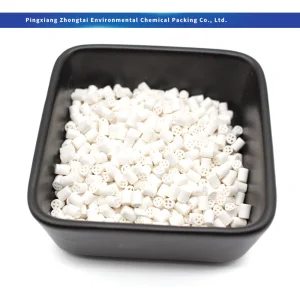
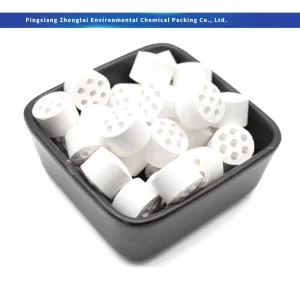
High-purity Inert Ceramic Support Balls (17-23% or 99% Al₂O₃) are layered at the vessel bottom (gradated from 2-inch down to 1/4-inch). They hold the weight of the molecular sieve bed, distribute incoming gas uniformly, and prevent bed migration into effluent piping.

Active Adsorption Core

Uniformly loaded Molecular Sieve 3A Spherical Beads (typically 1.6-2.5 mm for high kinetic rate, or 3.0-5.0 mm for low pressure drop), vacuum-dense packed to avoid bed settlement and attrition voids.

Upper Retaining & Separation Internals

Top layers of heavy ceramic balls covered by stainless steel screens, coupled with upper column Wire Mesh Demister Pads / Chevron Vane Mist Eliminators and Trough Liquid Distributors to knock out entrained liquid water or hydrocarbon droplets before gas hits the desiccant bed.

Technical Knowledge Base

6. Procurement & Process Engineering FAQ

In-depth answers to critical technical questions asked by EPC contractors, plant operators, and procurement specialists.

Q1: How does Molecular Sieve 3A differ fundamentally from 4A, 5A, and 13X grades?
The fundamental distinction lies in pore aperture diameter, controlled by cation exchange:
  • 3A (Potassium-exchanged LTA, ~3 Å): Adsorbs $H_2O$, $NH_3$, $He$. Excludes $C_2H_4$, $C_3H_6$, ethanol. Ideal for cracked gas, olefins, and insulating glass.
  • 4A (Sodium LTA, ~4 Å): Adsorbs $H_2O$, $CO_2$, $H_2S$, $SO_2$, methanol, ethane. Used for non-olefin gas drying, air separation pre-purification, and desiccant in closed systems.
  • 5A (Calcium-exchanged LTA, ~5 Å): Adsorbs straight-chain n-paraffins, excluding iso-paraffins and aromatics. Used for normal/iso-paraffin separation and PSA hydrogen purification.
  • 13X (Sodium Faujasite NaX, ~10 Å): Large pore aperture. Adsorbs bulky molecules, aromatics, nitrogen from air, and heavy mercaptans. Standard for cryogenic air separation and gas sweetening.
Q2: What are the primary causes of premature 3A sieve inactivation or bed poisoning in ethylene units?
Premature inactivation stems mainly from: (1) Insufficient Potassium Exchange: Allowing ethylene inside pores where high heat triggers polymerization into non-desorbing green oil; (2) Liquid Water/Heavy Hydrocarbon Slug: Free water causes thermal shock and hydrothermal structural collapse of zeolitic framework during heating phases; (3) Regeneration Thermal Overheating: Exceeding 300°C causes irreversible loss of crystallinity (sintering); (4) Amine or Heavy Salt Carryover: Acids or amines react with zeolitic sites, plugging micropores permanently.
Q3: What are the recommended temperature and flow parameters for TSA bed regeneration?
For standard Temperature Swing Adsorption (TSA) units, regeneration consists of three stages:
  1. Heating Phase: Dry purge gas (typically dry residue gas, methane, or $N_2$) is heated to 200°C − 230°C and passed upward through the bed until effluent temperature reaches 160°C − 180°C.
  2. Cooling Phase: Unheated dry gas flows through the bed to cool the desiccant back down to operating process temperature (< 40°C).
  3. Standby/Pressurization: The vessel is re-pressurized slowly to prevent bed lifting before switching back to drying service.
Q4: How do direct Chinese factory quotes compare against Western brands (UOP, Grace, CECA)?
Direct purchasing from established Pingxiang manufacturers (like Zhongtai) yields a 35% to 55% cost saving on unit pricing per metric ton while matching equivalent international performance specs (ASTM crush strength, attrition rate, dew point capability). This price advantage stems from local kaolin/synthetic zeolite raw material abundance, integrated rotary kilns, and centralized regional industrial infrastructure.
Q5: What quality certifications and inspection reports should be verified prior to shipment?
A comprehensive Factory Acceptance Test (FAT) dossier must include:
  • ISO 9001:2015 & ISO 14001 certification records.
  • Chemical Composition Analysis: XRF data verifying $SiO_2/Al_2O_3$ mole ratio and $K^+/Na^+$ exchange ratio.
  • Physical Test Certificates: Bulk density, attrition loss (GB/T 10504 / ASTM D3802), single-bead crushing strength distribution curve.
  • Adsorption Performance: Static water adsorption at 10% and 60% relative humidity, heat of adsorption data.
  • Third-party pre-shipment inspection reports (SGS, BV, or Intertek) upon request.
Q6: How to calculate the required mass of Molecular Sieve 3A for a cracked gas dryer?
Sizing involves calculating: (1) Total Water Load per Cycle: $W_{total} = \text{Gas Flow Rate} \times (\text{Inlet Moisture} - \text{Outlet Moisture}) \times \text{Cycle Time}$; (2) Useful Dynamic Capacity: Design operating dynamic capacity (typically 10.5 − 13 wt% accounting for aging factor $F_a$ and temperature correction $F_t$); (3) Mass of Equilibrium Section: $M_{eq} = W_{total} / \text{Dynamic Capacity}$; (4) Mass Transfer Zone (MTZ): Calculate the length of MTZ based on superficial gas velocity ($U_g$) and particle diameter; (5) Total Mass: Sum of $M_{eq}$ plus $M_{MTZ}$ multiplied by a 1.10 design safety margin.
Q7: What export packaging options protect activated 3A sieve from ambient humidity?
Because activated molecular sieves absorb ambient moisture instantly, Pingxiang Zhongtai employs airtight export packaging:
  • Air-Tight Steel Drums: 208-liter (55-gallon) heavy-gauge steel drums with double polyethylene inner liners and lever-lock ring seals (140−150 kg net weight per drum).
  • Hermetic Flexible Super Sacks (Jumbo Bags): 1,000 kg UV-stabilized woven polypropylene bags containing an inner aluminum-foil composite liner vacuum-heat-sealed prior to container loading.
Q8: Can Molecular Sieve 3A be used for liquid-phase dehydration of ethanol or solvents?
Yes, 3A molecular sieve is extensively applied in liquid-phase ethanol, methanol, and solvent drying. However, liquid-phase mass transfer rates are slower than vapor-phase. Designers must decrease superficial liquid velocity, extend bed contact residence time, and select spherical beads with high crushing strength (3-5 mm or 1.6-2.5 mm) to prevent attrition caused by fluid hydraulic drag.
Q9: What is the significance of bulk density and single-bead crush strength in deep beds?
In industrial drying towers standing 6 to 12 meters high, bottom desiccant layers endure immense static weight pressure from upper layers, combined with dynamic pressure drops ($\Delta P$) up to 100 kPa. If crush strength is insufficient (< 25 N/particle), bottom beads crush, causing major bed collapse, severe pressure drop spikes, and plant shutdowns. Zhongtai 3A beads achieve average crush strength exceeding 40−90 N depending on bead diameter.
Q10: How does Pingxiang Zhongtai handle custom OEM specifications or trial samples?
We provide complimentary 1 kg to 5 kg evaluation samples accompanied by full Technical Data Sheets (TDS) and Material Safety Data Sheets (MSDS). For custom process needs, our laboratory adjusts potassium exchange ratios, pore volumes, bead size distributions, and binder chemistry to match exact client specifications. Contact our engineering desk at [email protected] or +86-18270997020 for direct assistance.
Direct Factory Catalogue

High-Performance Industrial Mass Transfer & Chemical Packing (Part II)

Explore our complete product portfolio engineered for severe industrial distillation, scrubbing, and filtration.

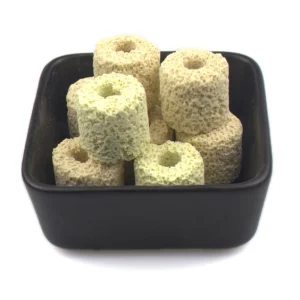
Far Infrared Bacterial House Aquarium Filter Media
China Aquarium Filter Media Far Infrared Bacterial House Manufacturer
Explore Specifications
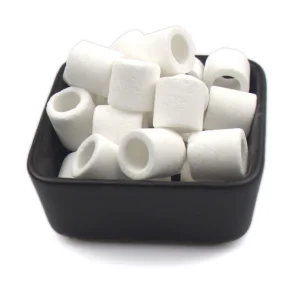
China Aquarium Ceramic Glass Ring Filter Media
China Aquarium Ceramic Filter Media Ceramic Glass Ring Factory & Quotes
Explore Specifications
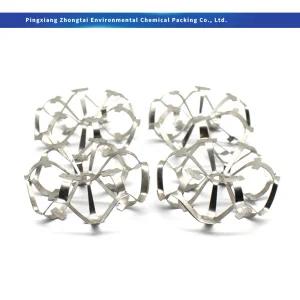
Stainless Steel Metal Teller Rosette Ring
Wholesale High Wear Resistance Stainless Steel Metal Teller Rosette Ring
Explore Specifications
Stainless Steel Metal Pipe Liquid Distributor
China 304 316L Stainless Steel Metal Pipe Liquid Distributor
Explore Specifications
Metal Chevron Vane Mist Eliminator
China 304 316L Metal Chevron Vane Mist Eliminator for High Liquid Load Scrubbing
Explore Specifications
Honeycomb Ceramic Proppant Filter 90 Al2O3
China 90% Al2O3 Honeycomb Ceramic Proppant Filter for Hydrogenation Units
Explore Specifications
Wire Gauze Metal Structured Packing
China Wire Gauze Metal Structured Packing Wire Packing Factories
Explore Specifications
Metal Raschig Ring Tower Packing
Wholesale Metal Raschig Ring 25mm 38mm 50mm High Temperature Resistant Packing
Explore Specifications

Request Factory Direct Quotes & Technical Datasheets

Partner with Pingxiang Zhongtai Environmental Chemical Packing Co., Ltd. for engineering support, customized molecular sieve formulations, and competitive direct OEM pricing.