Industrial random packing, ceramic foam filters, and monolith honeycomb media engineered for severe petrochemical and metallurgical environments.
An exhaustive metallurgical and chemical engineering analysis on how China's manufacturing clusters have transformed industrial spherical media procurement across North America, Europe, and the Asia-Pacific region.
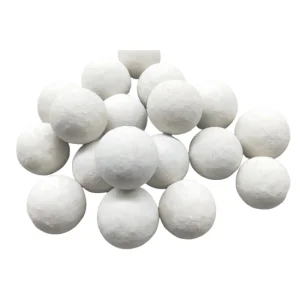
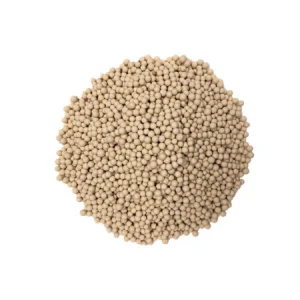
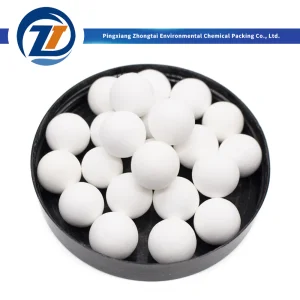
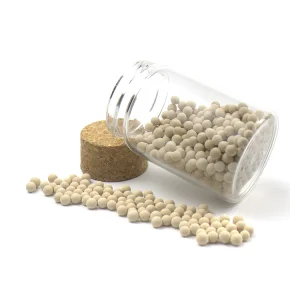
In modern industrial processes, the classification of "Ceramic Beads" encompasses two critical engineering product vectors: large-diameter inert spherical ceramic media (ranging from 3mm to 50mm utilized as catalyst bed support, retention toppings, and distribution beds in high-pressure hydroprocessing reactors) and precision micro-ceramic beads (ranging from 0.1mm to 3.0mm deployed for ultrafine wet horizontal milling, automotive paint dispersion, and mineral beneficiation). Additionally, spherical bio-ceramic beads and molecular sieve spheres act as fundamental contact substrates in air separation, regenerative VOC purification, and high-purity water treatment.
From an operational expenditure (OPEX) standpoint, plant operators historically faced acute trade-offs between domestic European or American suppliers offering high product integrity at extreme price premiums versus unverified traders offering variable product density with catastrophic risk of silica leaching or premature crush failure. Pingxiang Zhongtai Environmental Chemical Packing Co., Ltd. has bridged this gap for over two decades. By enforcing strict statistical quality control (SQC), automated multi-tier screening, and third-party certified testing under ASTM and ISO standards, China's precision manufacturing tier now delivers media with structural densities exceeding 3.70 g/cm³, microcrystalline matrices virtually free of structural microvoids, and crushing resistances engineered to survive severe differential pressures in fixed-bed vessels.
Matching specific crystal phases and alumina content to reactor operating temperatures, feed corrosivity, and catalytic reactivity.
| Alumina Grade / Type | Al₂O₃ (%) | SiO₂ (%) | Bulk Density (g/cm³) | Max Service Temp (°C) | Key Industrial Functionality |
|---|---|---|---|---|---|
| Standard Inert Ceramic Spheres | 17% – 23% | 70% – 76% | 1.35 – 1.45 | 1100°C | Catalyst bed retention, top hold-down, secondary reformers, sulfuric acid drying towers where HF is absent. |
| Medium-Alumina Support Balls | 23% – 30% | 65% – 72% | 1.40 – 1.50 | 1250°C | High-pressure hydrogenation guard beds, natural gas desulfurization, industrial gas dryers requiring superior crushing strength. |
| High-Alumina Inert Spheres | 90% – 92% | ≤6.5% | 2.00 – 2.15 | 1550°C | High-temperature synthesis gas generation, ethylene cracking quenching, fertilizer ammonia secondary reformers. |
| Ultra-Pure Alpha-Alumina | ≥99.5% | ≤0.2% | 2.10 – 2.25 | 1650°C | Zero-silica-leaching environments; prevents downstream catalyst poisoning in high-pressure steam reforming and methanation. |
| Zirconia Toughened Alumina (ZTA) | 70% – 85% | ≤0.1% | 3.80 – 4.20 | 1400°C | Micro-milling beads for ultrafine grinding of lithium iron phosphate (LiFePO4) battery slurries, high-wear attrition mills. |
Under high-temperature, high-pressure steam conditions (common in ammonia plants and hydrogen manufacturing units), free silica (SiO2) within standard ceramic matrices reacts to form volatile silicic acid [Si(OH)4]. This gaseous silica travels downstream into cooled reactor zones, condensing onto and irreversibly poisoning nickel and noble-metal catalysts.
Placing single-sized ceramic support balls directly under a micro-pellet catalyst bed causes catalyst migration through void spaces, leading to channeling and severe pressure drop spikes. Systematic bed graduation creates a stable mechanical bridge that preserves uniform fluid mechanics across the entire vessel cross-section.
Fixed-bed reactors often house catalyst beds over 15 meters tall, creating immense hydrostatic and physical weight loads on bottom support layers. Pingxiang Zhongtai subjects support spheres to 100% automated rolling forming or cold isostatic pressing followed by high-temperature solid-state sintering to achieve extraordinary crush resistance.
How inert ceramic spheres, random packings, and structured monoliths interface across large-scale continuous process units.
In diesel hydrodesulfurization (HDS), hydrocracking, and catalytic reforming units, inert ceramic balls serve a dual purpose. At the vessel top, a graded bed of high-density alumina spheres distributes incoming liquid/vapor feeds symmetrically across the active catalyst surface while capturing residual scale, particulates, and tramp iron from furnace coils. At the bottom, multi-layered inert balls support active catalysts without settling or attrition.
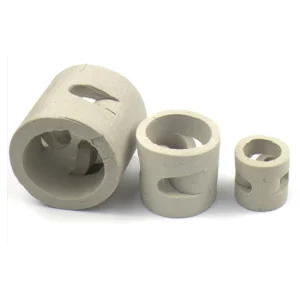
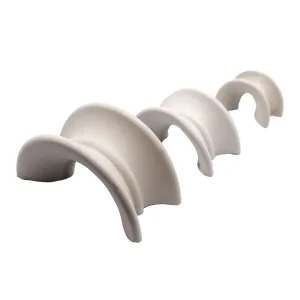
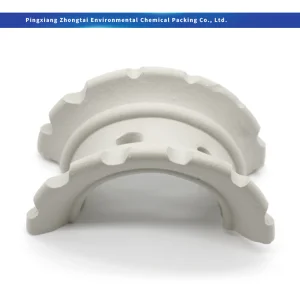
Corrosive absorption and drying columns operating under concentrated sulfuric acid (93% - 98% H2SO4) at temperatures up to 130°C rapidly disintegrate metallic and polymeric packings. Chemical porcelain Intalox saddles, ceramic super saddles, and high-silica ceramic balls manufactured in Pingxiang offer exceptional chemical inertness against all hot mineral acids (except hydrofluoric acid), preserving high mass transfer rates.
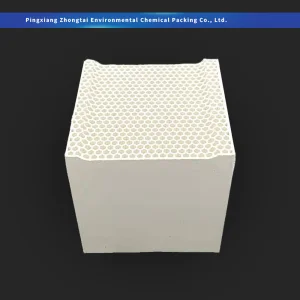
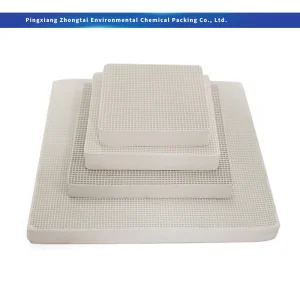
Modern Regenerative Thermal Oxidizers (RTOs) treating industrial VOC emissions rely on cordierite and cordierite-mullite honeycomb ceramic media and spherical heat retention ceramic beds. Engineered for ultra-low thermal expansion coefficients and high volumetric heat capacity, these ceramic matrices achieve thermal energy recovery efficiencies exceeding 95%, dramatically lowering natural gas fuel burn.
The global transition to electric mobility has triggered unprecedented demand for sub-micron nano-grinding. High-purity micro-alumina beads and Zirconia Toughened Alumina (ZTA) beads (0.2mm to 2.0mm) operate in high-energy horizontal pin-type bead mills to disperse cathode materials (LiFePO4, NCM), titanium dioxide, and high-end automotive pigments without media fragmentation or metallic contamination.
Technological imperatives shaping next-generation ceramic spheres, nano-dispersion media, and high-performance tower packings.
Traditional ceramic manufacturing relied on coal-fired or heavy oil kilns, producing variable firing atmospheres and high carbon footprints. Pingxiang Zhongtai has pioneered the deployment of automated natural gas roller hearth kilns and pilot-scale electric heating kilns equipped with closed-loop flue gas heat recuperators.
This transition guarantees absolute temperature uniformity (±3°C across kiln cross-sections), ensuring identical mineral grain boundary development throughout every single ceramic sphere while slashing specific energy consumption per metric ton by over 28%.
In high-speed agitated bead mills, conventional micro-beads experience surface micro-spalling and chipping due to shear fatigue. Advanced materials research at our manufacturing facility is integrating rare-earth dopants (Yttrium, Cerium) into sub-micron alpha-alumina matrices.
This microstructural grain-boundary pinning suppresses crack propagation along the ceramic grain boundaries, lowering specific wear rates below 0.005 g/kg·h. The result is pure, contamination-free processing for electronic ceramics and pharmaceutical precursors.
Procuring large volumes of industrial beads historically entailed acceptable risks of out-of-round spheroids, internal air pockets, or surface micro-cracks. Zhongtai's advanced lines now feature multi-camera AI optical sorting systems directly after the final cooling zone.
Each bead is scanned across multiple rotational axes at high speeds to verify diameter tolerances (±0.5mm on support balls, ±0.05mm on micro-beads), surface sphericity, and color consistency, automatically ejecting any deviation before packing.
Documented operational results validating Pingxiang Zhongtai chemical packing and ceramic media across global process plants.
Challenge: A major refining facility in Texas experienced rapid pressure-drop escalations across their ULSD (Ultra-Low Sulfur Diesel) reactor within 8 months of turnaround, driven by iron sulfide scale accumulation and support ball crush failure at the reactor bottom.
Solution: Zhongtai supplied a complete engineered re-pack consisting of top-layer graduated high-void hold-down balls and bottom-support high-crush 92% Al2O3 inert spheres (1/4", 1/2", 3/4", and 1").
Outcome: Pressure drop across the catalytic bed remained stable at ≤0.8 bar across a continuous 36-month run cycle, extending bed lifecycle and eliminating unscheduled skimmer shutdowns.
Challenge: A specialty chemicals producer in Antwerp required immediate column revamp for high-vacuum methyl methacrylate fractionation, demanding maximum theoretical plates per meter with minimal delta-P.
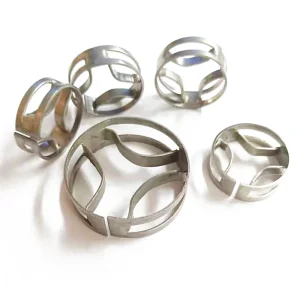
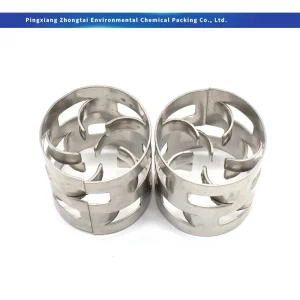
Solution: Rapid fabrication and sea-air logistical dispatch of 316L Stainless Steel Dixon Rings (Theta Rings) and High Capacity SS316 Metal Super Raschig Rings (RSR), combined with high-surface-area ceramic structured packings.
Outcome: Mass transfer separation efficiency increased by 22% compared to standard pall rings, enabling a 15% increase in boiler throughput without column flooding.
Challenge: An extraction and refining facility in the Lithium Triangle faced excessive bead wear and zirconia contamination during the sub-micron milling of cathode-grade battery precursor carbonates.
Solution: Implementation of Zhongtai's high-wear-resistant 95% Al2O3 micro-milling ceramic beads (0.6 - 0.8mm) with optimized microcrystalline sintered density.
Outcome: Specific media wear dropped by 44% compared to standard silicosilicate grinding media, saving tens of thousands of dollars annually in media top-up costs while meeting strict cathode purity thresholds.
Authoritative, specification-level answers to the most common engineering and procurement inquiries regarding ceramic beads and chemical packings.
High-crush proppants, precision molecular sieves, alumina grinding media, and catalytic bed protection components ready for global deployment.