Understanding the pivotal role of China's Pingxiang industrial ceramics cluster in delivering cost-efficient, high-purity inert alumina ceramic balls and tower packing for refinery distillation, chemical purification, and process column engineering.
Over 70% of the world’s industrial chemical packing and inert ceramic support spheres are sourced from specialized manufacturing hubs in Jiangxi Province, China. The concentrated supply chain for raw kaolin clay, synthetic alpha-alumina powders, and natural-gas-fired tunnel kilns provides unmatched price competitiveness and production scalability for global procurement officers.
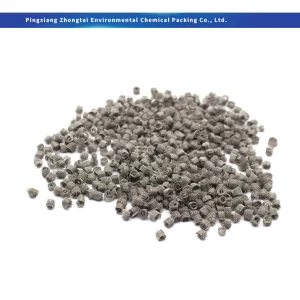
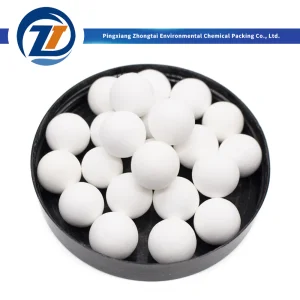
In modern distillation beds and catalytic reactors, ceramic balls serve two vital roles: acting as hold-down beds to prevent fine catalyst fluidization and equalizing liquid-vapor distribution. High cold crushing strength (CCS > 5 kN/particle) and low thermal expansion coefficients prevent bed compaction and pressure-drop spiking across high-temperature distillation runs.
Global buyer intent has shifted from pure price acquisition to verified material purity (minimizing leachable SiO₂ and Fe₂O₃ content) and batch-to-batch consistency. Chemical refiners require detailed testing reports confirming acid resistance rates above 99.6% and thermal shock resistance across 30+ rapid heating-cooling cycles.
An in-depth physical and chemical evaluation of ceramic ball performance under high thermal stress, aggressive solvent conditions, and high-throughput fractionating environments.
In packed distillation columns, achieving optimum HETP (Height Equivalent to a Theoretical Plate) requires uniform vapor-liquid contact. Spherical ceramic balls create an interconnected pore void matrix with a consistent porosity fraction ($\varepsilon \approx 0.38 - 0.42$). When layered systematically at the top and bottom of packed beds, ceramic spheres:
SEO Information Gain Insight: Selecting the correct ceramic ball gradient (e.g., 2-inch balls at the bottom support grid, stepping down to 1/8-inch balls at the catalyst interface) reduces interfacial turbulence and prevents fines migration without exceeding design pressure limits.
Different chemical process units require precise selection of alumina ($\text{Al}_2\text{O}_3$) content to prevent downstream catalyst poisoning or equipment fouling:
| Ceramic Grade | Al₂O₃ Range | SiO₂ Range | Primary Distillation Duty |
|---|---|---|---|
| Standard Inert | 17% – 23% | 70% – 76% | General chemical scrubbers, atmospheric wash beds, water stripping columns. |
| Medium Alumina | 23% – 30% | 65% – 72% | Crude oil distillation units (CDU), solvent extraction columns, petrochemical scrubbers. |
| High Alumina | 90% – 92% | 5% – 7% | High-temperature catalytic distillation, hydrotreating, severe thermal cycling duty. |
| Ultra-High Alumina | 99% + | < 0.1% | Ammonia distillation, steam reforming, units sensitive to silica leaching (HF/alkali attack). |
Navigating supplier selection, price structures, and quality assurance criteria when sourcing distillation ceramic media directly from Chinese manufacturers.
Factory quotes for ceramic distillation balls are primarily governed by three variables: Alumina Raw Material Index (calcined vs. tabular alumina), Firing Kiln Energy Costs (natural gas consumption during high-temperature sintering at 1400°C–1650°C), and Sphericity Tolerances (isostatic pressing vs. roll-forming methodology).
When requesting quotes from suppliers such as Pingxiang Zhongtai, engineers must specify: (1) Ball diameter range and roundness tolerance, (2) Nominal bulk density (kg/m³), (3) Minimum cold crushing strength per sphere, (4) Leachable iron and silica threshold, and (5) Packaging requirements (Jumbo bags vs. steel drums).
Top-tier Chinese suppliers maintain ISO 9001 certification and provide third-party verification (SGS, TUV, or Bureau Veritas) for chemical purity and physical strength. Plant audits evaluate automatic raw material batching, tunnel kiln temperature uniformity control, and continuous crush testing prior to dispatch.
How specialized ceramic balls and tower packings perform under real-world operating conditions across diverse chemical distillation sectors.
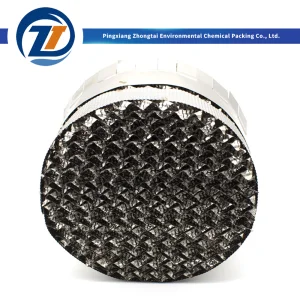
In crude atmospheric distillation columns (ADU) and vacuum distillation units (VDU), extreme fluid velocities and heavy hydrocarbon fractions cause severe bed turbulence. 23-30% Al₂O₃ medium ceramic balls serve as robust support beds under heavy structured metal packing (such as 250Y corrugated sheets), buffering high liquid loads and preventing structural bed collapse under thermal expansion.
Fine chemical plants operating high-vacuum fractional distillation columns require zero contamination. Ultra-high alumina ceramic spheres (99% Al₂O₃) resist trace organic acids and halogenated solvents. Their low surface porosity ensures smooth batch changeovers with zero cross-batch chemical retention or discoloration.
In food-grade ethanol and spirits distillation columns, ceramic spheres act as non-reactive boiling chips and reflux column packings. Placed inside copper or stainless steel column sections, they smooth out vapor boiling bubbles, increase condensation-evaporation contact surfaces, and deliver smooth reflux flow without imparting off-flavors.
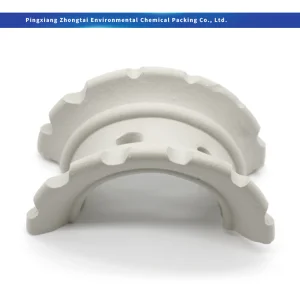
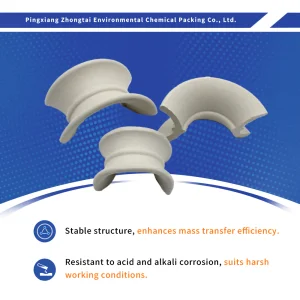
Acid towers subject packing media to hot concentrated H₂SO₄ and SO₃ gases. Combined ceramic Intalox Saddles and acid-proof inert ceramic balls provide complete corrosion immunity, maintaining structural integrity across decades of continuous exposure in industrial fertilizer and gas treatment facilities.
Anticipating material science advancements, decarbonized manufacturing pathways, and smart bed diagnostics in process plant mass transfer equipment.
Next-generation ceramic spheres incorporate engineered micro-textured surfaces that enhance liquid film spreading rates. By altering the micro-wetting angle, these advanced balls improve vapor-liquid mass transfer efficiency by up to 15% without increasing mechanical pressure drop.
To meet global Scope 1 carbon reduction targets, major Chinese ceramic manufacturers are transitioning tunnel kilns from liquefied natural gas (LNG) to green hydrogen-blend fuel systems and ultra-efficient electric kilns, slashing embodied carbon footprints by over 40%.
Integrating active catalytic micro-grains (e.g., transition metals) directly into porous ceramic ball matrices allows simultaneous chemical reaction and fractional separation within a single packed bed stage, streamlining capital equipment footprints.
Detailed answers to critical specification, chemical compatibility, bed sizing, and supplier procurement queries.
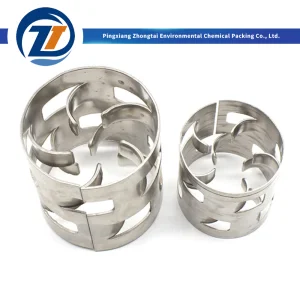
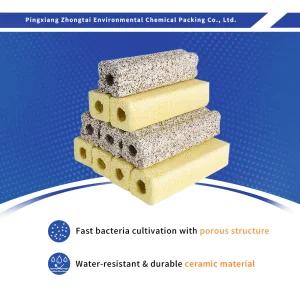
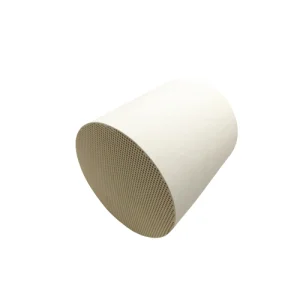
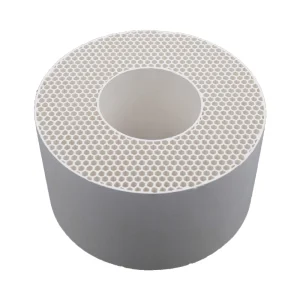
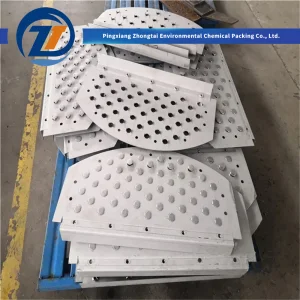
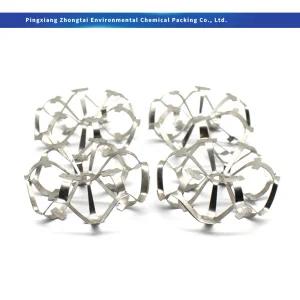
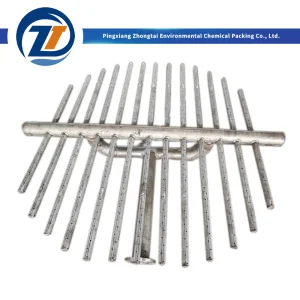
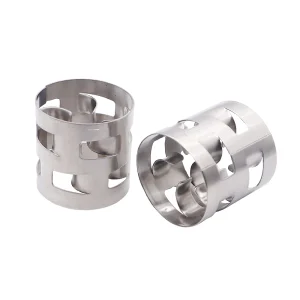
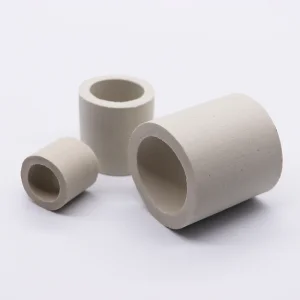
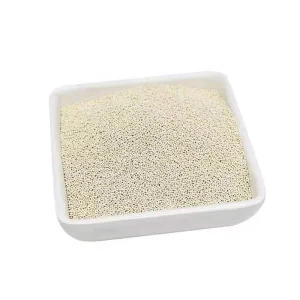
Established in 2003, Pingxiang Zhongtai has operated at the forefront of chemical tower packing and inert ceramic ball manufacturing for over two decades. Operating from our modern manufacturing facilities in Jiangxi, China, we produce a comprehensive portfolio covering 8 core product families: Inert Ceramic Support Balls, Alumina Grinding Media, Random & Structured Metal Packings, Ceramic Tower Packings, Honeycomb Thermal Ceramics, Ceramic Foam Filters, Molecular Sieves, and Bio-Filter Media.
Our direct-factory business model ensures every shipment conforms precisely to client technical specifications, backed by rigorous batch-level chemical analysis and mechanical crush testing.
