Factory-direct mass transfer components, ceramic support media, and filtration solutions engineered for global chemical processing plants.
In modern gas separation technology, Carbon Molecular Sieves (CMS) represent the pinnacle of kinetic adsorption media. Unlike conventional zeolites (such as 3A, 4A, 5A, or 13X molecular sieves) which rely primarily on thermodynamic equilibrium separation based on molecular polarity or molecular weight, CMS separates gases via kinetic separation mechanics. The kinetic separation principle leverages micro-porous pore aperture control—typically tuned within the ultra-narrow range of 3.0 to 4.0 Angstroms (Å).
Fundamental Separation Mechanism: Oxygen ($O_2$) has a kinetic diameter of approximately 3.46 Å, whereas Nitrogen ($N_2$) has a kinetic diameter of 3.64 Å. In a Pressure Swing Adsorption (PSA) system packed with premium Chinese CMS, oxygen molecules diffuse into the internal micropores of the carbon matrix hundreds of times faster than nitrogen, allowing high-purity nitrogen to pass unabsorbed as the product gas stream.
Achieving this precise sub-angstrom pore uniformity at an industrial scale requires rigorous material science, specialized pyrolytic carbon deposition, and advanced thermal activation. Over the past two decades, Chinese chemical media manufacturers—most notably concentrated within established industrial clusters like Pingxiang, Jiangxi—have evolved from regional raw material suppliers into global technology powerhouses capable of delivering CMS formulations with unmatched crushing strength, high nitrogen recovery rates, and exceptionally low dust generation.
The manufacturing process of industrial-grade CMS in Chinese factories begins with carefully selected carbonaceous precursors—primarily refined bituminous coal or premium coconut shell charcoal. The precursor undergoes multi-stage thermal degradation:
The shift toward Chinese procurement for mass transfer media, inert catalyst support balls, structured packing, and carbon molecular sieves is driven by key structural and technical advantages.
Pingxiang City in Jiangxi Province stands as China's undisputed hub for chemical packing and industrial ceramics. Having integrated local raw material supplies (kaolin, alumina, specialized coal derivatives), continuous tunnel kiln infrastructure, and decades of skilled labor, factories in Pingxiang operate with unparalleled economies of scale and rapid batch turnaround.
Leading factories like Pingxiang Zhongtai Environmental Chemical Packing Co., Ltd. enforce stringent quality control protocols. Every CMS and ceramic packing batch is tested for bulk density, crushing strength, abrasion loss rate, chemical inertness, and dynamic nitrogen yield rate prior to export clearance.
Direct OEM supply chains bypass multi-tiered trading markups. Purchasing straight from Chinese factory production lines allows international plant operators to reduce capital expenditure (CapEx) for initial bed loading and operational expenditure (OpEx) for media replacement by 30% to 50% compared to Western brands.
When evaluating CMS procurement options from Chinese factories, pricing is directly correlated with Nitrogen Yield Rate ($Nm^3/h \cdot t$), Target $N_2$ Purity (ranging from 95% to 99.999%), Pellet Diameter (1.1mm vs 1.6mm), and Mechanical Crush Strength. Below is the executive benchmark pricing matrix for 2025 international sourcing.
| CMS Grade | Target N2 Purity | N2 Yield Rate (Nm³/h·t) | Air/Nitrogen Ratio | Bulk Density (g/l) | Est. Price (USD / Metric Ton) |
|---|---|---|---|---|---|
| CMS-220 | 99.5% | 220 - 240 | 2.6 - 2.8 | 660 - 690 | $2,200 - $2,700 |
| CMS-240 | 99.9% | 240 - 260 | 3.0 - 3.2 | 670 - 700 | $2,800 - $3,400 |
| CMS-260 | 99.99% | 260 - 280 | 4.2 - 4.5 | 680 - 710 | $3,500 - $4,200 |
| CMS-280 / CMS-330 | 99.999% (Ultra-Pure) | 280 - 330 | 5.5 - 6.2 | 690 - 720 | $4,500 - $6,000 |
Pricing Variables & Packaging Notes: Quotes vary depending on order volume, customized crush strength requirements (>100 N/pellet), moisture content thresholds (<1.0%), and export packaging. Standard packing involves airtight 40kg plastic drums with inner foil seals or 130kg metal drums purged with nitrogen gas to prevent pre-exposure ambient moisture absorption.
From an engineering growth standpoint, selecting a higher CMS grade (e.g., CMS-260 vs CMS-220) slightly elevates upfront media costs but yields massive operational savings. A lower Air/Nitrogen ratio means your air compressor consumes significantly less electrical power ($kWh$) per normal cubic meter ($Nm^3$) of nitrogen produced. Over a typical 10-year service lifecycle, energy cost reductions outpace initial CMS purchase cost by up to 15 times.
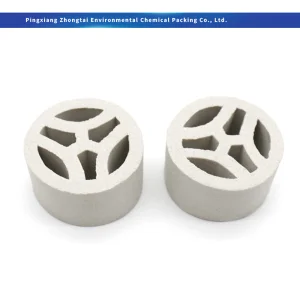
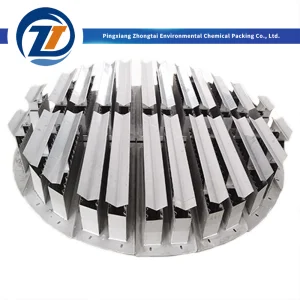
A high-performance PSA Nitrogen Generator or chemical adsorption column does not operate on CMS alone. Achieving peak fluid dynamics, low pressure drop, and zero catalyst fluidization requires a holistic bed architecture combining inert support spheres, random tower packings, and liquid distributors.
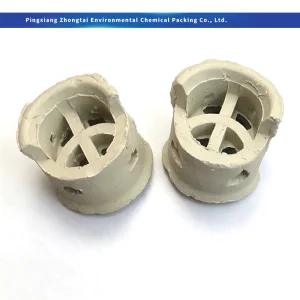
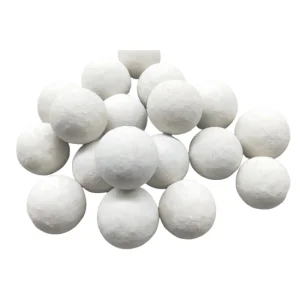
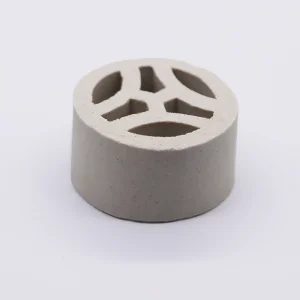
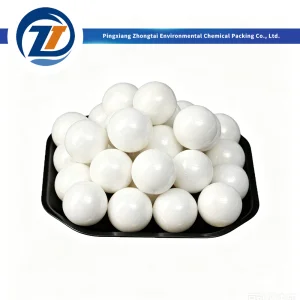
Positioned at the bottom and top of CMS beds, inert ceramic balls (17-23% or 99% High Alumina) act as flow distributors and bed hold-down media. They absorb high-velocity gas impact during rapid pressure swing cycles, preventing CMS pellet movement, abrasion, and dusting.
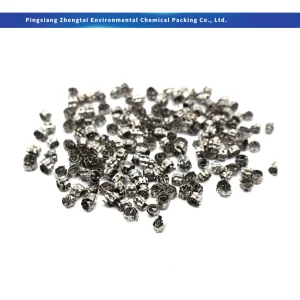
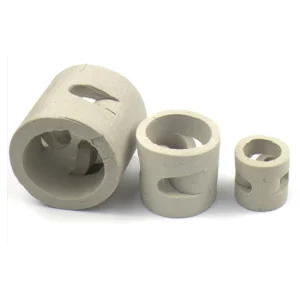
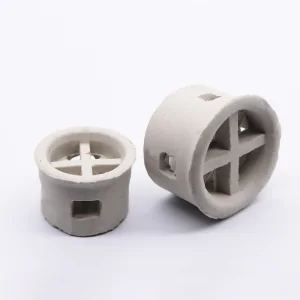
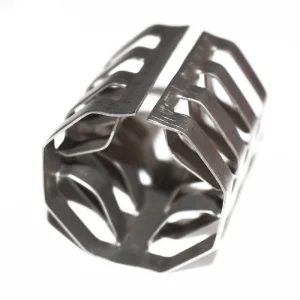
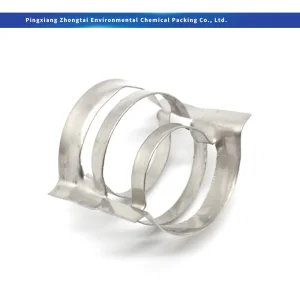
Before compressed air enters a CMS PSA unit, free oil, water vapor, and acid gases must be stripped. Metal Pall Rings, Stainless Steel Conjugate Rings, and Structured Packing in scrubbing and drying columns ensure clean feed air, extending CMS working life past 10 years.
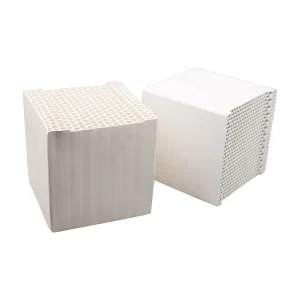
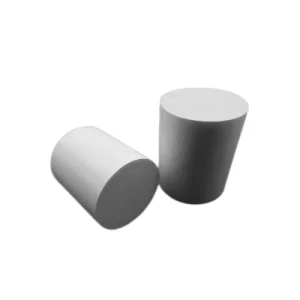
In petrochemical downstream facilities handling VOCs and off-gases, Cordierite Honeycomb Ceramics and RTO Heat Exchange Media integrate with adsorbent systems to recover up to 95% thermal energy while protecting catalytic beds from thermal shock.
As global decarbonization mandates intensify under global Net-Zero initiatives, the application scope of Carbon Molecular Sieves is expanding far beyond standard industrial nitrogen generation. Advanced Chinese carbon laboratories and factories are leading breakthroughs across three core frontiers:
Anaerobic digestion and landfill operations generate raw biogas rich in Methane ($CH_4$) and Carbon Dioxide ($CO_2$). Custom-tuned CMS adsorbents with micropore dimensions tailored to 3.3Å allow rapid kinetic adsorption of $CO_2$ while yielding high-purity Renewable Natural Gas (RNG) with over 98% $CH_4$ concentrations, suitable for direct pipeline injection or bio-CNG vehicle fuel.
With the expansion of green hydrogen generation via electrolysis and steam methane reforming (SMR), secondary hydrogen purification requires multi-bed PSA systems. Specialized CMS media operating alongside 5A and 13X zeolites remove trace Carbon Monoxide ($CO$), $CO_2$, and $N_2$ down to sub-ppm levels, supplying fuel-cell grade clean hydrogen (ISO 14687 Grade D).
Post-combustion carbon capture from flue gases demands resilient, acid-resistant adsorbent media capable of functioning under high humidity and trace SOx/NOx exposure. Chinese carbon molecular engineering teams are developing surface-functionalized carbon matrix materials that combine high $CO_2$ capacity with low thermal regeneration energy requirements.
From ultra-clean semiconductor fabrication lines to deep-sea offshore drilling platforms, customized adsorbents and tower packings deliver unyielding reliability under harsh operating conditions.
Challenge: Semiconductor manufacturing requires uninterrupted nitrogen at 99.999% purity with zero oxygen breakthrough to prevent micro-oxidation on silicon wafers.
Solution: High-density CMS-280 combined with 99% Alumina inert ceramic support beds. Achieved stable oxygen levels below 3 ppm and cut compressed air consumption by 14%.
Challenge: Floating Production Storage and Offloading (FPSO) units require compact, high-crush-strength CMS to withstand vessel vibration and humid ocean atmospheres while blanketing oil tanks.
Solution: Vibration-resistant 1.1mm CMS pellets packed with high-density loading methods and protected by Stainless Steel 316L Metal Pall Rings in pre-treatment moisture separators.
Challenge: High-speed food packaging plants require economic 99.5% purity $N_2$ to displace oxygen and extend product shelf-life without high utility power expenses.
Solution: Implementation of CMS-220, providing maximum nitrogen volume per kilogram of adsorbent, reducing initial system procurement cost by 35%.
Clear, factual responses based on field experience and Search Quality Guidelines.
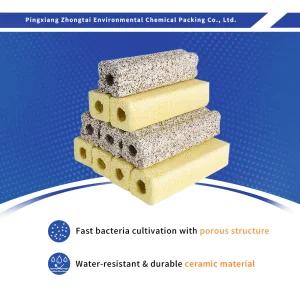
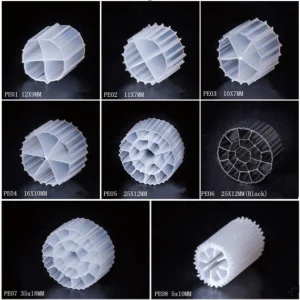
Complementary mass transfer, bio-filtration, structured packing, and ceramic media directly from our Pingxiang manufacturing facility.