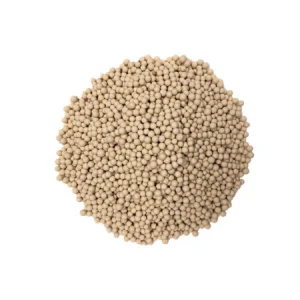
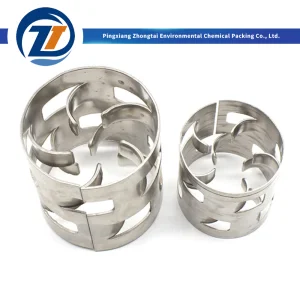
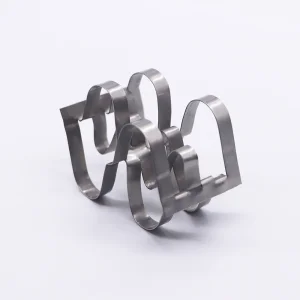
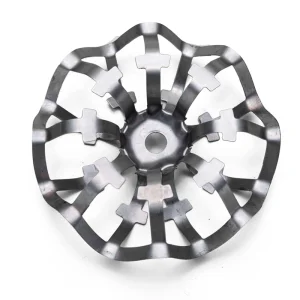
Explore our high-performance industrial ceramics, tower packings, and specialized grinding media engineered for high-stress processing environments.
Understanding the shift from traditional forged steel to high-density sintered α-alumina spherical media across modern processing operations.
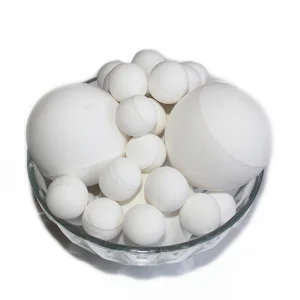
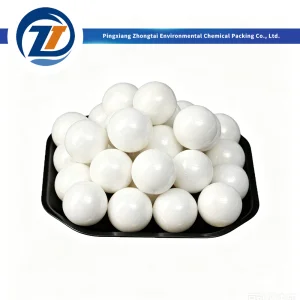
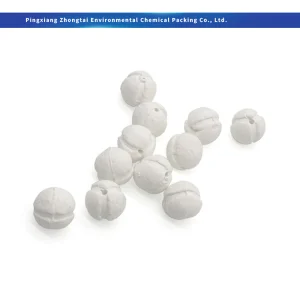
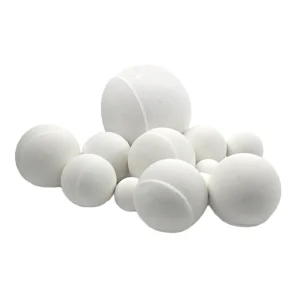
Comminution and ultra-fine wet grinding account for up to 50% of total electrical consumption in mining and advanced ceramics plants. Transitioning to high-density alumina balls ($3.60 - 3.70\text{ g/cm}^3$) drastically improves kinetic energy transfer, reducing mill residence times and lowering specific kWh consumption per ton of processed material.
In electronic ceramics, lithium-ion battery cathode materials (NMC, LFP), and pharmaceutical-grade glazes, metallic iron contamination causes catastrophic performance loss. Alumina grinding balls deliver exceptional chemical inertness, maintaining product purity with self-wear loss measured in fractions of a thousandth of a percent.
Featuring a Mohs hardness of 9.0 and high micro-vickers hardness ($\ge 1100\text{ HV10}$), high-alumina ceramic beads resist severe impact fatigue, high operational shear forces, and corrosive chemical slurry environments better than natural flint or forged alloy alternatives.
Engineering breakdown of Alpha-Alumina ($\alpha\text{-Al}_2\text{O}_3$) densification achieved through precise thermal sintering and automated forming techniques.
| Performance Indicator | 68% Alumina Grade | 75% Alumina Grade | 92% High-Alumina Grade | 95% Premium Grade | 99% Ultra-Pure Grade |
|---|---|---|---|---|---|
| Al₂O₃ Content (%) | $\ge 68\%$ | $\ge 75\%$ | $\ge 92\%$ | $\ge 95\%$ | $\ge 99\%$ |
| Bulk Density ($\text{g/cm}^3$) | $\ge 3.00$ | $\ge 3.20$ | $\ge 3.60$ | $\ge 3.68$ | $\ge 3.85$ |
| Mohs Hardness | 7.5 – 8.0 | 8.0 | 9.0 | 9.0 | 9.0 |
| Self-Wear Loss (%) | $\le 0.025\%$ | $\le 0.015\%$ | $\le 0.008\%$ | $\le 0.005\%$ | $\le 0.003\%$ |
| Crush Strength ($\varnothing 30\text{mm}$) | $\ge 8.5\text{ kN}$ | $\ge 12.0\text{ kN}$ | $\ge 20.0\text{ kN}$ | $\ge 23.0\text{ kN}$ | $\ge 28.0\text{ kN}$ |
| Water Absorption (%) | $\le 0.05\%$ | $\le 0.03\%$ | $\le 0.01\%$ | $\le 0.01\%$ | $\le 0.005\%$ |
| Color / Crystalline Form | Greyish White | Off White | Pure White / $\alpha\text{-Al}_2\text{O}_3$ | Pure White / $\alpha\text{-Al}_2\text{O}_3$ | Bright White / Fine Grain |
Chinese manufacturing facilities utilize two primary forming methods: Isostatic Pressing for large-diameter balls ($\varnothing 30\text{mm} - \varnothing 90\text{mm}$) ensuring uniform volumetric density and zero internal voiding; and Automated Rolling for micro-beads ($\varnothing 0.5\text{mm} - \varnothing 25\text{mm}$), maximizing sphericity ($\ge 0.98$) and throughput capacity.
Thermal processing takes place in natural gas-fired continuous tunnel kilns at temperatures ranging from 1550°C to 1700°C. Precise thermal soaking curves ensure complete phase transformation into corundum crystalline structures, optimizing mechanical toughness and thermal shock stability.
Why Pingxiang and regional Chinese hubs represent the pinnacle of global cost-efficiency, technical precision, and export logistics in industrial ceramics.
Based in historical ceramics clusters like Pingxiang, Jiangxi, factories benefit from an integrated raw material supply chain. Calcined bauxite refining, specialized binder formulation, synthetic diamond tooling, and heavy-duty kiln maintenance exist within a 50-kilometer supply radius, eliminating supply chain friction.
Automated batching systems, spray drying towers, and continuous multi-channel kilns significantly reduce labor overhead while maintaining extreme batch consistency. Global buyers secure direct OEM factory pricing with up to 30–45% cost savings compared to European or North American distributors.
Chinese manufacturing plants are seamlessly integrated with ocean ports (Ningbo, Shanghai, Shenzhen). Standard export packaging—including heavy-duty reinforced woven jumbo bags, plastic drums, and heat-treated fumigated wooden pallets—ensures zero breakage during ocean transit.
Specific operational guidelines for deploying high-alumina media across primary global industrial processing sectors.
In wet ultrafine attrition milling of Lithium Iron Phosphate (LFP) and Nickel Manganese Cobalt (NMC) precursors, micro-sized alumina grinding beads ($0.4\text{mm} - 2.0\text{mm}$) enable sub-micron scale particle distribution ($d_{50} < 0.5\,\mu\text{m}$) without introducing metallic iron contamination that risks battery short-circuiting.
Used extensively in secondary grinding and regrind circuits for gold, copper, lead, and zinc concentrates. High-density 92% alumina media withstand heavy wear rates in Stirred Media Mills (e.g., IsaMill, Vertimill), lowering steel ball consumption costs dramatically.
Essential in continuous ball mills for sanitaryware, ceramic tiles, and porcelain bodies. Alumina grinding media eliminate dark speckling in white glaze slurries while decreasing mill processing cycle duration by 25–35%.
Ultrafine dispersing and grinding of titanium oxide pigments require consistent spherical media that will not shatter under high shear velocities, preserving pigment optical opacity, color brightness, and particle size uniformity.
Key technological shifts shaping the next generation of industrial ceramic media procurement globally.
Zirconia-Toughened Alumina (ZTA) ceramic beads are rapidly acquiring market share in high-stress applications. Combining the high fracture toughness of Yttria-Stabilized Zirconia (YSZ) with the cost-efficiency of alumina, ZTA offers ultimate impact stability for ultra-high-power horizontal sand mills.
As advanced materials transition toward nano-grain structures, demand is surging for micro-milling media ranging from 0.1mm to 0.5mm. Factories are investing heavily in specialized spray-drier agglomeration to achieve flawless roundness in micro-bead geometries.
Global procurement teams now evaluate chemical suppliers on environmental footprint. Chinese factories are leading green transitions by adopting high-efficiency clean natural gas kilns, waste-heat energy recovery systems, and closed-loop water recycling during raw batch preparation.
Expert answers addressing specification selection, bulk density calculations, and quality verification standards.
Explore the remainder of our engineered portfolio, including zeolites, structured tower packings, and specialty alumina media.