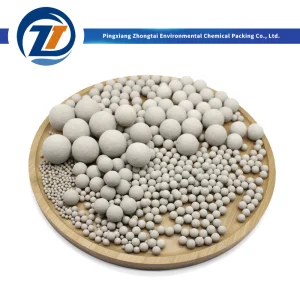
Factory-direct high-performance adsorbents, synthetic zeolites, and random tower packings engineered for global process industries.
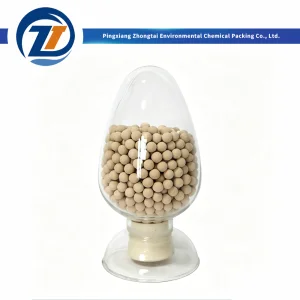
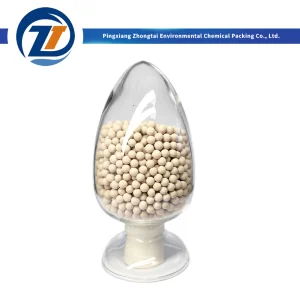
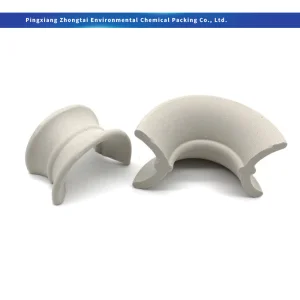
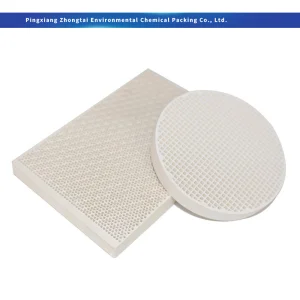
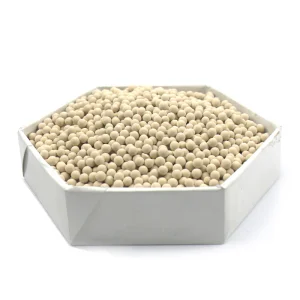
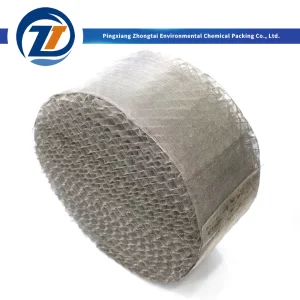
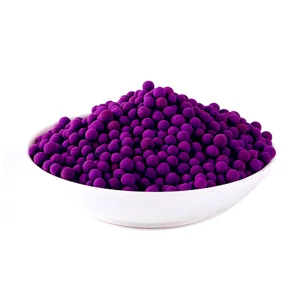
Activating molecular sieves represents a crucial paradigm shift in industrial desiccant technology, turning raw synthesized zeolites into highly porous, crystalline aluminosilicates with precise pore geometries capable of selective molecular separation down to the Angstrom (Å) scale.
Molecular sieves belong to the crystalline hydrated alkali metal aluminosilicate family. Their basic structural backbone is composed of a three-dimensional framework of SiO4 and AlO4 tetrahedra linked through shared oxygen atoms. The chemical formulation for activated crystalline zeolite powder is structurally expressed as:
When synthesized raw zeolite slurry is calcined in specialized high-temperature rotary kilns across Pingxiang's chemical industrial parks, the structural water held within the internal cages (alpha and beta cages) is vaporized and stripped. The resulting activated powder retains a vast specific surface area—frequently exceeding 700 to 800 m2/g—and an exceptionally strong affinity for polar molecules like H2O, NH3, and H2S.
China, and specifically the Pingxiang industrial cluster in Jiangxi Province, produces over 60% of the world's commercial molecular sieves and chemical packing materials. This dominance stems from concentrated supply chains, raw material availability, process innovation, and scale economics.
Chinese manufacturers maintain fully integrated supply chains, starting directly from high-purity kaolin clay and sodium silicate synthesis. This vertical integration guarantees precise control over the silica-to-alumina ratio, yielding crystalline purities exceeding 98% prior to thermal activation.
Modern Chinese plants feature continuous rotary activation kilns equipped with multi-stage temperature control loops (+/- 2°C accuracy). This automated process eliminates under-activated or over-calcined fractions, guaranteeing residual moisture content consistently under 1.0% by weight.
Quality Control (QC) frameworks comply with international standards (ASTM, ISO 9001). Every batch undergoes rigorous testing for Static Water Adsorption, Crush Strength, Bulk Density, Delta T Temperature Rise, and Particle Size Distribution before shipment.
The global market for activating molecular sieves is expanding rapidly, driven by the global energy transition, stringent environmental regulations, and growth in industrial automation.
The rise of green and blue hydrogen projects requires extreme gas purity (99.999%). Customized 5A and 13X-HP molecular sieves are critical for Pressure Swing Adsorption (PSA) systems to strip trace CO, CO2, and N2 from hydrogen streams.
Global mandates for E10 and E15 fuel-ethanol blends rely heavily on 3A molecular sieve beds. These sieves break the ethanol-water azeotrope without continuous energy-intensive distillation, reducing overall operational costs.
Activated molecular sieve powder (AMSP) is replacing traditional chemical water scavengers in 2K polyurethane coatings, sealants, adhesives, and elastomers to prevent CO2 bubble formation and micro-foaming defect structures.
Advanced modified zeolites are being engineered for flue-gas carbon capture systems, using selective pore networks to separate CO2 from nitrogen and moisture streams at scale.
From refinery cracked-gas dryers to architectural insulating glass units, activated molecular sieves protect process infrastructure and optimize chemical yields.
| Zeolite Type | Pore Size (Å) | Target Molecules Absorbed | Primary Industrial Scenarios |
|---|---|---|---|
| Activated 3A Sieve | ~3.0 | H2O, NH3 (Excludes Ethylene, Propylene) | Cracked gas drying, Ethanol dehydration, Insulating glass units, Refrigerant desiccation. |
| Activated 4A Sieve | ~4.0 | H2O, CO2, SO2, H2S, C2H4 | Closed-loop pneumatic air systems, solvent drying, static desiccation in packaging. |
| Activated 5A Sieve | ~5.0 | n-Paraffins, C3-C4 fractions, H2S, Mercaptans | PSA Oxygen concentrators, ISO-normal paraffin separation, natural gas sweetening. |
| Activated 13X Sieve | ~10.0 | Aromatics, branched hydrocarbons, large sulfur species | Air separation unit (ASU) pre-purification, bulk CO2 removal, medical oxygen generators. |
| Activated Powder (AMSP) | 3.0 - 10.0 | Trace structural moisture in matrixes | Polyurethane formulations, metallic paint formulations, rubber seal strips, epoxy castings. |
In 2K polyurethane formulations, trace moisture present in polyols or pigments reacts preferentially with isocyanates (NCO groups). This side-reaction generates gaseous carbon dioxide (CO2), causing pinholes, blistering, lost mechanical strength, and compromised optical transparency.
B2B procurement professionals must weigh direct unit pricing against performance lifespans, crush strength metrics, and regeneration cycles. Below is an indicative B2B price benchmark for wholesale orders originating from China factories.
| Product Classification | Physical Form | FOB China Price Range (USD/MT) | Standard Export Packaging Options |
|---|---|---|---|
| Molecular Sieve 3A Bead / Pellet | 1.6-2.5mm / 3.0-5.0mm | $1,250 - $1,850 / MT | 25kg Drum / 150kg Iron Drum / 750kg Super Sack |
| Molecular Sieve 4A Bead / Pellet | 1.6-2.5mm / 3.0-5.0mm | $1,100 - $1,600 / MT | 25kg Carton / 25kg Bag / 1000kg Jumbo Bag |
| Molecular Sieve 5A (PSA Grade) | 1.6-2.5mm Spheres | $1,450 - $2,200 / MT | 25kg Airtight Drum / Sealed Steel Drums |
| Molecular Sieve 13X / 13X-HP | 1.6-2.5mm Spheres | $1,600 - $2,600 / MT | 150kg Sealed Steel Drum with Nitrogen Purge |
| Activated Molecular Sieve Powder | Fine Powder (≤10μm) | $950 - $1,450 / MT | 15kg Moisture-Proof Bag / 500kg Super Sack |
Direct answers from our senior chemical engineers regarding specifications, activation protocols, and handling procedures.
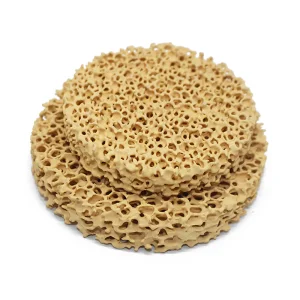
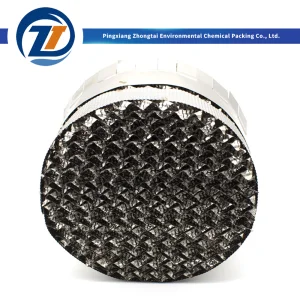
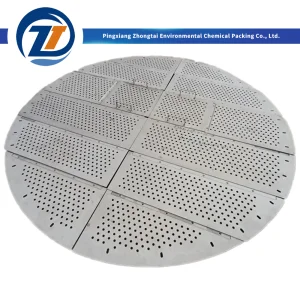
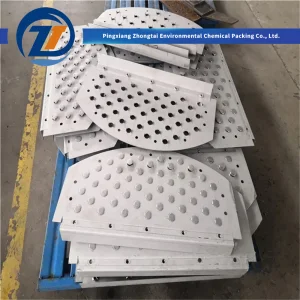
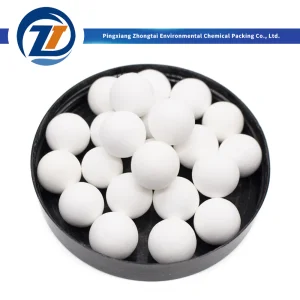
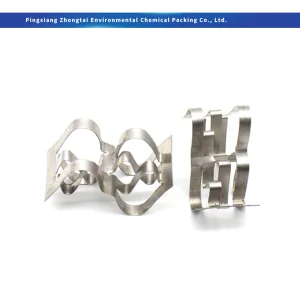
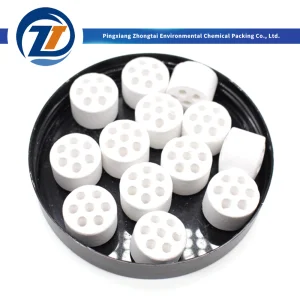
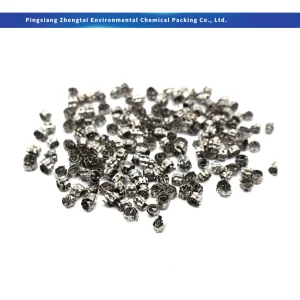
Complete your plant design with industrial ceramics, structured tower packings, filtration media, and catalyst support spheres.