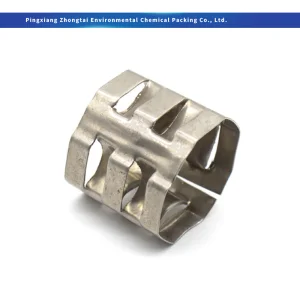
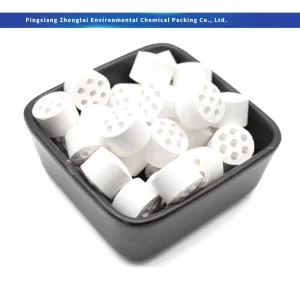
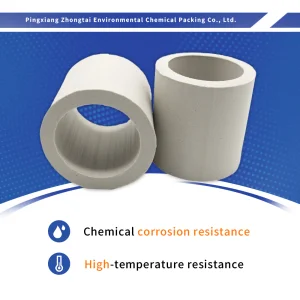
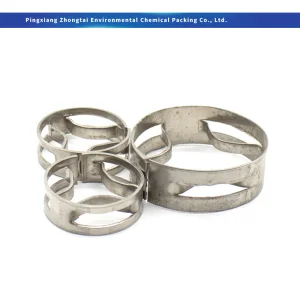
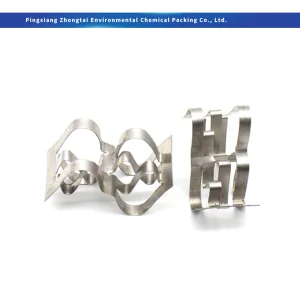
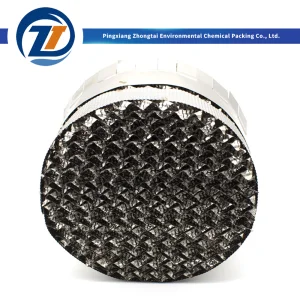
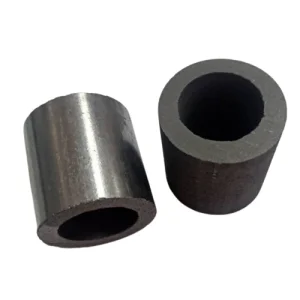
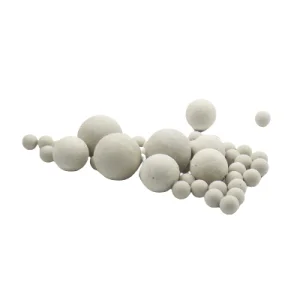
Direct factory-sourced items produced within our Pingxiang industrial cluster, built to withstand continuous operational rigors across hydrometallurgy, refining, and mass transfer scrubbing.
Analyzing the macro-economic and material science shift toward high-purity α-alumina media in heavy comminution circuits, advanced energy storage slurries, and aggressive chemical synthesis.
Modern mineral dressing, quartz processing, and ceramic tile operations have systematically moved away from natural flint pebbles, steatite, and forged steel balls. Sintered 92% Al2O3 delivers a bulk density greater than 3.60 g/cm³, cutting batch grinding cycles by 30% to 45% while terminating catastrophic iron ion leaching into refined product streams.
The exponential buildout of Lithium Iron Phosphate (LiFePO4) cathode facilities and battery separator coatings demands sub-micron wet grinding without electrochemically active metal contaminants. High-alumina ceramic balls manufactured via microcrystalline spray drying provide an isotropic wear interface that maintains ultra-pure slurry integrity.
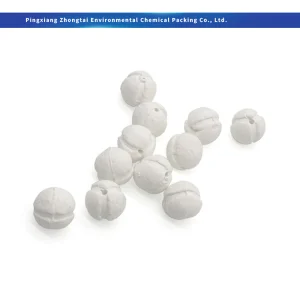
Refinery hydrotreating, catalytic cracking, and gas synthesis systems run under relentless cyclic pressure (up to 15 MPa) and steam-laden atmospheres. 92% Al2O3 inert ceramic support spheres possess an impervious alpha-corundum phase that inhibits chemical spalling, silica dissolution, and bed compaction over 48-month continuous runs.
Our China production line relies on ultrafine dry-milled calcined bauxite combined with high-tonnage cold isostatic pressing (CIP) and automated temperature-profile gas tunnel kilns.
| Critical Engineering Parameter | 92% Alumina Grinding Media | 92% Inert Catalyst Support Ball | Industrial Test Standard |
|---|---|---|---|
| Al2O3 (Alumina) Content | ≥ 92.0 % | ≥ 92.0 % | XRF / Chemical Titration (GB/T 4734) |
| SiO2 (Silica) Content | ≤ 5.5 % | ≤ 6.0 % | Spectrophotometry / ICP-OES |
| Fe2O3 (Iron Oxide) Content | ≤ 0.20 % | ≤ 0.25 % | Atomic Absorption Spectrometry |
| Bulk Density (Packed) | 2.20 – 2.40 g/cm³ | 2.10 – 2.30 g/cm³ | ASTM C29 / Standard Volumetric |
| Apparent True Density | ≥ 3.60 g/cm³ | ≥ 3.55 g/cm³ | Archimedes Immersion Method |
| Water Absorption | ≤ 0.01 % | ≤ 0.05 % | ASTM C373 High Vacuum Boil |
| Crush Strength (Ø 25mm / 1") | ≥ 2,000 N/ball (~200 kgf) | ≥ 2,500 N/ball (~255 kgf) | ASTM C773 Hydraulic Press Rate |
| Self-Wear Loss (Wet Tumbling) | ≤ 0.015 % (150 ppm) | N/A (Static Hold Duty) | 24-Hour Planetary Ball Mill Check |
| Thermal Shock Endurance | Resistant (300°C to cold water ΔT) | Resistant (800°C to cold water ΔT) | Visual & Penetrant Dye (3 cycles) |
For EPC engineering firms, industrial mineral processors, and petrochemical turnarounds, buying high-alumina media requires balancing technical parameters, kiln capacity, and import risk mitigation.
China produces more than 70% of the world's high-alumina media. Pingxiang Zhongtai operates with a vertically integrated upstream raw material supply chain. When procuring large volumes (50 to 500+ Metric Tons), buyers bypass middleman markups while securing guaranteed batch chemical stability, predictable pricing schedules, and sea-freight optimization (25–27 metric tons per 20ft GP container).
Buyers must specify between Cold Isostatic Pressing (CIP) and automated rolling ball disk formation. For grinding media larger than 30 mm, CIP yields uniform green-body compaction, eliminating internal voids and eccentric wear rings. For smaller media (0.5 mm to 20 mm), high-speed multi-axis disk rolling achieves maximum sphericity and uniform packing density.
Reputable tier-1 suppliers provide batch-traceable Certificates of Analysis (COA) covering apparent density, chemical constituents via XRF, water absorption, and random sample mechanical crushing. Procurement agreements should require hydraulic press crush testing across a minimum of 20 random spheres per production run.
High-density spheres exert enormous outward point-load pressures during ocean transit. Heavy-duty dual-ply 1.0 or 1.2-ton polypropylene woven jumbo bags with UV stabilization and inner moisture barriers, mounted on fumigated solid timber or composite pallets, prevent bag rupture, moisture contamination, and port handling damage.
Tailoring 92% Alumina media geometry, grading, and material properties to resolve specific processing challenges across critical sectors.
In ultra-fine regrind stirred mills for copper, gold, and lead-zinc flotation concentrators, iron cross-contamination reduces recovery rates. 92% alumina balls provide maximum kinetic energy transfer with zero steel-media corrosion, increasing downstream froth flotation recovery yields by up to 2.4%.
Manufacturing ultra-white calcium carbonate, calcined kaolin, and zirconium silicate requires immaculate color control. 92% ceramic balls eliminate graying and contamination, consistently keeping final powder whiteness indices above 95%.
Graded beds of 92% inert balls (from 1/8" at the top to 2" at the support grid) maintain uniform gas-liquid flow distribution across hydrocracker catalysts, preventing channeling, localized hot-spots, and catalyst fluidization during emergency depressurization.
Sub-micron dispersion of screen-printing silver pastes and high-temperature glazes requires media that resists chipping under high shear. Our isostatically pressed 92% spheres maintain spherical shape throughout thousands of milling hours without generating fractured debris.
Pingxiang Zhongtai Environmental Chemical Packing maintains strict quality systems, ensuring every production batch matches client procurement engineering specifications.
Every calcined bauxite batch is checked for mineral purity via X-ray fluorescence (XRF). Green bodies from our isostatic presses undergo dimensional, weight, and density checks before firing in our automated tunnel kilns with 64-point digital thermocouple monitoring.
We regularly partner with SGS, Bureau Veritas, and TÜV Rheinland for pre-shipment inspections. Auditors conduct on-site sampling, ASTM C773 compressive failure testing, and wet tumbling wear determinations before containers receive customs sealing.
Our export documentation team provides accurate Customs Tariff Declarations (HS Code: 6909.19 / 6909.11), Certificates of Origin (Form E, Form A, RCEP, CO), mill test certificates, packing declarations, and fumigation certificates (ISPM 15 compliant).
Advancing ceramic ball production through low-carbon processing, artificial intelligence kiln thermal profiling, and advanced microstructure tailoring.
Incorporating rare-earth zirconia (ZrO2) micro-dopants into the 92% alpha-alumina base to trigger transformation toughening, targeting fracture toughness values above 4.5 MPa·m½.
Integrating predictive computer-vision monitoring and automated gas-air ratio adjustments to eliminate temperature gradients across our 110-meter firing zones, keeping density variance within ±0.02 g/cm³.
Replacing manual wet-bag loading with fully enclosed dry-bag isostatic press cells operating at 220 MPa, increasing throughput by 40% while delivering tight dimensional tolerances (±0.5 mm).
Recovering waste heat from kiln cooling zones to power spray drying towers, combined with on-site solar power arrays to reduce overall carbon emissions per ton by 28% by 2026.
Detailed technical and commercial answers to help procurement managers and chemical process engineers evaluate high-alumina media.
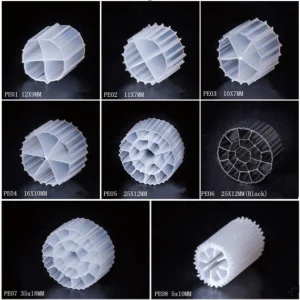
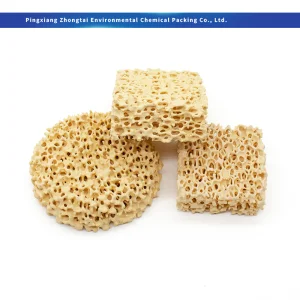
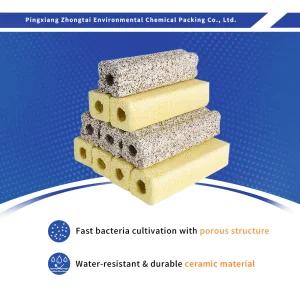
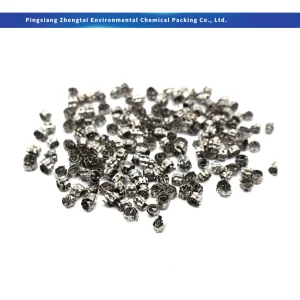
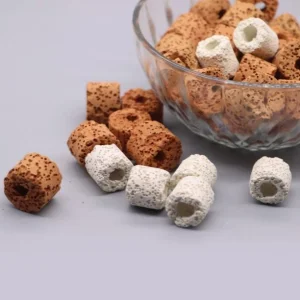
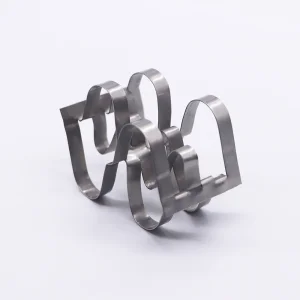
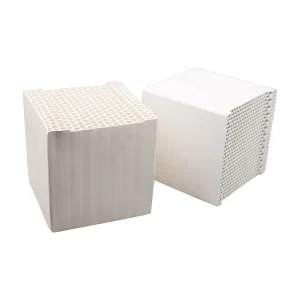
Explore our expanded chemical process hardware, random tower packings, and support media manufactured to international engineering standards.
Contact our chemical and ceramic engineering sales team in Pingxiang. We provide mill-test Certificates of Analysis (COA), free laboratory sample parcels, and landed CIF pricing for ports worldwide within 24 business hours.