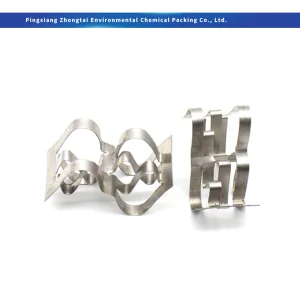
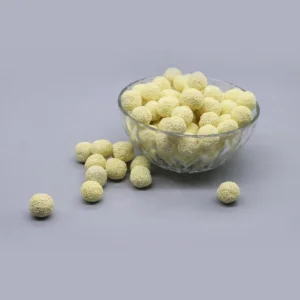
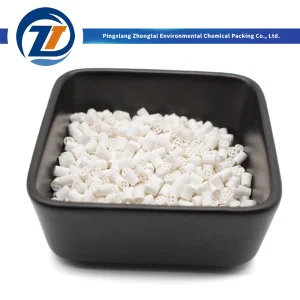
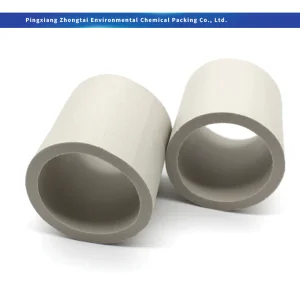
Direct factory supply of certified chemical reaction packings, molecular sieves, and biological filtration platforms engineered at our Pingxiang production base.
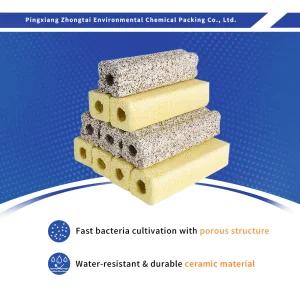
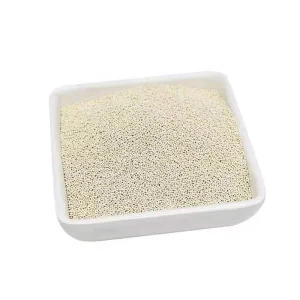
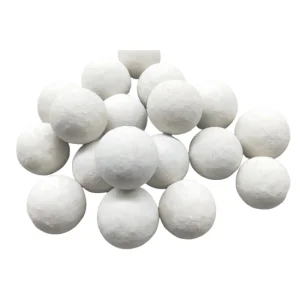
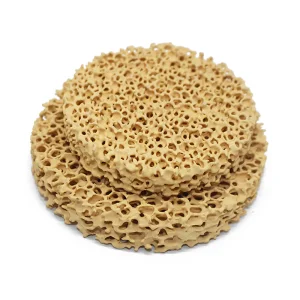
Engineered microcrystalline alpha-alumina wear media delivering superior abrasion resistance, zero discoloration, and elevated mechanical endurance for global industrial milling.
Iron content (Fe₂O₃) controlled rigorously below 0.25%, ensuring absolute purity for high-end ceramic glazes, zirconium silicate processing, and lithium iron phosphate (LiFePO4) battery cathode preparation.
The high bulk density (≥3.60 g/cm³) coupled with regular spherical symmetry accelerates particle fracture mechanics, decreasing standard ball mill milling duration by 20% to 35% compared to silica or chert media.
Micro-fine grain sintering inhibits transgranular shear fracture and peeling under high kinetic energy impacts, eliminating micro-chipping inside 100-ton capacity industrial continuous and batch ball mills.
Full conformance to international ASTM C517, ISO 9001:2015, and refractory industrial standards verified via chemical assay and X-ray diffraction (XRD).
| Technical Property | Standard Reference Value | Testing Methodology | Industrial Engineering Implication |
|---|---|---|---|
| Aluminium Oxide (Al₂O₃) | ≥ 92.0% – 92.5% | GB/T 4734 / XRF Spectroscopy | Guarantees corundum crystalline hardness and ultra-low chemical reactivity. |
| Silicon Dioxide (SiO₂) | ≤ 5.5% | Chemical Titration / ICP-OES | Acts as a specialized eutectic fluxing binder to lock alpha-grains without porosity. |
| Iron Trioxide (Fe₂O₃) | ≤ 0.20% – 0.25% | Atomic Absorption Spectrophotometry | Prevents dark speckling and unwanted dielectric degradation in white frit and tiles. |
| Bulk Density (Volumetric) | ≥ 3.60 – 3.65 g/cm³ | Archimedes Water Displacement Method | Increases impact mass and kinetic shearing momentum per revolution in ball mills. |
| Vickers Hardness (Hv) / Mohs | ≥ 1050 Hv / 9.0 Mohs | ISO 6507 Hardness Test | Outperforms tungsten carbide in long-term acid-slurry abrasive attrition regimes. |
| Self-Wear Rate (Wet Mill) | ≤ 0.010% – 0.015% per 1,000h | Standard Planetary Jar Attrition Protocol | Minimizes replenishment makeup cycles and dramatically cuts per-ton milling overhead. |
| Water Absorption | ≤ 0.01% (Hermetic Vitrification) | Vacuum Boiling Saturation Test | Zero interior moisture ingress prevents explosive spalling in thermal drying circuits. |
| Crush Strength (30mm Ball) | ≥ 1,800 – 2,200 N (Ball Crush) | Hydraulic Compressive Testing Rig | Eliminates cataclysmic shatter under severe cascading falls in heavy charge mills. |
Manufactured through both precision rolling (for fine sizes 0.5mm – 20mm) and high-tonnage cold isostatic pressing (CIP for 25mm – 90mm). Every batch conforms to strict sphericity and dimensional grading.
| Nominal Diameter (mm) | Tolerance Variance (mm) | Average Compressive Strength (KN) | Typical Packing Bulk Density (kg/L) | Primary Industrial Use-Case |
|---|---|---|---|---|
| Ø 13 mm – 20 mm | ± 1.0 mm | ≥ 0.85 KN | ≈ 2.15 – 2.25 kg/L | Fine secondary polishing, ultrafine quartz, pigment dispersion. |
| Ø 25 mm – 30 mm | ± 1.2 mm | ≥ 2.20 KN | ≈ 2.18 – 2.28 kg/L | Intermediate ceramic glaze reduction, chemical catalyst bed hold-down. |
| Ø 40 mm – 50 mm | ± 1.5 mm | ≥ 4.50 KN | ≈ 2.20 – 2.30 kg/L | Standard ceramic body wet milling, feldspar and kaolin bulk grinding. |
| Ø 60 mm – 70 mm | ± 2.0 mm | ≥ 7.80 KN | ≈ 2.22 – 2.32 kg/L | Primary coarse particle fracturing in industrial continuous ball mills. |
Comprehensive pricing framework direct from our Pingxiang manufacturing base, based on metric ton (MT) purchasing volume, packaging configuration, and delivery terms.
| Diameter Range (mm) | Forming Process | FOB Shanghai / Qingdao (USD/MT) | CIF Main Global Ports (USD/MT Est.) | Standard Packaging Option |
|---|---|---|---|---|
| Ø 10 mm – 20 mm | Precision Rolling | $1,020 – $1,150 / MT | $1,120 – $1,280 / MT | 25kg Double-Layer PP Bag or 1.0 MT Jumbo Bag |
| Ø 25 mm – 40 mm | Isostatic Pressing / Rolling | $950 – $1,080 / MT | $1,050 – $1,210 / MT | 1.0 MT / 1.2 MT Jumbo Bag on ISPM-15 Pallet |
| Ø 50 mm – 60 mm | Cold Isostatic Pressing (CIP) | $920 – $1,050 / MT | $1,020 – $1,180 / MT | 1.0 MT Ton-Bag with Anti-Abrasion Liner |
| Ø 70 mm – 90 mm | Heavy-Duty CIP Molding | $980 – $1,120 / MT | $1,080 – $1,250 / MT | Reinforced Wooden Crates or Heavy Jumbo Bag |
| Custom Mixed Grinding Charge | Engineered Ratio Charge | $960 – $1,090 / MT | $1,060 – $1,220 / MT | Graded Pre-Blended Ratio Bags Ready to Load |
Orders exceeding 50 MT qualify for a 3%–5% enterprise rebate; annual supply contracts (≥200 MT/year) receive locked quarterly spot price ceilings to cushion global raw alumina spot variations.
Pingxiang's logistical proximity to Ningbo, Shanghai, and Shenzhen container terminals enables transit times of 24–48 hours from factory gate to vessel loading, supporting rapid 14-day standard FOB lead times.
Standard export orders operate via confirmed Irrevocable LC at Sight or T/T deposit (30% deposit, 70% against BL/QC inspection). Established EPC and global recurring clients access OA 30/60-day terms via Sinosure.
A century-old ceramic ecosystem combining concentrated upstream raw minerals, high-efficiency natural gas roller kilns, and multi-generational engineering craftsmanship.
Pingxiang sits within immediate transport range of China's premier metallurgical and calcined alpha-alumina production hubs in Henan, Shandong, and Shanxi. By procuring calcined alumina powder (Al₂O₃ ≥ 99.5% feed) through bulk direct pipeline contracts, our factory insulates international clients from external commodity spikes while ensuring 100% batch consistency in raw material purity, particle sizing, and reactive phase conversion.
Unlike small-scale intermittent shuttle kilns that suffer from uneven thermal zones, our industrial factory utilizes fully digitized, computerized natural gas tunnel kilns extending over 100 meters. With continuous 36-hour thermal firing profiles maintaining exact ±3°C isothermal sintering curves at 1580°C, every 92 alumina ball attains uniform microcrystalline growth, complete phase transformation into alpha-corundum, and identical mechanical integrity.
Pingxiang represents China’s undisputed capital of chemical packing and industrial ceramics. Having operated continuously since 2003, our facility benefits from three generations of ceramic engineers, precision tooling fabricators, and advanced quality inspectors. This concentrated industrial density guarantees uninterrupted availability of spare parts, specialty additives, and kiln technicians that Western and localized overseas facilities cannot replicate.
Operating in complete compliance with China's Ministry of Ecology and Environment (MEE) industrial emissions standards, our plant utilizes low-NOx combustion burners, automated closed-loop bag-filter dust extraction, and zero-discharge industrial wastewater recycling. Overseas buyers are protected against unexpected factory shutdowns, winter smog stoppages, or delivery delays.
A technical and financial total cost of ownership (TCO) evaluation framework for plant directors, chief chemical engineers, and procurement managers.
| Evaluation Parameter | Forged Steel Balls | Natural Silica / Flint Pebbles | 75% Mid-Alumina Ceramic | 92% High-Alumina Media (Factory Grade) |
|---|---|---|---|---|
| Bulk Density (g/cm³) | 7.80 – 7.85 | 2.50 – 2.65 | 3.15 – 3.30 | 3.60 – 3.65 (Optimum Momentum) |
| Relative Wear Rate (1,000h) | High (Chemical Oxidation) | Extremely High (0.15%+) | Moderate (0.05% – 0.08%) | Ultra-Low (<0.012% – 0.015%) |
| Contamination Risk | Critical Fe Color Poisoning | High Silica / Iron Leaching | Moderate Silica Leaching | Virtually Zero (Fe₂O₃ ≤ 0.20%) |
| Lining Wear Impact | Severe Liner Destruction | Low Impact Friction | Moderate Rubber/Brick Wear | Gentle on Alumina Brick Linings |
| Motor Electrical Load | Extremely High kW/h | Low (Inefficient Grinding) | Moderate Energy Factor | 20% – 30% Energy Savings vs. Steel |
| Annual Total Cost Index | 185% (High maintenance) | 240% (Continuous loss) | 145% (Frequent makeup) | 100% (Lowest Lifecycle TCO) |
For continuous or batch wet ball mills in the ceramic, quartz, and electronic materials sectors, an uncalibrated single-size media charge leads to blind voids and hydraulic bypassing. Our technical application engineering team recommends a multi-stage graded ball charge ratio:
This distribution ensures interstitial voids between larger Ø60mm impact balls are packed with Ø30mm/40mm media, maximizing point contacts per drum revolution and eliminating coarse residue.
From advanced energy battery gigafactories to century-old ceramic tile plants and petrochemical catalyst refineries.
Standard media across Spanish, Italian, and Southeast Asian ceramic tile conglomerates. Grinds silica, feldspar, and zircon frit to sub-45 micron without altering the refractive whiteness index or introducing refractory black core specks.
Crucial comminution media in LiFePO4, NMC, and solid-state electrolyte synthesis. The extreme chemical inertness and zero metallic iron elution protect the cell slurry from micro-short circuits and capacity fading during thermal cycling.
Engineered for high-purity fused silica, solar glass quartz sand, and optical glass flour milling where silicon dioxide levels exceed 99.9%. Replaces steel grinding media entirely to guarantee iron levels below 30 ppm.
Acts as high-temperature, anti-crush ceramic support and top hold-down media in hydrocrackers, sulfur recovery claus reactors, and natural gas reforming columns subjected to turbulent volumetric gas velocity.
Deployed in vertical and horizontal stirred mills to pulverize titanium dioxide (TiO₂), calcium carbonate, and architectural white cement, preventing abrasive color darkening and preserving Hunter L* whiteness values.
High thermal capacity (0.88 kJ/kg·K) and resistance to cyclic thermal shock make 92 alumina spheres exceptional regenerative thermal bed fillers in secondary metallurgical heat recovery circuits.
Comprehensive risk mitigation frameworks: independent third-party SGS/BV inspection protocols, customs documentation, and worldwide engineering field support.
Every production batch leaves our Pingxiang factory with an accredited Certificate of Analysis (COA) specifying verified chemical purity, Archimedes bulk density, and crushing failure threshold. Buyers retain full authority to commission independent third-party inspection agencies (SGS, Bureau Veritas, TÜV, or Intertek) at our factory loading dock prior to seal application, covering size sampling, drop-test fracture checks, and weighing audits.
To withstand oceanic humidity and long-distance multimodal transit across North America, Europe, Latin America, and the Middle East, our media is packaged in reinforced 1.0 MT / 1.2 MT UV-stabilized polypropylene jumbo bags equipped with dual inner polyethylene moisture barriers. Pallets are constructed exclusively from heat-treated, fumigation-free ISPM-15 certified composite wood or solid timber carrying official IPPC stamp certification.
Our export operations division delivers turnkey documentary compliance: Generalized System of Preferences (GSP) Form A, Certificate of Origin (CO), ASEAN-China Free Trade Area Form E, and RCEP Certificates for duty-reduction status across Asia-Pacific destinations. Full Safety Data Sheets (SDS) and REACH compliance declarations ensure frictionless clearance through EU and North American ports.
We provide remote and on-site ball mill charge auditing services. By evaluating customer motor amperage draw, slurry density (specific gravity), solids percentage, and discharge sieve residue curves, our engineers fine-tune your top-up schedule, saving thousands of operational dollars annually in wasted kinetic energy and unnecessary ball replenishment.
How nanostructured alpha-phase sintering, decarbonized kilns, and circular recycling models are redefining the next decade of industrial milling.
Transitioning from conventional 3–5 micron raw alumina feedstock to sub-micron calcined powders (<0.8µm) enables ultra-dense grain boundary interlocking, reducing micro-porosity to near zero and extending media service life by an additional 25%.
In alignment with global net-zero ESG mandates, next-generation Pingxiang kilns are pioneering oxy-fuel and hydrogen-assisted natural gas firing systems, slashing carbon footprint per metric ton of sintered media by over 30%.
Integration of acoustic acoustic-emission sensors on industrial ball mills detects subtle shift in grinding cascade resonance, triggering automated top-up schedules that maintain perfect internal ball loading without mill shutdown.
Clear, specification-level answers covering MOQ, price volatility, wear warranties, factory inspections, and custom sizing.
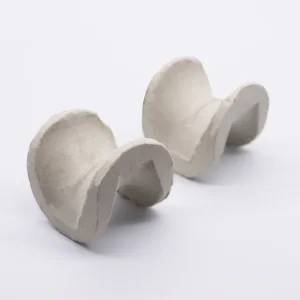
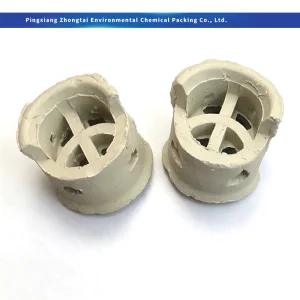
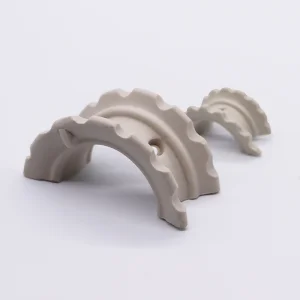
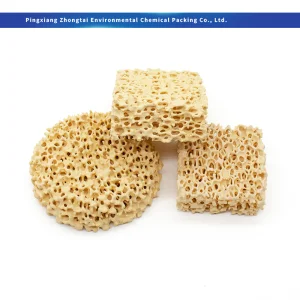
Complete product range of refractory honeycombs, molten metal filters, and acid-resistant column packing rings engineered to international standards.