Engineered for extreme operating environments, mass transfer optimization, and gas-liquid separation.
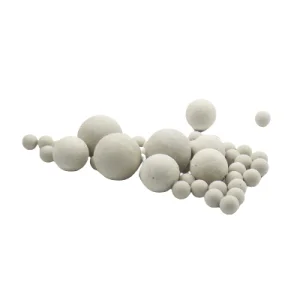
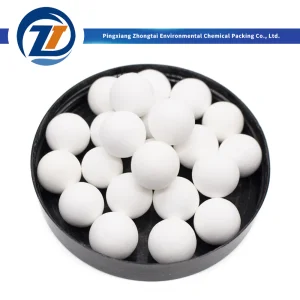
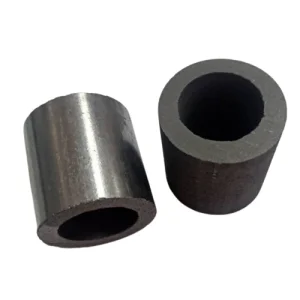
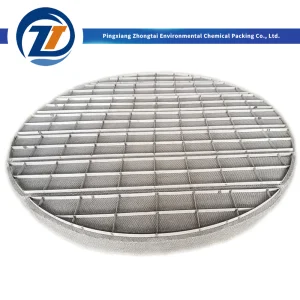
4 Angstrom Molecular Sieve (Zeolite 4A) is an alkali metal aluminosilicate synthesized for selective adsorption at the sub-nanometer scale. Characterized by an effective pore opening of approximately 4 Ångströms (0.4 nm), its sodium-form Type A crystalline framework ($Na_{12}[(AlO_2)_{12}(SiO_2)_{12}]\cdot xH_2O$) admits molecules with kinetic diameters smaller than 4 Å while strictly excluding larger molecular species.
Adsorbs $H_2O$, $CO_2$, $H_2S$, $SO_2$, $NH_3$, $CO$, and saturated hydrocarbons ($CH_4$, $C_2H_6$). Excludes aromatic hydrocarbons and branched chains, rendering it ideal for static and dynamic hydrocarbon gas drying.
Exhibits a steep Type I adsorption isotherm. Maintains high water adsorption capacity even at exceptionally low relative humidity levels ($RH < 10\%$) and elevated operational temperatures up to 100°C.
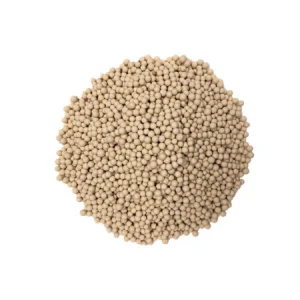
Formulated with high-purity clay binders (attapulgite or kaolin) to deliver superior crush strength (≥30 N for 1.6–2.5mm beads), minimizing bed attrition, dust generation, and operational pressure drop.
Located in Pingxiang, Jiangxi Province—China's world-renowned industrial ceramics and chemical packing cluster—our manufacturing ecosystem integrates raw material synthesis, precision extrusion, automated calcination, and rigorous batch quality assurance under one unified operational footprint.
Our computerized synthesis reactors strictly control silica-to-alumina stoichiometric ratios and crystallization temperature profiles. This ensures 100% phase purity of Type A zeolite crystals without contamination from Type X or amorphous silica phases, guaranteeing predictable adsorption kinetics across every batch.
Utilizing high-capacity, multi-zone temperature-controlled rotary kilns operating at 550°C to 600°C, our activation process drives off structural water while preserving crystal integrity. Inline laser particle counters and moisture analyzers monitor output 24/7 to maintain residual moisture content below 1.0% wt.
By securing direct regional supply lines for high-grade kaolin clay and high-purity sodium silicate within Pingxiang's chemical manufacturing hub, our factory remains immune to upstream raw material bottlenecks, preserving lead-time stability for large-scale international EPC orders.
To prevent pre-hydration during international transit, finished 4A molecular sieves are immediately sealed into airtight steel drums, flexible intermediate bulk containers (FIBCs), or multi-layer moisture-barrier bags with nitrogen purging, ensuring guaranteed out-of-box performance upon site arrival.
Zeolite 4A adsorbents serve as critical process components across energy, HVAC, gas separation, and chemical synthesis sectors worldwide.
Prevents hydrate formation and corrosion in natural gas pipelines and cryo-separation plants. Zeolite 4A dries feed gas down to sub-ppm dew points (–70°C to –100°C) without co-adsorbing heavier hydrocarbons ($C_3+$), maximizing natural gas liquid recovery efficiency.
Dehydrates mobile and stationary refrigeration systems utilizing R-134a, R-410A, and next-gen HFO refrigerants. Protects expansion valves and compressor mechanisms from ice blockage and acid degradation caused by water hydrolysis.
Specially sized 4A beads (0.5–0.9mm / 1.0–1.5mm) absorb trapped air moisture and organic solvents inside double and triple-pane glass units, preventing window fogging, pane distortion, and structural glass failure over 20+ year lifespans.
Functions in twin-tower regenerative heatless or heated pressure swing adsorption (PSA) dryers. Dehydrates industrial instrument air to instrument-grade quality while maintaining ultra-low bed attrition under high cyclic pressure swings.
Activated 4A molecular sieve powder is blended directly into polyurethane formulations, coatings, adhesives, and sealants to neutralize trace moisture, preventing carbon dioxide ($CO_2$) bubble formation and micro-foaming during curing.
Engineering specifications for standard commercial grades of 4 Angstrom Molecular Sieve beads and pellets.
| Property Parameter | Unit | Spherical Bead (1.6 - 2.5 mm) | Spherical Bead (3.0 - 5.0 mm) | Pellet Extrudate (1.6 mm / 3.2 mm) |
|---|---|---|---|---|
| Nominal Pore Diameter | Å (Angstrom) | 4.0 (0.4 nm) | 4.0 (0.4 nm) | 4.0 (0.4 nm) |
| Bulk Density | g/mL (g/cm³) | 0.68 - 0.74 | 0.66 - 0.72 | 0.64 - 0.70 |
| Static Water Adsorption (RH 60%, 25°C) | % wt | ≥ 21.5% | ≥ 21.5% | ≥ 21.0% |
| Static Water Adsorption (RH 10%, 25°C) | % wt | ≥ 15.0% | ≥ 15.0% | ≥ 14.5% |
| Crush Strength (Average) | N / particle | ≥ 35 N | ≥ 85 N | ≥ 35 N/cm |
| Attrition / Wear Rate | % wt | ≤ 0.10% | ≤ 0.10% | ≤ 0.15% |
| Package Moisture (Loss on Ignition 575°C) | % wt | ≤ 1.0% | ≤ 1.0% | ≤ 1.0% |
| Regeneration Temperature | °C | 200°C - 250°C | 200°C - 250°C | 200°C - 250°C |
| Zeolite Grade | Pore Opening | Molecules Adsorbed | Primary Industrial Applications |
|---|---|---|---|
| Zeolite 3A | ~3 Å | $H_2O$, $NH_3$, $He$ (Excludes molecules > 3Å) | Cracked gas dehydration, ethylene drying, insulated glass. |
| Zeolite 4A | ~4 Å | $H_2O$, $CO_2$, $H_2S$, $SO_2$, $C_2H_6$, $C_2H_4$ | Natural gas drying, refrigerant dehydration, air PSA dryers. |
| Zeolite 5A | ~5 Å | n-paraffins ($C_4-C_{14}$), $H_2$, $N_2$, $O_2$ | Iso/normal paraffin separation, PSA hydrogen purification. |
| Zeolite 13X | ~10 Å | Mercaptans, large hydrocarbons, $CO_2$, $H_2O$ | Air separation cryogenic prepurification, mercaptan removal. |
As global carbon-neutral mandates and process intensification requirements accelerate, our engineering teams are pioneering advanced molecular sieve architectures.
Traditional molecular sieves incorporate 20% inert clay binder, which contributes zero adsorption capacity. Our binderless synthesis converts the clay matrix directly into active Type A crystalline structures, raising dynamic water capacity by 15–18% per cubic meter of vessel fill.
By engineering intercrystalline mesopores (2–10 nm) within microporous zeolite 4A crystals, mass transfer resistance is drastically reduced. This enables rapid adsorption/desorption cycles in fast-swing PSA energy storage systems with minimal thermal energy penalties.
Surface chemistry modification reduces the adsorption enthalpy barrier of residual water molecules, enabling complete bed reactivation at 150°C–180°C (compared to traditional 250°C), reducing refinery steam consumption by up to 25%.
We support global engineering contractors (EPCs) and plant operators with end-to-end technical backup, custom bed dimension modeling, and full international regulatory compliance.
Manufactured under strict ISO 9001:2015 quality management systems and ISO 14001:2015 environmental standards. Fully compliant with EU REACH regulations, RoHS directives, and OSHA industrial chemical handling standards.
Our dedicated mass transfer engineers evaluate customer stream compositions, gas flow rates, pressure drops, and dew point targets to recommend exact vessel packing heights, zone grading, and bed support layer designs.
Flexible packaging options tailored for export logistics: 25 kg multi-wall paper bags with PE liners, 150 kg hermetically sealed air-tight steel drums, or 800 kg heavy-duty super-sacks mounted on ISPM-15 compliant pallets.
We provide remote engineering assistance during vessel loading, dense phase packing supervision guidance, pre-commissioning dry-outs, and post-turnaround sample lab performance testing.
Discover our comprehensive industrial catalogue designed for refineries, gas plants, water treatment, and foundries.
Detailed answers regarding molecular sieve selection, regeneration procedures, operational lifespan, and factory audit verification.
The primary difference lies in their effective crystalline pore opening sizes, determined by cation exchange during synthesis:
Thermal reactivation (desorption) of 4A molecular sieve beds requires heating the bed to a purge gas temperature of 200°C to 250°C (392°F – 482°F). A dry purge gas (such as nitrogen or dried product gas with dew point < –40°C) should flow through the bed in a direction counter-current to the adsorption cycle. Bed heating should follow a controlled temperature ramp (approx. 2°C–3°C per minute) to avoid thermal shock, followed by a cooling sweep down to ambient process temperature prior to re-pressurization.
Because Zeolite 4A has a strict 4.0 Å aperture cutoff, it excludes branched hydrocarbons, aromatics (benzene, toluene), and alkanes heavier than propane ($C_3+$). However, if liquid hydrocarbons or heavy lubricating oils carry over into the desiccant vessel due to inadequate upstream mist elimination, oil coking can occur on the bead exterior during high-temperature thermal regeneration cycles, blinding the surface pores. Installing effective upstream coalesce filter separators is strongly recommended.
In standard natural gas dehydration or instrument air PSA units operated under design thermal regeneration cycles, high-quality 4A molecular sieves deliver an operational lifespan of 3 to 5 years (typically 3,000 to 8,000 thermal cycles). Key factors influencing lifetime include feed gas cleanliness, steam or liquid water slug prevention, mechanical crushing avoidance, and adherence to maximum regeneration heating limits.
Every production run undergoes systematic quality control testing according to ASTM and GB standard protocols. We measure bulk density, gravimetric static water adsorption capacity at 10% and 60% relative humidity, attrition loss via rotary drum test (ASTM D3802), single-bead crush strength across a sample size of 50 beads, and residual package moisture (Loss on Ignition at 575°C). Certified Material Test Reports (CMTR) and Certificates of Analysis (CoA) accompany all international shipments.
Yes. We welcome international engineering buyers, plant operators, and accredited third-party inspection agencies (SGS, BV, Intertek, TÜV) to audit our Pingxiang manufacturing facility. We provide complete access to raw material testing logs, rotary kiln calcination records, packaging lines, and independent laboratory testing equipment.
Contact our chemical process engineers for detailed datasheets, custom bed sizing calculations, sample evaluation kits, or competitive factory-direct pricing for your next plant turnaround.
