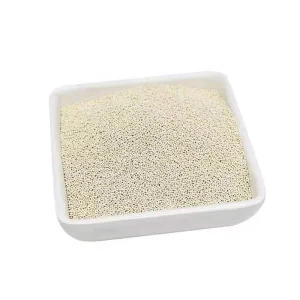
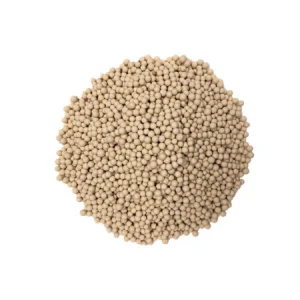
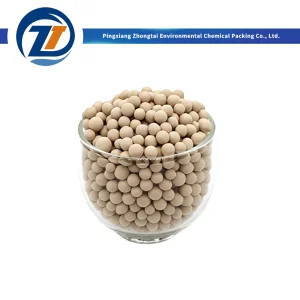
High-Capacity Synthetic Zeolites (3A, 4A, 5A, 13X, APG) Engineered for Renewable Fuel Refining, Biomethane Upgrading, Cryogenic Air Separation & Maritime Decarbonization in Western Sweden.
Precision-synthesized crystalline aluminosilicates optimized for low-dewpoint gas drying, oxygen concentration, and hydrocarbon separation.
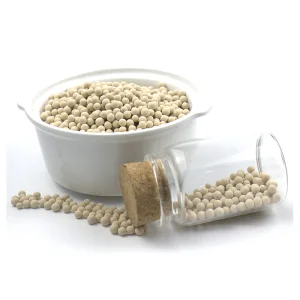
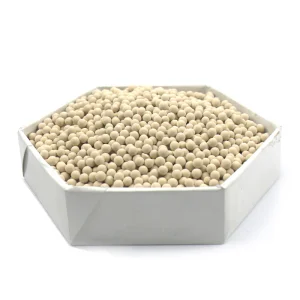
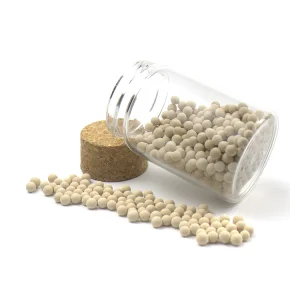
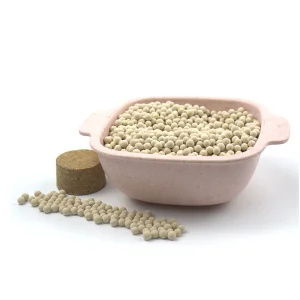
As the industrial heartland of Western Sweden and the site of Scandinavia’s largest port, Gothenburg (Göteborg) stands at the absolute epicenter of Northern Europe's green transition. The region’s aggressive push toward carbon neutrality by 2030 has fundamentally altered the technical demands placed on chemical processing media, separation adsorbents, and mass transfer packings.
From the major refinery complexes along the Göta Älv river (such as Preemraff Gothenburg and St1) transitioning rapidly to HVO (Hydrotreated Vegetable Oil) and SAF (Synthetic Aviation Fuel) production, to the burgeoning biomethane grid feeding into the regional gas distribution systems, clean molecular adsorption has become a critical unit operation. Industrial facilities across the Västra Götaland region require synthetic zeolite adsorbents engineered with extreme mechanical durability, precise pore diameter distributions, and zero hydrothermal degradation under rapid swing adsorption cycles.
Industrial operations situated along the Kattegat coastline contend with high ambient relative humidity (averaging 80-88% during Nordic autumn and winter months). When ambient air is drawn into high-pressure compression systems for industrial gas production or maritime LNG/LBG boil-off gas handling, moisture load spikes dramatically. Conventional desiccants experience early breakthrough. Factory-direct 3A, 4A, and 13X-APG Molecular Sieves supplied to Gothenburg must provide sustained pressure dew points below -80°C (-112°F) to prevent hydrate formation in cryogenic cold boxes and pipeline corrosion in green hydrogen distribution networks.
The procurement requirements for molecular sieves in Gothenburg differ significantly from standard commodity markets. Applications are heavily weighted toward high-reliability green technology infrastructure:
Preem and St1 refinery revamps require specialized 3A and 4A adsorbents for ultra-deep drying of bio-feedstocks, renewable naphtha, and recycled hydrogen streams prior to catalytic hydrodeoxygenation.
Västra Götaland’s agricultural and municipal anaerobic digestion facilities utilize 4A and 13X molecular sieves to scrub $CO_2$, $H_2S$, and moisture, elevating raw biogas to >98% pure bio-LNG vehicle fuel.
The Port of Gothenburg’s bunker terminals and regional air separation units (Linde/AGA, Air Liquide) rely on 13X-APG beds to remove traces of $CO_2$ and hydrocarbons to ppb levels before cryogenic distillation.
The global molecular sieve market is undergoing a structural shift. Driven by net-zero mandates, hydrogen economy scaling, and stricter industrial emission standards, the demand for synthetic zeolites has expanded beyond traditional petroleum cracking into specialized separation media. However, process engineers in Gothenburg face a critical supply chain challenge: balancing cost efficiency with strict adherence to ISO 9001 quality controls, REACH compliance, and batch-level physical stability guarantees.
Molecular sieves are crystalline, hydrated alkali metal aluminosilicates belonging to the zeolitic family. Their dynamic structure consists of three-dimensional networks of $SiO_4$ and $AlO_4$ tetrahedra linked through shared oxygen atoms. The chemical formula for Type A molecular sieves is structurally represented as:
Where Me represents exchangeable cations ($Na^+$, $K^+$, $Ca^{2+}$) that dictate the effective pore aperture diameter:
In high-throughput industrial adsorbers—such as those operating in Gothenburg’s natural gas peak-shaving facilities—bead attrition and dusting are primary operational risks. When molecular sieve beads crumble under rapid bed pressure swings (PSA/VPSA) or thermal thermal cycles (TSA), fine particles migrate downstream, plugging dust filters, damaging compressor turbines, and creating severe bed channeling.
As a specialized manufacturer, Zhongtai Environmental Chemical Packing Co., Ltd. addresses these kinetic failure modes through advanced binder optimization (utilizing high-purity kaolin/attenuated clay matrices) and precision rotary calcination. This yields synthetic zeolite beads with crush strengths exceeding 80 N/bead for 3-5mm sizes and attrition rates below 0.1% by weight under ASTM D4058 testing.
Standardized physical, thermal, and kinetic adsorption parameters for Gothenburg engineering selection.
| Property Parameter | Zeolite 3A | Zeolite 4A | Zeolite 5A | Zeolite 13X | Zeolite 13X-APG |
|---|---|---|---|---|---|
| Nominal Pore Size | 3 Å (0.3 nm) | 4 Å (0.4 nm) | 5 Å (0.5 nm) | 10 Å (1.0 nm) | 10 Å (1.0 nm) |
| Cation Base Matrix | Potassium ($K^+$) | Sodium ($Na^+$) | Calcium ($Ca^{2+}$) | Sodium ($Na^+$) | High-Purity Sodium |
| Bulk Density (g/ml) | 0.70 – 0.74 | 0.68 – 0.72 | 0.68 – 0.73 | 0.64 – 0.68 | 0.66 – 0.70 |
| Static Water Adsorption (25°C, 60% RH) | ≥ 21.5% | ≥ 22.0% | ≥ 21.5% | ≥ 24.0% | ≥ 25.5% |
| CO₂ Adsorption Capacity | Excluded | ≥ 17.0% | ≥ 18.0% | ≥ 18.0% | ≥ 19.5% (Trace Level) |
| Crush Strength (Spherical, 3-5mm) | ≥ 75 N / bead | ≥ 70 N / bead | ≥ 75 N / bead | ≥ 65 N / bead | ≥ 80 N / bead |
| Attrition Rate (% wt) | ≤ 0.10% | ≤ 0.10% | ≤ 0.12% | ≤ 0.15% | ≤ 0.08% |
| Regeneration Temp Range | 175°C – 230°C | 200°C – 250°C | 200°C – 300°C | 200°C – 310°C | 200°C – 320°C |
| Primary Application Duty | Cracked Gas, Ethanol, Bio-fuel drying | Compressor air, dynamic gas drying | H₂ Purification, Normal/Iso Paraffin separation | Solvent purification, PSA Oxygen | Cryogenic ASU pre-purification ($CO_2/H_2O$) |
In Western Sweden’s biorefineries, tallow, used cooking oil (UCO), and tall oil are hydrotreated at elevated temperatures and pressures. Free moisture and bound water in the feed organic matrix can cause severe catalyst deactivation in hydrodeoxygenation reactors. By deploying Zhongtai 3A Molecular Sieve bed guard columns, moisture content is stripped from up to 5,000 ppm down to < 5 ppm prior to catalyst exposure, extending precious-metal catalyst bed life by up to 300%.
Biogas plants operating in regional hubs such as Falköping and Borås—feeding directly into the Gothenburg gas grid—require continuous removal of $CO_2$ and trace siloxanes. A multi-bed VPSA system utilizing a layered bed of Activated Alumina (bottom layer) and Zeolite 13X-APG / 5A (top layer) guarantees that raw gas with 40% $CO_2$ is upgraded to vehicle-grade bio-methane with >99% $CH_4$ recovery and zero dew-point freezing risk during cold Nordic winter injections.
The Port of Gothenburg leads Europe in green maritime fuels, including liquid biogas (LBG) and green methanol. Cryogenic liquefaction plants require absolute elimination of $CO_2$ (down to < 1 ppm) and $H_2O$ (down to < 0.1 ppm) to prevent severe ice/dry-ice blockages inside heat exchangers operating at -170°C. Zhongtai 13X-APG Molecular Sieve features exceptional mass-transfer zone dynamics, enabling shorter bed heights and smaller footprint vessel designs for marine and onshore installations.
With Gothenburg serving as Sweden's automotive technology hub, battery manufacturing dry-rooms require atmospheric moisture control down to a dew point of -60°C to -70°C PDP. High-capacity 4A Molecular Sieve desiccant wheels and dual-tower desiccant air dryers supply continuous ultra-dry air, preventing lithium degradation and thermal runaway risks during cell assembly.
Two decades of dedicated synthetic zeolite synthesis, mass transfer media manufacturing, and global export excellence.
As industrial process requirements evolve toward lower energy consumption and zero-carbon emissions, molecular sieve design is undergoing radical innovation.
Traditional molecular sieve beads contain 15-20% non-adsorptive clay binders. Emerging binderless zeolite technology converts the clay matrix directly into active zeolite crystals. This provides a 20% increase in working adsorption capacity and significantly reduces the heat input required for TSA regeneration, cutting factory energy costs in half.
To support Gothenburg’s target of net-zero port operations, modified 13X and mesoporous silica-zeolite hybrids are being deployed for Carbon Capture and Storage (CCS). These tailored adsorbents offer ultra-fast adsorption kinetics and high selectivity for $CO_2$ over nitrogen under atmospheric pressures.
Achieving calculated design performance in Gothenburg industrial adsorbers requires strict adherence to bed loading standards. Improper loading causes void spaces and fluidization during startup:
Technical, logistical, and operational answers for procurement managers and process consultants.
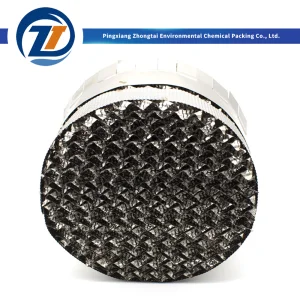
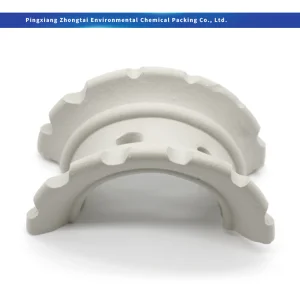
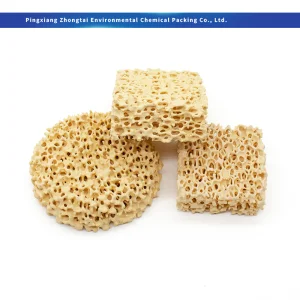
Full range of high-efficiency molecular sieves, structured tower packings, and ceramic filter media.