Engineered for extreme thermal stability, chemical inertness against sour hydrocarbons, and high compressive resistance across Omani petrochemical installations.
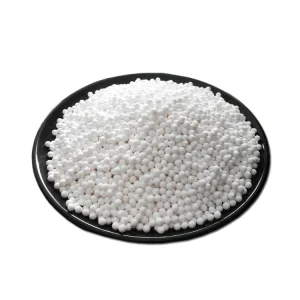
Ultra-high macroporous volume designed for regenerative natural gas dehydration units and air separation plants across Khazzan and Fahud fields.
Explore Technical Specs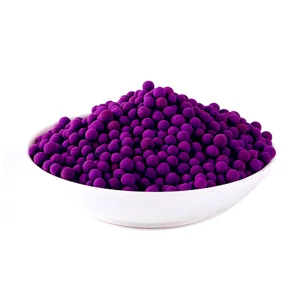
Specialized chemical filtration media formulated for chemisorption of hydrogen sulfide (H2S), sulfur dioxide, and toxic mercaptans in Gulf coastal refineries.
Explore Technical Specs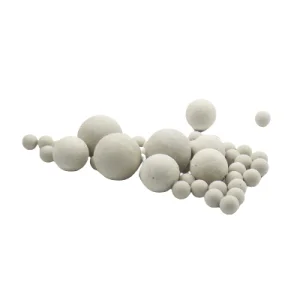
Economical and robust structural hold-down and support media for secondary hydrocarbon reactors, Claus sulfur units, and non-critical petrochemical towers.
Explore Technical Specs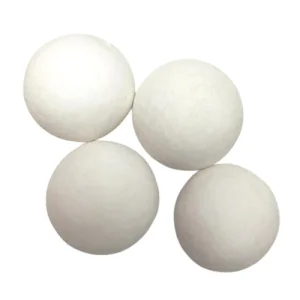
The international benchmark for hydrocracking and hydrotreating support beds, exhibiting less than 1% water absorption and high mechanical crush tolerance.
Explore Technical SpecsOman's downstream hydrocarbon processing landscape is experiencing transformative structural expansion underpinned by the strategic mandates of Oman Vision 2040. As the Sultanate accelerates economic diversification away from unrefined crude exports toward high-margin petrochemical derivatives, refining complexes such as the Duqm Refinery (OQ8), with a design processing throughput of 230,000 barrels per stream day (BPSD), have reshaped Gulf refining dynamics.
Within this rigorous operating framework, the continuous, uninterrupted operation of catalytic reactors—such as Hydrocracker Units (HCU), Diesel Hydrotreaters (DHT), Kerosene Hydrotreaters (KHT), and Fluid Catalytic Crackers (FCC)—hinges upon the uncompromising structural integrity of inert ceramic packing and bed support systems.
In locations spanning from the deep-desert gas fields of Khazzan and Mabrouk (managed by BP and OQ) to the coastal industrial powerhouses of the Port of Sohar Industrial Complex and the Salalah Free Zone, process chemical engineers confront extreme operational challenges: high concentrations of sour gas (H₂S and CO₂), intense cyclic thermal gradients, and aggressive particulate scouring.
Steam Injection Enhanced Oil Recovery (EOR) in regions like Amal and Mukhaizna generates extreme downhole and surface thermal swings. Ceramic support media utilized in related heat recovery and gas sweetening facilities require exceptional thermal shock resistance (>750°C rapid cycle quench) without spalling or micro-cracking.
The emergence of SEZAD as a central bunkering and refining crossroad requires strategic warehouse stocking and immediate turnaround capability. Direct bulk maritime shipments from China's specialized chemical ceramics clusters directly into Port of Duqm and Port of Sohar minimize procurement lead-times for annual turnaround outages.
When specifying inert alumina ceramic balls for sour gas processing and high-pressure hydrogenation columns, procurement officers must balance chemical leaching risks against cold crushing strength (CCS).
Under high-temperature steam environments (>400°C) found in hydrocracker units, free silica (SiO₂) from substandard support balls vaporizes and deposits onto downstream catalysts, permanently poisoning noble active metal sites. Our 99% Al₂O₃ formulations guarantee leachable SiO₂ < 0.1%, protecting multi-million-dollar catalyst beds.
Deep reactor columns (exceeding 25-meter heights) exert monumental hydrostatic and dynamic mechanical burdens. Our engineered isostatic pressing and high-temperature calcination processes yield cold crushing ratings exceeding 25 kN/sphere for 2-inch support media, eliminating fines generation and pressure-drop surges.
Every production run delivered to Omani ports is backed by comprehensive 3.1 Mill Test Certificates (MTC), chemical spectrometry via XRF, and third-party inspection dossiers (SGS/Bureau Veritas). We work closely with local Omani EPC entities to satisfy technical prequalification criteria and vendor registration requirements.
| Alumina Grade Class | Al₂O₃ Content (%) | Bulk Density (g/cm³) | Water Absorption (%) | Cold Crush Strength (kN/particle @ 25mm) | Primary Industrial Service in Oman |
|---|---|---|---|---|---|
| Standard Support | 17% – 23% | 1.35 – 1.45 | < 2.5 | > 5.5 | Non-critical support, secondary gas scrubbers, air filtration beds |
| Standard Inert Ball | 23% – 30% | 1.40 – 1.55 | < 1.5 | > 7.0 | Atmospheric and vacuum distillation bottom hold-down, amine scrubbers |
| Medium-High Alumina | 50% – 75% | 1.60 – 1.85 | < 1.0 | > 11.0 | Claus sulfur recovery converters, sour gas sweetening, primary hydrotreating |
| High Purity Alumina | 90% – 95% | 2.00 – 2.15 | < 0.5 | > 18.0 | Hydrocrackers, deep thermal cracking reactors, catalytic reforming units |
| Ultra-High Inert Media | ≥ 99.5% | 2.10 – 2.30 | < 0.2 | > 24.0 | Steam methane reformers (SMR), ammonia synthesis, high-pressure hydrogen service |
Technical consultation, customized gradation plans, and immediate CIF Sohar/Salalah rate structures.
Pingxiang, located in Jiangxi Province, China, is widely recognized across chemical engineering circles as the premier epicenter of industrial mass transfer media and advanced industrial ceramics. Housing an integrated value chain encompassing raw mineral kaolin mining, high-pressure isostatic forming equipment, precision die manufacturing, and automated high-temperature tunnel kilns, this specialized industrial cluster affords distinct structural advantages to Omani chemical purchasers:
Statistically representative sample batches subjected to hydraulic axial compressive loads per ASTM C515 protocols.
Submersion in boiling 70% sulfuric acid for 48 hours to confirm zero surface degradation and minimal mass depletion (<0.5%).
Repeated heating to 850°C followed by immediate ice-water quenching across 10 complete cycles to verify microstructural toughness.
Open container access provided for client-appointed inspectors (SGS, TUV, BV) with complete moisture-barrier palletizing.
Proven ceramic support configurations, catalyst bed hold-down layers, and mass transfer packings engineered for Oman's most challenging chemical regimes.
Graded packing systems utilizing 1/8", 1/4", 1/2", 1", and 2" inert ceramic balls arranged progressively to uniformly distribute incoming heavy gas-oil liquid streams while preventing active catalyst entrainment under differential pressure.
High-density refractory and heat storage ceramic balls deployed inside cyclic regenerative steam generators across the South Oman salt basins, surviving aggressive oxidation and extreme temperature fluctuations.
Porous and perforated ceramic support spheres engineered to disperse high-sulfur acid gas streams, resisting corrosive SO₂/H₂S attack while mitigating thermal spalling within downstream tail-gas catalytic clean-up beds.
Combined installation of 3A/4A/13X molecular sieves flanked by high-crush inert alumina balls at bed top and bottom to eliminate gas pulsation damage in export pipelines feeding Oman LNG at Qalhat.
Specialized ceramic filter spheres and dechlorination media utilized in pre-treatment intake filtration for SWRO (Seawater Reverse Osmosis) plants at Barka, Sohar, and Ghubrah, protecting polyamide membranes.
Ultra-wear-resistant 92% Al₂O₃ grinding spheres serving high-capacity ball mills across Oman's thriving limestone, gypsum, and cement production facilities in Raysut and the Sohar industrial corridor.
As the Sultanate positions itself as a premier global exporter of green hydrogen and ammonia through Hydrom awards, industrial ceramic media requirements are rapidly evolving.
Oman's ambitious hydrogen target of 1 to 1.25 million tonnes per annum by 2030 demands massive infrastructure investments in Ammonia Synthesis Units, Carbon Capture and Storage (CCS), and High-Temperature Regenerative Oxidizers. The ceramic packings supporting these next-generation reactors must deliver zero catalytic interference under hyper-pure hydrogen flows.
Concurrently, industrial emissions compliance across the Duqm and Sohar petrochemical corridors has mandated the installation of Regenerative Thermal Oxidizers (RTOs). Our specialized high-density heat storage ceramic balls and honeycomb monoliths provide the thermal inertia required to recover up to 95% of waste heat, drastically slashing gas consumption in industrial processing furnaces.
Direct answers to the most common questions raised by refinery project engineers, turnaround planners, and procurement directors in the Gulf region.
Comprehensive specifications matching every duty: from high-temperature RTO regenerative storage to wear-resistant industrial clinker grinding in Oman.
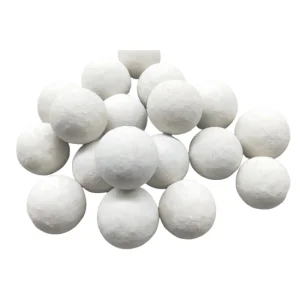
Economical balance of crushing resistance and chemical passivity for fertilizer, ammonia, and chemical scrubbing columns in Sohar Freezone.
Explore Technical Specs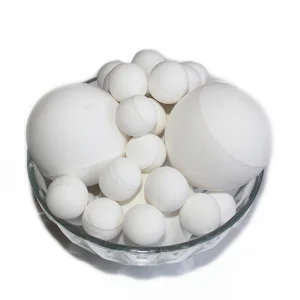
Ultra-pure alpha-alumina phase with negligible silica leaching (<0.1%). Mandatory for severe hydrocracking and hydrogen plants in Duqm OQ8.
Explore Technical Specs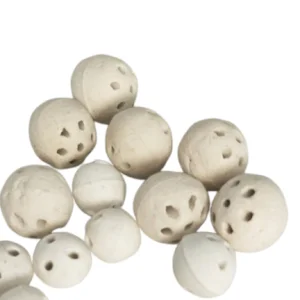
Engineered with high controlled porosity (20–30%) to filter particulate impurities and carbon scale upstream of active catalyst beds.
Explore Technical Specs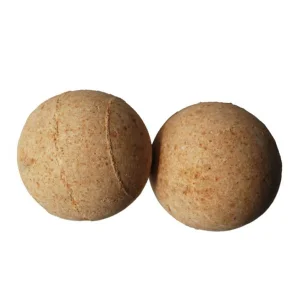
Formulated to endure sustained working temperatures exceeding 1400°C without plastic deformation or surface sintering in refinery reformers.
Explore Technical Specs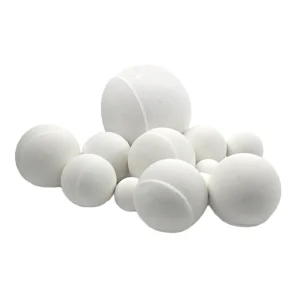
Exceptional Mohs hardness (9.0) and negligible wear loss designed for ultrafine milling of Omani clinker, quartz, and mineral slurry.
Explore Technical Specs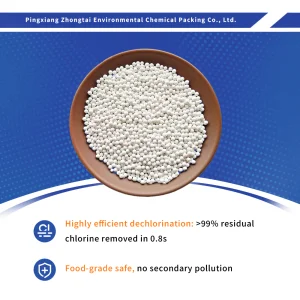
High-speed chlorine neutralization media protecting reverse osmosis filtration membranes in Barka and Salalah municipal desalination works.
Explore Technical Specs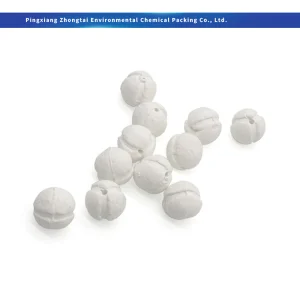
Featuring a central channel that reduces overall bed pressure drop by up to 28% while enhancing radial vapor-liquid flow uniformity.
Explore Technical Specs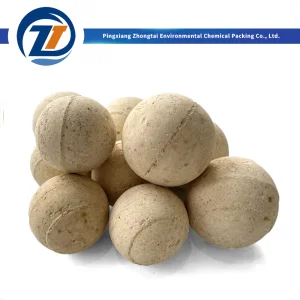
Optimized volumetric heat capacity for volatile organic compound (VOC) incinerators and thermal regenerative oxidizers across Oman plastics plants.
Explore Technical SpecsWhether you are designing a new catalyst bed layout for Duqm, planning an annual shutdown in Mina Al Fahal, or replenishing grinding media stock in Sohar, our technical sales engineers provide rapid CAD loading diagrams, crushing test data, and competitive CIF container pricing.
Send Inquiry Now