Engineering Whitepaper & Procurement Directory: High-Efficiency Polymer Mass Transfer Media, Hydrodynamics, Materials Science & Global OEM Supply Systems
Engineered for low pressure drop, maximum operational flux, and extreme chemical durability across global processing plants.
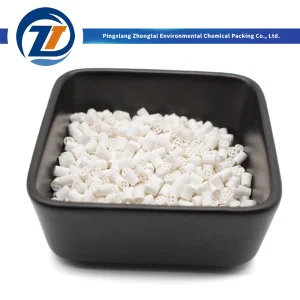
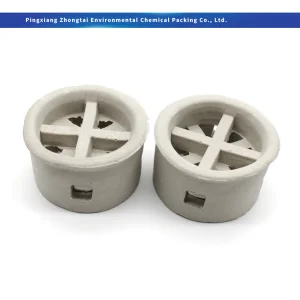
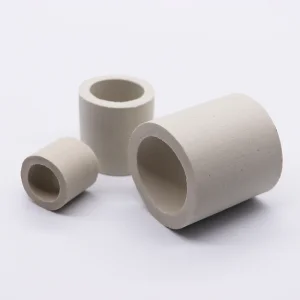
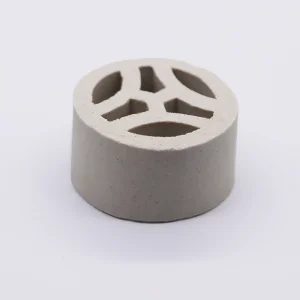
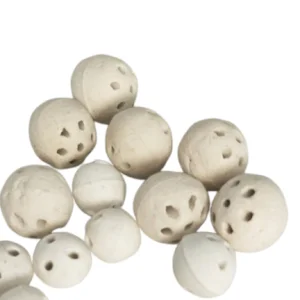
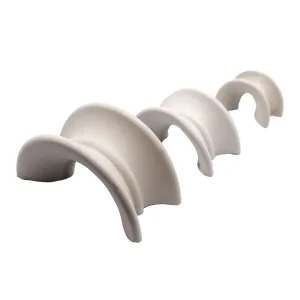
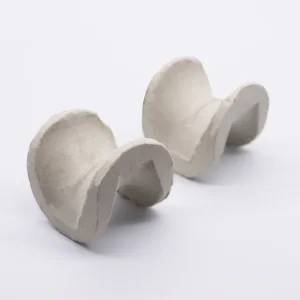
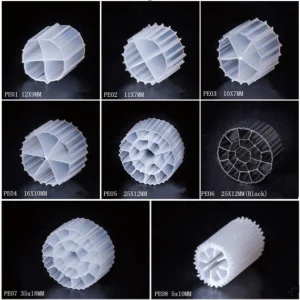
Understanding the transition toward thermoplastic mass transfer media in modern chemical process industries (CPI).
Global decarbonization mandates have forced chemical plants, refineries, and gas treating facilities to optimize mass transfer columns. Modern polymer random packings reduce column pressure drop by up to 40% compared to legacy ceramic rings, directly lowering reboiler energy requirements and blower power consumption.
In aggressive scrubbing applications involving wet chlorine ($Cl_2$), hydrochloric acid ($HCl$), and hydrofluoric acid ($HF$), metallic packings suffer rapid pitting and stress corrosion cracking. Engineered thermoplastics (PVDF, CPVC, PTFE) provide complete chemical immunity at a fraction of the cost of exotic alloys like Hastelloy C-276 or Titanium.
Thermoplastic random packing boasts a bulk density ranging between 45 kg/m³ and 150 kg/m³, which is roughly 80% lighter than ceramic packing and 85% lighter than stainless steel. This massive weight reduction slashes column shell thickness requirements, foundation civil work costs, and crane rental fees during turnarounds.
Geometric optimization, mass transfer efficiency ($K_L a, K_G a$), and hydraulic capacity control.
| Packing Geometry Type | Primary Polymer Grades | Specific Surface Area ($m^2/m^3$) | Void Fraction ($\epsilon$) | Key Hydrodynamic Advantage |
|---|---|---|---|---|
| Plastic Pall Ring | PP, RPP, PE, PVC, PVDF | 110 – 225 | 88% – 92% | Internal spatial fingers allow high gas velocity and uniform liquid distribution. |
| Plastic Super Intalox Saddle | PP, RPP, CPVC, PVDF | 90 – 190 | 90% – 94% | Scalloped edges eliminate liquid pooling and lower pressure drop ($\Delta P$). |
| Plastic Cascade Mini Ring (CMR) | PP, RPP, PE | 120 – 240 | 92% – 95% | Low aspect ratio (height-to-diameter = 1:3) forces vertical orientation, minimizing liquid hold-up. |
| Plastic Tri-Pak Spherical Packing | PP, RPP, PE, PVC | 85 – 160 | 93% – 96% | Symmetrical rib network eliminates nesting and channeling in gas scrubbers. |
| Conjugated Ring & Polyhedral Ball | PP, PE, PVC | 100 – 210 | 89% – 93% | Optimized for biofilm attachment in MBBR wastewater and water degassing. |
In packed column mass transfer, performance is governed by the Stichlmair Hydrodynamic Model. The pressure drop of gas flowing counter-currently against liquid spray is mathematically represented by:
Where ΔP/L represents pressure drop per meter of packing depth, a_p is specific surface area, ε is dry bed porosity, u_g is superficial gas velocity, and h_L is liquid hold-up. By maximizing the void fraction (ε > 92%) through open-work polymer wall designs (such as internal cross-ribs and window apertures), manufacturers achieve a higher Hydraulic Flooding Point, allowing process plants to increase throughput by 20% to 35% without incurring column flooding.
Selecting the right resin to prevent thermal deformation, oxidative degradation, and chemical stress cracking.
Max Operating Temperature: PP: 90°C (194°F) | RPP: 125°C (257°F)
Chemical Resistance: Excellent against non-oxidizing acids, alkalis, and inorganic salts. RPP incorporates 15-20% glass-fiber reinforcement, doubling tensile strength and eliminating creep under heavy packing bed heights.
Max Operating Temperature: PVC: 60°C (140°F) | CPVC: 95°C (203°F)
Chemical Resistance: Outstanding resistance to strong oxidizers, wet chlorine gas, sodium hypochlorite ($NaOCl$), and nitric acid. Self-extinguishing fire ratings make CPVC ideal for refinery air strippers.
Max Operating Temperature: 150°C (302°F)
Chemical Resistance: Premium fluoropolymer suitable for high-temperature extreme service. Resistant to elemental halogen gases, concentrated sulfuric acid ($H_2SO_4$), aromatic hydrocarbons, and nuclear radiation environments.
Real-world deployment matrix across petrochemical processing, environmental scrubbing, and water infrastructure.
In chlor-alkali manufacturing plants across North America and Western Europe, chlorine gas generated at the membrane cell exit must be dried with concentrated sulfuric acid and scrubbed with cold caustic soda. PVDF Pall Rings (25mm and 38mm) are specified to withstand continuous exposure to wet $Cl_2$ gas and hypochlorite solutions without brittle oxidation failure.
Natural gas processing units in the Gulf Cooperation Council (GCC) region utilize 50mm RPP Super Intalox Saddles in absorber columns operating with MDEA (methyldiethanolamine). The high voidage minimizes hydrocarbon condensation foaming while providing high turndown flexibility under fluctuating feed gas pressures.
Municipal water authorities and industrial chemical parks employ Plastic Tri-Pak and Polyhedral Hollow Spheres in packed-bed stripping towers to eliminate Volatile Organic Compounds (VOCs), hydrogen sulfide ($H_2S$), and ammonia ($NH_3$) from effluents before environmental discharge.
Turnkey column modernization: Transitioning from legacy tray columns to packed towers.
A mass transfer tower is only as effective as its internal distribution system. Simply dumping high-performance plastic random packing into a vessel will result in severe operational failure if liquid distributor design, wall flow deflectors, and bed support plates are neglected.
Plastic random packings require an initial drip density of at least 42 to 60 drip points per square meter. Trough-type or pipe-orifice liquid distributors fabricated from matching PP, PVC, or PVDF prevent initial liquid maldistribution and liquid wall channeling.
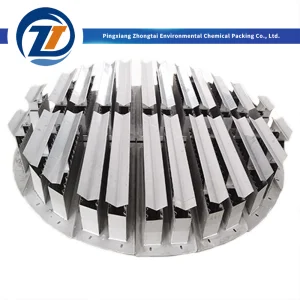
Traditional flat perforated plates restrict gas upflow, creating local flooding at the packing interface. Multi-beam gas injection support plates provide separate passage routes for downflowing liquid and upflowing gas, maintaining 100% of the packing's inherent hydrodynamic capacity.
Because thermoplastic packings have low specific gravity, sudden pressure surges or gas phase upset conditions can cause bed expansion and packing fluidization. Lightweight plastic grid bed limiters secured to the column shell keep the packed bed compressed and structurally stable.
Pioneering advancements in CFD design, surface modification, and circular polymer economies.
Emerging random packing geometries utilize micro-texture grooves and variable-thickness ribs designed via 3D CFD modeling. These micro-features break liquid surface tension, promoting uniform film spreading even at low liquid irrigation rates ($L < 5 m^3/m^2\cdot h$).
Aligning with global ESG mandates, manufacturers are certifying mass-balanced bio-polypropylene and post-industrial recycled resins for non-critical scrubbing applications, reducing the carbon footprint of chemical column turnarounds by up to 60%.
Because virgin polymers possess hydrophobic surface properties (high liquid contact angle), novel cold-plasma treatments are applied post-injection molding. This permanently increases surface energy, enabling instantaneous wetting during column commissioning.
Understanding price structures per cubic meter ($/m³) and cost drivers in B2B chemical packing purchasing.
| Product Line / Geometry | Material Grade | Estimated Wholesale Price Range (USD / m³) | Primary Commercial Cost Drivers |
|---|---|---|---|
| Standard Pall Rings (25mm - 50mm) | 100% Virgin PP | $180 – $320 / m³ | Polypropylene resin spot market price, automated injection mold cavity count. |
| Reinforced Pall Rings (50mm - 76mm) | RPP (Glass-Filled) | $240 – $410 / m³ | Fiberglass compounding cost, thermal stabilizer package, increased wall thickness. |
| Super Intalox Saddles (#1 - #3) | Virgin PP / RPP | $210 – $390 / m³ | Complex mold ejection mechanics, scalloped edge rib retention. |
| Specialty Acid-Proof Packing | CPVC / PVC | $450 – $780 / m³ | Chlorinated resin density, specialized anti-corrosion mold steels. |
| High-Temperature Corrosion Packing | 100% Pure PVDF | $1,800 – $3,200 / m³ | High raw fluoropolymer resin costs, specialized processing temperatures (300°C+). |
*Disclaimer: Quotations fluctuate based on raw polymer index pricing (ICIS/S&P Platts), total volume ordered, custom color masterbatches, and container sea freight rates.
Direct, engineering-backed answers to critical tower specification and purchasing queries.
Explore structured wire gauze, ceramic foam, bio-reactors, and high-strength proppant lines.