Explore our top-tier mass transfer, ceramic filtration, and water processing solutions exported globally from our Pingxiang manufacturing base.
Understanding the crystalline selectivity, adsorption kinetics, and thermodynamic properties of synthetic zeolites in moisture abatement.
Synthetic molecular sieves are crystalline alkali metal aluminosilicates possessing three-dimensional interconnecting networks of silica (SiO₄) and alumina (AlO₄) tetrahedra. This uniform pore architecture provides targeted molecular separation based on precise kinetic diameter differentials.
Water molecules ($H_2O$, kinetic diameter ~2.65 Å) possess a strong dipole moment. The electrostatic cations ($K^+$, $Na^+$, $Ca^{2+}$) residing within the zeolite crystal lattice generate intense local electric fields, drawing water vapor into the internal cavities with high heat of adsorption.
Unlike silica gel or activated alumina, molecular sieves maintain extraordinary static equilibrium water capacity even at extremely low relative humidities ($<10\%$). This enables process engineers to achieve effluent moisture dew points below -100°C (-148°F).
Macroeconomic drivers shaping bulk molecular sieve procurement across energy, refining, environmental, and gas separation sectors worldwide.
As global energy transformation accelerates and industrial purity mandates tighten, demand for high-performance desiccant media has reached unprecedented levels. Molecular sieves engineered for water removal form the operational core of multi-billion-dollar processing infrastructure—preventing pipeline hydrate formation, protecting cryogenic heat exchangers from freezing, and ensuring strict compliance with moisture specifications in green hydrogen, LNG, and biofuel supply chains.
With massive expansion in US Gulf Coast LNG export terminals and shale gas processing facilities, high-capacity desiccant beds (specifically Molecular Sieve 3A and 4A) are vital. Moisture levels must be reduced to $<0.5\text{ ppm}_v$ to prevent catastrophic ice blockage in aluminum plate-fin heat exchangers during liquefaction at -162°C.
European REPowerEU initiatives have spurred investments in anaerobic digestion biomethane plants and green hydrogen electrolyzers. Molecular sieves provide energy-efficient Pressure Swing Adsorption (PSA) moisture removal, delivering fuel-grade purity ($>99.9\%$) compliant with grid injection standards.
Asia-Pacific remains the largest wholesale consumer of zeolite adsorbents, led by megawatt-scale ethylene steam crackers, aromatics complexes, and semiconductor gas purification plants in China, South Korea, and Southeast Asia. Plant operators prioritize long-cycle durability and attrition-resistant bead formulations.
Comprehensive technical specifications comparing chemical formulas, pore sizes, bulk densities, and specialized applications.
| Zeolite Type | Nominal Pore Opening | Cation Form | Equilibrium Water Adsorption ($RH 75\%$) | Bulk Density (g/ml) | Primary Water Removal Applications |
|---|---|---|---|---|---|
| Molecular Sieve 3A | ~3 Ångströms (0.3 nm) | Potassium ($K^+$) | $\ge 21.0\%$ | 0.68 – 0.74 | Cracked gas, Ethylene, Propylene, Ethanol dehydration, Insulating glass units. Prevents co-adsorption of hydrocarbons. |
| Molecular Sieve 4A | ~4 Ångströms (0.4 nm) | Sodium ($Na^+$) | $\ge 21.5\%$ | 0.68 – 0.72 | Closed-loop instrument air drying, refrigerant dehydration, static moisture absorption in sealed systems. |
| Molecular Sieve 5A | ~5 Ångströms (0.5 nm) | Calcium ($Ca^{2+}$) | $\ge 21.5\%$ | 0.69 – 0.73 | Natural gas drying, iso-paraffin/normal-paraffin separation, moisture removal from transformer oils and town gas. |
| Molecular Sieve 13X | ~10 Ångströms (1.0 nm) | Sodium ($Na^+$ / Type X) | $\ge 23.0\%$ | 0.66 – 0.70 | Simultaneous removal of $H_2O$, $CO_2$, and mercaptans from natural gas; pre-purification feed beds in air separation units (ASU). |
Direct engineered solutions deployed in multi-stage adsorption columns, packed towers, and inline dryers worldwide.
Distillation can only concentrate ethanol up to its azeotropic limit (~95.6% $v/v$). To reach anhydrous fuel-grade standards ($>99.9\%$), vapor-phase Temperature Swing Adsorption (TSA) units packed with 3A Molecular Sieve beads selectively adsorb water molecules while excluding the larger ethanol molecules ($3.8\text{ Å}$). This eliminates toxic entrainer chemicals like benzene used in older distillation schemes.
Upstream natural gas streams contain saturated moisture levels that cause severe pipeline corrosion and frozen methane hydrate plugs. Dual-bed or tri-bed dehydration towers utilizing Molecular Sieve 4A or 13X scrub water down to $<0.1\text{ ppm}_v$. The optimized mass transfer zone (MTZ) length engineered into Pingxiang Zhongtai's sieves minimizes column vessel height and reduces operational pressure drop.
Before air can be fractionated into liquid oxygen, nitrogen, and argon at ultra-low temperatures (-190°C), atmospheric moisture and carbon dioxide must be completely stripped out. High-capacity Molecular Sieve 13X-APG beds act as the primary defense line, protecting main heat exchangers from freeze-up while delivering exceptional dynamic adsorption capacity.
Innovations in synthetic adsorbent chemistry, binderless formulation, and energy-efficient thermal regeneration cycles.
Traditional molecular sieve beads contain 15–20% clay binder (kaolin/attenuapulgite), which adds no adsorption capacity. Emerging binderless molecular sieve manufacturing converts the binder matrix into active zeolite crystal structure, increasing static water adsorption capacity by up to 20–25% while reducing overall bed mass and freight weight.
Conventional Thermal Swing Adsorption (TSA) requires heating bed columns up to 250°C–315°C, consuming vast quantities of natural gas or electrical power. Next-generation hydrophobic/hydrophilic tailored zeolites feature optimized desorption kinetics, allowing full desorption at lower purge temperatures (150°C–180°C), saving processing plants millions in annual energy costs.
Raw natural gas and biogas streams often contain wet $H_2S$ and $CO_2$, which form corrosive acids during condensation cycles. Advanced synthetic zeolites incorporate high silica-to-alumina ratios ($Si/Al$), preventing lattice structural collapse and maintaining mechanical crush strength over thousands of thermal regeneration cycles.
Two decades of industrial ceramic and chemical packing manufacturing excellence from China's central industrial hub.
Located in the West Section Hi-Tech Industry Park of Pingxiang City, Jiangxi Province, Pingxiang Zhongtai operates within the world's most dense ecosystem for chemical packing and industrial ceramics. Raw materials, specialized automated kilns, and expert chemical engineering labor sit within one immediate radius, keeping lead times short and pricing direct from the source.
Every shipment of wholesale molecular sieves undergoes rigorous quality control. Chemical composition, particle size distribution, static water adsorption capacity, bulk density, bulk attrition loss, and mechanical crush strength are documented per batch in certified inspection reports provided prior to container loading.
To preserve ultra-low moisture absorption capability during sea transit, our molecular sieves are packaged in airtight 25 kg cardboard drums, 150 kg steel drums with internal polyethylene vacuum sealing, or heavy-duty super sacks fitted with moisture-proof barrier liners on ISPM-15 compliant pallets.
Engineered answers to common procurement, sizing, and operational questions for process engineers and purchasing managers.
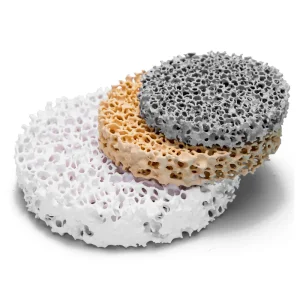
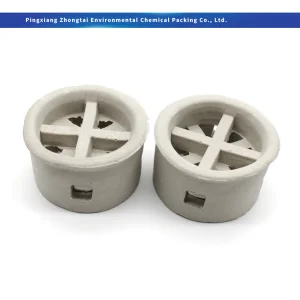
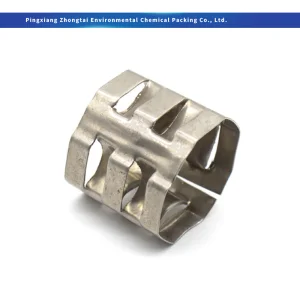
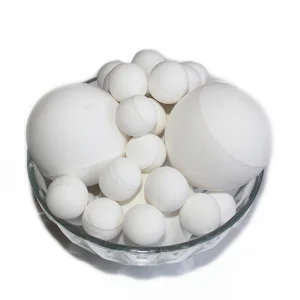
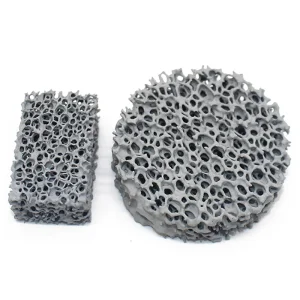
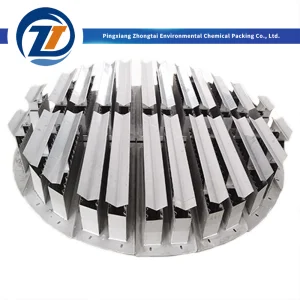
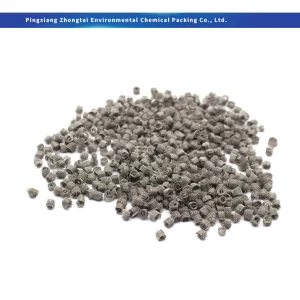
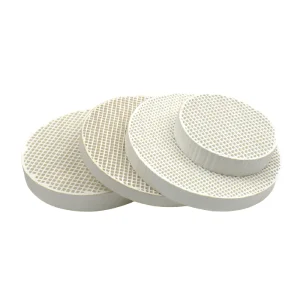
Explore our full range of chemical process tower internal components, random packings, structural packings, and ceramic foam filters.
Direct factory pricing, complete batch inspection certificates, and worldwide engineering support from Pingxiang Zhongtai Environmental Chemical Packing Co., Ltd.
