Explore our industrial chemical packing solutions engineered for high mass transfer, severe corrosion resistance, and low pressure drop.
A comprehensive analysis of Na-X zeolite pore kinetics, polar molecule selectivity, and mechanical integrity in deep gas purification.
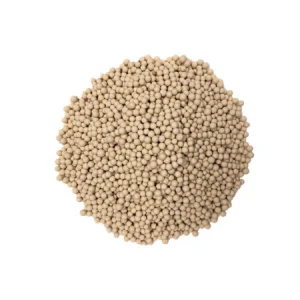
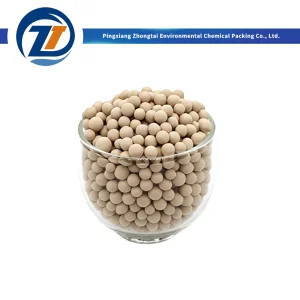
Molecular Sieve Type 13X is the sodium form of the Type X synthetic zeolite crystal, featuring a Faujasite (FAU) framework structure with an effective pore aperture of approximately 10 Angstroms (1.0 nm). Chemically defined as Na12[(AlO2)12(SiO2)12]·xH2O with a typical SiO2/Al2O3 molar ratio of 2.0 to 3.0, Type 13X provides significantly larger free access dimensions than standard Type 3A (3 Å), Type 4A (4 Å), or Type 5A (5 Å) adsorbents. This wide pore matrix allows Type 13X to co-adsorb large molecular kinetic diameter species—such as aromatics, branched hydrocarbons, mercaptans, and carbon dioxide—that smaller zeolites strictly exclude.
Accommodates complex molecules with kinetic diameters up to 9.8 Å. Highly effective for removing heavy impurities, organosulfur compounds, and aromatic rings from liquid and gas streams.
Strong electrostatic field gradient inside the Na-X cage creates exceptional equilibrium adsorption capacity for water, carbon dioxide, H2S, and polar nitrogen compounds under dynamic flow.
Specialized 13X-APG grades prevent CO2 and H2O freeze-out in cold boxes, ensuring cryogenic air separation units operate continuously without exchanger blockages.
Selecting the optimal molecular sieve requires matching molecular kinetic diameters, polarities, and bed operating temperatures. Below is a engineering benchmark comparison for process plant design:
| Zeolite Type | Nominal Pore Size | Cation Form | Kinetic Diameter Limit | Static Water Adsorption (25°C, 75% RH) | Primary Industrial Application |
|---|---|---|---|---|---|
| Molecular Sieve 3A | 3 Å (0.3 nm) | Potassium (K+) | < 3.0 Å | ≥ 21.0 wt% | Ethanol dehydration, cracked gas drying, IG units |
| Molecular Sieve 4A | 4 Å (0.4 nm) | Sodium (Na+) | < 4.0 Å | ≥ 22.0 wt% | Refrigerant drying, closed-loop air systems |
| Molecular Sieve 5A | 5 Å (0.5 nm) | Calcium (Ca2+) | < 5.0 Å | ≥ 22.5 wt% | n-Paraffin separation, PSA hydrogen purification |
| Molecular Sieve 13X | 10 Å (1.0 nm) | Sodium (Na+) | < 9.8 Å | ≥ 26.5 wt% | CO2/H2O co-adsorption, gas sweetening, air prep |
| 13X-APG / 13X-HP | 10 Å (1.0 nm) | Na+ / High-Purity X | < 9.8 Å | ≥ 27.0 wt% | Cryogenic ASU air purification, PSA VPSA O2 units |
In high-velocity air pre-purification towers, the dynamic CO2 capacity of 13X molecular sieve depends heavily on binder quality and crystal agglomeration density. Superior 13X-APG formulations shorten the Mass Transfer Zone (MTZ), reducing premature CO2 breakthrough and allowing up to 15% smaller vessel bed heights in plant capital expenditure (CAPEX).
Accelerating decarbonization, LNG supply chain expansion, and industrial oxygen demand drive next-generation adsorbent development.
Global net-zero mandates are pushing process plants to capture CO2 directly from flue gas and syngas streams. Modified 13X zeolites are widely adopted for vacuum swing adsorption (VSA) CO2 recovery due to their exceptionally high Henry's law constant for carbon dioxide compared to nitrogen and methane.
With liquefied natural gas (LNG) serving as a transitional fuel, natural gas pretreatment plants require strict removal of CO2 (< 50 ppm) and H2S (< 4 ppm) to avoid cryogenic solidification in heat exchangers. Molecular Sieve 13X remains the industry baseline for heavy hydrocarbon and trace sulfur polishing beds.
The decentralization of industrial gas supply has spurred demand for high-efficiency Vacuum Pressure Swing Adsorption (VPSA) oxygen plants. Lithium-exchanged 13X and ultra-pure Na-13X adsorbents provide enhanced N2/O2 selectivity ratios, lowering power consumption per ton of generated oxygen.
Evaluating Total Cost of Ownership (TCO), physical durability metrics, and performance guarantees for procurement teams.
Purchasing agents and chief chemical engineers must balance initial unit pricing against bed lifetime and operational energy expenses. Inferior molecular sieves suffer high attrition, resulting in dust formation, severe pressure drop spikes, and premature replacement cycles that cost millions in plant downtime.
| Quality Test Parameter | Standard Commercial Grade | Zhongtai High-Purity 13X-APG Grade | Impact on Plant OPEX |
|---|---|---|---|
| Crush Strength (1.6–2.5mm Spheres) | ≥ 15 N / granule | ≥ 35 N / granule | Prevents bead fracturing under bed compaction and thermal shock cycles. |
| Attrition Rate (wt%) | ≤ 0.20% | ≤ 0.05% | Eliminates downstream filter plugging and pressure drop increases. |
| CO2 Adsorption Capacity (25°C, 15 Torr) | ≥ 16.0 cm³/g | ≥ 18.5 cm³/g | Extends adsorption cycle time, reducing thermal regeneration steam/gas costs. |
| Bulk Density (g/ml) | 0.62 – 0.68 | 0.64 – 0.70 | Ensures uniform vessel packing with zero voiding or channeling zones. |
| Residual Moisture (As Shipped) | ≤ 1.5 wt% | ≤ 0.5 wt% | Delivers immediate full dynamic adsorption capacity upon vessel loading. |
Inside Pingxiang Zhongtai’s automated hydrothermal crystallization, precision shaping, and batch-level quality control protocols.
Located in Pingxiang, Jiangxi Province—the world's renowned industrial ceramic and chemical packing manufacturing hub—Pingxiang Zhongtai Environmental Chemical Packing Co., Ltd. combines raw material proximity with advanced Industry 4.0 production control. Our automated manufacturing line integrates digital synthesis, extruding, sphere forming, calcination, and airtight packaging.
Automated alkali-aluminate-silicate gel mixing ensures tight stoichiometry. Controlled hydrothermal aging yields flawless FAU framework crystals with uniform pore diameters.
Advanced clay binder formulations maintain crystal exposure above 85% active zeolite mass while achieving industry-leading mechanical crush resistance.
Computer-monitored temperature zones activate zeolites uniformly, removing hydration water without structurally damaging the Na-X aluminosilicate cage.
Field-proven operating parameters across petrochemical, gas processing, and industrial gas purification applications.
Operating Duty: Simultaneous removal of H2O (< 0.1 ppm) and CO2 (< 1 ppm) from ambient intake air before cryogenic distillation columns.
Engineering Key: 13X-APG prevents acetylene and light hydrocarbon accumulation, eliminating cryogenic explosion risks. Regeneration temperatures range from 180°C to 230°C using waste nitrogen gas.
Operating Duty: Deep sulfur compound capture (mercaptans, COS, H2S) from pipeline natural gas and NGL feedstocks.
Engineering Key: The 10 Å aperture admits bulky organosulfur molecules (e.g., ethyl mercaptan, propyl mercaptan) that cannot enter 4A or 5A pores, meeting stringent pipeline specifications.
Operating Duty: Liquid-phase drying of LPG, butane, propane, and aromatic solvents (benzene, toluene, xylene).
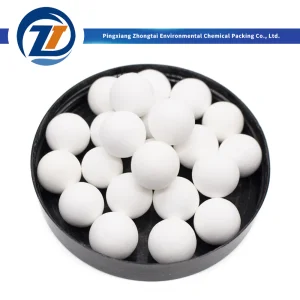
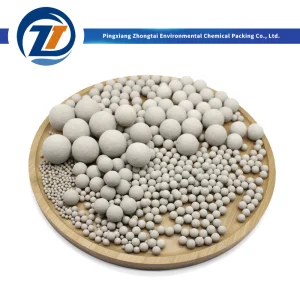
Engineering Key: Dynamic liquid adsorption requires high mechanical strength beads to prevent friction erosion. Zhongtai 13X spherical beads maintain structural stability under high fluid linear velocities.
Operating Duty: Selective N2 adsorption from air streams to deliver 93% ± 3% medical/industrial oxygen gas.
Engineering Key: Fast adsorption-desorption kinetics enable short cycle times (15 to 60 seconds), increasing unit volume oxygen output per kilogram of molecular sieve.
Expert engineering answers to common technical queries from procurement teams and plant operators.
Review our supplementary product lines for distillation towers, filtration systems, and gas treatment units.