Explore high-specification chemical ceramics, metallic packings, and crystalline zeolite adsorbents manufactured under rigorous ISO/ASTM quality standards in Pingxiang, China.
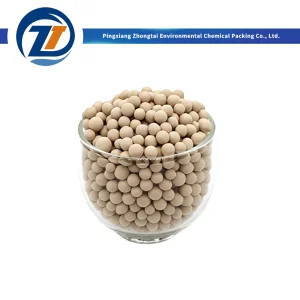
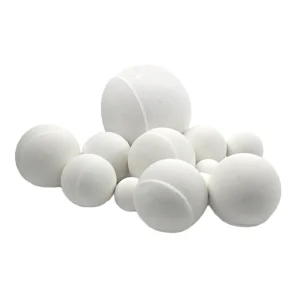
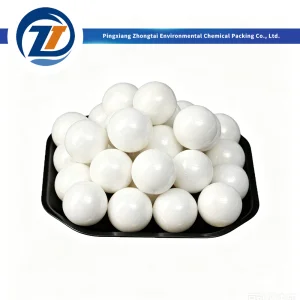
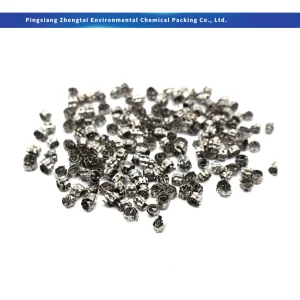
Synthetically synthesized aluminosilicate desiccants represent the technological pinnacle of industrial moisture, polar contaminant, and gas separation technology.
The global demand for synthetic zeolite desiccants is experiencing an unprecedented structural expansion. Once categorized primarily as consumable drying agents for packaging and compressed air networks, modern molecular sieve desiccants have transitioned into critical kinetic and thermodynamic separation agents across high-stakes energy transition infrastructures. The rapid commissioning of world-scale Liquefied Natural Gas (LNG) export terminals, mega-capacity Cryogenic Air Separation Units (ASU), blue and green hydrogen purification skids, and next-generation Carbon Capture, Utilization, and Storage (CCUS) projects has made high-purity crystalline adsorbents indispensable.
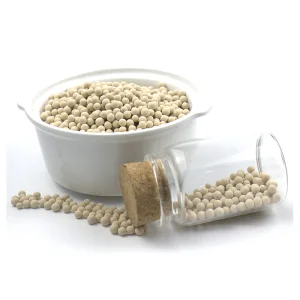
Unlike conventional amorphous desiccants such as silica gel or activated alumina, molecular sieves feature uniform, crystallographically defined pore architectures at the Ångström scale (3 Å to 10 Å). Their affinity for water molecules is driven by intense localized electrostatic fields generated by exchangeable extra-framework cations (K⁺, Na⁺, Ca²⁺) within the anionic aluminosilicate cage. This thermodynamic force enables molecular sieves to maintain exceptional moisture holding capacities even at ultra-low relative humidities (<10% RH) and elevated process temperatures up to 100°C—operating windows where traditional drying media completely lose efficacy.
Understanding the strict kinetic cutoffs and thermodynamic adsorption isotherms governing Type A (LTA) and Type X (FAU) molecular sieves.
| Zeolite Grade | Pore Opening | Cationic Form | Bulk Density (g/ml) | Crush Strength (N/bead) | Static H₂O Capacity (wt%) | Primary Industrial Applications |
|---|---|---|---|---|---|---|
| Zeolite 3A | ~3 Å (0.3 nm) | Potassium (K⁺) | 0.68 – 0.74 | ≥ 35 (1.6-2.5mm) | ≥ 20.5% (25°C, 60% RH) | Cracked gas, ethylene/propylene drying, insulated glass units, ethanol azeotropic dehydration. |
| Zeolite 4A | ~4 Å (0.4 nm) | Sodium (Na⁺) | 0.66 – 0.72 | ≥ 35 (1.6-2.5mm) | ≥ 21.5% (25°C, 60% RH) | Compressed air dryers, closed-loop refrigerant circuits, pharmaceutical packaging, static moisture stripping. |
| Zeolite 5A | ~5 Å (0.5 nm) | Calcium (Ca²⁺) | 0.68 – 0.74 | ≥ 40 (1.6-2.5mm) | ≥ 21.5% (25°C, 60% RH) | Normal/iso-paraffin separation, pressure swing adsorption (PSA) hydrogen purification, natural gas sweetening. |
| Zeolite 13X-HP | ~10 Å (1.0 nm) | Sodium (Na⁺ Faujasite) | 0.62 – 0.70 | ≥ 32 (1.6-2.5mm) | ≥ 23.5% (25°C, 60% RH) | Cryogenic air prepurification (simultaneous H₂O & CO₂ removal <0.1 ppm), medical PSA oxygen generators. |
In selective dehydration of polymerizable olefins (such as ethylene, propylene, and butadiene), specifying Type 3A molecular sieve is non-negotiable. Its strictly controlled 3 Å aperture excludes hydrocarbon molecules (kinetic diameter > 3.9 Å), preventing intra-crystalline coking, runaway catalytic polymerization, and catastrophic bed thermal excursion during cyclic thermal regeneration.
The sub-nanometer aluminosilicate matrix creates an unyielding structural grid where only molecules with critical kinetic diameters smaller than the window opening can enter the adsorption cavities, delivering 100% steric selectivity.
Densely concentrated extra-framework metal cations create electrostatic field gradients approaching 10¹⁰ V/m. This induces massive dipole moments in incoming water, carbon dioxide, and mercaptan molecules, ensuring fast mass transfer zone (MTZ) kinetics.
Modern advanced binder technologies (using high-purity attapulgite and kaolinite clays) provide superior attrition resistance (wear loss < 0.1 wt%), maintaining low differential pressure (ΔP) through hundreds of high-temperature thermal swing cycles.
How Pingxiang, Jiangxi has developed into the world's most concentrated chemical packing and industrial adsorbent production powerhouse.
Pingxiang sits at the geographic epicenter of superior kaolin, halloysite, and mineral binder deposits. Upstream raw chemicals including technical-grade sodium silicate and aluminum hydroxide are sourced within an ultra-short industrial freight radius, drastically reducing carbon intensity, transport volatility, and baseline synthesis costs.
Modernized Pingxiang facilities have replaced legacy static chamber kilns with multi-zone, computerized continuous rotary calcination furnaces. Automated PID thermal profiles (550°C to 650°C) ensure precise control over crystal dehydroxylation, eliminating residual structural moisture while avoiding crystalline phase collapse.
Every single wholesale batch is subjected to rigorous analytical validation prior to release: X-ray Powder Diffraction (XRD) for phase purity, BET analysis for specific surface area (>900 m²/g), auto-titration for cation exchange degree, and automated single-bead crush testers to ensure failure rates below 0.01% under deep-bed hydrostatic pressure.
Where molecular sieve desiccants guarantee uninterrupted plant uptime and strict conformance to purity thresholds.
In cryogenic distillation columns operating at -196°C, trace water vapor and CO₂ will freeze into solid precipitates, causing catastrophic plate plugging and heat exchanger tube ruptures. Specially formulated 13X-APG zeolite strips atmospheric feed air down to <0.1 ppmv H₂O and <0.5 ppmv CO₂, while simultaneously capturing hazardous trace acetylene and ambient hydrocarbons.
Raw natural gas containing saturated water and hydrogen sulfide creates corrosive carbonic/sulfuric acids and solid gas hydrates that choke cross-country transmission pipelines. Multi-bed adsorption units employing Zeolite 4A and 5A lower moisture dew points below -100°C prior to cryogenic liquefaction (-162°C) while selectively capturing mercaptans without co-adsorbing heavier methane liquids.
Double and triple-glazed architectural window units require desiccant matrix fills inside perimeter aluminum spacers. Ultra-pure Zeolite 3A beads are engineered with negligible gas desorption characteristics (specifically zero nitrogen or oxygen adsorption). This prevents internal vacuum formation or glass ballooning under dramatic weather and barometric shifts, preventing glass seal failure.
Conventional distillation cannot concentrate ethanol beyond the 95.6 wt% azeotropic boundary. Vapour-phase Pressure Swing Adsorption (PSA) utilizing tailored 3A molecular sieve columns selectively adsorbs the smaller water molecules (2.8 Å) while repelling ethanol molecules (4.4 Å), producing fuel-grade 99.8% anhydrous ethanol with significantly lower thermal energy inputs than entrainer distillation.
Life-support respiratory systems and hospital-grade onsite oxygen generators demand exceptional nitrogen adsorption kinetics. Premium Lithium-exchanged Zeolite (LiX) and 13X-HP utilize thermodynamic quadrupole moment interactions to aggressively hold N₂ while letting high-purity O₂ (>93% ± 3%) pass through as the product gas stream at ambient operating temperatures.
Steam Methane Reforming (SMR) and water-electrolysis green hydrogen skids must comply with strict ISO 14687 Grade D fuel cell purity limits (<5 ppm H₂O, <2 ppm CO₂, <0.2 ppm CO). Dual-layer desiccant beds containing silica gel protective guards followed by 5A and 13X molecular sieves guarantee continuous zero-slip purification for heavy mobility fuel cell networks.
Critical mechanical and chemical parameters international EPC contractors and process plant procurement teams must demand before awarding wholesale contracts.
Static adsorption capacity measures maximum thermodynamic equilibrium in a closed chamber, but Dynamic Water Breakthrough Capacity governs real-world tower sizing. Always specify dynamic capacity under real superficial gas velocity (0.15 - 0.35 m/s), inlet relative humidity, and operating pressure to ensure the Mass Transfer Zone (MTZ) does not exit the bed prematurely.
In high-pressure cyclic gas dryers, rapid pressurization and depressurization create violent fluidization shocks. Cheap, poorly bound molecular sieves generate fine dust that coats downstream particulate filters, foul valve seats, and destroys downstream compressor impellers. Insist on audited attrition rates under 0.10% by weight.
Synthetic zeolites possess immense hygroscopic chemical potential; exposure to ambient humidity during sea transit destroys adsorption capacity before field loading. Reputable Chinese manufacturers package bulk orders in heavy-gauge carbon steel drums (with hermetic rubber gasket bolt rings) or vacuum-sealed foil-lined bags under dry nitrogen blanketing.
Technological leaps redefining desiccant performance, energy consumption, and lifecycle sustainability across heavy chemical manufacturing.
Standard industrial sieves incorporate 15% to 20% inert clay binder to mechanically agglomerate sub-micron zeolite powders into robust beads. Next-generation binderless processing chemically converts the inert clay binder into crystalline zeolite phase post-granulation, yielding 100% active adsorbent volume, boosting dynamic capacity by 20-25%, and reducing bed inventory weight.
Desorption of tightly bound water from classic zeolites typically demands high-temperature regeneration purge streams between 220°C and 300°C, representing massive parasitic energy consumption. Cutting-edge surface chemical modifications are tuning framework hydrophobicity, enabling rapid, complete desorption at 140°C - 160°C, drastically lowering utility overheads for green hydrogen and clean energy facilities.
Global net-zero targets have accelerated research into amine-functionalized and hybrid hierarchical mesoporous molecular sieves designed specifically for Direct Air Capture of ultra-dilute CO₂ (approx. 420 ppm). These cutting-edge sorbents provide high CO₂ loading kinetics without competitive moisture poisoning in ambient atmospheric conditions.
Source high-performance chemical mass transfer equipment, structured packings, and specialty filtration directly from our accredited factories.
Clear, unvarnished technical answers from our chemical process engineers regarding selection, regeneration, and plant commissioning.
Share your gas composition, tower dimensions, operating temperatures, and target dew point with our Pingxiang engineering department.
